How did silver from a mountain in the Andes end up in Ming China?
.jpg)
TL;DR — Potosí’s silver, dug by forced mita labor and refined with Huancavelica mercury from 1571, sailed to Seville and, on Manila galleons, to China, the era’s sink for silver.
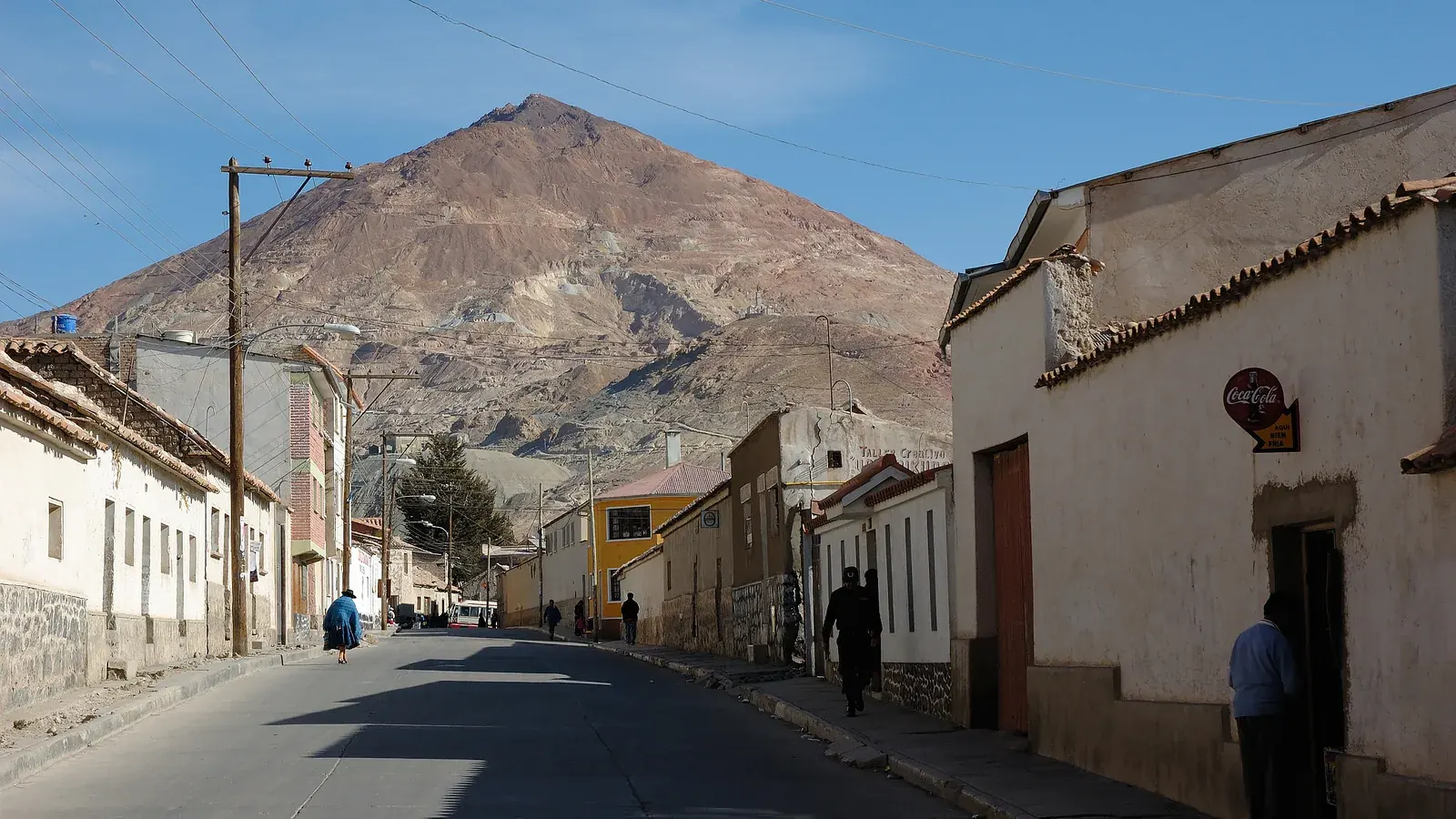
Silver dug from Cerro Rico at Potosí after 1545 became the coin that Spain spent in Europe and that Manila galleons carried over the Pacific to China. The mountain stood at about 4,000 meters in what is now Bolivia. Its ore was ground in water mills and mixed with mercury from Huancavelica, 1,680 kilometers away, by Indians drafted under the mita, a labor levy the viceroy Francisco de Toledo imposed in the 1570s. World History Encyclopedia puts the total silver shipped to Spain by 1600 at 25,000 tons. The rest crossed the Pacific, where, as Columbia University’s Asia for Educators puts it, China was “a ‘sink’ for silver.”
Quick facts
- When
- 1545 (silver lodes found at Cerro Rico) · 1564 (mercury found at Huancavelica) · 1571 (mercury refining begins at Potosí) · 1572 (Francisco de Toledo's visit and the mining mita) · 1565–1815 (Manila galleons) · 1987 and June 17, 2014 (UNESCO listings)
- Where
- Potosí, a mining town at about 4,000 meters in the Andes of what is now Bolivia; the mercury mine of Huancavelica in what is now Peru; the ports of Portobelo, Seville, Acapulco and Manila
- Who
- Diego de Huallpa, named as the finder of the lodes; the viceroy Francisco de Toledo; Pedro Fernández de Velasco, who brought the mercury method; the Jesuit José de Acosta; the Andean chronicler Felipe Guaman Poma de Ayala
- Outcome
- The mountain's silver, dug by forced labor and refined with mercury, became the coin Spain spent in Europe and the cargo Manila galleons carried to China, the destination Columbia's Asia for Educators calls a "sink" for silver
The mountain and the year 1545
The lodes were found in 1545 by Diego de Huallpa, according to World History Encyclopedia, in the mountain the Spaniards called Cerro Rico, the Rich Mountain.
Felipe Guaman Poma de Ayala, an Andean noble whose illustrated chronicle of about 1615 was addressed to the king of Spain, drew Potosí. In the drawing the Inca and four Andean kings hold up the pillars and arms of imperial Spain over the silver mines, and his caption reads, in translation, “Because of that mine Castile is Castile, Rome is Rome, the pope is pope and the king is monarch of the world.” In the pages that follow he described a town with “silver like stone, gold like dust.”
By 1600, World History Encyclopedia records, more than 600 mines worked the mountain and yielded some 9 million silver pesos a year, more than every other silver mine in the world combined.
How the silver was won: mercury and the mita
The first miners smelted rich surface ore in small clay furnaces that Guaman Poma called huayrachinas; he drew six of them on the hill beside Cerro Rico. What kept Potosí alive after those veins gave out was a method that Bartolomé de Medina of Seville worked out in 1555, according to Peru’s 2017 submission to UNESCO’s Tentative List: crushed ore was mixed with salt, water and mercury, trodden for days, then heated until the mercury boiled off and left silver.
The mercury came from Huancavelica, in what is now Peru, where the Santa Bárbara deposit was found in 1564. Peru’s submission quotes the Jesuit José de Acosta, who wrote that under Toledo a man named Pedro Fernández de Velasco offered to refine Potosí’s silver with mercury, and that “in 1571 Potosí started to extract silver with mercury brought from Huancavelica.” UNESCO’s Potosí listing dates full production to after 1580, when 22 reservoirs drove 140 mills that ground the ore.
The labor came from the mita. Peru’s submission describes it as Toledo’s adaptation of an Inca rotation: Indian men aged 18 to 50 from provinces up to 40 leagues, about 223 kilometers, from a mining center owed a year of work for a small wage plus rations of beef and corn. UNESCO counts 13,500 Indians forced into the Potosí mines under the system, alongside 160,000 colonists by the 17th century.
Guaman Poma, who wrote as a petitioner to the king, described what the levy did. A man who caught the mercury sickness “dries up like a stick and has asthma and cannot live by day or by night. And he lasts a year or two in this way and dies.” His drawing of Huancavelica carries the line “In that mine the Indians are used up.” He recorded the pay, eight reales a day plus food in the mercury mines and four in silver mines. None of the sources read for this article gives a total of the dead. Peru’s submission dates the end of the mita to the Cadiz constitution of March 19, 1812; World History Encyclopedia gives 1821.
A city of 160,000 at 4,000 meters
Potosí held the largest Spanish-speaking population in the Americas, by World History Encyclopedia’s account, and was infamous for murderous feuds between Europeans. UNESCO’s listing describes a Spanish quarter of churches and patrician houses and a native quarter of bare rancherías, separated by an artificial river. World History Encyclopedia adds the cost: coca farms to keep miners working underground, and grain demand so heavy that the surrounding countryside suffered famines.
The road of the silver: Seville and Manila
Refined bars were stamped at the Royal Mint and the crown took one fifth. From Potosí the silver went by galleon to Panama, then by mule train over the isthmus to Portobelo, where the Tierra Firme fleet loaded it for Havana and Seville. UNESCO’s criterion for the listing names the result: the “flood of Spanish currency resulting from the massive import of precious metals in Seville.” World History Encyclopedia records that prices in Europe rose 400 percent over the 16th century.
A second road ran west. From 1565 to 1815, one or two galleons a year sailed from Manila to Acapulco with silk, porcelain and spices, and returned carrying up to 3 million silver pesos to buy the next cargo. World History Encyclopedia explains why: in Amsterdam one ounce of gold bought 11 ounces of silver, while in China the same silver could be exchanged for two ounces of gold.
Why China took the silver
Columbia’s Asia for Educators describes the chain. Spain settled the Philippines in 1565, and Manila became its entrepôt for trade with China. Silver “minted by the Spaniards in their new territories in the Americas eventually travels across the Pacific, through Manila, and into China as the commodity the Europeans can trade for the goods they seek from China.” The same page records that the Ming state drew its income from land and salt taxes, and World History Encyclopedia adds that Ming potters adapted designs for European buyers. The material read for this article describes China as the destination; it does not trace how prices inside China moved, so that part of the story is left out here.
What remains: 1987 and 2014
UNESCO inscribed the City of Potosí on the World Heritage List in 1987 under criteria (ii), (iv) and (vi), citing the conserved chain from mine to mint, from the reservoirs and mills to the Casa de la Moneda rebuilt in 1759. On June 17, 2014, the World Heritage Committee in Doha placed the city on the List of World Heritage in Danger because uncontrolled mining had left Cerro Rico porous and parts of its summit had collapsed.
The mountain that Guaman Poma drew holding up the Spanish crown was hollowed by the men the mita sent into it, and its silver, refined with Huancavelica mercury, paid Spain’s bills in Seville and bought China’s silk in Manila.
Key facts
- The Cerro Rico lodes were found in 1545; by about 1600 more than 600 mines produced some 9 million pesos a year (World History Encyclopedia).
- Mercury refining began at Potosí in 1571 with mercury from Huancavelica, found in 1564 (José de Acosta, quoted in Peru’s UNESCO submission).
- Toledo’s mita drafted men aged 18 to 50 from a 40-league radius for a year; UNESCO counts 13,500 mita workers and 160,000 colonists by the 17th century.
- Guaman Poma recorded eight reales a day in the mercury mines and four in silver mines, and described mercury sickness that killed within a year or two.
- World History Encyclopedia puts silver shipped to Spain by 1600 at 25,000 tons and the 16th-century price rise in Europe at 400 percent.
- Manila galleons sailed 1565 to 1815 and returned to Manila with up to 3 million pesos a trip; in China silver bought about twice the gold it bought in Amsterdam.
- UNESCO listed Potosí in 1987 and placed it on the Danger List on June 17, 2014.
FAQ
When was silver found at Potosí?
In 1545, at Cerro Rico in the Andes of what is now Bolivia. World History Encyclopedia names Diego de Huallpa as the finder.
What was the mita?
A labor levy that the viceroy Francisco de Toledo set up in the 1570s on the model of an Inca rotation. Indian men aged 18 to 50 from provinces up to 40 leagues away owed a year in the mines for a small wage. Peru's UNESCO submission dates its abolition to 1812; World History Encyclopedia gives 1821.
How did Potosí silver reach China?
By way of Acapulco. Manila galleons carried Asian goods to Mexico from 1565 and returned to Manila with silver pesos, which Chinese merchants took in exchange for silk and porcelain. Columbia's Asia for Educators calls China a "sink" for that silver.
Sources
- UNESCO World Heritage Centre — "City of Potosí," World Heritage List no. 420, Outstanding Universal Value statement.
- UNESCO World Heritage Centre — "City of Potosí (Plurinational State of Bolivia) added to List of World Heritage in Danger," news release, June 17, 2014.
- UNESCO World Heritage Centre, Tentative Lists — Peru, "Santa Bárbara mining complex" (Huancavelica), submission of July 10, 2017.
- World History Encyclopedia — Mark Cartwright, "The Silver of the Conquistadors" (August 15, 2022).
- World History Encyclopedia — Mark Cartwright, "Manila Galleon" (October 29, 2021).
- World History Encyclopedia — Mark Cartwright, "Spanish Treasure Fleets."
- Columbia University, Asia for Educators — "Key Points across East Asia by Era: 1450–1750," section on Europeans in China.
- Royal Danish Library — Felipe Guaman Poma de Ayala, Nueva corónica y buen gobierno (1615), pages 530–532, "Chapter of the miners," transcription.
- Royal Danish Library — Guaman Poma, Nueva corónica, page 1055, drawing of Oropesa de Huancavelica, mercury mines.
- Royal Danish Library — Guaman Poma, Nueva corónica, pages 1065–1068, drawing and description of the imperial town of Potosí.
Cite this article
- APA
- Our Earth's History. (2026, September 20). How did silver from a mountain in the Andes end up in Ming China? Our Earth's History. https://ourearthshistory.com/americas/early-modern/potosi-silver-mountain-world-money/
- Chicago
- Our Earth's History. “How did silver from a mountain in the Andes end up in Ming China?” Our Earth's History, September 20, 2026. https://ourearthshistory.com/americas/early-modern/potosi-silver-mountain-world-money/.
- MLA
- “How did silver from a mountain in the Andes end up in Ming China?” Our Earth's History, 20 Sep. 2026, https://ourearthshistory.com/americas/early-modern/potosi-silver-mountain-world-money/.
Text licensed CC BY-NC-ND 4.0. Found an error? Tell us.