Seven to two, March 6, 1857: the Dred Scott decision
.jpg)
TL;DR — On March 6, 1857, the Supreme Court ruled 7-2 that Black Americans were not citizens and struck down the Missouri Compromise; Dred and Harriet Scott were freed weeks later.
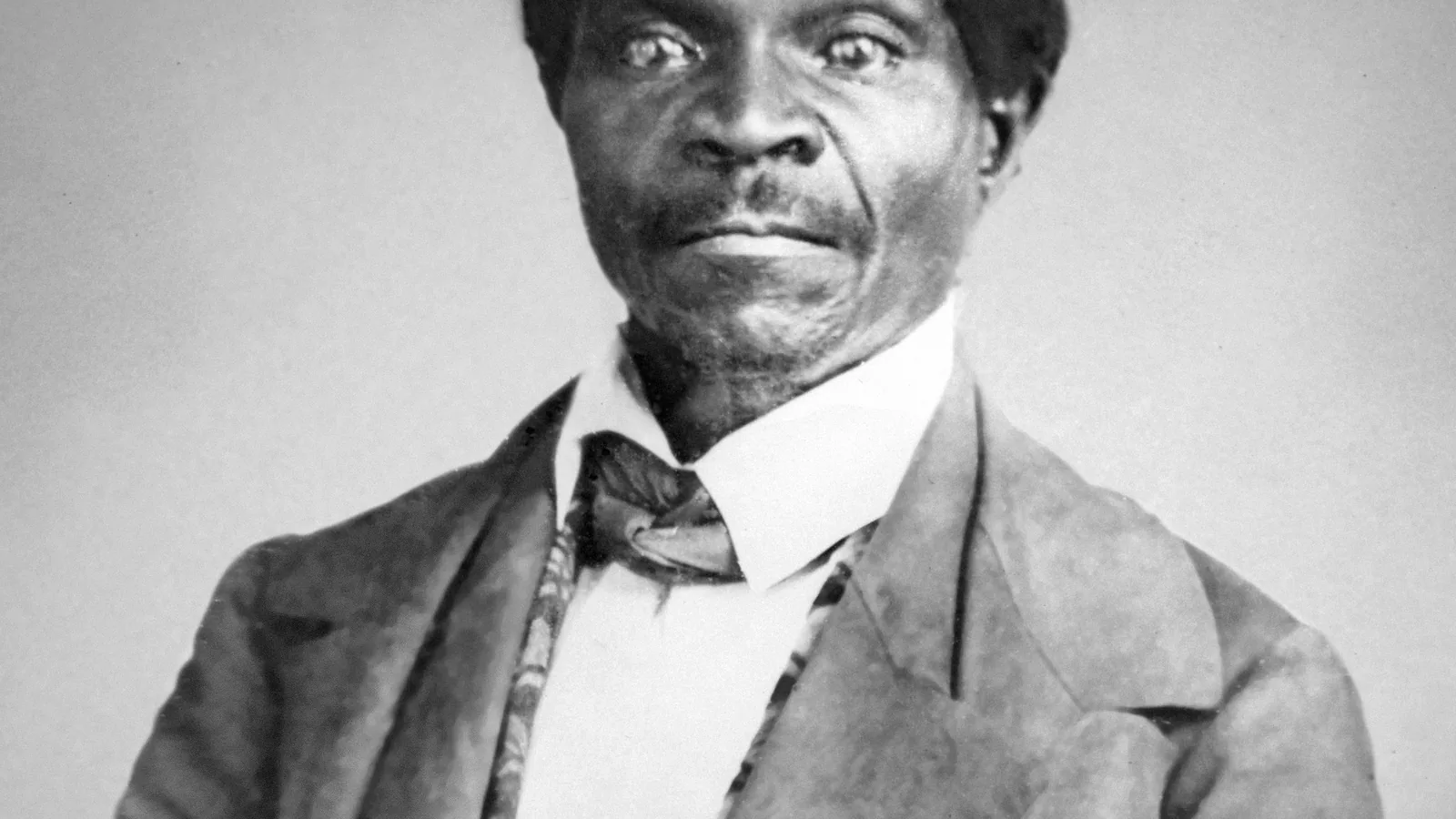
In April 1846, Dred Scott “made his mark with an ‘X,’ signing his petition . . . to sue for freedom in the St. Louis Circuit Court,” the Missouri State Archives records. Eleven years later, on March 6, 1857, the Supreme Court decided Dred Scott v. Sandford by a vote of seven to two.
Quick facts
- When
- April 6, 1846 (freedom suit petition filed) · March 22, 1852 (Missouri Supreme Court reverses, 2-1) · March 6, 1857 (U.S. Supreme Court decision) · May 26, 1857 (Dred and Harriet Scott formally freed) · September 17, 1858 (Dred Scott's death)
- Where
- St. Louis Circuit Court, Missouri; the Missouri Supreme Court; the United States Supreme Court, Washington, D.C.
- Who
- Dred Scott; Harriet Scott; Chief Justice Roger B. Taney; Justices Wayne, Nelson, Grier, Daniel, Campbell and Catron (concurring); Justices McLean and Curtis (dissenting); Taylor Blow
- Outcome
- The Court held that Black Americans were not citizens under the Constitution and that the Missouri Compromise's ban on slavery north of 36 degrees 30 minutes was unconstitutional. Dred and Harriet Scott were freed two months later by a separate transfer of ownership, not by the ruling
St. Louis, 1846: a petition and a precedent
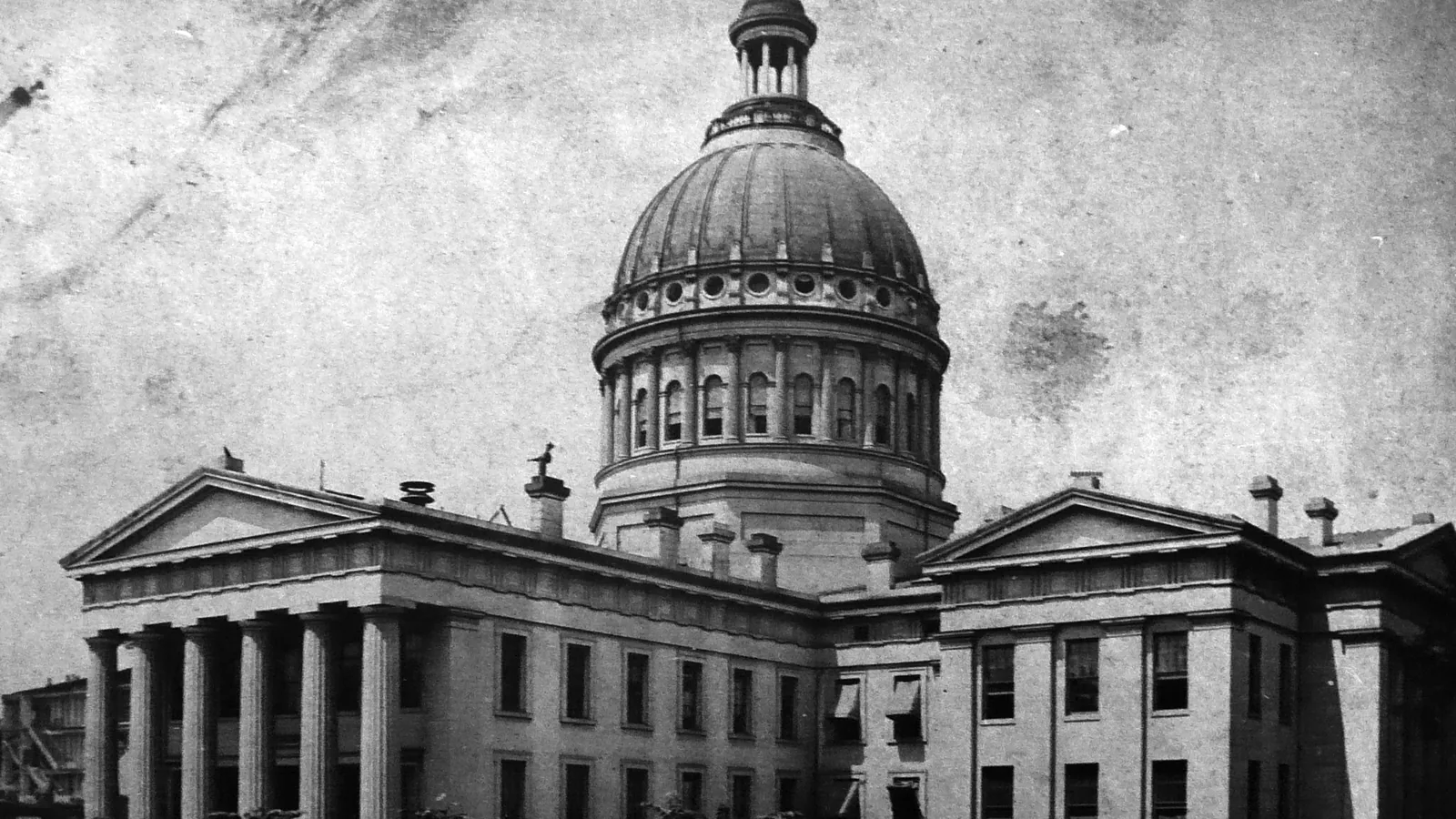
Scott’s petition rested on Missouri’s own case law. The Missouri State Archives states that the status of slaves who had lived in free territory “had been resolved with the Missouri Supreme Court’s 1824 decision in Winny v. Whitesides, where a mandate of ‘once free, always free’ became standard judicial practice.” Scott’s owner, Dr. John Emerson, an Army surgeon, had taken Scott to postings in the free state of Illinois and the free territory that included Fort Snelling, and the petition argued that residence there had already made him free. Between 1844 and 1846, the archive notes, twenty-five freedom suits had been filed in the St. Louis Circuit Court and only one had succeeded. Scott’s first attorney was Francis B. Murdoch.
A St. Louis jury found for Scott in 1850. Two of the Missouri Supreme Court’s judges then lost their seats in the August 1851 election, and the reconstituted court, made up of Hamilton Gamble, William Scott and John Ryland, took up the case. “The Court adjourned on December 24, 1851, and reconvened on March 15, 1852,” the Missouri State Archives states. “On March 22, 1852, they rendered their 2-1 decision reversing the lower court decision. Justice William Scott wrote the opinion, with Ryland concurring.” The reversal set aside Missouri’s own “once free, always free” rule, and the case moved into the federal courts.
Taney's opinion: citizenship denied
Chief Justice Roger B. Taney wrote the opinion of the Court. On Black Americans’ status under the Constitution, the text published by Cornell Law School’s Legal Information Institute states: “We think they are not, and that they are not included, and were not intended to be included, under the word ‘citizens’ in the Constitution, and can therefore claim none of the rights and privileges which that instrument provides for and secures to citizens of the United States.” Taney went on to describe the view he attributed to the era of the Constitution’s framing: that Black people “had for more than a century before been regarded as beings of an inferior order . . . and so far inferior, that they had no rights which the white man was bound to respect; and that the negro might justly and lawfully be reduced to slavery for his benefit.”
Taney’s opinion also struck down the Missouri Compromise, the 1820 law that had prohibited slavery in federal territory north of the line of 36 degrees 30 minutes. The opinion held: “The act of Congress which prohibited a citizen from holding and owning property of this kind in the territory of the United States north of the line therein mentioned, is not warranted by the Constitution, and is therefore void; and that neither Dred Scott himself, nor any of his family, were made free by being carried into this territory.” Six justices concurred in separate opinions: Wayne, Nelson, Grier, Daniel, Campbell and Catron. The Cornell text records the two dissents as “Mr. Justice McLEAN and Mr. Justice CURTIS dissented,” each in a separate opinion.
The National Archives and the Library of Congress on the record
The National Archives’ Milestone Documents page holds the official citation for the case: “Judgment in the U.S. Supreme Court Case Dred Scott v. John F. A. Sandford; 3/6/1857 . . . Record Group 267; National Archives Building, Washington, DC.” The Library of Congress’s research guide, written by reference specialist Ken Drexler, summarizes the ruling: “The Supreme Court decision Dred Scott v. Sandford was issued on March 6, 1857. Delivered by Chief Justice Roger Taney, this opinion declared that African Americans were not citizens of the United States and could not sue in Federal courts . . . this decision declared that the Missouri Compromise was unconstitutional and that Congress did not have the authority to prohibit slavery in the territories.” The guide also gives the case’s formal citation as 60 U.S. (19 How.) 393, and its Prints and Photographs Division holds 1857 photographs of Dred and Harriet Scott and of their daughters, Eliza and Lizzie.
.jpg)
Emancipation, May 26, 1857
Ownership of the Scott family had passed by marriage to Irene Emerson’s husband, Dr. Calvin Chaffee, a Massachusetts congressman opposed to slavery. The Missouri State Archives records that Chaffee learned only “just shortly before the Court’s decision,” in February 1857, that his wife owned the country’s most famous slave. Missouri law barred an out-of-state owner from freeing a slave within the state, so Chaffee transferred the family to Taylor Blow, a St. Louis man. The court record from that transfer states that Blow “acknowledges the execution by him of a Deed of Emancipation to his slaves.” On May 26, 1857, the archive states, “Dred and Harriet Scott appeared in the St. Louis Circuit Court and were formally freed; Judge Alexander Hamilton approved the papers. Dred Scott took a job as a porter at Barnum’s Hotel at Second and Walnut streets in St. Louis; he became a sort of celebrity there.”
Freedom lasted little more than a year. The Missouri State Archives records: “Dred Scott did not live to enjoy his free status very long; on September 17, 1858, he died of tuberculosis.” Harriet Scott died on June 17, 1876, and was buried three days later in Section C of Greenwood Cemetery in St. Louis County.
The Fourteenth Amendment answers the ruling
The National Archives’ Milestone Documents page on the Fourteenth Amendment records two dates for its passage into law. Congress passed the amendment on June 13, 1866, and the National Archives states that it “was ratified July 9, 1868,” extending “liberties and rights granted by the Bill of Rights to formerly enslaved people.” The same page records a second date: “On July 28, 1868, the 14th amendment was declared, in a certificate of the Secretary of State, ratified by the necessary 28 of the 37 States, and became part of the supreme law of the land.” Its citizenship clause opens: “All persons born or naturalized in the United States . . . are citizens of the United States.”
Key facts
- April 6, 1846: Dred Scott signed with his mark a petition to sue for freedom in the St. Louis Circuit Court (Missouri State Archives).
- March 22, 1852: the Missouri Supreme Court reversed the freedom verdict 2-1; William Scott wrote the opinion, Ryland concurred (Missouri State Archives).
- March 6, 1857: the U.S. Supreme Court ruled 7-2 that Black Americans were not citizens and that the Missouri Compromise was unconstitutional (Cornell LII; Library of Congress).
- Six justices concurred separately with Taney: Wayne, Nelson, Grier, Daniel, Campbell and Catron; McLean and Curtis dissented (Cornell LII).
- The case’s official citation is 60 U.S. (19 How.) 393 (Library of Congress).
- May 26, 1857: Dred and Harriet Scott were formally freed in the St. Louis Circuit Court after Taylor Blow’s Deed of Emancipation; Judge Alexander Hamilton approved the papers (Missouri State Archives).
- September 17, 1858: Dred Scott died of tuberculosis; Harriet Scott died June 17, 1876 (Missouri State Archives).
- The Fourteenth Amendment was ratified July 9, 1868, and declared ratified by the Secretary of State on July 28, 1868 (National Archives).
FAQ
What did the Supreme Court rule in Dred Scott v. Sandford?
On March 6, 1857, the Court ruled 7-2 that Black Americans, free or enslaved, were not citizens under the Constitution and could not sue in federal court, and that the Missouri Compromise's ban on slavery in federal territory north of 36 degrees 30 minutes was unconstitutional.
Were Dred and Harriet Scott freed by the Supreme Court's decision?
No. The ruling denied their freedom claim. They were freed on May 26, 1857, after their owner, Dr. Calvin Chaffee, transferred them to Taylor Blow, a St. Louis resident who executed a Deed of Emancipation, approved by Judge Alexander Hamilton in the St. Louis Circuit Court.
Which amendment overturned the Dred Scott ruling on citizenship?
The Fourteenth Amendment. The National Archives records it as ratified July 9, 1868, and declared ratified by the Secretary of State on July 28, 1868. Its opening clause states that "all persons born or naturalized in the United States . . . are citizens of the United States."
Sources
- Missouri Secretary of State, Missouri State Archives, "Missouri's Dred Scott Case, 1846-1857," Missouri Digital Heritage.
- Cornell Law School, Legal Information Institute, "Dred Scott v. Sandford, 60 U.S. 393 (1856)," full text.
- Library of Congress, Research Guides, "Introduction," Dred Scott v. Sandford, Primary Documents in American History.
- U.S. National Archives and Records Administration, Milestone Documents, "Dred Scott v. Sandford (1857)."
- U.S. National Archives and Records Administration, Milestone Documents, "14th Amendment to the U.S. Constitution: Civil Rights (1868)."
- Library of Congress, Research Guides, "Digital Collections," Dred Scott v. Sandford, Primary Documents in American History.
Cite this article
- APA
- Our Earth's History. (2026, September 26). Seven to two, March 6, 1857: the Dred Scott decision. Our Earth's History. https://ourearthshistory.com/americas/modern/dred-scott-v-sandford-march-6-1857-taney-seven-to-two-fourteenth-amendment/
- Chicago
- Our Earth's History. “Seven to two, March 6, 1857: the Dred Scott decision.” Our Earth's History, September 26, 2026. https://ourearthshistory.com/americas/modern/dred-scott-v-sandford-march-6-1857-taney-seven-to-two-fourteenth-amendment/.
- MLA
- “Seven to two, March 6, 1857: the Dred Scott decision.” Our Earth's History, 26 Sep. 2026, https://ourearthshistory.com/americas/modern/dred-scott-v-sandford-march-6-1857-taney-seven-to-two-fourteenth-amendment/.
Text licensed CC BY-NC-ND 4.0. Found an error? Tell us.