A 'Stygian pool' in July 1858: Disraeli's bill and Bazalgette's sewers

TL;DR — MPs questioned the state of the Thames on June 18, 1858; on July 15 Disraeli called it “a Stygian pool” and named a price: 3,000,000 pounds.
Mr. R. D. Mangles asked the Chief Commissioner of Works, in the House of Commons on June 18, 1858, what steps had been taken “to preserve the health of the Members of the two Houses of Parliament from being destroyed by the present pestilential condition of the River Thames.” Four weeks later the government brought in a bill, and on August 2 it became law.
Quick facts
- When
- June 18, 1858 (Commons question); July 15, 1858 (first reading); July 19, 1858 (second reading); August 2, 1858 (act passed); April 4, 1865 (Crossness opened)
- Where
- The Palace of Westminster and the House of Commons, London; the Thames outfalls at Crossness and Abbey Mills; the Victoria Embankment
- Who
- Benjamin Disraeli, Chancellor of the Exchequer; Sir Benjamin Hall, former First Commissioner of Works; Joseph Bazalgette, engineer to the Metropolitan Board of Works; the Prince of Wales
- Outcome
- Parliament passed the Metropolis Management Amendment Act 1858 within seven weeks of the June 18 debate, giving the Metropolitan Board of Works power to borrow 3,000,000 pounds for Bazalgette's intercepting sewers; Crossness pumping station opened on April 4, 1865, and the Victoria Embankment opened on July 13, 1870.
June 18: a question to the Chief Commissioner
Lord John Manners, the Chief Commissioner of Works, answered Mangles by reading out a report from Goldsworthy Gurney. Gurney wrote that the air entering Parliament “is purified from the river effluvia by the spray jets,” and that for the windows he had “placed canvass moistened with a weak solution of chloride of zinc and lime.” Manners added that Gurney was that day spreading “four or five boat-loads of lime” on the river.
Mr. Warren used the same debate to describe how little had changed since Parliament had already legislated once. An 1855 act had set up the Metropolitan Board of Works and handed it 71 existing main sewers that emptied straight into the Thames. “The Act came into operation on the 1st January, 1856,—this was the 18th June, 1858, and what had been hitherto done? Nothing; and, on the contrary, matters had got worse—infinitely worse than before.” That act had told the Board to finish the work “on or before the 31st December, 1860.” Sir Benjamin Hall, the former First Commissioner of Works, explained why nothing had been built: the Board’s first two drainage plans were rejected because their outfalls lay too close to the metropolitan area, and after consulting a naval surveyor and further engineers on a third plan, Hall told the House, “the Board passed a resolution that they would defer all consideration of it until the month of October next, leaving the whole summer to pass without any care for the state of the river.”
Disraeli's bill, July 15
The Chancellor of the Exchequer, Benjamin Disraeli, rose on July 15 to move for leave to bring in a bill. “That noble river, so long the pride and joy of Englishmen,” he told the Commons, “has really become a Stygian pool, reeking with ineffable and intolerable horrors.” He said “the public health is at stake” and that there was “a pervading apprehension of pestilence in this great city.” Disraeli said the government had decided the cost should fall on London itself: “this is an instance which must be met by local resources.” He put a figure on the work: “the expenditure which it would be necessary to incur… is estimated at a considerable amount. It cannot . . . be computed at much less than £3,000,000.” To raise it, he proposed a new charge, “the Main Sewage rate of the Metropolis,” at “not more than 3d. in the pound, levied for a term of forty years.” The usual channel for such borrowing, the Exchequer-bills Loan Commissioners, would not do: its “powers and resources… are of too limited a character to enable us to avail ourselves of its interference in the present instance.”
Second reading, July 19: Bazalgette named
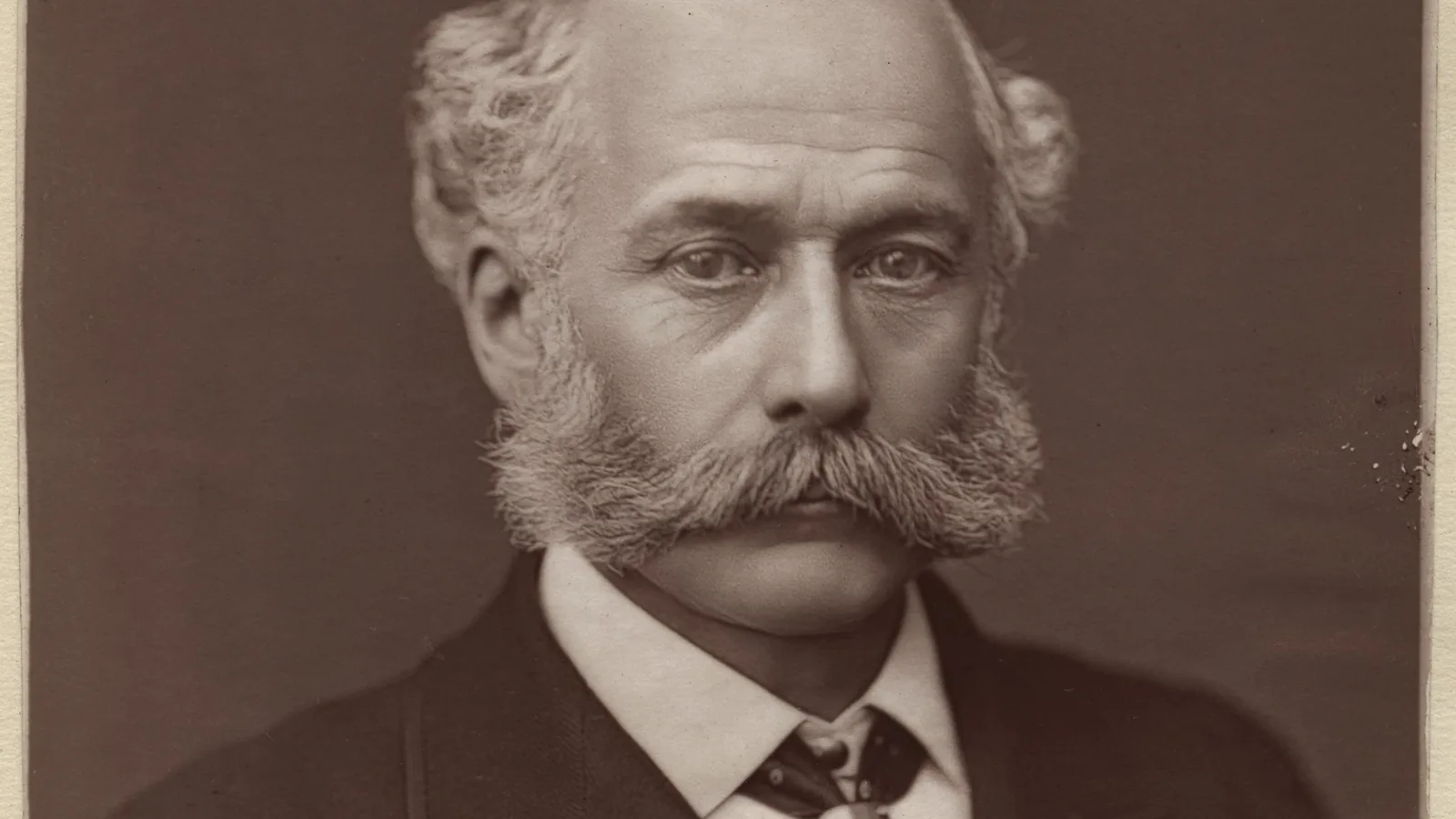
The bill returned to the Commons four days later, on July 19, for its second reading. An opponent set out rival cost estimates during the debate: “Bidder, Hawksley, and Bazalgette’s system” would need £76,000 a year to deodorize sewage, plus £45,000 a year to pump sewage from the River Lea to Barking Creek and £30,000 a year for dredging, a “permanent annual charge of £151,000” that, capitalized and added to the £3,000,000 already committed, came to “no less than £7,000,000.” The government’s own referees offered a rival scheme cited in the same debate, a canal to Sea Reach, at “£6,000,000 for the construction of the canal to Sea Reach, and the annual expense for pumping sewage would be £40,000.” Joseph Bazalgette, engineer to the Metropolitan Board of Works, was named in that day’s debate alongside Hawksley and Bidder as an author of the plan before the House.

The act, August 2
The bill became the Metropolis Management Amendment Act 1858, recorded by legislation.gov.uk as chapter 104 of 21 and 22 Victoria. Historic England’s account gives the date it passed: “Parliament was forced to legislate to create a new unified sewage system for London. The Bill became law on 2 August 1858.” The same account describes what the act gave the Board: “full responsibility for cleaning up the Thames to the MBW, favouring Bazalgette’s plans and the ability to borrow £3 million.” Of that sum it adds only that it “was a colossal sum then, which had more than doubled by the end of the project,” without naming a final total. Historic England records the conditions that pushed the bill through: “In the scorching summer of 1858, temperatures averaged 35 degrees Celcius. The stench from the Thames, the ‘Great Stink’, became overwhelming for those nearby, including Parliament, whose legislative business was disrupted.” Physician John Snow had already argued that cholera traveled through water; Historic England notes that “his ideas received little attention” at the time and that “Dr John Snow’s theory about cholera being a water-borne disease was correct, although he died at the height of the Great Stink without knowing he had been vindicated.”
Crossness, April 4, 1865
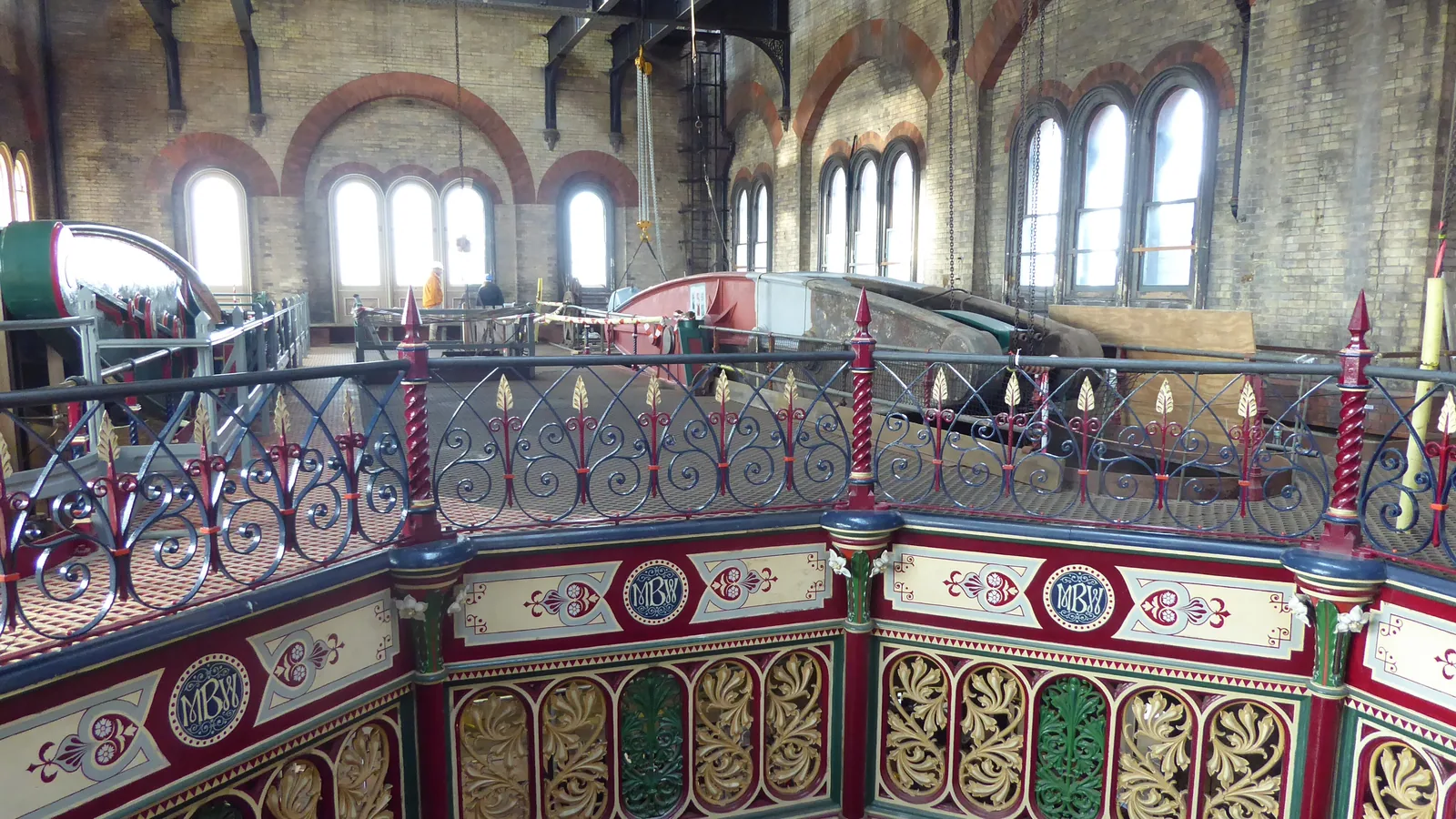
Bazalgette’s intercepting sewers ran south and north of the river toward two new pumping stations, Crossness and Abbey Mills, the latter completed in 1868 according to Historic England. Crossness came first. The Crossness Engines Trust describes the station’s opening: “In 1858, the year of the Great Stink, the smell of the Thames forced Parliament to act. Joseph Bazalgette, chief engineer of the Metropolitan Board of Works, led the design of London’s new main sewer system. At its southern outfall rose Crossness Pumping Station… On 4 April 1865 the Prince of Wales turned the handle and the great beam engines began their work.” Historic England adds that the station used “four enormous powerful beam engines” to raise sewage “up 12 metres into a reservoir,” and that Bazalgette’s finished network, completed in the mid-1870s, “virtually eliminated cholera” in London.
To carry his low-lying sewers along the river, Bazalgette also built the Albert Embankment, finished in 1869, the Victoria Embankment in 1870, and the Chelsea Embankment in 1874. Edward Walford’s Old and New London, published in 1878 and hosted by British History Online, gives the Victoria Embankment’s dates: “It was commenced in February, 1864 . . . and completed in July, 1870 . . . the whole was thrown open to the public on the 13th of July in that year.” Walford records the ceremony: “The ‘opening’ ceremony was performed by the Prince of Wales, accompanied by Her Royal Highness Princess Louise, on behalf of Her Majesty.” He measured the embankment at “about a mile and a quarter in length” and 100 feet wide, with a 64-foot carriageway, running from Blackfriars Bridge to Westminster.
Key facts
- Mr. R. D. Mangles asked the Chief Commissioner of Works on June 18, 1858, how Parliament would be protected from “the present pestilential condition of the River Thames” (Historic Hansard, June 18, 1858).
- The 1855 act that created the Metropolitan Board of Works had ordered 71 main sewers rerouted from the Thames by December 31, 1860; by June 1858 nothing had been built (Historic Hansard, June 18, 1858).
- Disraeli told the Commons on July 15, 1858, that the Thames “has really become a Stygian pool, reeking with ineffable and intolerable horrors” (Historic Hansard, July 15, 1858).
- Disraeli put the cost of cleansing the river and completing the main drainage at “not… much less than £3,000,000,” funded by a 3d.-in-the-pound rate over forty years (Historic Hansard, July 15, 1858).
- On July 19, 1858, an opponent capitalized “Bidder, Hawksley, and Bazalgette’s system” at up to £7,000,000 against a rival canal plan to Sea Reach costed at £6,000,000 plus £40,000 a year (Historic Hansard, July 19, 1858).
- The Metropolis Management Amendment Act 1858 (21 and 22 Vict. c. 104) became law on August 2, 1858, giving the Metropolitan Board of Works power to borrow £3 million (Historic England; legislation.gov.uk).
- The Prince of Wales opened Crossness pumping station on April 4, 1865, starting its four beam engines (Crossness Engines Trust).
- The Victoria Embankment, begun in February 1864, opened to the public on July 13, 1870, with the Prince of Wales and Princess Louise performing the ceremony (Walford, Old and New London, 1878).
FAQ
What did Disraeli call the Thames in 1858?
On July 15, 1858, moving for leave to bring in the drainage bill, he told the Commons the river "has really become a Stygian pool, reeking with ineffable and intolerable horrors."
How much did Parliament let the Metropolitan Board of Works borrow?
The Metropolis Management Amendment Act 1858 gave the Board power to borrow £3,000,000, the figure Disraeli had named on July 15. Historic England states this sum "had more than doubled by the end of the project" without giving a final total.
When did Crossness pumping station open?
On April 4, 1865, when the Prince of Wales turned the handle to start its beam engines, according to the Crossness Engines Trust.
Sources
- UK Parliament, Historic Hansard, House of Commons, "State of the Thames.—Question," HC Deb 18 June 1858, vol. 151, cc. 27-40.
- UK Parliament, Historic Hansard, House of Commons, "Metropolis Local Management Act Amendment Bill.—Leave. First Reading," HC Deb 15 July 1858, vol. 151, cc. 1508-40.
- UK Parliament, Historic Hansard, House of Commons, "Metropolis Local Management Act Amendment Bill.—Second Reading," HC Deb 19 July 1858, vol. 151, cc. 1701-45.
- Historic England, "The Story of London's Sewer System," Heritage Calling (March 28, 2019).
- legislation.gov.uk, "The Metropolis Management Amendment Act 1858," UK Public General Acts, 1858 c. 104 (21 and 22 Vict).
- Crossness Engines Trust, "Why Crossness?"
- Edward Walford, "The Victoria Embankment," Old and New London, vol. 3 (1878), pp. 322-329, hosted by British History Online.
Cite this article
- APA
- Our Earth's History. (2026, September 26). A 'Stygian pool' in July 1858: Disraeli's bill and Bazalgette's sewers. Our Earth's History. https://ourearthshistory.com/europe/modern/great-stink-june-1858-disraeli-stygian-pool-bazalgette-sewers-crossness-1865/
- Chicago
- Our Earth's History. “A 'Stygian pool' in July 1858: Disraeli's bill and Bazalgette's sewers.” Our Earth's History, September 26, 2026. https://ourearthshistory.com/europe/modern/great-stink-june-1858-disraeli-stygian-pool-bazalgette-sewers-crossness-1865/.
- MLA
- “A 'Stygian pool' in July 1858: Disraeli's bill and Bazalgette's sewers.” Our Earth's History, 26 Sep. 2026, https://ourearthshistory.com/europe/modern/great-stink-june-1858-disraeli-stygian-pool-bazalgette-sewers-crossness-1865/.
Text licensed CC BY-NC-ND 4.0. Found an error? Tell us.