Why did the revolutions of 1848 spread in weeks and fail in a year?
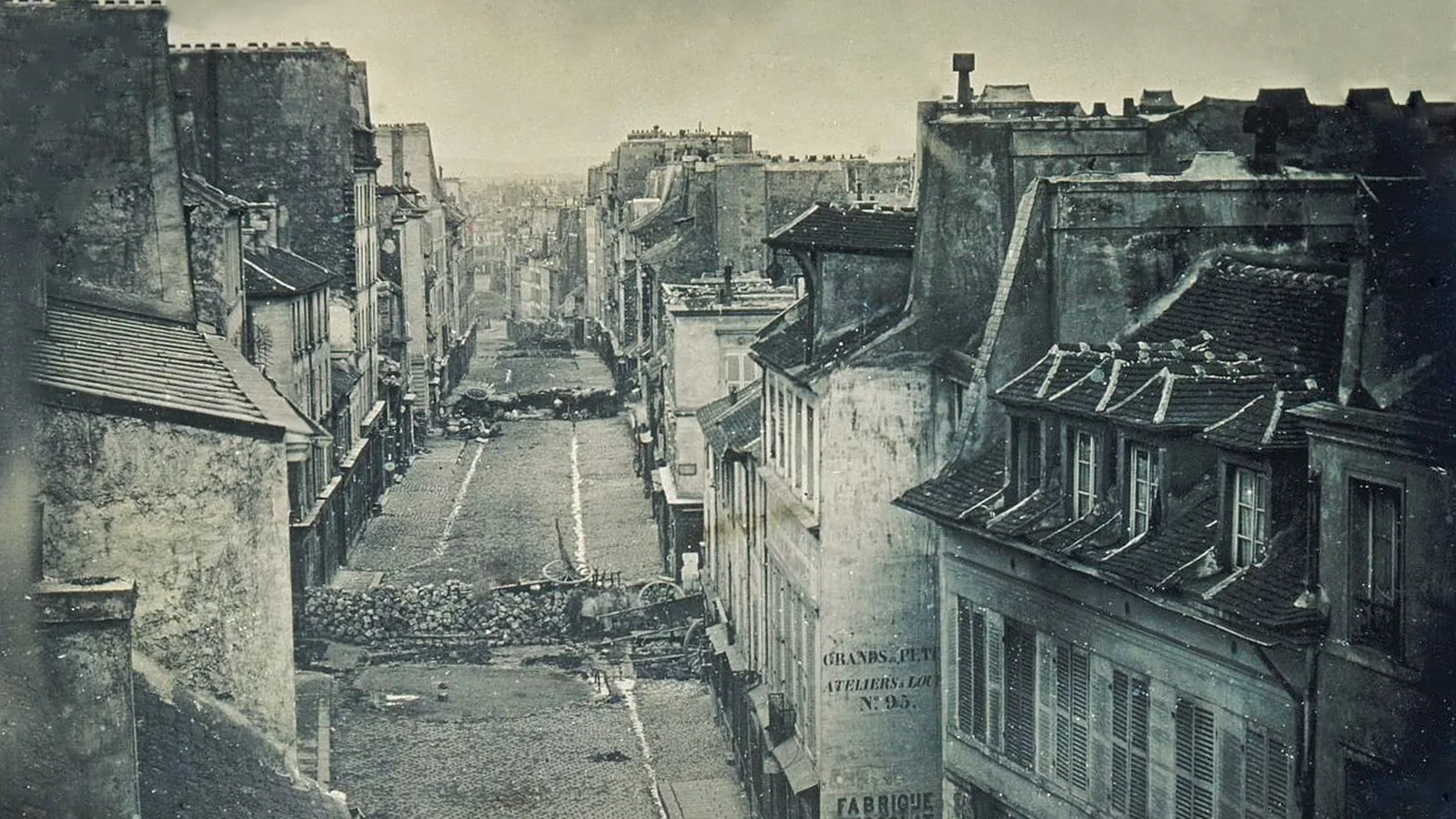

TL;DR — Paris fell on February 24, 1848, and Vienna, Budapest, Berlin and Milan followed by March 22; the winning coalitions then split and the armies held.
The revolutions of 1848 spread because the same grievances met the same news, and failed because the coalitions that won in March split while the armies stayed loyal. Bad harvests, censored presses and diets that few could vote for were common to Paris, Vienna, Berlin and Pest, so when Louis-Philippe fell on February 24 each city moved within days: Vienna on March 13, Buda on March 15, Berlin on March 18, Milan by March 22. Then Paris turned its army on its workers in June, Croats and Czechs turned against the Hungarian and German assemblies, the Habsburg generals retook Prague, Vienna and Lombardy, Prussia took Rastatt on July 23, 1849, and a Russian army accepted Hungary’s surrender at Világos on August 13.
Quick facts
- When
- February 22 to 24, 1848 (Paris) · March 13 (Vienna) · March 15 (Budapest) · March 18 (Berlin) · March 18 to 22 (Milan) · May 18 (Frankfurt assembly opens) · June 22 (June Days begin) · August 31 (Vienna abolishes feudal dues) · December 2 (Ferdinand abdicates) · December 10 (Louis-Napoléon elected) · March 28, 1849 (Frankfurt elects an emperor) · July 23, 1849 (Rastatt) · August 13, 1849 (Világos)
- Where
- Paris, the Boulevard des Capucines and the Tuileries; Vienna; Buda and Pest on the Danube; Berlin, the palace square and the Jägerstrasse barricades; Milan; the Paulskirche in Frankfurt; Rastatt in Baden; Világos in eastern Hungary
- Who
- Louis-Philippe and his minister François Guizot; the poet and minister Alphonse de Lamartine; Friedrich Wilhelm IV of Prussia and General von Prittwitz; Klemens von Metternich; Lajos Kossuth and Count Lajos Batthyány; the generals Windischgrätz, Radetzky and Cavaignac; Louis-Napoléon Bonaparte; the witnesses Percy B. St. John, Karl Gutzkow, Alexis de Tocqueville, Karl Marx and Friedrich Engels
- Outcome
- Every capital that rose in March had been retaken or outvoted by August 1849; feudal dues abolished in Vienna on August 31, 1848 and the French presidency of December 10, 1848 survived the defeat
February in Paris: a banned banquet and 62 dead
The government canceled a reform banquet set for February 20, 1848, and on February 22 the crowds went to the Place de la Madeleine anyway. Percy B. St. John, an eyewitness who published his notes that year, watched from his window as boys built a barricade from a gravel cart, a brewer’s dray and a cab. By Wednesday the National Guard “insisted on the dismissal of Guizot,” the chief minister who had called himself in 1842 “a decided enemy of universal suffrage,” and Louis-Philippe let him go that afternoon.
That evening a singing column reached the troops outside Guizot’s residence on the Boulevard des Capucines, a shot went off, the 14th Regiment fired, and St. John counted “sixty-two men, women, and lads” dead on the pavement. Alphonse de Lamartine, a minister within the day, wrote that no one knew whose shot it was: “Crime or chance, that discharge of fire-arms rekindled a revolution.” On the 24th the National Guard stayed neutral between troops and people, the provisional government proclaimed a republic, and the next day it decreed “the immediate establishment of national workshops.”
March: a month of capitals
Friedrich Engels, writing in 1851, set the sequence in one sentence: February 24 in Paris, March 13 in Vienna, where “the people of Vienna broke the power of Prince Metternich,” and March 18 in Berlin, where after “an obstinate struggle of eighteen hours” the king surrendered to the crowd. The Library of Congress adds Buda on March 15, when students stormed the fortress to free political prisoners, and C. Edmund Maurice’s 1887 history dates Milan’s “Five Days” to March 18 to 22, when Field Marshal Radetzky withdrew.
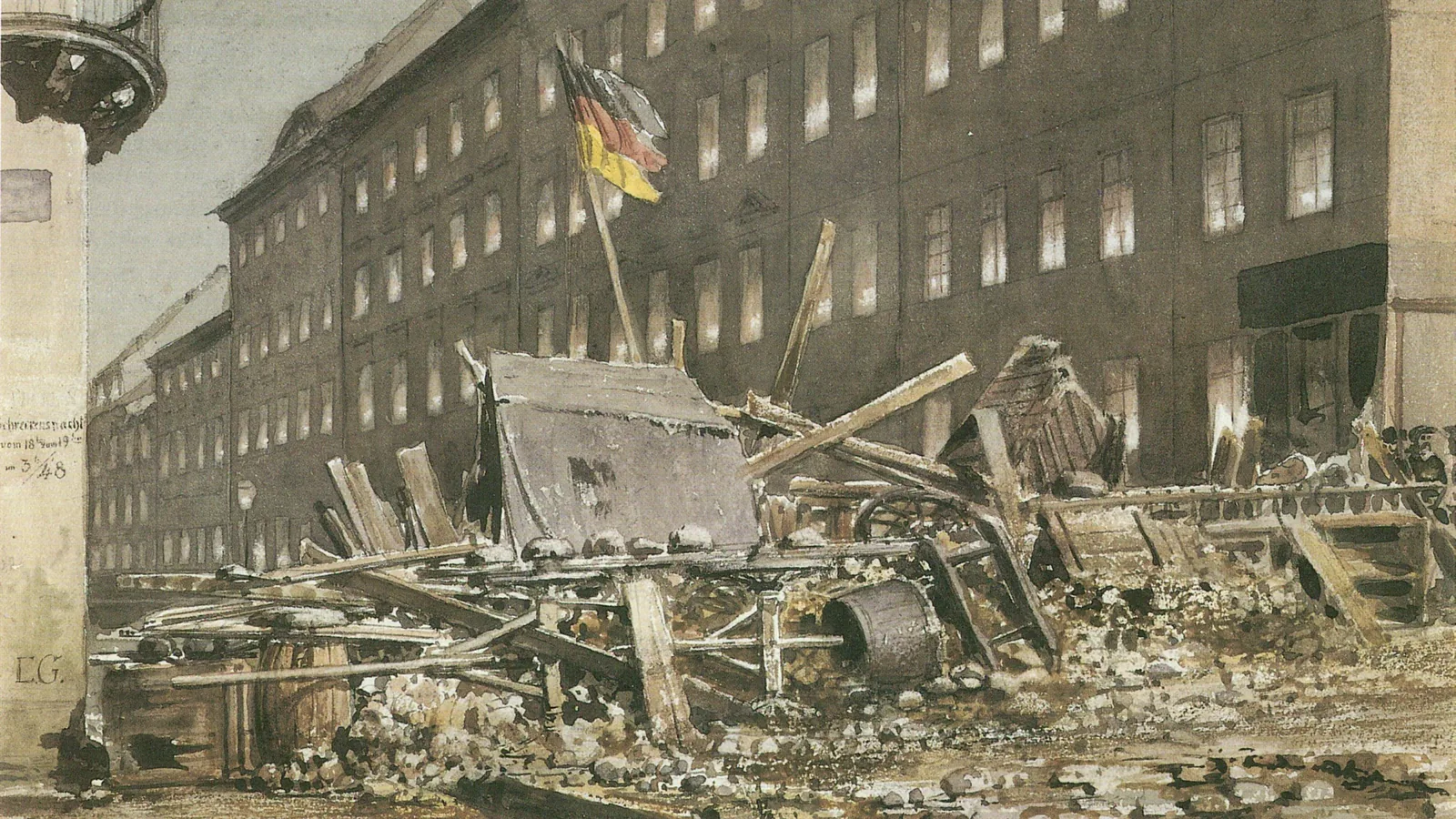
The news carried the fire. The historian Justine Davis Randers-Pehrson wrote in 1998 that a mass meeting in Berlin on March 16 was “reacting to the news of Metternich’s fall” in a city holding about 20,000 soldiers and 7,000 unemployed. On March 18 the crowd cheered the king’s concessions, then saw troops massed in a rear courtyard and shouted “Militär zurück,” troops back. General von Prittwitz led out his cavalry with drawn swords, two shots were fired, and the barricades went up; the Deutsches Historisches Museum counts more than 250 dead. That night Friedrich Wilhelm IV wrote to his “dear Berliners” that the cavalry had advanced at a walk with sheathed weapons. Witnesses called that “grundfalsch,” dead wrong.

What they asked for
The demands matched from city to city. At Mannheim on February 27 a public meeting drew up the “March demands” that the museum says were heard in almost every German state within days: freedom of press and assembly, a people’s militia, equal rights and a national assembly. Hungary’s April Laws, signed by the emperor Ferdinand, made the government answerable to an elected parliament, abolished the corvée and tithes, taxed the nobles and freed the press. Sándor Petőfi’s “National Song” of 1848, in a 1914 translation, asked: “Shall we be slaves, shall we be free?”
Engels wrote that in Vienna bourgeoisie, shopkeepers and workers rose together against “a Government detested by all.” Marx traced the ferment to the potato blight and crop failures of 1845 and 1846 and “the famine of 1847”; Randers-Pehrson recorded Berlin’s “potato revolution” of 1847. The programs agreed because the grievances did.
June: the split in Paris
Marx counted 100,000 workers in the national workshops at 23 sous a day, paid for by 45 centimes added to every franc of direct tax; from then on, he wrote, “the republic meant to the French peasant the 45 centime tax.” On June 21 a decree ordered unmarried workers out of the workshops or into the army. Alexis de Tocqueville, then a deputy, recorded that on June 22 the workers “marched through Paris in troops, singing . . . ‘We won’t be sent away, we won’t be sent away.’”
Tocqueville called what followed “a combat of class against class, a sort of Servile War,” more than 100,000 men fighting for four days “without a war-cry, without leaders, without flags.” Marx wrote that the victors killed over 3,000 prisoners. Both described General Cavaignac’s army shooting the workers who had made the republic in February. Tocqueville judged the days “necessary and disastrous.”
Autumn and 1849: the armies return
The Habsburg lands split along language. The Library of Congress records that Czech leaders refused to send Bohemia into the Germany being drafted at Frankfurt, that Transylvanian Germans and Romanians opposed union with Hungary, and that Josip Jelačić, governor of Croatia, marched an army into Hungary in September. General Alfred Windischgrätz “routed the revolutionaries from Prague and Vienna,” Radetzky held Lombardy-Venetia by August, and on October 30 imperial troops entered Vienna. Ferdinand abdicated on December 2, 1848, and his 18-year-old nephew became Franz Joseph I.
Frankfurt had no army. Its National Assembly, about 600 deputies who first met on May 18, 1848, passed a constitution on March 27, 1849 and next day elected Friedrich Wilhelm IV “Emperor of the Germans” by a narrow majority. He refused in early April a crown that in his words carried the “Ludergeruch der Revolution,” the carrion stench of revolution, and the risings that tried to enforce the constitution ended when Rastatt surrendered to Prussian troops on July 23, 1849. In Hungary a rump diet deposed the Habsburgs in April 1849; Franz Joseph asked Russia for troops, they attacked from the east in June, and on August 13 General Görgei surrendered at Világos. Batthyány and about 100 others were shot. In France the vote of December 10, 1848 had already made Louis-Napoléon Bonaparte president.
What lasted
The Vienna assembly abolished feudal dues on August 31, 1848, and Engels wrote in 1851 that the restored government would “never have the power of re-establishing the feudal servitude of the peasantry.” France kept its republic and its elected president. The memory went abroad with the Forty-Eighters who fled to the United States, while in Hungary the government outlawed the national colors and Kossuth-style beards.
The rest went back to soldiers whose loyalty had never broken. The news that emptied Metternich’s chancellery in March could not hold together a Paris that shot its workers in June, a Hungary its Croats marched against in September, or a Frankfurt that owned no regiments.
Key facts
- The banquet banned for February 20, 1848 brought crowds to the Madeleine on February 22; the 14th Regiment’s volley on the Boulevard des Capucines on February 23 killed 62 by St. John’s count.
- The provisional government proclaimed the republic on February 24 and decreed national workshops the next day (Hanover Historical Texts).
- Engels dated the fall of Metternich to March 13 and the Berlin rising to March 18, 1848; the Deutsches Historisches Museum counts more than 250 dead in Berlin.
- Milan’s Five Days ran March 18 to 22, 1848 (Maurice); the Frankfurt assembly of about 600 deputies opened May 18.
- The June Days began June 22; Tocqueville put the insurgents above 100,000, and Marx wrote that over 3,000 prisoners were killed.
- Vienna abolished feudal dues on August 31, 1848; Ferdinand abdicated December 2; Louis-Napoléon was elected December 10.
- Frankfurt elected Friedrich Wilhelm IV emperor on March 28, 1849 and he refused in early April; Rastatt fell July 23 and Hungary surrendered at Világos on August 13, 1849.
FAQ
Which city rose first in 1848?
Paris, on February 22 to 24, 1848, though Maurice's table of dates records a Sicilian rising on January 12 and a Neapolitan constitution granted on January 29. Vienna followed on March 13, Buda on March 15, Berlin on March 18 and Milan on March 18 to 22.
Why did the Frankfurt National Assembly fail?
It had no army and no agreed authority. Engels wrote that no one knew whether its decrees had force of law, and when it elected the Prussian king emperor on March 28, 1849 he refused and Austria, Prussia, Bavaria, Hanover and Saxony rejected its constitution; Prussian troops then crushed the risings that tried to enforce it.
Who defeated the Hungarian revolution?
Russian troops sent at Franz Joseph's request attacked from the east in June 1849 after the Austrian army had retaken Pest; General Görgei surrendered to the Russian commander at Világos on August 13, 1849, according to Maurice and the Library of Congress country study.
Sources
- Hanover Historical Texts Project — "Documents of the Revolution of 1848 in France," from J. H. Robinson, ed., Readings in European History (Boston: Ginn, 1906), vol. 2, pp. 559–562.
- Internet Modern History Sourcebook (Fordham University) — Percy B. St. John, "The French Revolution in 1848," from The French Revolution of 1848: The Three Days of February (New York, 1848), pp. 72–84, 104–110.
- Internet Modern History Sourcebook — Alphonse de Lamartine, History of the Revolution of 1848 in France (Boston: Phillips, Sampson & Co., 1849), pp. 28–51.
- Internet Modern History Sourcebook — François Guizot, "Condition of the July Monarchy, 1830–1848," speeches of 1831 and February 15, 1842.
- Internet Modern History Sourcebook — Sándor Petőfi, "The National Song of Hungary, 1848," in Eva March Tappan, ed., The World's Story (Boston: Houghton Mifflin, 1914), vol. 6, pp. 408–410.
- Justine Davis Randers-Pehrson, "The March Days of 1848: Friedrich Wilhelm IV of Prussia and his 'Dear Berliners'" (1998), read in an Internet Archive copy dated February 8, 2001.
- Friedrich Engels, Revolution and Counter-Revolution in Germany (New-York Daily Tribune, 1851–52), chapter 5, "The Vienna Insurrection," Marxists Internet Archive.
- Friedrich Engels, Revolution and Counter-Revolution in Germany, chapter 7, "The Frankfort National Assembly," Marxists Internet Archive.
- Deutsches Historisches Museum, LeMO — Arnulf Scriba, "Die Revolution von 1848/49" (September 15, 2014).
- Alexis de Tocqueville, The Recollections of Alexis de Tocqueville, translated by Alexander Teixeira de Mattos, chapters "The Days of June," Internet Archive full text.
- C. Edmund Maurice, The Revolutionary Movement of 1848–9 in Italy, Austria-Hungary, and Germany (London, 1887), "Table of Dates" and pp. 493–494, Internet Archive full text.
- Karl Marx, The Class Struggles in France, 1848 to 1850 (1850), chapter 1, Marxists Internet Archive.
- Karl Marx, The Class Struggles in France, 1848 to 1850, chapter 2, Marxists Internet Archive.
- U.S. Library of Congress, Country Studies — Austria, "The Revolution of 1848 and Neoabsolutism."
- U.S. Library of Congress, Country Studies — Hungary, "The Revolution of March 1848."
Cite this article
- APA
- Our Earth's History. (2026, September 21). Why did the revolutions of 1848 spread in weeks and fail in a year? Our Earth's History. https://ourearthshistory.com/europe/modern/revolutions-of-1848-why-they-spread-and-failed/
- Chicago
- Our Earth's History. “Why did the revolutions of 1848 spread in weeks and fail in a year?” Our Earth's History, September 21, 2026. https://ourearthshistory.com/europe/modern/revolutions-of-1848-why-they-spread-and-failed/.
- MLA
- “Why did the revolutions of 1848 spread in weeks and fail in a year?” Our Earth's History, 21 Sep. 2026, https://ourearthshistory.com/europe/modern/revolutions-of-1848-why-they-spread-and-failed/.
Text licensed CC BY-NC-ND 4.0. Found an error? Tell us.