August 10, 1628: the Vasa sank and the inquest blamed no one

TL;DR — The Vasa sank minutes into its 1628 maiden voyage; the inquest that followed blamed no one, and salvage waited until 1961.
“It was the 10th of August 1628, when Vasa, the most powerful warship in the Baltic, foundered in Stockholm harbour before the eyes of a large audience, scant minutes after setting sail for the first time,” the Vasa Museum writes. The ship cast off from the royal palace between four and five o’clock, set four of her ten sails and fired a salute. A gust of wind then pushed her over, and she went down in 32 meters of water. Some of those aboard swam 120 meters to the shore of Beckholmen.
Quick facts
- When
- August 10, 1628 (sinking); around July 8 or 9, 1628 (stability test); September 5, 1628 (inquest convened); August 25, 1956 (wreck located); April 24, 1961 (raised); June 15, 1990 (museum opened)
- Where
- Stockholm harbor, Sweden, off Tegelviken; the Tre Kronor palace (inquest); the Vasa Museum, Stockholm (since 1990)
- Who
- King Gustav II Adolf; Captain Söfring Hansson; boatswain Jöran Matsson; Vice Admiral Klas Fleming; Karl Karlsson Gyllenhielm; naval engineer Anders Franzén; diver Per Edvin Fälting
- Outcome
- Vasa capsized and sank minutes into her maiden voyage; the 1628 inquest named no one responsible and everyone questioned was later promoted; Franzén located the wreck in 1956, it was raised in 1961, and conservation research into its slow decay continues
August 10, 1628: a gust off Tegelviken
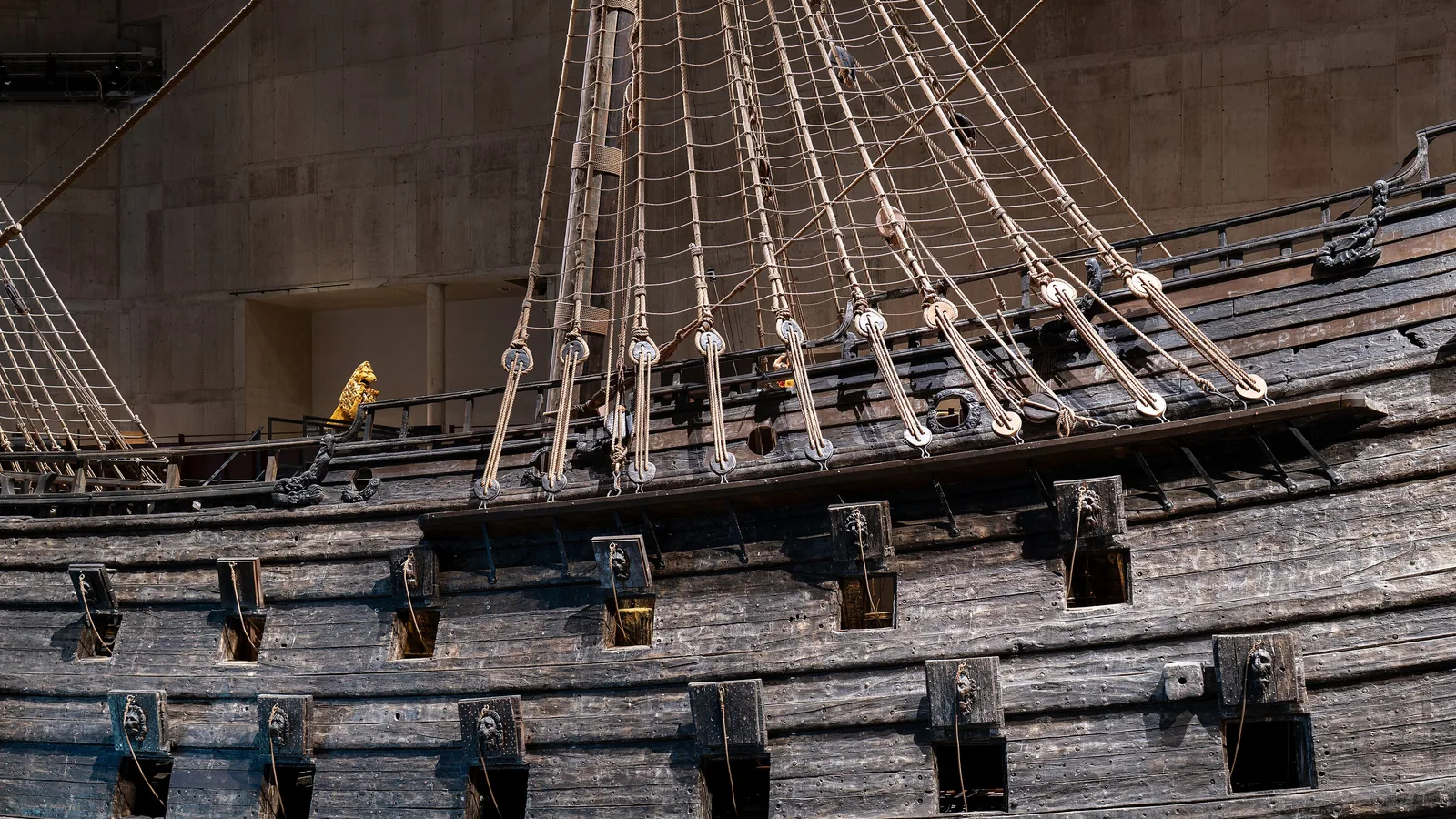
As Vasa passed the gap in the bluffs at Tegelviken, the museum records, “a much stronger gust pushed the ship so far over on its port side that water poured in through the open gunports on the lower gundeck.” The museum calls Captain Söfring Hansson’s decision to leave those gunports open “a fateful decision,” adding that closed ports might have kept the ship afloat “long enough to be rebuilt into a more stable configuration.” The deeper cause was in the design: “the upperworks of the hull are too tall and heavily built for the relatively small amount of hull below the waterline,” so that “even a light breeze could heel the ship alarmingly.” Master shipwright Henrik Hybertsson, who designed her, was “an experienced and well-respected master shipwright,” but Vasa exceeded anything he had built, and no mathematics for calculating a ship’s stability existed for another century. About 30 people died. The museum’s page on the recovered remains states that “only one of them is named in historical sources: Captain Hans Jonsson.”
Jöran Matsson's warning
The Council of State began looking for the responsible parties the day after the sinking, and Söfring Hansson was detained and questioned “before his clothes were even dry,” the museum records. On August 12 the Council sent its first report to King Gustav II Adolf, then with the army in Prussia; “one can still read his fury in the reply,” which demanded an inquiry and punishment for the guilty. A commission of 17 councillors and naval officers, chaired by Admiral of the Realm Karl Karlsson Gyllenhielm, the king’s older half brother, opened its inquest on September 5 at the Tre Kronor palace. The most damaging testimony came from boatswain Jöran Matsson, who described a stability test held before the ship sailed, probably on July 8 or 9: 30 men ran across the upper deck to rock the hull while Vice Admiral Klas Fleming watched from the dock. The ship tilted so sharply that the test was stopped, and Matsson said he overheard Fleming say, “If only His Majesty were at home!” Fleming never reported the test to the king.
The inquest that ended in promotions
Hein Jacobsson, who had supervised construction, told the commission that Vasa “was built according to Master Henrik’s design, which the king had approved.” Hybertsson had died the year before and could not answer for himself. The commission, the museum notes, “faced an unpleasant dilemma: blame must be assigned, but without blackening the king’s name.” Its account states plainly that “no one was officially blamed or punished, and all of those questioned were eventually promoted.” An appendix of expert opinion went further than the commissioners had: the shipwrights and captains who wrote it “correctly identified the forces at work and the cause of the instability,” concluding that the ship did not have enough “belly” to carry her upperworks.

"Vasa had been found at last"
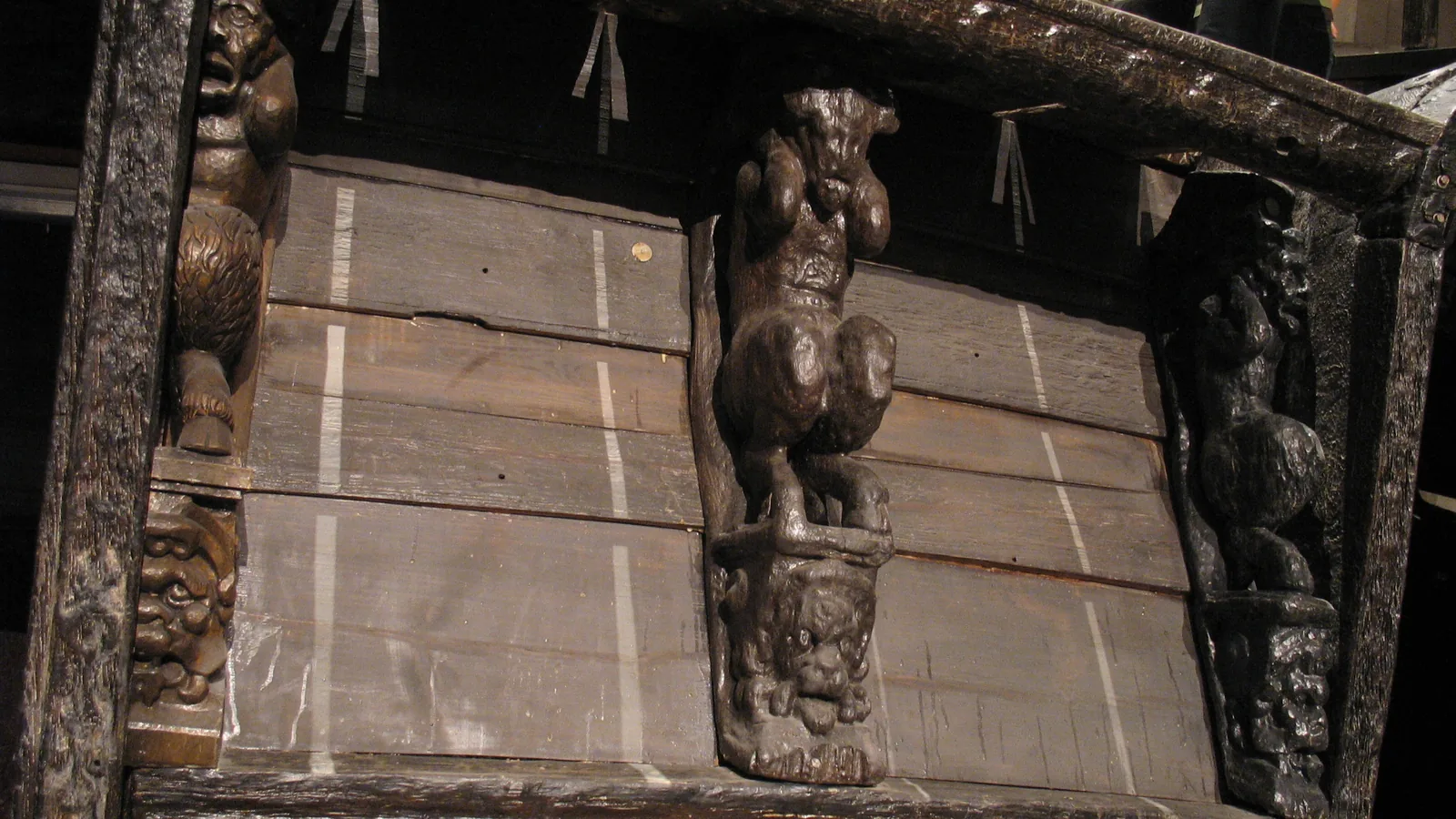
Anders Franzén, a naval fuel engineer and amateur archaeologist, began a systematic search in 1954, using a homemade coring device to bring up wood samples from the harbor floor. On August 25, 1956, a piece of black oak stuck in the corer. Diver Per Edvin Fälting went down in early September and felt his way along the hull: “It was an old warship, with two gundecks,” the museum quotes him as saying. “Vasa had been found at last.” Franzén assembled a coalition of the navy, the Heritage Board, the museum world and a salvage firm to raise her; “some have called it Sweden’s Apollo Program.” Divers cut six tunnels under the hull between 1957 and 1959, threaded steel cables through them, and connected the cables to lifting pontoons flooded and pumped out in stages. On August 20, 1959, the museum records, “Vasa was free again after 331 years.” She broke the surface for good on April 24, 1961, at 09.03, when “the tops of a few eroded frames peeked out of the water,” followed by the carved heads of four warriors and then the ship’s whole outline. A team of archaeologists led by Per Lundström spent five months excavating and recovered more than 30,000 objects; further dives between 1963 and 1967 brought the total past 40,000. The museum opened on June 15, 1990.
5,000 fastenings, 8,500 bolts, and a 2028 target
Salvage divers recovered skeletal remains from at least 17 people during the 1960s, and a 1966 dive found more. Osteologist Nils-Gustaf Gejvall classified the individuals by letter in 1963, and Ebba During’s reanalysis in the 1980s gave them names such as Adam and Beata. Uppsala University’s Marie Allen began DNA work in 2004, and 2023 sampling with United States and Swedish forensic scientists found that a skeleton long assumed to be a man was a woman. The hull needed its own long treatment: from 1962 to 1979 it was sprayed with polyethylene glycol, a water-soluble wax, and the museum declared conservation “complete” in 1988. By the 1990s a crust of sulfur and iron compounds had appeared on the wood; in 2001 an international team traced it to sulfate, and in 2003 the museum launched what its own preservation timeline calls the “Preserve Vasa” project (EMBO Reports, describing the same effort in 2006, calls it “Preserve the Vasa”). Chemist Magnus Sandström and his co-authors, publishing through the University of Calgary, found that several tons of reduced sulfur had accumulated in the timbers during 333 years on the seabed. Three bolt counts appear in the record, each describing something different: the museum’s timeline states that “almost all” of roughly 5,000 iron fastenings driven into the hull in 1628 corroded; EMBO Reports states that conservators in the 1960s inserted “some 8,500 iron bolts” to replace those originals; and the museum’s timeline separately records more than 5,000 corroded bolts replaced with a rust-resistant alloy between 2011 and 2018, cutting the ship’s weight by about eight tons. The current project, a new support structure for the hull, is due for completion in 2028, in time for the ship’s 400th anniversary.
Key facts
- Vasa sank on August 10, 1628, minutes after setting sail in Stockholm harbor, coming to rest at a depth of 32 meters (Vasa Museum, “The Disaster”).
- About 30 people died; the only victim named in the historical record is Captain Hans Jonsson (Vasa Museum, “Skeletons from Vasa”).
- Boatswain Jöran Matsson testified that a pre-departure stability test, held around July 8 or 9, 1628, nearly capsized the ship at the dock while Vice Admiral Klas Fleming watched (Vasa Museum, “The Inquest”).
- The inquest opened on September 5, 1628, before a 17-member commission chaired by Karl Karlsson Gyllenhielm; “no one was officially blamed or punished” (Vasa Museum, “The Inquest”).
- Anders Franzén located the wreck on August 25, 1956, using a homemade coring device (Vasa Museum, “The Search for Vasa”).
- Vasa broke the surface at 09.03 on April 24, 1961, after a salvage that used six cable tunnels and two lifting pontoons (Vasa Museum, “The Salvage”).
- The Vasa Museum’s own timeline states that “almost all” of roughly 5,000 original iron fastenings corroded, EMBO Reports states that conservators added “some 8,500” replacement bolts in the 1960s, and the museum’s timeline separately records more than 5,000 replaced again between 2011 and 2018.
- The museum’s support-structure project for the hull is due for completion in 2028, ahead of the ship’s 400th anniversary (Vasa Museum, “How We Preserve Vasa”).
FAQ
Why did the Vasa sink on its maiden voyage?
The Vasa Museum attributes the sinking to a hull whose upperworks were too tall and heavy for the amount of hull below the waterline, a flaw no stability mathematics of the period could have caught, combined with Captain Söfring Hansson's decision to leave the lower gunports open as the ship set sail.
Was anyone punished for the sinking?
No. The Council of State's inquest, which opened on September 5, 1628, heard testimony that a pre-departure stability test had nearly capsized the ship, but the commission, facing what the Vasa Museum calls "an unpleasant dilemma" over the king's own approval of the design, assigned no formal blame, and everyone questioned was later promoted.
When was the Vasa found and raised?
Anders Franzén located the wreck on August 25, 1956, using a homemade coring device, and divers confirmed it days later. The ship was raised to the surface on April 24, 1961, after a salvage operation using cable tunnels and lifting pontoons, and the Vasa Museum opened to display it on June 15, 1990.
Sources
- Vasa Museum, "The Disaster" and "The Inquest," Statens maritima och transporthistoriska museer (SMTM).
- Vasa Museum, "The Search for Vasa," "The Salvage," "The Excavation," and "The Museum," SMTM.
- Vasa Museum, "How We Preserve Vasa," "Timeline for the Preservation of Vasa," and "Skeletons from Vasa," SMTM.
- Andrea Rinaldi, "Saving a Fragile Legacy," EMBO Reports 7(11), 2006, pp. 1075-1079.
- "Sulfur and Iron Accumulation in Three Marine-Archaeological Shipwrecks in the Baltic Sea," Scientific Reports 4, 4222, 2014.
- M. Sandström, F. Jalilehvand, Y. Fors, E. Damian and U. Gelius, "Analyses of Sulfur and Iron in Marine-Archaeological Wood," University of Calgary repository.
Cite this article
- APA
- LETTER. (2026, September 28). August 10, 1628: the Vasa sank and the inquest blamed no one. Our Earth's History. https://ourearthshistory.com/europe/early-modern/vasa-august-10-1628-maiden-voyage-inquest-franzen-1956-raised-1961/
- Chicago
- LETTER. “August 10, 1628: the Vasa sank and the inquest blamed no one.” Our Earth's History, September 28, 2026. https://ourearthshistory.com/europe/early-modern/vasa-august-10-1628-maiden-voyage-inquest-franzen-1956-raised-1961/.
- MLA
- LETTER. “August 10, 1628: the Vasa sank and the inquest blamed no one.” Our Earth's History, 28 Sep. 2026, https://ourearthshistory.com/europe/early-modern/vasa-august-10-1628-maiden-voyage-inquest-franzen-1956-raised-1961/.
Text licensed CC BY-NC-ND 4.0. Found an error? Tell us.