Lisbon, November 1, 1755: a death toll counted from 6,000 to 100,000
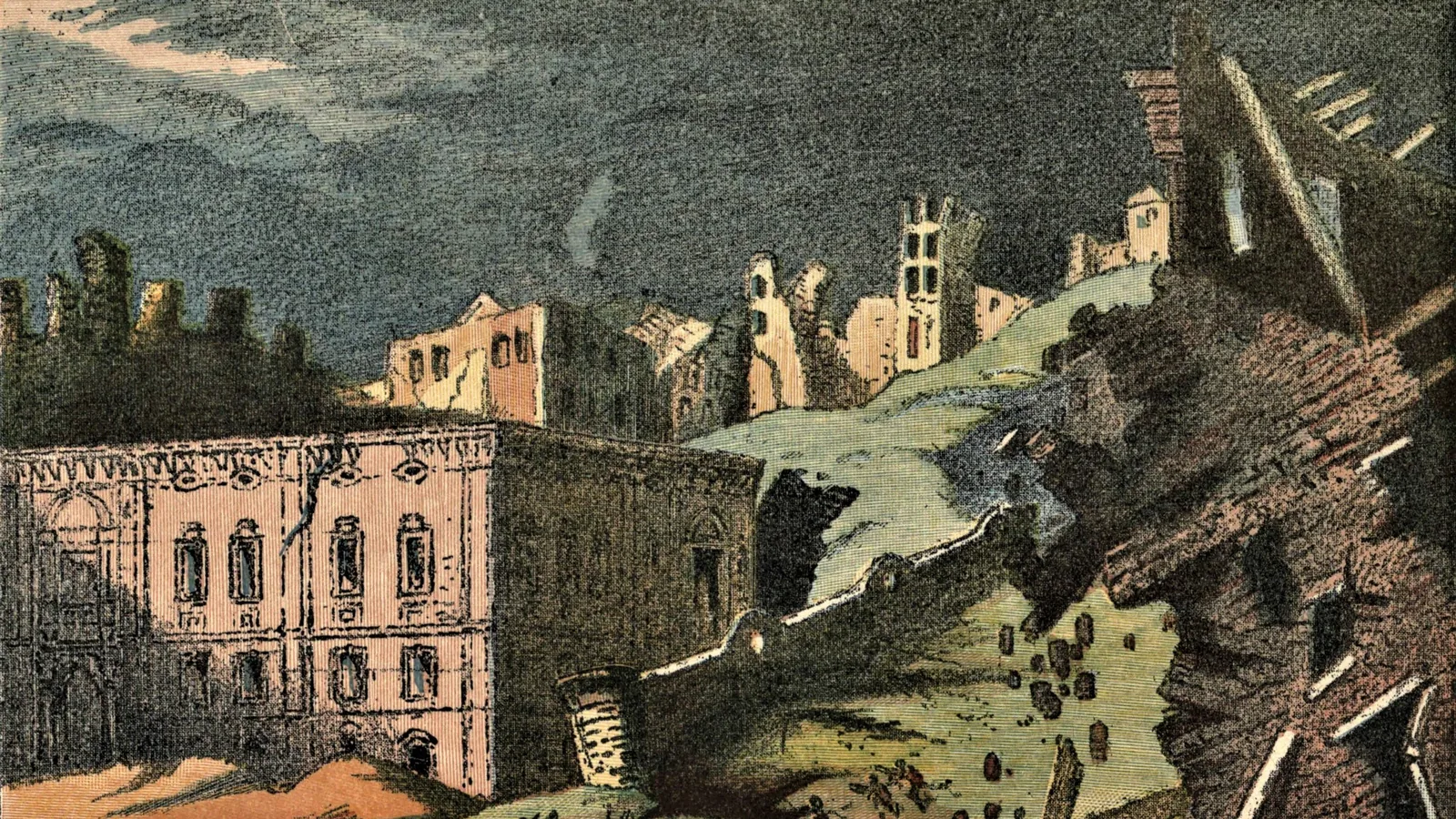

TL;DR — NOAA’s catalogue lists the Lisbon earthquake of November 1, 1755 at Mw 8.5, intensity 11 and 50,000 dead, then says 60,000 to 100,000; Pombal told his governors six to eight thousand.
The National Oceanic and Atmospheric Administration (NOAA) lists the earthquake as “PORTUGAL: LISBON,” November 1, 1755, 09:30, moment magnitude 8.5, intensity 11, with 50,000 in its deaths field. The comment attached to the same record reads that “the earthquake and tsunami killed between 60,000 and 100,000 people,” and older references quoted beneath it give 8,000 and 30,000. NOAA’s catalogue puts the shock at 09:30, its comment at “about 9:50 a.m.,” and a merchant who was in the city wrote to England that month that it came “about ten of the Clock in the Morning.” It was All Saints’ Day and the churches were full. The institutions that publish a death toll still disagree by a factor of more than ten.
Quick facts
- When
- November 1, 1755, All Saints' Day, in the morning (NOAA lists 09:30; its comment gives about 9:50 a.m.; a merchant's letter says about ten) · December 4, 1755 (Manuel da Maia's first report) · 1756 (thirteen-question survey; Voltaire's poem) · May 12, 1758 (law that opened the rebuilding)
- Where
- Lisbon and the Tagus estuary; the Algarve coast; Cádiz and Gibraltar; Madeira and the Azores; the Caribbean shores of Samaná Bay
- Who
- King José I of Portugal; his minister Sebastião José de Carvalho e Melo, later Marquis of Pombal; the military engineer Manuel da Maia; the architect Eugénio dos Santos; John Michell of Queens' College, Cambridge; Voltaire; Immanuel Kant
- Outcome
- Lisbon's downtown was flooded, burned and later rebuilt on a grid between Rossio and Praça do Comércio under the law of May 12, 1758; the death toll was never counted, and institutions still give figures from 6,000 to 100,000
"There is no Possibility of ascertaining Numbers"
The merchant’s letter, printed in London by J. Payne before the year was out, put the population at “about three hundred and fifty thousand” and the dead at “about thirty Thousand,” with others carrying the count “much higher.” He then explained why no count existed: “There is no Possibility of ascertaining Numbers, because there was such a Hurry in [disposing] of such dead Bodies as could be got at, that no Accounts of them could be well taken.” He also recorded the panic at the river: a crowd came running from the waterside “all crying out the Sea was pouring in and would certainly overwhelm the City,” and the Tagus “rose at once above twenty Feet perpendicular, and subsided again to its natural Pitch in less than a Minute’s time.”
Ana Cristina Araújo, writing in the journal Storicamente in 2021, describes barges loaded with corpses on the Tagus estuary and “thousands of bodies, tied with weights,” launched into the sea “some leagues beyond the bar.” A city that put its dead over the side had no register to count them from.
Pombal's three priorities and a letter to the governors
King José I put the crisis in the hands of his minister Sebastião José de Carvalho e Melo, the future Marquis of Pombal. Araújo writes that the response followed a brief announcement of three priorities: “bury the dead, care for the living, and close the ports.” The minister also chose a number. Lisbon, by Araújo’s account, had about 250,000 inhabitants and would have lost 10 percent of them. A year after the disaster the word on the street, as Father Antony of the Sacrament said, was that at least 18,000 had died; the Apostolic Nuncio informed Rome of a toll on the order of 40,000; and Pombal, “to stop alarmism and silence the voices of doom,” sent the colonial governors a much lower estimate of “between six and eight thousand,” a figure Araújo takes from França (1987).
Two later recalculations sit closer to the minister than to the nuncio. Benigno E. Aguirre, in the Journal of Interdisciplinary History in 2012, worked from the death rate among Lisbon’s Catholic clergy and concluded in his abstract that falling debris killed between 5,000 and 8,700 people, with “roughly the same number” dying in the tsunamis, the fires and the civil unrest. Alvaro S. Pereira, in the Journal of Economic History in 2009, put the direct cost at 32 to 48 percent of gross domestic product in his abstract.
Fifty feet at Belém, 13 meters at Horta
The water is better measured than the dead. NOAA’s tsunami database gives a maximum water height of 18.3 meters and, in Lisbon, a penetration of 250 meters from the river into the downtown. In the Algarve, by a reference quoted in the same record, “the waves crested at more than 30 m” in places. At Horta in the Azores the sea rose and dropped three times and the maximum wave was 13 meters. NOAA’s runup records give 2.1 meters at Gibraltar and 3.7 meters at Samaná Bay in what is now the Dominican Republic.
John Michell of Queens’ College, Cambridge, read a paper to the Royal Society on February 28, 1760, that collected the reports. Off Lisbon “the bar was seen dry from shore to shore; then suddenly the sea, like a mountain, came rolling in; and about Belém castle, the water rose fifty feet almost in an instant.” At Funchal in Madeira the sea “rose full fifteen feet perpendicular above high-water mark.” The source of that water is still argued. NOAA’s comment gives magnitude 8.5 from the isoseismal maps of Martins and Mendes Victor (1990), estimates as high as 8.9 cited by Arroyo and Udías (1972), and Mw 8.5 to 9.0 on the Azores-Gibraltar plate boundary from Johnston (1996) and Muir-Wood and Mignan (2009). M.-A. Gutscher, in the European Review in 2006, gave 8.5 to 9 and wrote that the fault had not yet been identified.
1756: thirteen questions to every parish
In 1756 the Ministry of the Kingdom printed a survey of 13 questions and sent it to the parish priests of every diocese in Portugal. Most asked for direct observation of nature; one asked, “Have there been any other earthquakes in living memory and what damage did they cause?”
The same year Voltaire published his Poème sur le désastre de Lisbonne. In Joseph McCabe’s translation of 1912 it opens “Unhappy mortals! Dark and mourning earth!” and asks, “Did fallen Lisbon deeper drink of vice / Than London, Paris, or sunlit Madrid?” Candide followed in 1759. Immanuel Kant took the other road, as Li-an Yu describes in Synthese in 2022: he explained earthquakes by inflammable materials exploding in underground cavities, an account Yu calls wrong, and advised his readers to live away from such cavities.
Rubble, a grid and the law of May 12, 1758
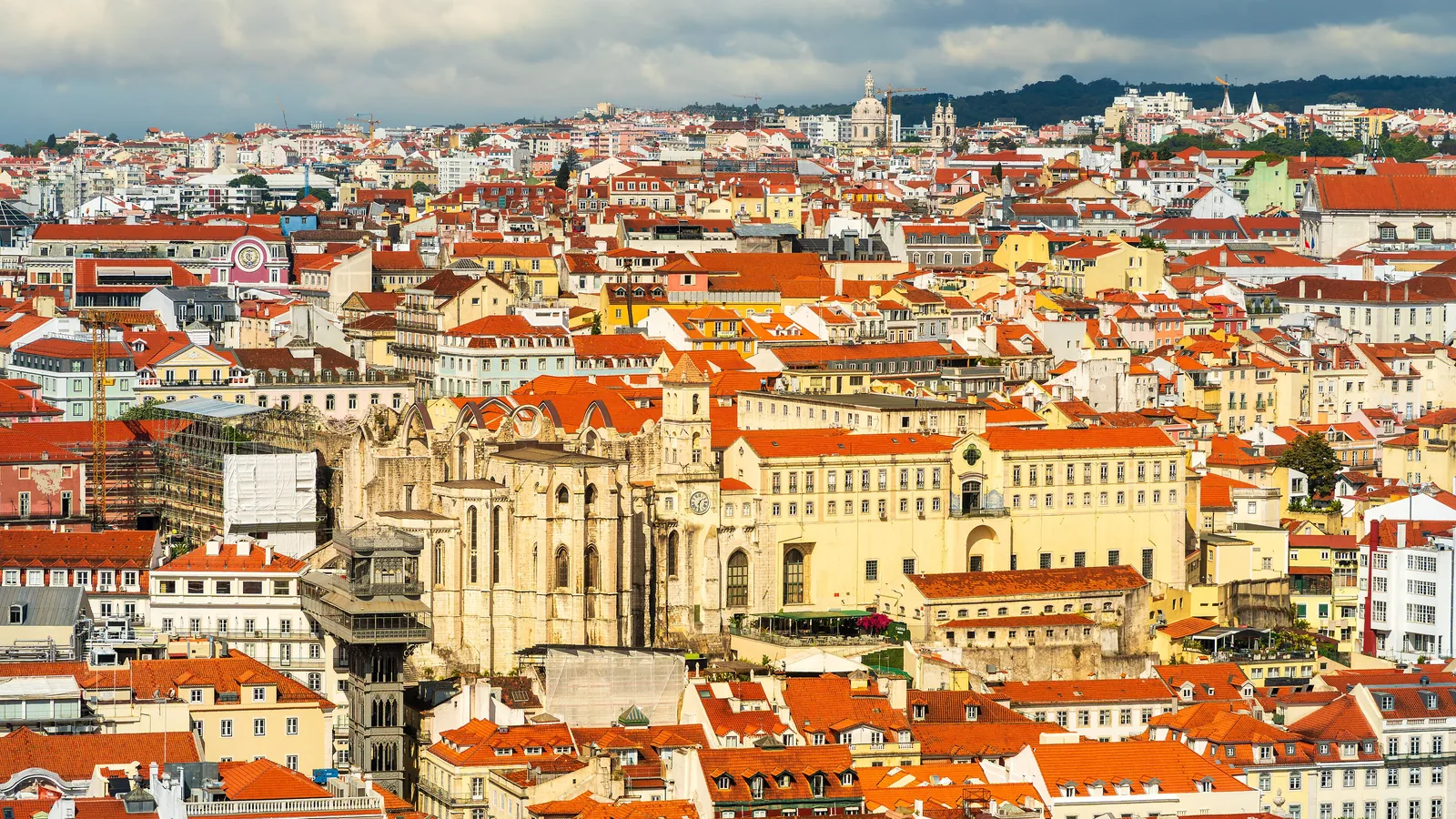
On December 4, 1755, the military engineer Manuel da Maia delivered a report he called the Dissertation to the Duke of Lafões. It set out five choices, from rebuilding as before to a new Lisbon at Belém. The plan adopted was drawn by Eugénio dos Santos. In Araújo’s words it “smoothed out the topography into a flat plane over the rubble and inscribed on it an orthogonal layout of streets,” a grid running from the Rossio in the north down to the Praça do Comércio on the Tagus.
Money came from a 4 percent fee on the customs duties of imported goods, levied from 1756, and from Brazil, which was made to promise 1,200 contos of réis payable over thirty years. The rebuilding formally began with the law of May 12, 1758, which gave the owners new rights and set a five-year term for building on each plot, a term that was not kept.

Key facts
- NOAA’s Significant Earthquake Database lists the event as “PORTUGAL: LISBON,” November 1, 1755, 09:30, moment magnitude 8.5, intensity 11, deaths 50,000; the comment on the same record gives “between 60,000 and 100,000.”
- The time of the shock differs by source: 09:30 in NOAA’s catalogue, “about 9:50 a.m.” in NOAA’s comment, “about ten of the Clock in the Morning” in a merchant’s letter printed in London in 1755.
- NOAA’s tsunami database gives a maximum water height of 18.3 meters, 250 meters of penetration into downtown Lisbon, waves of “more than 30 m” in the Algarve and 13 meters at Horta; runups of 2.1 meters at Gibraltar and 3.7 meters at Samaná Bay.
- John Michell’s paper, read to the Royal Society on February 28, 1760, records that near Belém “the water rose fifty feet almost in an instant” and that at Funchal the sea rose “fifteen feet perpendicular above high-water mark.”
- Pombal’s government announced three priorities, “bury the dead, care for the living, and close the ports,” and sank thousands of weighted bodies “some leagues beyond the bar” (Araújo, 2021).
- Pombal told the colonial governors that “between six and eight thousand” had died, against 18,000 on the street and 40,000 reported to Rome by the nuncio (Araújo, citing França, 1987).
- Aguirre’s 2012 recalculation from clergy death rates gives 5,000 to 8,700 killed by falling debris and “roughly the same number” by the tsunami, the fires and the unrest (abstract).
- A 1756 survey of 13 questions went to every parish priest in Portugal; the law of May 12, 1758 opened the rebuilding of the Baixa on Eugénio dos Santos’s grid between Rossio and Praça do Comércio.
FAQ
How many people died in the Lisbon earthquake of 1755?
No count was made; bodies were sunk at sea without a register. NOAA's earthquake record gives 50,000 in its deaths field and "between 60,000 and 100,000" in its comment. Araújo reports 18,000 from a Lisbon priest, 40,000 from the papal nuncio and "between six and eight thousand" from Pombal's own letter to the colonial governors. Aguirre's 2012 recalculation gives 5,000 to 8,700 from falling debris plus roughly the same number from the tsunami, the fires and the unrest.
How high was the 1755 tsunami?
NOAA's tsunami database records a maximum water height of 18.3 meters, water reaching 250 meters into downtown Lisbon, and waves of "more than 30 m" on the Algarve coast. John Michell's 1760 paper reports the water near Belém castle rising "fifty feet almost in an instant" and "fifteen feet perpendicular" at Funchal in Madeira.
What was the magnitude of the 1755 Lisbon earthquake?
NOAA's catalogue value is moment magnitude 8.5. Its comment cites estimates as high as 8.9 (Arroyo and Udías, 1972) and a range of Mw 8.5 to 9.0 on the Azores-Gibraltar plate boundary (Johnston, 1996; Muir-Wood and Mignan, 2009). Gutscher wrote in 2006 that the fault responsible had not yet been identified.
Sources
- NOAA National Centers for Environmental Information, Significant Earthquake Database, event 1339, "PORTUGAL: LISBON," November 1, 1755 (hazard-service API record with comments).
- NOAA National Centers for Environmental Information, Significant Tsunami Database, event 456 (1755 Lisbon), record with comments.
- NOAA National Centers for Environmental Information, tsunami runup records for event 456.
- John Michell, "Conjectures concerning the Cause, and Observations upon the Phaenomena of Earthquakes; particularly of that great Earthquake of the first of November 1755," Philosophical Transactions of the Royal Society, vol. 51, read February 28, 1760 (Internet Archive full text).
- An Account of the Late Dreadful Earthquake and Fire, which destroyed the City of Lisbon . . . In a Letter from a Merchant Resident there, to his Friend in England, London: J. Payne, 1755 (Internet Archive full text).
- Ana Cristina Araújo, "The 1755 Lisbon Earthquake: The Catastrophe and the Reconstruction," Storicamente 17 (2021), no. 5.
- Voltaire, "Poem on the Lisbon Disaster; or an Examination of the Axiom, 'All is Well'" (1756), translated by Joseph McCabe in Toleration and Other Essays, New York and London: G. P. Putnam's Sons, 1912 (Project Gutenberg ebook 64858).
- Li-an Yu, "Distributing epistemic and practical risks: a comparative study of communicating earthquake damages," Synthese 200, 361 (2022), PubMed Central PMC9395881.
- Benigno E. Aguirre, "Better Disaster Statistics: The Lisbon Earthquake," Journal of Interdisciplinary History 43, no. 1 (2012): 27–42 (abstract, OpenAlex record).
- M.-A. Gutscher, "The great Lisbon earthquake and tsunami of 1755: lessons from the recent Sumatra earthquakes and possible link to Plato's Atlantis," European Review 14, no. 2 (2006): 181–191 (abstract).
- Alvaro S. Pereira, "The Opportunity of a Disaster: The Economic Impact of the 1755 Lisbon Earthquake," Journal of Economic History 69, no. 2 (2009): 466–499 (abstract).
- "The 1755 earthquake in the Algarve (South of Portugal): what would happen nowadays?", Advances in Geosciences 14 (2008): 59–70, Copernicus Publications (abstract).
Cite this article
- APA
- Our Earth's History. (2026, September 22). Lisbon, November 1, 1755: a death toll counted from 6,000 to 100,000. Our Earth's History. https://ourearthshistory.com/europe/early-modern/lisbon-earthquake-november-1-1755-numbers/
- Chicago
- Our Earth's History. “Lisbon, November 1, 1755: a death toll counted from 6,000 to 100,000.” Our Earth's History, September 22, 2026. https://ourearthshistory.com/europe/early-modern/lisbon-earthquake-november-1-1755-numbers/.
- MLA
- “Lisbon, November 1, 1755: a death toll counted from 6,000 to 100,000.” Our Earth's History, 22 Sep. 2026, https://ourearthshistory.com/europe/early-modern/lisbon-earthquake-november-1-1755-numbers/.
Text licensed CC BY-NC-ND 4.0. Found an error? Tell us.