Titanic, 1912: what the Senate and Lord Mersey's inquiry each concluded
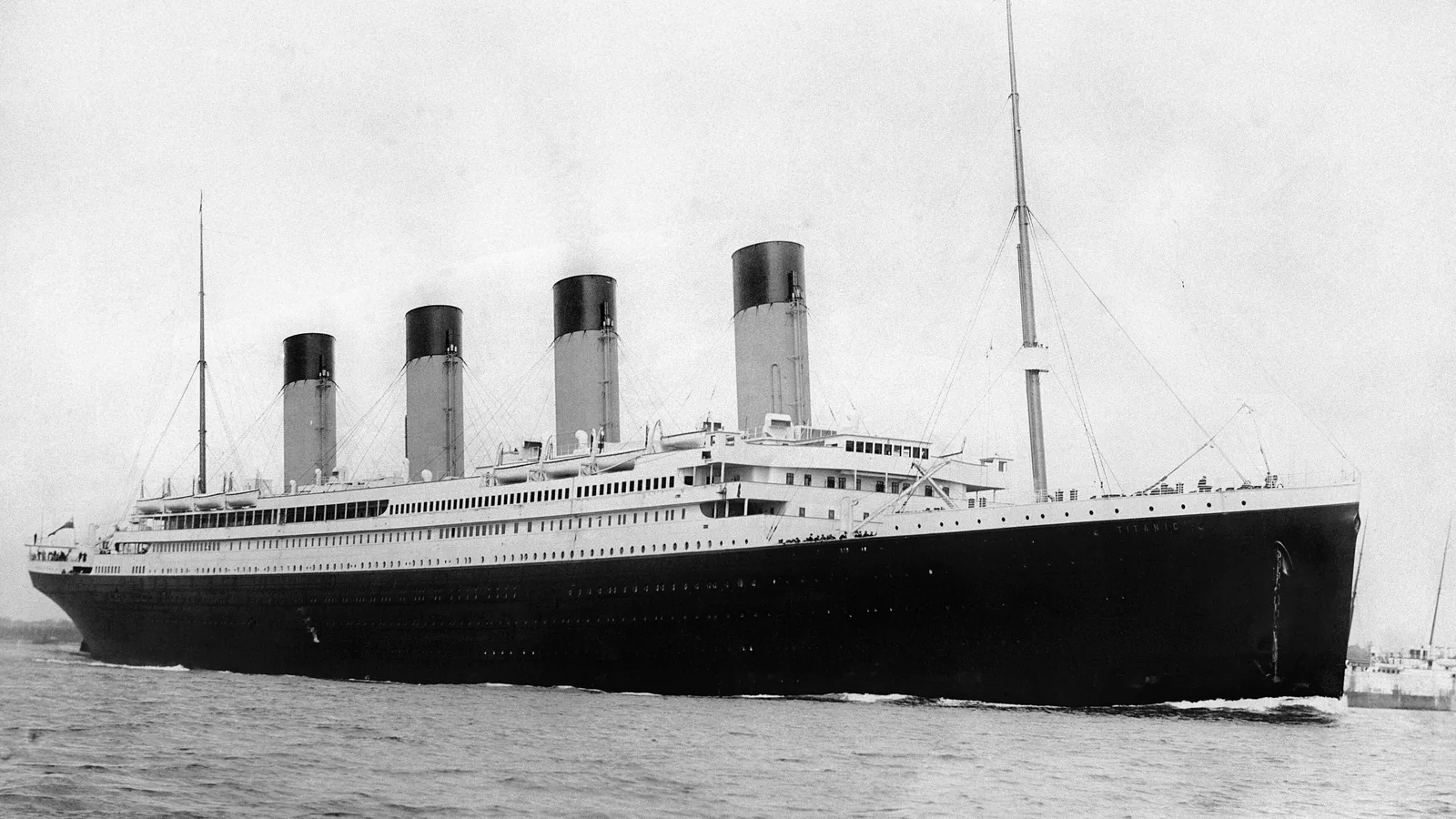

TL;DR — Lord Mersey’s court blamed excessive speed and cleared Captain Smith of negligence; Senator William Alden Smith’s Senate speech called his conduct a direct cause of the sinking.
“The court finds . . . that the loss of the said ship was due to collision with an iceberg, brought about by the excessive speed at which the ship was being navigated.” Lord Mersey, the Wreck Commissioner, signed that finding on July 30, 1912, closing a British inquiry that had run since May 2. Two months earlier, on May 28, Senator William Alden Smith of Michigan had stood in the Senate chamber and reached a different verdict on the man in command.
Quick facts
- When
- April 19 to May 25, 1912 (Senate subcommittee hearings) · May 28, 1912 (Smith's Senate speech, printed as Senate Document 850) · May 2 to July 30, 1912 (British formal investigation) · August 7, 1914 (Hansard record of the Merchant Shipping Convention Bill)
- Where
- Scottish Hall, Buckingham Gate, Westminster, and Caxton Hall, Caxton Street, Westminster (British inquiry); a Senate subcommittee room in New York and the Senate chamber in Washington (American inquiry)
- Who
- Lord Mersey, Wreck Commissioner, with assessors Gough-Calthorpe, Clarke, Lyon, Biles and Chaston; Senator William Alden Smith of Michigan; Senator Francis G. Newlands; Captain Edward J. Smith; Captain Stanley Lord of the Californian; J. Bruce Ismay
- Outcome
- Mersey's court found the loss due to collision with an iceberg brought about by excessive speed, and declined to blame Captain Smith for negligence. Senator Smith's speech called the captain's "overconfidence and neglect" a direct and contributing cause. Both inquiries found the Californian could have reached the Titanic and made no attempt.
Lord Mersey's court clears Captain Smith of negligence
The Lord Chancellor appointed Mersey as Wreck Commissioner on April 23, 1912, the home secretary named five assessors on April 26, and the court began sitting at the Scottish Hall, Buckingham Gate, Westminster, on May 2. It moved to Caxton Hall on July 1 and 3 and returned to the Scottish Hall on July 30 to deliver its finding, signed by Mersey and his assessors Gough-Calthorpe, Clarke, Lyon, Biles and Chaston. The Board of Trade had put twenty-six questions to the court on the ship’s design, equipment, wireless installation, crew and passengers. Question 14 asked the speed at the moment of the casualty; the court answered “About 22 knots,” and whether that speed was excessive, answered “Yes.”
On the question of blame, Mersey’s report argued from custom. Ships had long kept up speed near ice at night, “for many years past . . . for a quarter of a century or more,” without disaster, and the court reasoned: “In these circumstances I am not able to blame Capt. Smith. . . . He made a mistake, a very grievous mistake, but one in which, in face of the practice and of past experience, negligence can not be said to have had any part.” The report added: “What was a mistake in the case of the Titanic would without doubt be negligence in any similar case in the future.”
May 28, 1912: a Senate speech names a direct cause
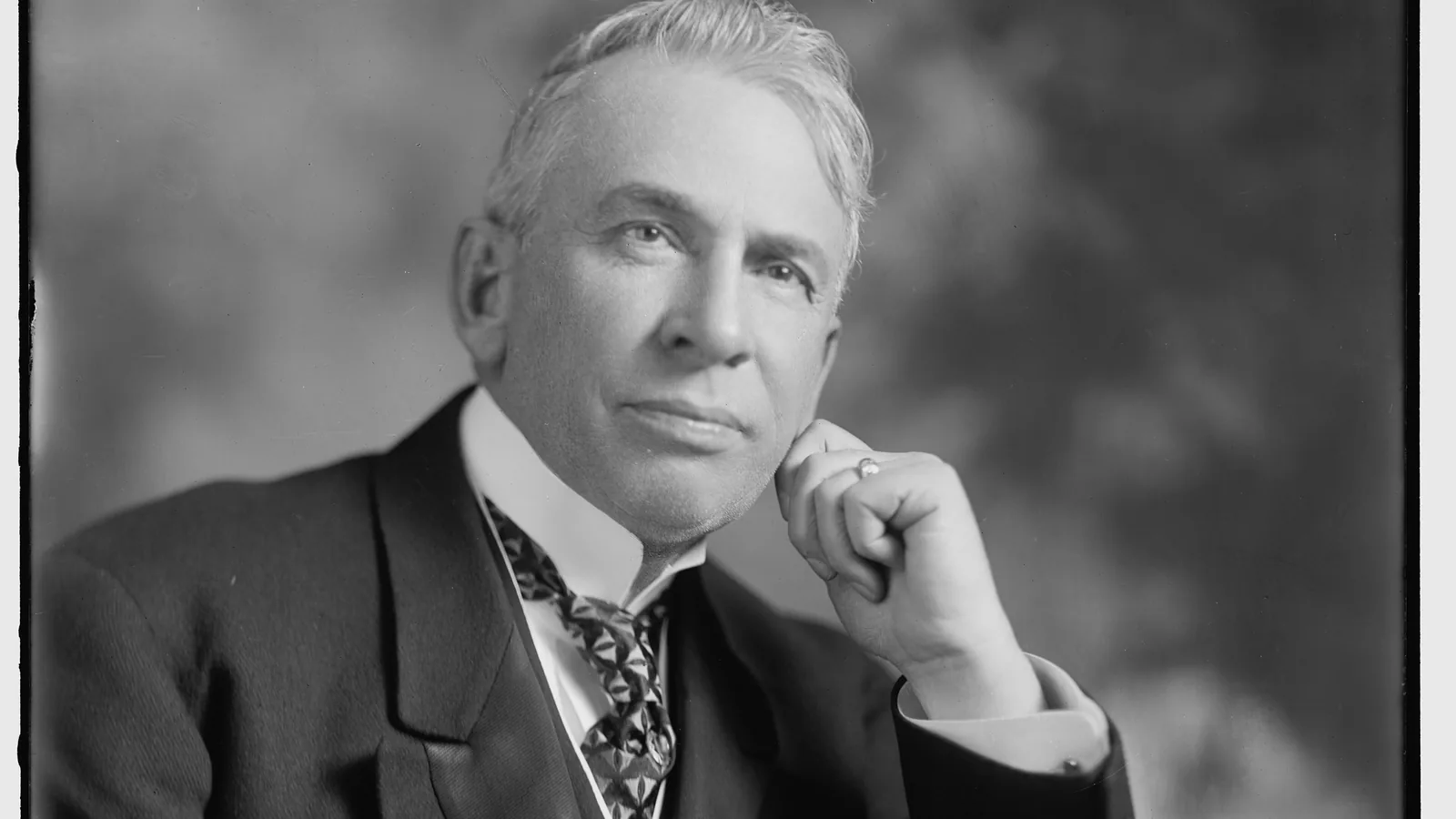
Senator Smith’s inquiry began under Senate Resolution 283, directing the Committee on Commerce to investigate the wreck. A subcommittee under his chairmanship, with Senator Francis G. Newlands, opened hearings in New York on April 19, 1912. On May 28 Smith reported to the full Senate in a speech printed as Senate Document 850, opening: “My associates and myself return the commission handed to us on the 18th day of April last, directing an immediate inquiry into ‘the causes leading up to the destruction of the steamship Titanic . . . so shocking to the people of the world.’” On the captain, Smith reached the opposite conclusion from Mersey’s court: “his indifference to danger was one of the direct and contributing causes of this unnecessary tragedy,” and named “one specific charge against him, overconfidence and neglect to heed the oft-repeated warnings of his friends.” The speech quoted J. Bruce Ismay, president of the White Star Line, that the ship “was worked up to 75 revolutions (or about) 22 knots per hour,” but Smith’s own narration gave a different figure, “her highest speed of 24¾ miles per hour,” a discrepancy the speech does not resolve.

Captain Lord's Californian, and numbers that do not match
Both inquiries reached the same finding on a nearby ship. Mersey’s court answered its own question 24: “The Californian. She could have reached the Titanic if she had made the attempt when she saw the first rocket. She made no attempt.” The report put the distance between the two ships at five to ten miles, “the night was clear and the sea was smooth.” Senator Smith’s speech pressed the finding harder, quoting Captain Stanley Lord’s own account of signaling with a Morse lamp “at half past 11 . . . at 10 minutes past 12, half past 12, a quarter to 1, and 1 o’clock” without response, and crewman Ernest Gill’s testimony of seeing “a white rocket about 10 miles away.” Smith asked why the ship signaled “for nearly two hours if they saw nothing,” and wrote that the episode placed “a tremendous responsibility” on Lord.
The two inquiries also counted differently. Mersey’s report gave 885 crew and 1,316 passengers, a total of 2,201 aboard, of whom 711 were saved and 1,490 lost, with first-class passengers saved at 62.46 percent against 25.21 percent in third class; the disproportion, it stated, “was certainly not due to any discrimination by the officers or crew.” Smith’s speech gave different figures: “There were 1,324 passengers on the ship. The lifeboats would have easily cared for 1,176; and only contained 704, 12 of whom were taken into the boats from the water.”
Lifeboats built to a tonnage table
Mersey’s report traced the shortage of lifeboats to an 1894 Board of Trade rule keyed to tonnage rather than to the number of people carried. The table “stopped short at the point where the gross tonnage of the vessels reached ‘10,000 and upwards,’” fixing the minimum at sixteen boats for any ship above that threshold, whatever its size. The Titanic, at roughly 46,000 tons, exceeded the letter of the rule anyway, carrying “boat accommodation for 1,178 persons, a number far in excess of the requirements of the table and rules,” yet still short of the 2,201 aboard. A House of Commons committee under Lord Charles Beresford had already recommended in 1887 that “all sea-going passenger ships should be compelled by law to carry such boats, and other life-saving apparatus, as would in the aggregate best provide for the safety of all on board.” Mersey’s court repeated the point in recommendation 6, that lifeboat capacity be set by persons carried rather than tonnage, and in recommendation 24 called for an international conference on subdivision, life-saving appliances and speed near ice.
"Signed in London last January": the 1914 convention
Mersey’s call for an international conference reached the House of Lords two years later. On August 7, 1914, during debate on the Merchant Shipping (Convention) Bill, the Earl of Granard told the Lords that “the object of this Bill is to give effect to the International Convention on Safety of Life at Sea which was signed in London last January.” The bill, he said, covered a ship’s obligation to assist others in distress, conduct near ice, and wireless telegraphic apparatus on passenger ships carrying more than fifty hands. The same year’s Hansard record shows a written question to the Board of Trade opening with the words “The Report of the Commission of Inquiry into the circumstances attending the loss of the s.s. . . . ,” raised while the convention bill was before Parliament.
Key facts
- Lord Mersey’s court found the loss “due to collision with an iceberg, brought about by the excessive speed at which the ship was being navigated,” dated July 30, 1912, signed by Mersey and five assessors.
- Mersey’s court answered its own speed question: “About 22 knots,” and found that speed excessive.
- Mersey’s report cleared Captain Smith of negligence, calling his decision “a mistake” made in line with then-standard practice.
- Senator William Alden Smith’s Senate speech of May 28, 1912, called the captain’s “overconfidence and neglect” a “direct and contributing” cause of the sinking.
- Both inquiries found the Californian could have reached the Titanic and made no attempt; Smith’s speech quoted Captain Lord’s own account of Morse-lamp signals sent for nearly two hours.
- Mersey’s report counted 2,201 aboard and 711 saved; Smith’s speech gave 1,324 passengers, with lifeboats carrying 704 plus 12 pulled from the water.
- An 1894 Board of Trade tonnage table fixed the lifeboat minimum at sixteen boats for any ship above 10,000 tons; the Titanic still carried 1,178 seats, above that minimum but short of the number aboard.
- The Earl of Granard told the House of Lords on August 7, 1914, that the Merchant Shipping (Convention) Bill gave effect to a safety-of-life-at-sea convention “signed in London last January.”
FAQ
Did the British and American inquiries agree on the Titanic's speed?
Both put the speed at the moment of the casualty near 22 knots. Lord Mersey's court answered its own question 14 with "About 22 knots" and found that speed excessive. Senator Smith's speech quoted Ismay's testimony of "22 knots per hour" but also gave a separate figure of "24¾ miles per hour," a discrepancy the speech leaves unexplained.
Did Lord Mersey's inquiry and the Senate agree on Captain Smith's responsibility?
No. Mersey's court found that "negligence can not be said to have had any part" in the captain's decision to keep up speed, given the practice of the time, and declined to blame him. Senator William Alden Smith's Senate speech called the captain's "overconfidence and neglect" a "direct and contributing cause" of the sinking.
What came from Lord Mersey's recommendation for an international conference?
His report's recommendation 24 called for an international conference on ship subdivision, life-saving appliances, wireless telegraphy and speed near ice. The Earl of Granard told the House of Lords on August 7, 1914, that the Merchant Shipping (Convention) Bill then before Parliament gave effect to a safety-of-life-at-sea convention signed in London the previous January.
Sources
- Great Britain, Court to Investigate the Loss of the Steamship "Titanic," Report of a Formal Investigation into the Circumstances Attending the Foundering on April 15, 1912, reprinted as U.S. 62d Congress, 2d Session, Senate Document No. 933 (Washington: GPO, 1912), Project Gutenberg e-book #39415.
- Hon. William Alden Smith of Michigan, The "Titanic" Disaster: Speech of Hon. William Alden Smith in the Senate of the United States, May 28, 1912, U.S. 62d Congress, 2d Session, Senate Document No. 850, Internet Archive identifier titanicdisasters00smit.
- UK Parliament, Hansard, House of Lords, Merchant Shipping (Convention) Bill debate, August 7, 1914, remarks of the Earl of Granard.
- UK Parliament, Hansard API search results, "Safety of Life at Sea Convention," 1914 sittings.
Cite this article
- APA
- LETTER. (2026, September 28). Titanic, 1912: what the Senate and Lord Mersey's inquiry each concluded. Our Earth's History. https://ourearthshistory.com/europe/modern/titanic-1912-two-inquiries-senate-smith-mersey-report-compared/
- Chicago
- LETTER. “Titanic, 1912: what the Senate and Lord Mersey's inquiry each concluded.” Our Earth's History, September 28, 2026. https://ourearthshistory.com/europe/modern/titanic-1912-two-inquiries-senate-smith-mersey-report-compared/.
- MLA
- LETTER. “Titanic, 1912: what the Senate and Lord Mersey's inquiry each concluded.” Our Earth's History, 28 Sep. 2026, https://ourearthshistory.com/europe/modern/titanic-1912-two-inquiries-senate-smith-mersey-report-compared/.
Text licensed CC BY-NC-ND 4.0. Found an error? Tell us.