Paid for by subscription: the Hejaz Railway reaches Medina, 1908

TL;DR — Damascus to Deraa construction started September 1, 1900; the line reached Medina on the same date in 1908, paid for by subscriptions from Muslims worldwide, a Turkish press study shows.
Construction on the Hejaz Railway began between Damascus and Deraa in an official ceremony on September 1, 1900, and the line reached Medina eight years later, on September 1, 1908, according to a 2010 study of the Ottoman press by Emrah Cetin, published in the journal History Studies. Both dates fell on the anniversary of the enthronement of Sultan Abdulhamid II, in 1876. Cetin’s article, based on Ottoman newspapers including Sabah, Ikdam and Tercuman-i Hakikat, states that the completed line reached a total length of 1,464 kilometers once the Haifa branch was counted, and that Bedouin raids on the track intensified as soon as it opened.
Quick facts
- When
- September 1, 1900 (construction begins, Damascus to Deraa) - September 1, 1908 (line reaches Medina) - 1916-1918 (Arab Revolt raids on the line)
- Where
- Damascus to Medina, with a branch to Haifa, across Ottoman Syria and the Hejaz
- Who
- Sultan Abdulhamid II; Heinrich Meissner Pasha; Sherif Hussein; T. E. Lawrence
- Outcome
- A subscription campaign funded a 1,320-kilometer line to Medina, opened in 1908. Bedouin raids kept it from reaching Mecca and Jeddah, and Arab Revolt raids in 1916-1918 ended its wartime operation. Sections and rolling stock survive as museums in Amman and Medina.
September 1, 1900: a subscription begins
Cetin’s newspaper sources describe a funding drive organized entirely through donations, called iane. A central Iane Commission in Istanbul directed provincial branches run by local mutasarrifs and kaymakams, which forwarded contributions to the treasury; donors received a numbered “subscription bond,” the iane bileti, carrying the Ottoman seal, and from 1903 a dedicated finance office, the Hamidiye Hicaz Demiryolu Idare-i Maliyesi, managed the funds. Cetin’s article states that the first donation, 50,000 lira, came from Abdulhamid II himself, who also gave up a month’s salary, delivering an initial installment of 6,600 kurus to the commission. Provincial governors followed: Hudavendigar province pledged 75,000 lira, and Konya delivered 88,712 kurus to the commission, among contributions Cetin records from Ankara, Kastamonu, Kosovo, Ioannina, Edirne, Aleppo, Aydin, Diyarbakir, Van and Sivas. A JOM article by Louise Dean, published in 2003, gives the subscription’s start as 1901 rather than 1900, without citing a specific document for that date.
Heinrich Meissner builds to Medina
The railway’s chief engineer was Heinrich August Meissner, a German-born civil engineer who held the title of Pasha, according to Dean’s JOM article, which states that 5,000 workers of multiple ethnic backgrounds built the line. Dean’s account gives the finished track as 1,320 kilometers to Medina, on a 1,050-millimeter gauge; Saudipedia, the Saudi Press Agency’s official encyclopedia portal, gives the same gauge and the same 1,320-kilometer figure. Cetin’s total of 1,464 kilometers includes a branch to Haifa, where, according to Michael Talbot’s 2015 article in Urban History, the Ottoman government had already marked the start of construction in 1903 with a monument called the Exalted Column, part of a wider effort to display imperial legitimacy in the port city. Dean’s article states that Bedouin tribes would not allow track to be laid beyond Medina, so the line never reached its planned end at Mecca.
Bedouin raids close off Mecca and Jeddah
Cetin’s newspaper sources state that Bedouin groups, who saw the railway as a threat to their own economic and political interests, raided the line from the moment it opened in September 1908, and that these attacks kept the planned extension to Mecca and Jeddah from being built. A 2023 article by Asmahan Mostafa Tawfik Khalil Ahmed in Al-Jami’ah, drawing on Ottoman state archive files from Istanbul dated 1908 to 1911, examines the countermeasures the Ottoman government tried, including handing local security over to tribal sheikhs and holding ceremonies to mark the line’s progress. Ahmed’s article concludes that these Ottoman measures were not effective in stopping the attacks.
"Effect the damage we wished": raids of 1916 to 1918
The National Army Museum in London states that in 1916 T. E. Lawrence was posted to the Hejaz as a liaison officer between the British government and Arab tribes fighting the Ottoman Empire, and that raiding parties under his direction targeted telephone wires and the railway line leading to Palestine. Lawrence recalled the results in a 1919 article for the Royal Engineers Journal, quoted in an Imperial War Museums description of a rail fragment in its collection: “The Turks arrived at their system of defence after considerable experience of our demolition parties, but we were able, till the end of the war, to descend upon the railway when and where we pleased, and effect the damage we wished, without great difficulty.” The same museum record states that raiding parties, which used blasting gelatine, guncotton and mines, grew from about ten Arab fighters at the start to mobile columns with armored cars by the war’s end. A separate Imperial War Museums photograph record dates one such operation to September 16, 1918, when Lieutenant Junor of the Royal Flying Corps flew air cover over the Yarmuk section of the line while Arab forces under Lawrence’s command attempted to destroy it. The National Army Museum also places Lawrence at the fall of Aqaba on July 6, 1917, the Battle of Tafileh in January 1918 and the entry into Damascus on October 1, 1918. Jordan’s Ministry of Tourism and Antiquities, on its Visit Jordan museum portal, states that the railway “was destroyed by the Great Arab Revolt and the fall of the Ottoman Empire after the war,” and dates that destruction to 1916; the two British museums record raids on the line in 1917 and 1918.
Amman and Medina keep the stations
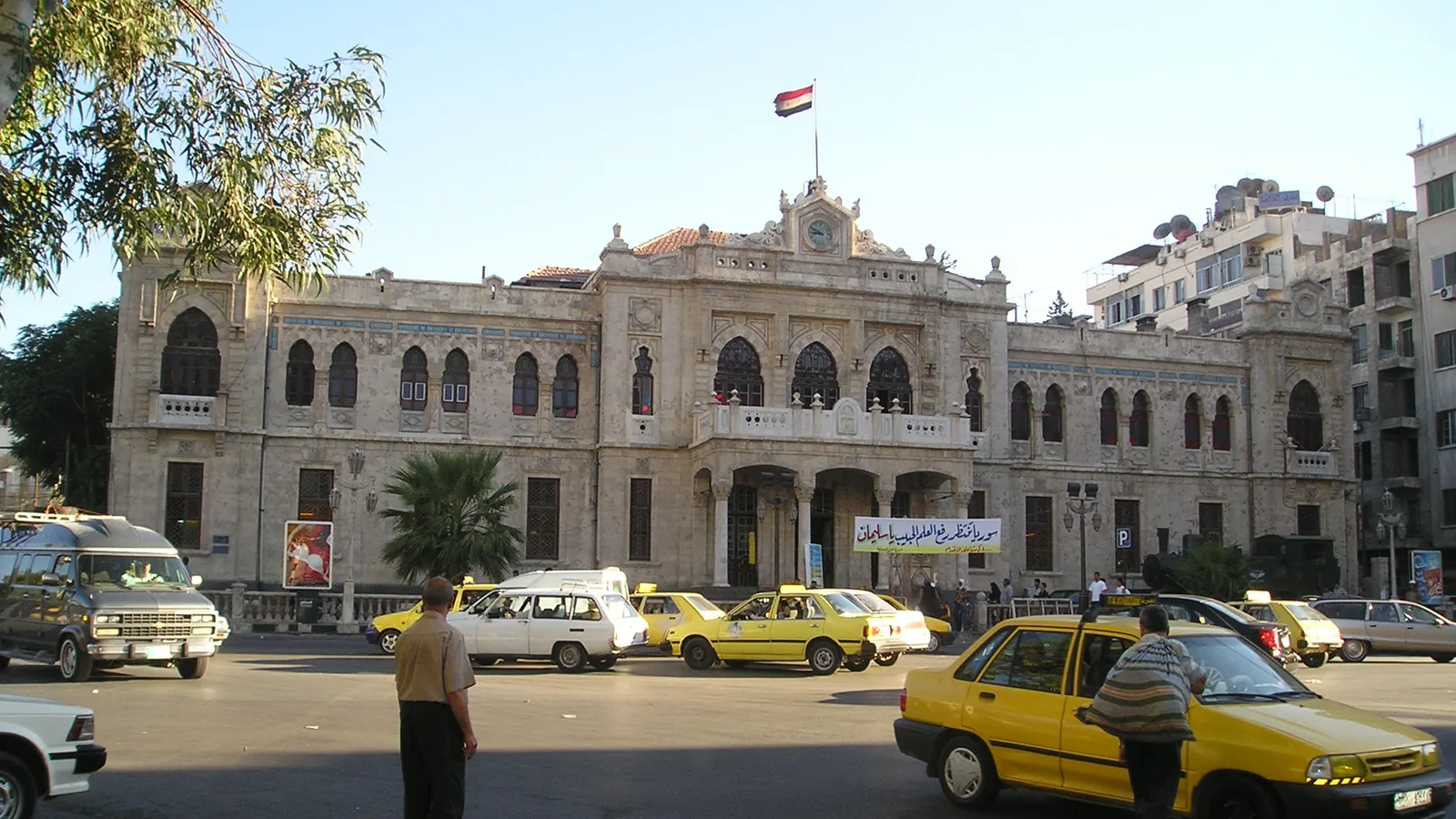
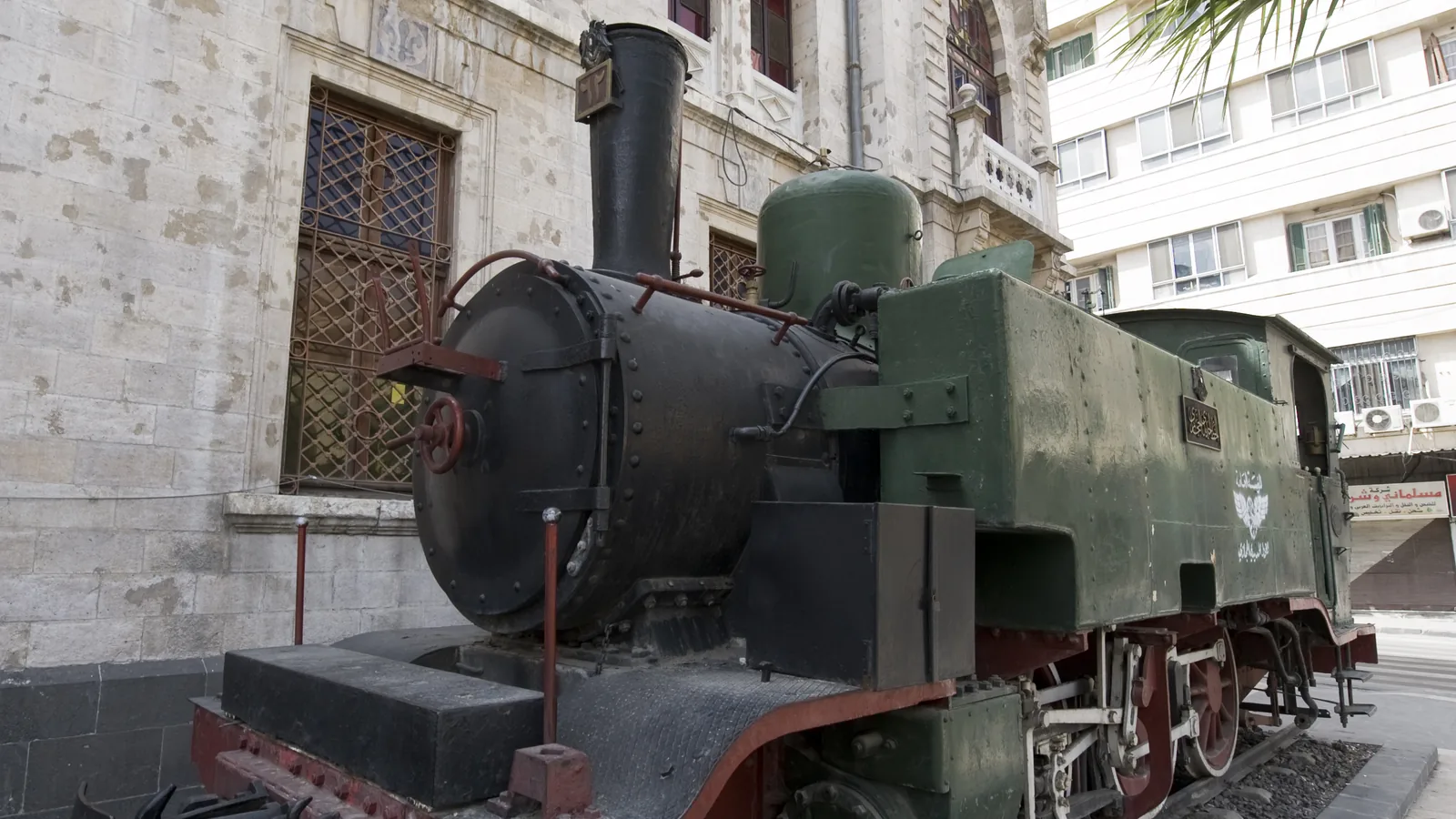
Jordan’s tourism ministry maintains a Hijazi Railway Museum in Amman, housed at a station built during the original construction. In Saudi Arabia, the kingdom’s Antiquities and Museums Agency took over the former Medina station in 1984 and began the Hejaz Railway Restoration Project in 1998, according to Saudipedia. Visit Madinah, the Saudi tourism authority’s official destination page, states that the museum on the site opened in 1419 AH, corresponding to 1998, inaugurated by Prince Abdulmajeed ibn Abdulaziz, and now holds 19 galleries covering Medina’s history along with parts of the Hejaz train, including 12 carriages converted into restaurants for visitors. Saudipedia states that the first phase of the restoration project was inaugurated on Monday, December 9, 2013.

Key facts
- Construction began between Damascus and Deraa on September 1, 1900, in an official ceremony, and the line reached Medina on September 1, 1908, both dates marking Sultan Abdulhamid II’s enthronement anniversary (History Studies).
- The railway was funded through the iane subscription campaign, with a central commission in Istanbul and provincial branches; donors received numbered subscription bonds (History Studies).
- Abdulhamid II gave the first donation of 50,000 lira and a month’s salary; Hudavendigar province pledged 75,000 lira and Konya delivered 88,712 kurus (History Studies).
- Chief engineer Heinrich Meissner Pasha, a German-born civil engineer, directed 5,000 workers of multiple ethnic backgrounds (JOM).
- The line ran 1,320 kilometers to Medina on a 1,050-millimeter gauge; counting the Haifa branch, History Studies gives a total of 1,464 kilometers (JOM; Saudipedia; History Studies).
- Bedouin raids, which intensified after the 1908 opening, kept the railway from being extended to Mecca and Jeddah (History Studies).
- Ottoman countermeasures of 1908-1911, including reliance on local tribal sheikhs, failed to stop the attacks, according to Ottoman archive records examined in Al-Jami’ah (2023).
- T. E. Lawrence and Arab forces raided the line from 1916 through a September 16, 1918 attack on its Yarmuk section, while Jordan’s tourism ministry dates the railway’s destruction to 1916 (Imperial War Museums; National Army Museum; Visit Jordan).
FAQ
When did the Hejaz Railway reach Medina?
On September 1, 1908, according to a 2010 study of the Ottoman press by Emrah Cetin in History Studies. The date marked the 33rd anniversary of Sultan Abdulhamid II's enthronement, the same anniversary chosen for the September 1, 1900 start of construction.
Who paid for the Hejaz Railway?
Muslims across the Ottoman Empire and beyond, through a subscription campaign called iane, organized by a central commission in Istanbul with provincial branches. Sultan Abdulhamid II made the first donation, 50,000 lira, and also gave up a month of his own salary, according to Cetin's article.
Why did the railway never reach Mecca?
Bedouin tribes, who saw the line as a threat to their economic and political position, raided it from the time it opened in 1908, according to Cetin's research, and an extension to Mecca and Jeddah was never built. Ottoman security measures tried between 1908 and 1911 failed to stop the raids, an Al-Jami'ah study of Ottoman archive records found.
Sources
- Emrah Cetin, "Turk Basinina Gore Hicaz Demiryolu (1900-1918)" ["According to the Turkish Press, the Hejaz Railway (1900-1918)"], History Studies, Middle East Special Issue (2010), pp. 99-115.
- Asmahan Mostafa Tawfik Khalil Ahmed, "The Ottoman Measures to Prevent Attacks on the Hejaz Railway, 1908-1911: The Ottoman Archives as a Source," Al-Jami'ah: Journal of Islamic Studies, vol. 61, no. 1 (2023), pp. 239-266.
- Michael Talbot, "The Exalted Column, the Hejaz Railway and Imperial Legitimation in Late Ottoman Haifa," Urban History, vol. 42, no. 2 (2015).
- Louise Dean, "Rail that Survived Demolition by 'Lawrence of Arabia': An Analysis," JOM, vol. 55, no. 3 (July 2003), archived copy.
- Imperial War Museums, collections record EPH 9262, "rail track section, Hejaz railway."
- Imperial War Museums, collections record Q 60019, "T E Lawrence and the Arab Revolt 1916-1918."
- National Army Museum, "Lawrence of Arabia: The man behind the robes."
- Jordan Ministry of Tourism and Antiquities, Visit Jordan museum portal, "Railway Hijazi Museum."
- Saudipedia, "The Railway Museum."
- Visit Madinah, "Hijaz Railway Museum."
Cite this article
- APA
- LETTER. (2026, September 28). Paid for by subscription: the Hejaz Railway reaches Medina, 1908. Our Earth's History. https://ourearthshistory.com/west-asia/modern/hejaz-railway-1908-medina-abdulhamid-subscription-arab-revolt/
- Chicago
- LETTER. “Paid for by subscription: the Hejaz Railway reaches Medina, 1908.” Our Earth's History, September 28, 2026. https://ourearthshistory.com/west-asia/modern/hejaz-railway-1908-medina-abdulhamid-subscription-arab-revolt/.
- MLA
- LETTER. “Paid for by subscription: the Hejaz Railway reaches Medina, 1908.” Our Earth's History, 28 Sep. 2026, https://ourearthshistory.com/west-asia/modern/hejaz-railway-1908-medina-abdulhamid-subscription-arab-revolt/.
Text licensed CC BY-NC-ND 4.0. Found an error? Tell us.