Two firmans and six cables: Tehran, August 15 to 20, 1953, in FRUS

TL;DR — A firman failed at Mosaddegh’s door on August 15, 1953; the embassy called him the victor on August 16; on August 19 his house fell.
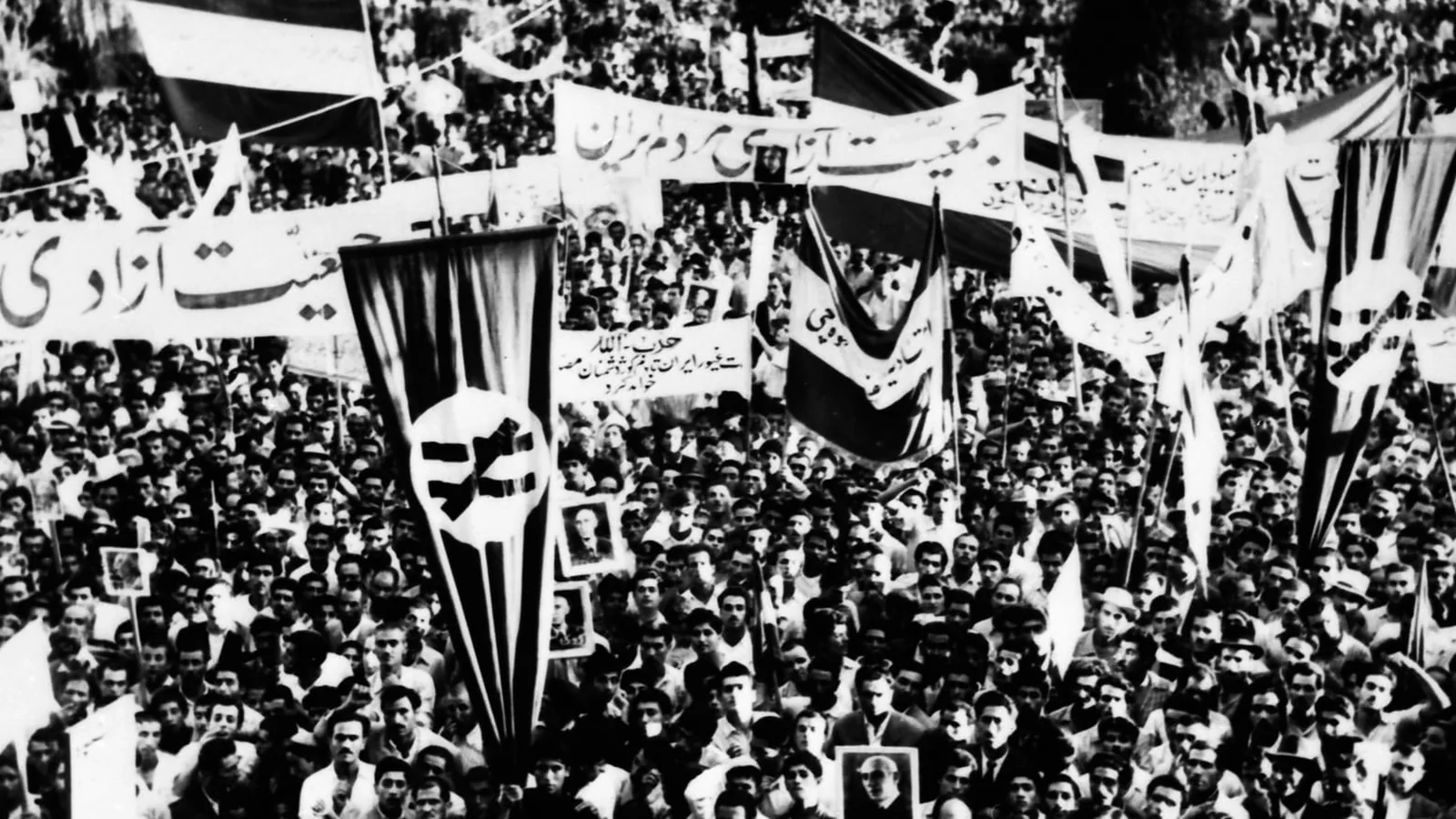
“The elimination of Mossadeq by assassination or otherwise might precipitate decisive events except in the unlikely alternative that the Shah should regain courage and decisiveness,” Allen Dulles, the Director of Central Intelligence, wrote to President Dwight D. Eisenhower on March 1, 1953. At 8 p.m. on August 16 the American embassy in Tehran cabled: “Flight by Shah and uncertainty Zahedi actions presumably leave Mosadeq victor in protracted and Persian-mannered campaign eliminate Shah as political force in country.” Both are printed, as Documents 169 and 268, in Foreign Relations of the United States, 1952–1954, Iran, 1951–1954, Second Edition, the State Department’s retrospective volume released in 2017. On August 19, 1953, crowds and army units overran Prime Minister Mohammad Mosaddegh’s house, and General Fazlollah Zahedi took his desk.
Quick facts
- When
- March 1, 1953 (Dulles memorandum to Eisenhower) · night of August 15 (first firman carried to Mosaddegh's house; Nasiri arrested) · August 16 (the shah leaves; four embassy cables) · August 18 (Henderson sees Mosaddegh) · August 19 (Mosaddegh's house overrun) · August 19, 2013 (CIA history posted) · 2017 (FRUS Second Edition)
- Where
- Tehran (the prime minister's house, the bazaar, Radio Tehran, the hills north of the city); Washington; Baghdad and Rome, where the shah went; Nicosia, where the plan was summarized
- Who
- Prime Minister Mohammad Mosaddegh; Mohammad Reza Shah Pahlavi; General Fazlollah Zahedi; Colonel Nematollah Nasiri; General Taqi Riahi; Ambassador Loy Henderson; Allen Dulles; Kermit Roosevelt; Frank Wisner; Harold Stassen
- Outcome
- The first firman failed on the night of August 15 and the shah left the country; on August 19 crowds and army units overran Mosaddegh's house and Zahedi took the prime minister's office. Mosaddegh was sentenced to three years and held under house arrest until his death in 1967. The CIA's role was formally acknowledged in a history released in 2013, and the State Department's retrospective volume followed in 2017
March 1951 to June 1953: an assassination, a court, a plan
Farhad Kazemi, in Encyclopaedia Iranica, records that Prime Minister Razmara was assassinated on March 7, 1951, and that a bill nationalizing the oil industry passed within days. Mosaddegh became prime minister on April 29, 1951, according to Mark J. Gasiorowski in the same encyclopedia. Britain went to the International Court of Justice, which granted interim measures on July 5, 1951, and on September 28, 1951, to the United Nations Security Council, where Mosaddegh led Iran’s delegation himself.
On February 3, 1953, Gasiorowski writes, American and British officials in Washington agreed to a plan, code-named AJAX, to remove Mosaddegh and install Zahedi; the State Department gave final approval on June 25. Document 214, “Summary of Operational Plan,” Nicosia, June 1, 1953, is entered as “8 pages not declassified,” and Document 221, the draft plan, as “29 pages not declassified.”
Nasiri at the prime minister's door, the night of August 15
CIA officers drafted two firmans, royal decrees, one dismissing Mosaddegh and one appointing Zahedi, and the shah signed them, Gasiorowski writes. Colonel Nematollah Nasiri, commander of the Imperial Guard, carried the first to Mosaddegh’s house on the night of August 15. A CIA station report of August 17 (Document 270) gives the timing: General Taqi Riahi, the chief of staff, learned at 5 p.m. that the shah would act at midnight and “used 7 hours warning to advantage.” The station’s verdict: “Nassiri was correct in going directly to Prime Minister with firman for that is normal channel. But Nassiri walked into superior force and was arrested.” It closes with the head of the American military mission’s estimate: “Gen McClure estimates that had Zahedi then walked in with firman he would have won.”

Cables of August 16: a decree dated Thursday, August 13
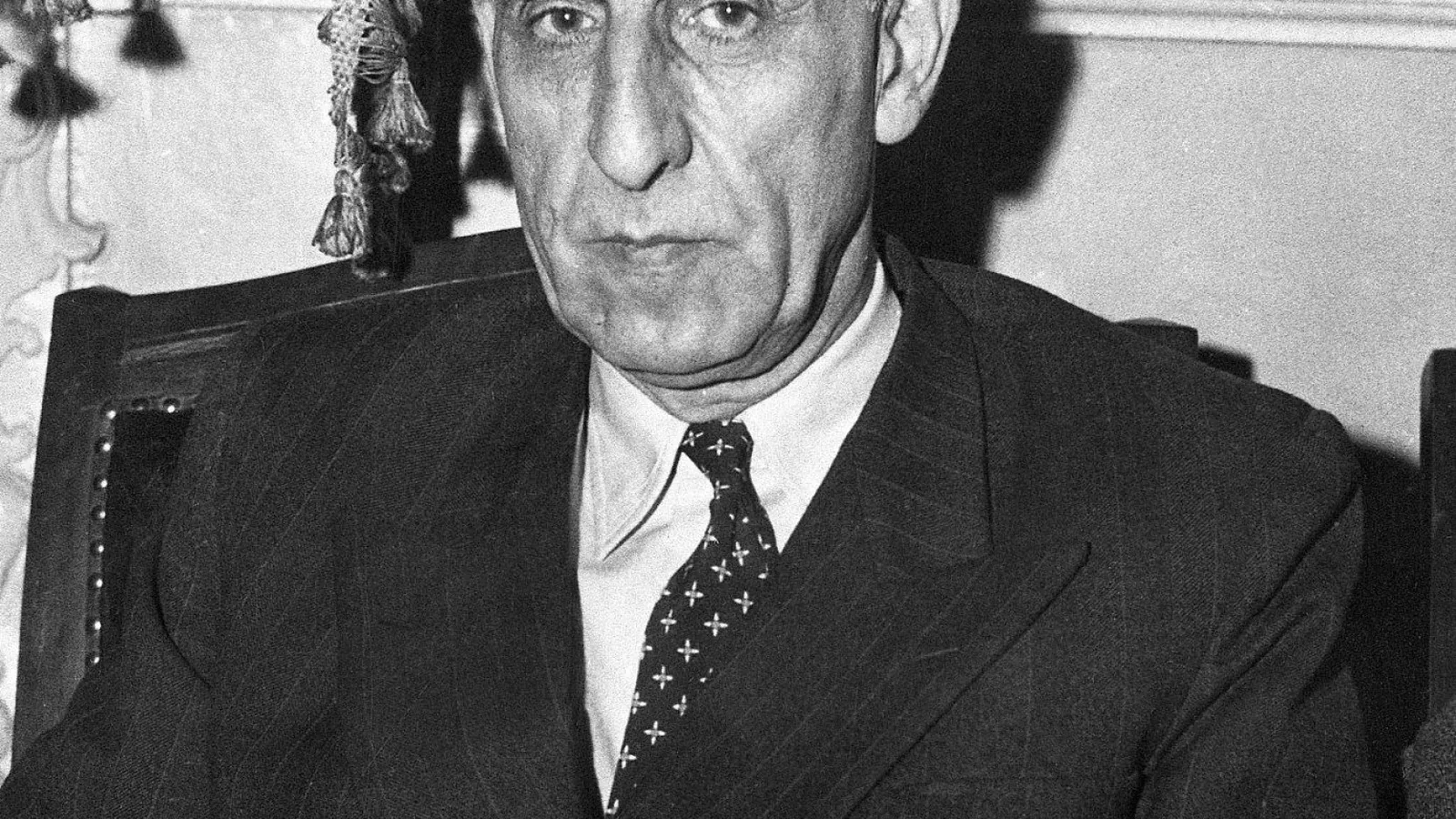
Four embassy telegrams from that Sunday are in the volume, each signed Mattison, with Ambassador Loy Henderson away. At 10 a.m. (Document 261): “Embassy received unconfirmed report from good source Shah in dismissing Mosadeq issued royal decree appointing General Zahedi Prime Minister.” At 3 p.m. (Document 266): Donald Schwind of the Associated Press and Kennett Love of the New York Times had met Zahedi’s son and received photostats of a decree signed by the shah and dated Thursday, August 13, 1953. The shah, “with knowledge I have of your ability and merit,” appointed Zahedi “with this letter Prime Minister.” A translator who knew the shah’s hand “declared belief Shah’s signature genuine.”
At 5 p.m. (Document 267): General McClure had met Riahi for forty minutes. Riahi “denied, without apparent conviction that a decree had been authentically signed” and said that “army was of people.” At 8 p.m. came the cable calling Mosaddegh the victor. It asked for Henderson’s return; a footnote records that he reached Tehran at 6 p.m. on August 17.
"Avoid any such terminology as 'coup d'état'": August 17 to 20
A CIA memorandum of August 17 (Document 274) recorded that State had instructed the Voice of America and its own press officers “to avoid any such terminology as ‘coup d’état,’ ‘plot,’ etc.,” and to play up the version “which indicates that if there was any coup d’état it was that of Mossadegh and not of Zahedi.” In Tehran, Gasiorowski writes, Kermit Roosevelt’s team, through two journalists code-named Nerren and Cilley and the Rashidian brothers, “hired large crowds to pose as members of the Tudeh party”; the crowds marched on August 17 and 18.
Henderson saw Mosaddegh for an hour on August 18 (Document 280). Mosaddegh said Nasiri had come to arrest him and had been arrested instead; asked whether he would treat any firman as invalid, “He replied ‘precisely’.” On August 19 Harold Stassen of the Foreign Operations Administration told Frank Wisner of the CIA that a “$5 million immediate requirement” was “exactly the kind of thing we (CIA) have our reserves for” (Document 282).
Henderson’s telegram 419 (Document 283), sent at noon on August 20, described August 19. A pro-shah demonstration “began in small way in bazaar area but initial small flame found amazingly large amount combustible material and was soon roaring blaze.” The crowds were “primarily civilians interspersed with members security forces,” in a “holiday mood” that “did not prevent execution of grim missions which on at least two occasions resulted in loss life.” No count of the dead appears in the documents cited below. Late in the day Mosaddegh’s house was “overrun and gutted” and Zahedi “occupied desk in Prime Minister’s office.” Cause D on the embassy’s list was the break with the Tudeh party on the evening of August 18: “Tudeh was conspicuously absent all day.” And: “No hostility manifested towards foreigners with exception of minor demonstrations in front of Soviet Embassy . . . No shouts of ‘Yankee go home’ no Americans stoned.”
Sixty years on: a CIA history, a delayed volume, 2013 to 2017
Mosaddegh was convicted of treason and sentenced to three years in prison, then held under house arrest until his death in 1967; his foreign minister, Hossein Fatemi, was executed by the Zahedi government (Gasiorowski). On August 19, 2013, the National Security Archive at George Washington University posted passages of a CIA internal history, The Battle for Iran, written in the mid-1970s; a version released in 1981 after an ACLU lawsuit had blacked out every reference to TPAJAX. The Archive’s editor, Malcolm Byrne, wrote that the posting “includes what is believed to be the CIA’s first formal acknowledgement that the agency helped to plan and execute the coup.” It also reported, from British records, that “The United Kingdom sought to expunge ‘very embarrassing’ information about its role in the 1953 coup in Iran from the official U.S. history of the period.” Liora Hendelman-Baavur wrote in the International Journal of Middle East Studies in May 2024 that the seventieth anniversary “prompted a moment of reflection in Iran.” The Second Edition, edited by James C. Van Hook, was released in 2017; the printed volume carries a Washington, 2018 imprint. Telegram 419 is its Document 283, and a footnote records that on August 20, 1953, the Department authorized the embassy in Rome to share its contents with the shah.
Key facts
- Prime Minister Razmara was assassinated on March 7, 1951; a bill nationalizing the oil industry passed within days, and Mosaddegh took office on April 29, 1951 (Encyclopaedia Iranica, Kazemi; Gasiorowski).
- Allen Dulles wrote to Eisenhower on March 1, 1953 that “the elimination of Mossadeq by assassination or otherwise might precipitate decisive events” (FRUS, Document 169).
- The AJAX plan was agreed in Washington on February 3, 1953 and approved at the State Department on June 25 (Gasiorowski); the operational plan of June 1, 1953 is “8 pages not declassified” (Document 214).
- Colonel Nasiri “walked into superior force and was arrested” on the night of August 15 to 16; McClure estimated that Zahedi “would have won” had he walked in with the firman (Document 270).
- The decree shown to two American reporters on August 16 was dated Thursday, August 13, 1953, and appointed Zahedi “with this letter Prime Minister” (Document 266).
- At 8 p.m. on August 16 the embassy cabled that the shah’s flight left “Mosadeq victor” (Document 268).
- On August 17 State told the Voice of America “to avoid any such terminology as ‘coup d’état,’ ‘plot,’ etc.” (Document 274); on August 19 Stassen told Wisner that a $5 million need was “exactly the kind of thing we (CIA) have our reserves for” (Document 282).
- Henderson’s telegram 419 of August 20 records “loss life” on “at least two occasions” without a figure, and “No shouts of ‘Yankee go home’ no Americans stoned” (Document 283).
FAQ
What was the firman of August 1953?
A royal decree signed by the shah. Two were drafted by CIA officers, one dismissing Mosaddegh and one naming Zahedi prime minister. The copy given to two American reporters on August 16 was dated Thursday, August 13, 1953, and appointed Zahedi "with this letter Prime Minister."
How many people died in Tehran on August 19, 1953?
The embassy's telegram of August 20 reports "loss life" on "at least two occasions" and "some loss life" in the morning attacks on the prime minister's house and the General Staff, but gives no number. The documents cited below contain no count.
When did the CIA acknowledge its part in the overthrow of Mosaddegh?
On August 19, 2013, the National Security Archive posted passages of the CIA history The Battle for Iran in which the code name TPAJAX appears unredacted; the Archive described this as "the CIA's first formal acknowledgement that the agency helped to plan and execute the coup." The State Department's Second Edition of its Iran volume followed in 2017.
Sources
- U.S. Department of State, Office of the Historian, Foreign Relations of the United States, 1952–1954, Iran, 1951–1954, Second Edition (ed. James C. Van Hook; Washington, 2018 imprint): volume contents and preface.
- FRUS 1952–1954, Iran, 1951–1954, Second Edition, Document 169: Memorandum From Director of Central Intelligence Dulles to President Eisenhower, Washington, March 1, 1953.
- FRUS Iran Second Edition, Document 214 (Summary of Operational Plan, Nicosia, June 1, 1953: 8 pages not declassified) and Document 221 (Draft Operational Plan, undated: 29 pages not declassified).
- FRUS Iran Second Edition, Document 261: Telegram From the Embassy in Iran to the Department of State, Tehran, August 16, 1953, 10 a.m.
- FRUS Iran Second Edition, Document 266: Telegram From the Embassy in Iran to the Department of State, Tehran, August 16, 1953, 3 p.m. (text of the decree dated August 13).
- FRUS Iran Second Edition, Document 267: Telegram From the Embassy in Iran to the Department of State, Tehran, August 16, 1953, 5 p.m. (McClure and Riahi).
- FRUS Iran Second Edition, Document 268: Telegram From the Embassy in Iran to the Department of State, Tehran, August 16, 1953, 8 p.m.
- FRUS Iran Second Edition, Document 270: Telegram From the Station in Iran to the Central Intelligence Agency, Tehran, August 17, 1953 (MilSitRep 15–16 August).
- FRUS Iran Second Edition, Document 274: Memorandum Prepared in the Directorate of Plans, Central Intelligence Agency, Washington, August 17, 1953.
- FRUS Iran Second Edition, Document 280: Telegram From the Embassy in Iran to the Department of State, Tehran, August 18, 1953, 10 p.m. (Henderson's talk with Mosaddegh).
- FRUS Iran Second Edition, Document 282: Memorandum for the Record by the Deputy Director for Plans, Central Intelligence Agency (Wisner), Washington, August 19, 1953.
- FRUS Iran Second Edition, Document 283: Telegram From the Embassy in Iran to the Department of State, Tehran, August 20, 1953, noon (telegram 419).
- Encyclopaedia Iranica, "Coup d'etat of 1332 Š./1953," by Mark J. Gasiorowski, vol. VI, fasc. 4, pp. 354–356 (published December 15, 1993; last updated August 15, 2013).
- Encyclopaedia Iranica, "Anglo-Persian Oil Company," by Farhad Kazemi, vol. II, fasc. 1, pp. 61–65 (published December 15, 1985; last updated April 19, 2017).
- National Security Archive, George Washington University, Electronic Briefing Book No. 435, "CIA Confirms Role in 1953 Iran Coup," ed. Malcolm Byrne, posted August 19, 2013.
- Liora Hendelman-Baavur, "A Man for All Seasons: Mosaddeq's Image and Legacy in Contemporary Iran," Roundtable: Mossadeq's Ouster at 70, International Journal of Middle East Studies 56, no. 2 (May 2024): 307–316 (open access).
Cite this article
- APA
- Our Earth's History. (2026, September 22). Two firmans and six cables: Tehran, August 15 to 20, 1953, in FRUS. Our Earth's History. https://ourearthshistory.com/west-asia/contemporary/iran-august-19-1953-frus-2017-two-firmans-done-embassy-cables/
- Chicago
- Our Earth's History. “Two firmans and six cables: Tehran, August 15 to 20, 1953, in FRUS.” Our Earth's History, September 22, 2026. https://ourearthshistory.com/west-asia/contemporary/iran-august-19-1953-frus-2017-two-firmans-done-embassy-cables/.
- MLA
- “Two firmans and six cables: Tehran, August 15 to 20, 1953, in FRUS.” Our Earth's History, 22 Sep. 2026, https://ourearthshistory.com/west-asia/contemporary/iran-august-19-1953-frus-2017-two-firmans-done-embassy-cables/.
Text licensed CC BY-NC-ND 4.0. Found an error? Tell us.