'Snow conditions bad': the coded Everest message of May 1953
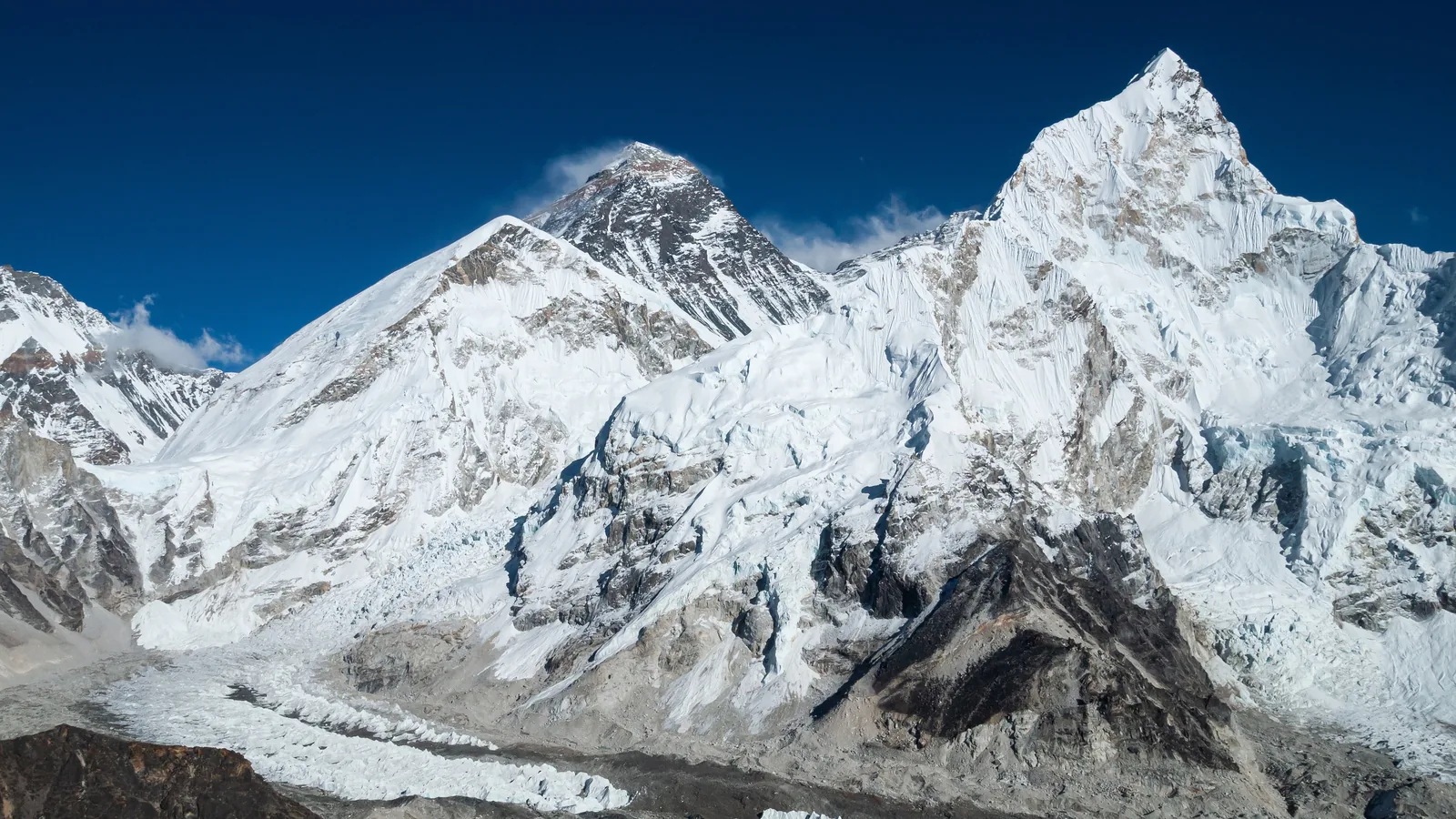

TL;DR — A coded cable, “Snow conditions bad,” told The Times that Hillary and Tenzing had reached Everest’s summit, and the paper printed it on the morning of the coronation.
“Snow conditions bad stop advanced base abandoned may twentynine stop awaiting improvement stop all well.” The Times correspondent James Morris had fixed the wording months earlier, and he explained the code afterward: “the code phrase for ‘Everest climbed’ was ‘Snow conditions bad’; the phrase meaning Hillary was ‘Advanced base abandoned’, and that for Tensing ‘Awaiting improvement’.”
Quick facts
- When
- May 26, 1953 (Bourdillon and Evans reach the South Summit); May 29, 1953, 11:30 a.m. (Hillary and Tenzing reach the summit); June 2, 1953 (The Times prints the news, coronation day); June 12, 1953 (London Gazette, Issue 39886, records the honors)
- Where
- The South Col route, Mount Everest, Nepal; the radio post at Namche Bazar; London
- Who
- Colonel John Hunt; Edmund Hillary; Tenzing Norgay; Tom Bourdillon; Charles Evans; James Morris of The Times
- Outcome
- Hillary and Tenzing reached the summit at 11:30 a.m. on May 29, 1953. Morris's coded cable reached London in time for The Times to print the news on the morning of the coronation, June 2. The London Gazette of June 12 recorded Hillary's KBE and Hunt's knighthood, both dated June 6.
John Hunt's expedition on the South Col route
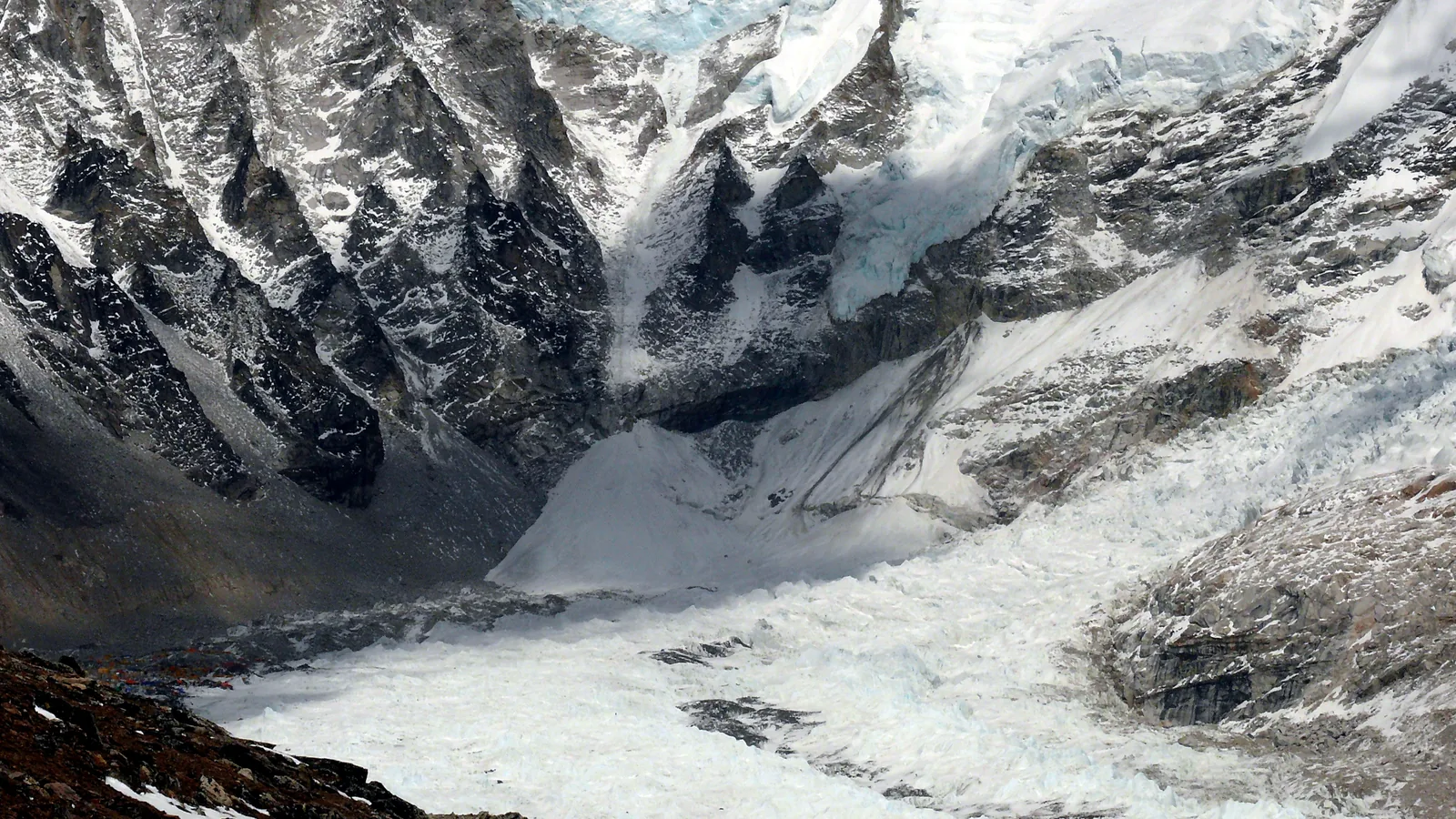
Colonel John Hunt led the British expedition that left Bhadgaon, near Kathmandu, in March 1953. His account to the Alpine Club that November, written with Michael Westmacott, records: “The substance of Sir John Hunt’s account given to the Alpine Club on November 10, 1953.” The first party left Bhadgaon with “9 sahibs, Tenzing and 16 other climbing Sherpas, and 180 coolies” on March 10. Members trained through late March and April on peaks near Ama Dablam, at Mera La, Chukhung Peak and Pokalde, “acclimatized to about 20,000 ft” by the time the party reached Base Camp. The Royal Geographical Society records that Base Camp went up on April 12, 1953, with nine further camps through the Khumbu Icefall and the Western Cwm to the South Col. By May 21, Wilfred Noyce and Annullu had reached the col, which the society calls “a symbolic and crucial objective.”
May 26, 1953: Bourdillon and Evans turn back
On May 26 the first assault party, Tom Bourdillon and Charles Evans, set off for the South Summit on closed-circuit oxygen, the Royal Geographical Society records. Hunt and Westmacott write: “After a brief rest they moved upwards again … At 1 P.M. they stood on the South summit. It was now clear that they had neither the time, nor enough oxygen, to reach the main summit unless the final ridge proved to be very easy. No one expected it to be easy … After a short pause for photography, they reluctantly turned back.” The journal notes that the last 400 feet before the South Summit ran “much steeper than the lower part of the ridge,” and that a fault in Bourdillon’s oxygen set forced the pair to convert it to an open circuit on the mountain. The same day, Hunt and the Sherpa Da Namgyal carried loads up the southeast ridge on open-circuit oxygen; Hunt and Westmacott write that “it was not until after 9 A.M. that they reached the South-east ridge at about 27,200 ft,” leaving tents, fuel and oxygen cylinders at a point the journal calls a height “now reckoned to be 27,350 ft” before they descended.
Camp IX, and the summit at 11:30 a.m.
Two days later, on May 28, Edmund Hillary and Tenzing Norgay made their bid. The Royal Geographical Society writes that “with support from George Lowe, Alfred Gregory and Ang Nyima they established Camp IX at 27,900 feet (8,503m).” Hunt and Westmacott give the same figure, “about 27,900 ft.” The pair rose at 4:00 a.m. after what the society calls “a bitterly cold and desolate night” and left the tent, in the Alpine Journal’s words, at “6.30 A.M.,” reaching the South Summit at about 9:00 a.m. Both accounts describe the final obstacle, a rock and ice step later named for Hillary: the Alpine Journal calls it “the great rock step … about 40 ft. high and almost vertical,” with a crack between the rock and the cornice that Hillary climbed while Tenzing held the rope. The Royal Geographical Society records the moment: “It was 11.30am on Friday 29 May 1953 and Tenzing Norgay and Edmund Hillary had reached the highest point on the earth.” Hunt and Westmacott record Tenzing’s words on the summit: “It was like meeting an old friend. You do not want to talk, but you are glad to be there.” The pair spent fifteen minutes there, removed their masks to save oxygen and ate Kendal mint cake before starting down at 11:45 a.m.; by 2:00 p.m. they were back at Camp IX. The Royal Geographical Society gives Everest’s height as 8,849 meters, or 29,028 feet.

'On the very eve of her Coronation'
The Times had sent Morris to cover the expedition; he later wrote that “it was decided last February that I should join the expedition as Special Correspondent of The Times.” His account in the Himalayan Journal explains why: “As for the mountaineer the climbing of Mount Everest was the summit of ambition, so for every British newspaper its ascent was a news event of the highest importance, the more especially as it came in the year of Queen Elizabeth’s coronation … my newspaper held the copyright of dispatches from the mountain.” On June 1 he sent a runner to the radio post at Namche Bazar with the coded cable. As he wrote, “the key to this code I sent by runner to Hutchinson in Katmandu, who passed further copies to The Times in London and to the British Ambassador.” Morris described what happened next: “On the very eve of her Coronation, my radio told me, the Queen had been told of Everest’s conquest. The Times had printed the news in that morning’s editions, the vast Coronation crowds waiting in London’s rain had been told in the dark of the night, the world was rejoicing with us; all was well.” The Times published the news on June 2, 1953, the morning Elizabeth II was crowned.
Two honors in one gazette, June 12
The London Gazette recorded the results in its Issue 39886, dated June 12, 1953. Under appointments to the Order of the British Empire it stated: “The QUEEN has been graciously pleased, on the advice of Her Majesty’s New Zealand Ministers, to give orders for the following appointment to the Most Excellent Order of the British Empire: – (to be dated 6th June, 1953) To be an Ordinary Knight Commander of the Civil Division of the said Most Excellent Order: – Edmund Percival HILLARY, Esq.” The same issue recorded Hunt’s knighthood separately, dated from Whitehall: “The QUEEN has been graciously pleased to signify her intention of conferring the honour of Knighthood upon Colonel Henry Cecil John Hunt, C.B.E., D.S.O.”
Key facts
- On May 26, 1953, Tom Bourdillon and Charles Evans reached the South Summit at 1 p.m. but turned back for lack of time and oxygen (Alpine Journal, Hunt & Westmacott, 1953).
- The same day Hunt and the Sherpa Da Namgyal climbed the southeast ridge to a height “now reckoned to be 27,350 ft,” leaving tents and oxygen for the next attempt (Alpine Journal).
- Hillary and Tenzing established Camp IX at 27,900 feet (8,503 meters) on May 28, with support from George Lowe, Alfred Gregory and Ang Nyima (Royal Geographical Society).
- Hillary and Tenzing left Camp IX at 6:30 a.m. on May 29 and reached the South Summit at about 9:00 a.m. (Alpine Journal; Royal Geographical Society).
- The pair reached the summit at 11:30 a.m. on Friday, May 29, 1953 (Royal Geographical Society).
- James Morris’s coded cable read “Snow conditions bad stop advanced base abandoned may twentynine stop awaiting improvement stop all well” (Himalayan Journal, Morris, “The Press on Everest”).
- The Times printed the news on the morning of June 2, 1953, the day of Queen Elizabeth II’s coronation, as Morris recorded (Himalayan Journal).
- The London Gazette, Issue 39886 of June 12, 1953, recorded Hillary’s KBE and Hunt’s knighthood, both dated June 6, 1953.
FAQ
What was the coded message James Morris sent from Everest?
Morris cabled "Snow conditions bad stop advanced base abandoned may twentynine stop awaiting improvement stop all well." As he explained, "Snow conditions bad" meant Everest had been climbed, "Advanced base abandoned" identified Hillary and "Awaiting improvement" identified Tenzing.
How far did Bourdillon and Evans get on May 26, 1953?
They reached the South Summit at 1 p.m., the Alpine Journal records, but turned back because they had "neither the time, nor enough oxygen" to reach the main summit.
What honors did Hillary and Hunt receive after the climb?
The London Gazette, Issue 39886 of June 12, 1953, recorded Edmund Hillary's appointment as an Ordinary Knight Commander of the Order of the British Empire and Colonel John Hunt's knighthood, both dated June 6, 1953.
Sources
- John Hunt & Michael Westmacott, "Everest, 1953 (x) Narrative of the Expedition," The Alpine Journal, Vol. LIX, No. CCLXXXVII (1953), pp. 107-122.
- Royal Geographical Society, "Everest 1953 limited edition platinum prints."
- Royal Geographical Society, "Mount Everest" (Schools resource, lesson plan).
- James Morris, "The Press on Everest," in "Everest -- 1953," The Himalayan Journal, Vol. 18 (1953).
- The London Gazette, Issue 39886, p. 3273 (12 June 1953).
Cite this article
- APA
- Our Earth's History. (2026, September 26). 'Snow conditions bad': the coded Everest message of May 1953. Our Earth's History. https://ourearthshistory.com/south-asia/contemporary/everest-may-29-1953-hillary-tenzing-hunt-expedition-coronation-news/
- Chicago
- Our Earth's History. “'Snow conditions bad': the coded Everest message of May 1953.” Our Earth's History, September 26, 2026. https://ourearthshistory.com/south-asia/contemporary/everest-may-29-1953-hillary-tenzing-hunt-expedition-coronation-news/.
- MLA
- “'Snow conditions bad': the coded Everest message of May 1953.” Our Earth's History, 26 Sep. 2026, https://ourearthshistory.com/south-asia/contemporary/everest-may-29-1953-hillary-tenzing-hunt-expedition-coronation-news/.
Text licensed CC BY-NC-ND 4.0. Found an error? Tell us.