Plassey, June 23, 1757, and the inquiry that followed Clive home
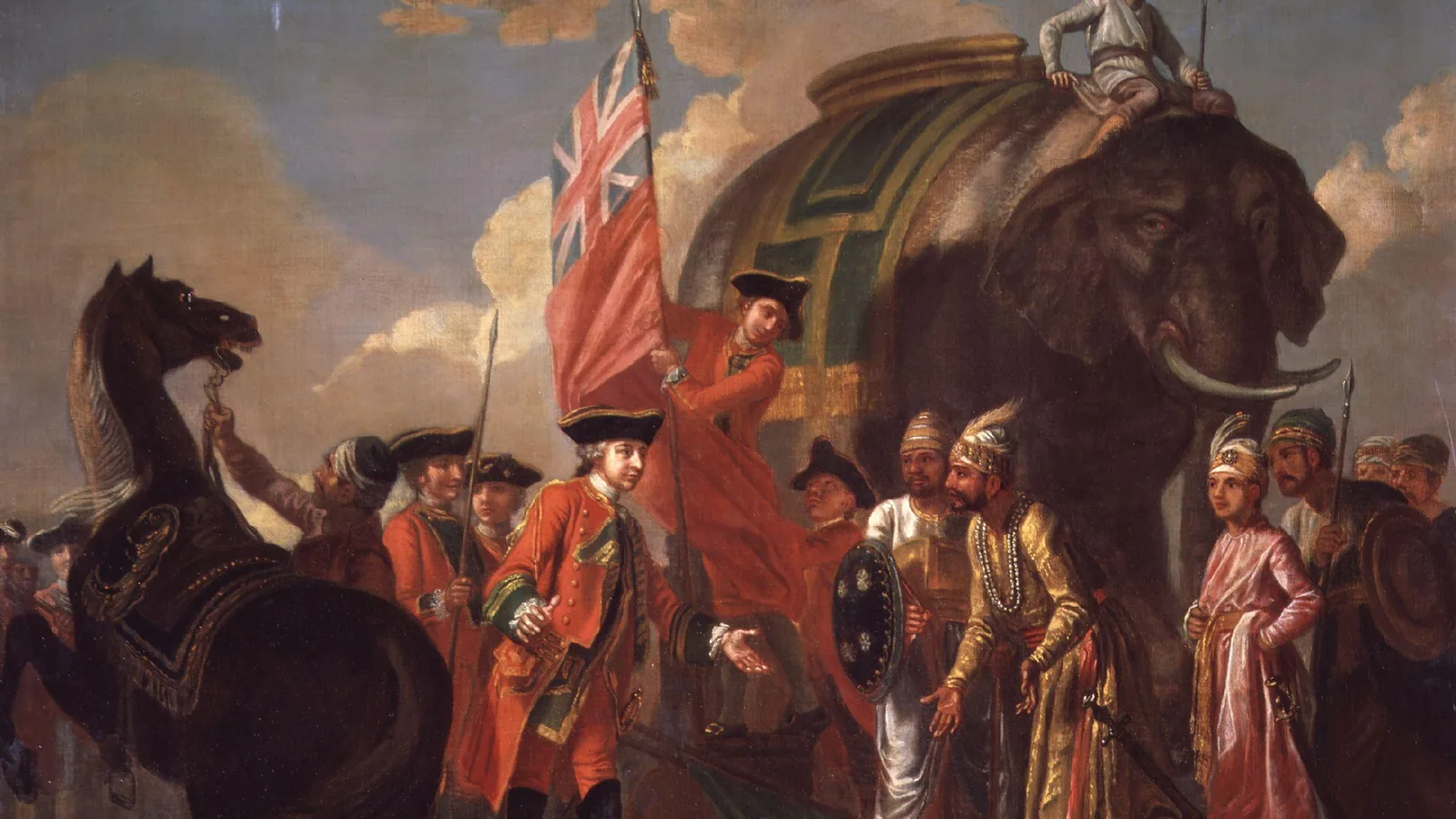

TL;DR — Clive’s outnumbered force routed Siraj-ud-Daulah at Plassey on June 23, 1757, aided by a deal with Mir Jafar; the payments drew an inquiry sixteen years later.
The National Army Museum states that “the Battle of Plassey was fought in north-east India on 23 June 1757.” Troops of the East India Company under Robert Clive met the forces of Siraj-ud-Daulah, the last Nawab of Bengal, and his French allies. During the battle, the museum states, Mir Jafar, commanding the Nawab’s cavalry, “refused to take part.” The historian Thomas Babington Macaulay, writing in 1840, describes the secret dealings with Mir Jafar that came first.
Quick facts
- When
- June 23, 1757 (battle); 1765 (diwani granted); 1772-1773 (parliamentary inquiry)
- Where
- Plassey, Bengal; Fort William and Moorshedabad; House of Commons, London
- Who
- Robert Clive; Siraj-ud-Daulah; Mir Jafar; Emperor Shah Alam II; Admiral Watson
- Outcome
- Clive's smaller Company force routed Siraj-ud-Daulah's army after Mir Jafar's cavalry refused to fight; the payments that followed drew a House of Commons inquiry in 1772-73 that ended without confiscating Clive's fortune
Robert Clive's secret agreement with Mir Jafar
According to Macaulay, the Bengali financier Omichund demanded 300,000 pounds for his silence about the plot. Macaulay writes that “two treaties were drawn up, one on white paper, the other on red, the former real, the latter fictitious,” with a clause naming Omichund inserted only into the false copy meant to be shown to him. When Admiral Watson refused to sign the fictitious treaty, Macaulay states that Clive “forged Admiral Watson’s name.” Mir Jafar delayed his break with Siraj-ud-Daulah up to the battle itself. Macaulay writes that this was, “for the first and for the last time,” an occasion on which Clive’s “dauntless spirit . . . shrank from the fearful responsibility of making a decision.” Macaulay records that Clive called a council of war, that most of the officers present argued against fighting, and that Clive at first agreed with them before withdrawing alone under a stand of trees for close to an hour and returning “determined to put every thing to the hazard.”
June 23, 1757: a downpour and a cavalry that stood aside
Macaulay puts Siraj-ud-Daulah’s army at forty thousand infantry and fifteen thousand cavalry, with fifty pieces of heavy ordnance, against a Company force of about three thousand men, of whom close to a thousand were English. The National Army Museum gives the Nawab’s strength as around 50,000 men, including 16,000 cavalry and 50 field guns, and Clive’s as roughly 3,000, including 2,100 Indian sepoys and about 800 Europeans, with ten field guns and two howitzers. The museum records that the Nawab’s opening cannonade fell out of range and that a heavy downpour then interrupted the fighting; British gunners covered their cannon and ammunition with tarpaulins, while the Nawab’s uncovered artillery was put out of action. Mir Jafar, commanding the Nawab’s cavalry, then refused to take part, the museum states. Macaulay adds that Mir Jafar “had given no assistance to the English during the action” but withdrew his division once he judged the battle decided.
Casualties and the silver that followed
The Nawab’s army lost about 500 men, both the museum and Macaulay state; the Company’s losses were 22 killed and 50 wounded, a figure the two accounts also share. Siraj-ud-Daulah fled the field and, Macaulay writes, reached Moorshedabad in “little more than twenty-four hours,” then disguised himself and fled again by river before he was captured a few days later. A sum of 800,000 pounds sterling in coined silver was sent down the river from Moorshedabad to Fort William in a fleet of more than a hundred boats, Macaulay’s 1840 account states. The same Victorian account describes Clive walking between heaps of gold and silver and taking between 200,000 and 300,000 pounds for himself. In 1765 Clive obtained the diwani, the right to collect the tax and customs revenue of Bengal, from Emperor Shah Alam II, the National Army Museum records.
"Astonished at my own moderation"
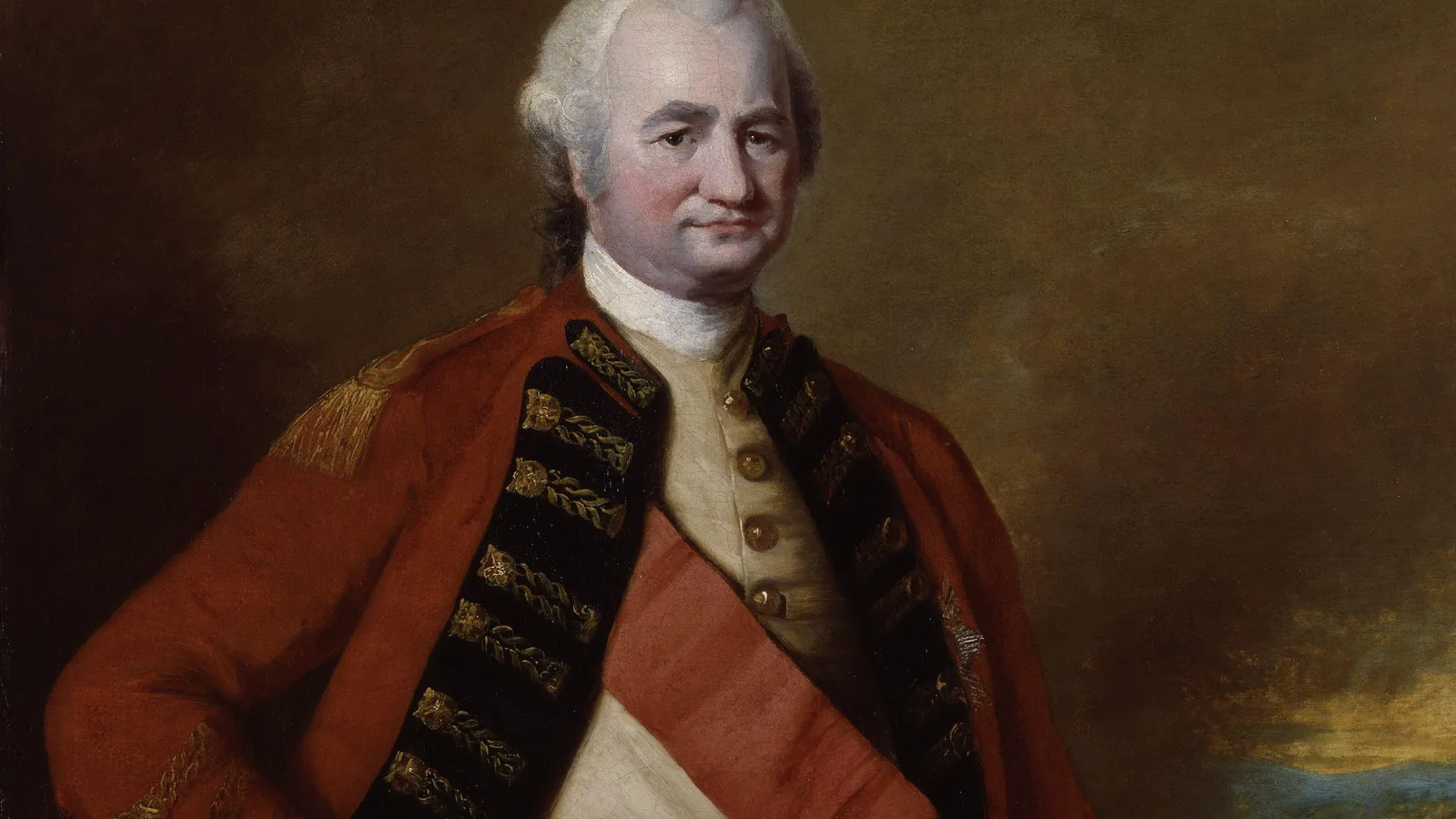
Sixteen years after Plassey, Macaulay writes, the payments from Mir Jafar were “condemned by the public voice, and severely criticised in Parliament.” Clive defended himself in a 1772 speech to the House of Commons, later printed, insisting of his second period governing Bengal that “so far from reaping any benefit myself from the expedition, I returned to England many thousand pounds out of pocket.” Both Macaulay and the National Army Museum report that Clive answered his critics with the words, “By God, Mr. Chairman, at this moment I stand astonished at my own moderation,” a line neither account traces to a surviving transcript of the debate itself. In the same printed speech, Clive said that once the diwani had made it unnecessary to draw bills on the Company, he sent an agent “into a distant and independent country to make purchases of diamonds” to remit the value of the annual grant the Mughal emperor had given him.
.jpg)
The East India Company Act 1772, 13 Geo. 3 c. 63
The Commons resolved, Macaulay records, “that acquisitions made by the arms of the State belong to the State alone, and that it is illegal in the servants of the State to appropriate such acquisitions to themselves,” and further that Clive had, through his command of British forces in India, “obtained large sums from Meer Jaffier.” A motion holding that Clive had abused his powers and set an evil example was turned aside by a procedural vote, Macaulay states, while a separate motion, that he had “rendered great and meritorious services to his country,” passed without a division. The same parliamentary period produced the East India Company Act 1772, registered by the National Archives as 13 Geo. 3 c. 63 and known afterward as the Regulating Act. The act’s text, as the National Archives publishes it, sets out qualifications for Company directors and shareholders and rules for the government of Bengal.
Key facts
- National Army Museum dates the Battle of Plassey to June 23, 1757, fought between Robert Clive’s East India Company force and Siraj-ud-Daulah’s army with its French allies.
- Macaulay states that Clive’s agreement with Mir Jafar involved two treaties, one on white paper and one on red, drawn up to deceive the financier Omichund; Clive forged Admiral Watson’s signature on the false copy.
- The National Army Museum records that a downpour disabled the Nawab’s uncovered artillery while British gunners protected their guns with tarpaulins.
- Mir Jafar, commanding the Nawab’s cavalry, refused to fight, both the museum and Macaulay state.
- The Nawab’s army lost about 500 men; the Company lost 22 killed and 50 wounded, figures the two accounts share.
- Macaulay’s 1840 account puts the Company’s silver payment at 800,000 pounds and Clive’s personal share at 200,000 to 300,000 pounds.
- In 1765 Clive obtained the diwani of Bengal from Emperor Shah Alam II, the National Army Museum states.
- The House of Commons resolved that Clive had obtained large sums from Mir Jafar but also passed a motion recognizing his services, Macaulay records; the same period produced the East India Company Act 1772, later known as the Regulating Act.
FAQ
What happened at the Battle of Plassey on June 23, 1757?
Robert Clive's East India Company force met Siraj-ud-Daulah's larger army in Bengal. A downpour disabled the Nawab's uncovered artillery, and Mir Jafar's cavalry refused to fight, after which the Nawab's army broke, the National Army Museum and Macaulay both record.
What was the secret agreement with Mir Jafar?
Macaulay states that when the financier Omichund demanded money for his silence, Clive had two treaties drawn up, a real one on white paper and a fictitious one on red, and forged Admiral Watson's name on the false copy. On the day of battle, Mir Jafar's cavalry refused to take part, the National Army Museum states.
What did the 1772-73 parliamentary inquiry decide about Clive?
The House of Commons resolved that Clive had obtained large sums from Mir Jafar, but a separate motion recognizing his "great and meritorious services" passed without a division, and a motion accusing him of abusing his powers was turned aside, Macaulay records.
Sources
- National Army Museum, "Battle of Plassey"
- Thomas Babington Macaulay, "Lord Clive" (1840), in Critical, Historical, and Miscellaneous Essays, vol. 4, Project Gutenberg ebook #55904
- Robert Clive, Baron Clive, Lord Clive's Speech Made in the House of Commons, on the Motion Made for an Inquiry into the Nature, State, and Condition, of the East India Company (London, 1772), Internet Archive
- The National Archives, legislation.gov.uk, "The East India Company Act 1772" (13 Geo. 3 c. 63)
Cite this article
- APA
- Our Earth's History. (2026, September 27). Plassey, June 23, 1757, and the inquiry that followed Clive home. Our Earth's History. https://ourearthshistory.com/south-asia/early-modern/plassey-june-23-1757-clive-siraj-ud-daulah-mir-jafar-inquiry-1773/
- Chicago
- Our Earth's History. “Plassey, June 23, 1757, and the inquiry that followed Clive home.” Our Earth's History, September 27, 2026. https://ourearthshistory.com/south-asia/early-modern/plassey-june-23-1757-clive-siraj-ud-daulah-mir-jafar-inquiry-1773/.
- MLA
- “Plassey, June 23, 1757, and the inquiry that followed Clive home.” Our Earth's History, 27 Sep. 2026, https://ourearthshistory.com/south-asia/early-modern/plassey-june-23-1757-clive-siraj-ud-daulah-mir-jafar-inquiry-1773/.
Text licensed CC BY-NC-ND 4.0. Found an error? Tell us.