Twelve pieces of striped cloth: da Gama's gift to the Zamorin, 1498

TL;DR — Vasco da Gama reached Calicut on May 20, 1498, with cloth, hats, sugar and honey; the Zamorin’s officers laughed, and he left with a letter asking for gold.
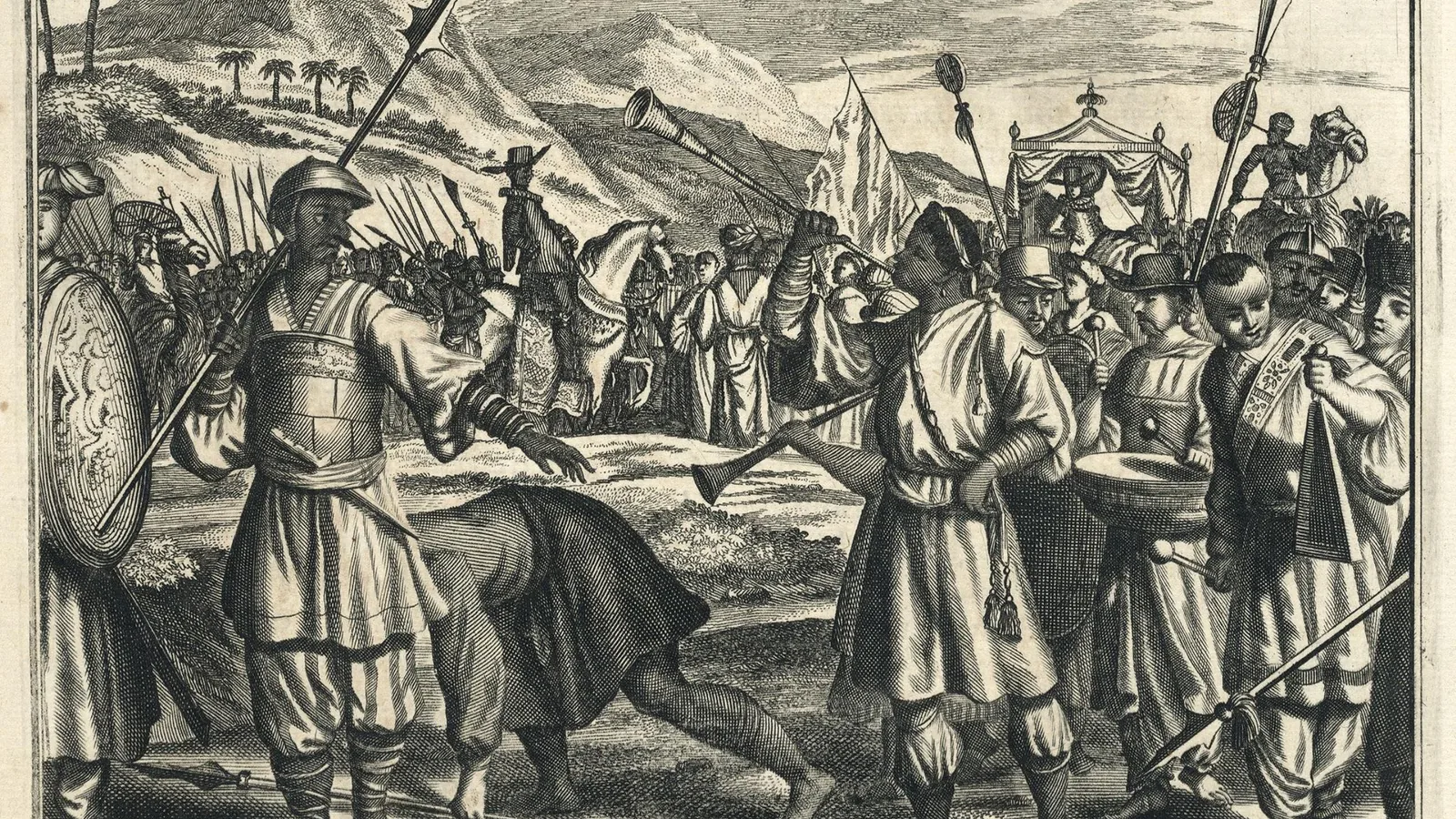
Twelve pieces of striped cloth, four scarlet hoods, six hats, four strings of coral, six wash-hand basins, a case of sugar, two casks of oil and two of honey. That was the present Vasco da Gama got ready on Tuesday, May 29, 1498, for the ruler of Calicut, and the fleet’s journal, the Roteiro, recorded how the Zamorin’s factor and the bale, the town’s governor, received it. They laughed, “saying that it was not a thing to offer to a king, that the poorest merchant from Mecca, or any other part of India, gave more, and that if he wanted to make a present it should be in gold.” What the ships carried was of no interest to the port they had reached.
Quick facts
- When
- July 8, 1497 (fleet leaves Restello) · April 24, 1498 (leaves Malindi with a Gujarati pilot) · May 20, 1498 (anchors off Calicut) · May 28 and 30, 1498 (audiences) · August 29, 1498 (departure) · July 10 and August 29, 1499 (ships reach Lisbon) · October 1, 1502 (Mecca ship burned)
- Where
- Calicut (Kozhikode) on the Malabar coast of what is now Kerala, India; Malindi in what is now Kenya; Cannanore, where the 1502 fleet waited for the Mecca ships
- Who
- Vasco da Gama, captain-major; his brother Paulo da Gama; Nicolau Coelho; the Zamorin (Samoothiri) of Calicut and his factor; the anonymous author of the Roteiro; Ibn Battuta and Ma Huan, earlier visitors; Thomé Lopes and the author of Calcoen, witnesses of 1502
- Outcome
- A sea route from Lisbon to India, a letter from the Zamorin asking for gold, silver, coral and scarlet cloth, and the death of about half the men who sailed; in 1502 a second fleet burned a Mecca ship with its passengers off the Malabar coast
Lisbon, Malindi and a pilot from Gujarat
Four ships left Restello, below Lisbon, on Saturday, July 8, 1497, under da Gama, with his brother Paulo da Gama and Nicolau Coelho commanding two of them. On April 22, 1498, at Malindi, in what is now Kenya, the king of the town sent a pilot aboard. The Roteiro calls him only “a Christian pilot.” E. G. Ravenstein, who edited the journal for the Hakluyt Society in 1898, drew on the chroniclers Barros, Góis and Faria y Sousa, who named him Malema Cana, or Canaqua, a native of Gujarat; malema is muallim, a ship’s master. The fleet left Malindi on April 24, and on Sunday, May 20, after 23 days without land, the pilot recognized the hills above Calicut.
A convict sent ashore the next morning told two Moors from Tunis “that we came in search of Christians and of spices.” The journal then describes Calicut as a city “inhabited by Christians.” The court the Portuguese had reached was Hindu, and the error ran through everything the fleet did over the next three months.
Calicut before 1498: thirteen junks and a hand-clasp
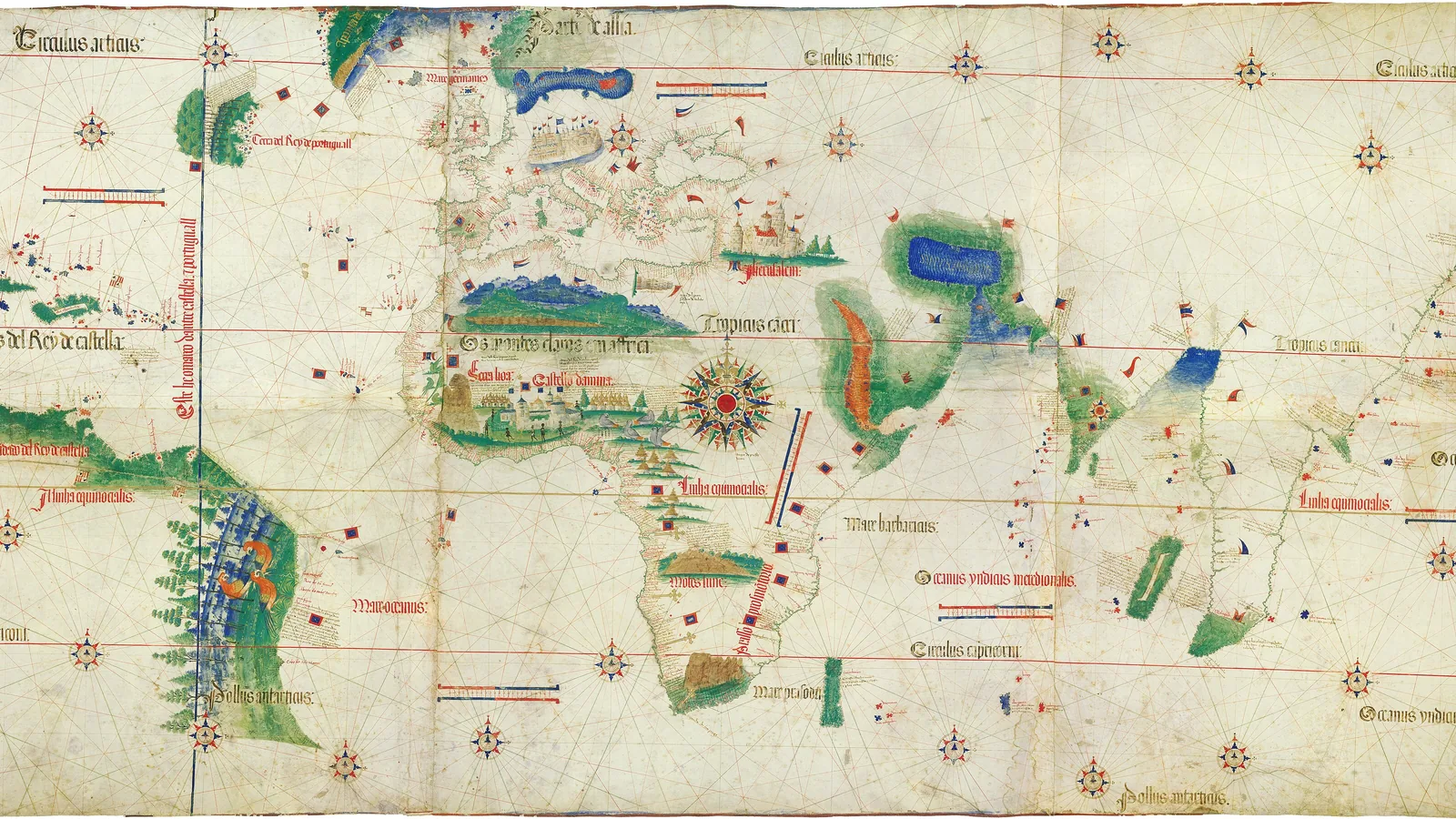
The Zamorin, a title that Ravenstein’s note derives from “Samudriya Rajah,” king of the coast, or from the Tamuri family of the Nair caste, ruled a port that had drawn the Indian Ocean’s shipping for at least 150 years. Ibn Battuta, passing through in the 1340s, called Calicut “one of the largest harbours in the world,” where 13 Chinese vessels lay when he arrived. Ma Huan, who sailed with Zheng He, wrote in 1433 that the Ming court had sent the king a silver seal and that prices for a treasure ship’s cargo were fixed by a hand-clasp that neither side could repudiate. The Portuguese had arrived at the hub of that system with a case of sugar.
.jpg)
An audience on May 28 and a present the factor refused
On Monday, May 28, da Gama went ashore with 13 men, the journal keeper among them. At the palace the party forced its way through four doors, wounding several men at the last. The king reclined on a couch of green velvet, holding a gold cup into which he threw the husks of the herb he chewed.
The present came out the next day, and the factor and the bale would not carry it. Da Gama answered that he had brought no gold, “that, moreover, he was no merchant, but an ambassador,” and that richer presents would follow if his king sent him back. Gaspar Correa, writing decades later, described King Manuel ordering gold, jewels and engraved swords “fit for presentation to the kings and rulers” abroad, but Manuel’s own letter of July 1499 says the explorers “took no merchandise with them.”
Stones or men? The second audience, May 30
On Wednesday da Gama waited four hours outside a palace door before he was admitted. The Zamorin said he had expected him on Tuesday, and that he came from a very rich kingdom yet had brought nothing. Da Gama replied that the object of his voyage was merely to make discoveries. The king asked “what it was he had come to discover: stones or men? If he came to discover men, as he said, why had he brought nothing?” The king heard Manuel’s letter read and told da Gama to land his goods and sell them.
On August 13 the king demanded 600 xerafins before the fleet left and had Diogo Dias, the clerk in charge of the goods, held in the town. On August 19 da Gama seized 18 men who had come aboard to trade and offered them in exchange. On Monday, August 27, seven boats brought Dias back with a letter.
A palm-leaf letter and the road home
Dias had written it “with an iron pen upon a palm-leaf, as is the custom of the country”; Ravenstein cautioned that the journal gives its tenor, not its wording. The Zamorin wrote that a gentleman of Manuel’s household had come to his country and that he was pleased; that his country was rich in “cinnamon, cloves, ginger, pepper, and precious stones”; and that what he asked in exchange was gold, silver, corals and scarlet cloth. On Wednesday, August 29, the captains agreed that “it appeared impossible to establish cordial relations with the people,” and sailed with the hostages aboard.
Da Gama came back in 1502 with a larger fleet. A Flemish sailor’s pamphlet printed at Antwerp about 1504, called Calcoen, recorded that off Cannanore the fleet took a Mecca ship with 380 men and many women and children aboard, seized at least 12,000 ducats from it, and “burnt the ship and all the people on board with gun powder, on the first day of October.” Thomé Lopes, on another ship, counted 240; R. S. Whiteway, comparing the accounts in 1899, wrote that the number “would only approximately be known.” Correa said 20 children and a hunchbacked pilot were spared; Calcoen names no survivors.
The crossing back over the Arabian Sea took three months less three days, and the journal records gums that grew over the teeth, swollen legs and 30 dead, “an equal number having died previously,” with seven or eight fit men left to work each ship. The first ship home reached Lisbon on July 10, 1499; da Gama followed on August 29, by Ravenstein’s reckoning, without his brother Paulo, who died on the way. Manuel’s letters patent of January 10, 1502, put the loss at “one-half of the people whom we sent out,” and the chroniclers disagree on the totals: Sernigi gave 118 men embarked and 63 home, Castanheda and Góis 148 embarked and 55 home, by Ravenstein’s tally. What came home besides the survivors and a few spices was the letter on the palm leaf, with its list of spices and its request for gold.
Key facts
- The fleet left Restello, below Lisbon, on Saturday, July 8, 1497, under Vasco da Gama, with Paulo da Gama and Nicolau Coelho commanding two of the ships (Roteiro).
- The pilot taken aboard at Malindi on April 22, 1498, is only “a Christian pilot” in the Roteiro; Ravenstein’s note names him from Barros, Góis and Faria y Sousa as Malema Cana or Canaqua, a native of Gujarat.
- The ships anchored two leagues from Calicut on Sunday, May 20, 1498; the next day a convict sent ashore said the fleet had come “in search of Christians and of spices.”
- The present of May 29, 1498: twelve pieces of striped cloth, four scarlet hoods, six hats, four strings of coral, six wash-hand basins, a case of sugar, two casks of oil and two of honey.
- The Zamorin’s letter, written on a palm leaf with an iron pen, offered cinnamon, cloves, ginger, pepper and precious stones and asked for gold, silver, coral and scarlet cloth from the king of Portugal.
- Thirty men died with swollen gums and legs on the return crossing of the Arabian Sea, “an equal number having died previously” (Roteiro); Manuel’s letters patent of 1502 say half the men sent out died.
- On October 1, 1502, da Gama’s second fleet burned a Mecca ship off Cannanore: 380 men aboard by Calcoen, 240 by Thomé Lopes; Correa said 20 children were spared, Calcoen names no survivors.
- Ibn Battuta counted 13 Chinese vessels at Calicut in the 1340s; Ma Huan described the Ming court’s silver seal to its king and the hand-clasp that fixed prices.
FAQ
Who piloted Vasco da Gama from Malindi to Calicut?
The Roteiro says only that the king of Malindi sent "a Christian pilot" on April 22, 1498. Ravenstein's 1898 edition, following the Portuguese chroniclers Barros, Góis and Faria y Sousa, calls him Malema Cana or Canaqua, a native of Gujarat, and explains the name as the Arabic muallim, ship's master, joined to his caste name.
What did Vasco da Gama give the Zamorin of Calicut?
He prepared twelve pieces of striped cloth, four scarlet hoods, six hats, four strings of coral, a case of six wash-hand basins, a case of sugar, two casks of oil and two of honey. The Zamorin's factor and the bale laughed and said the poorest merchant from Mecca gave more; they would not carry it to the king.
How many men died on Vasco da Gama's first voyage?
The Roteiro records 30 deaths on the return crossing of the Arabian Sea, from swollen gums and limbs, and an equal number before that. King Manuel wrote in 1502 that half the men sent out had died. Chroniclers cited by Ravenstein give totals from 118 embarked and 63 returned (Sernigi) to 148 embarked and 55 returned (Castanheda and Góis).
Sources
- E. G. Ravenstein (ed.), A Journal of the First Voyage of Vasco da Gama, 1497–1499 (Hakluyt Society, 1898): the anonymous Roteiro with Ravenstein's notes on the pilot, the Zamorin's title and the crew numbers, and King Manuel's letters of 1499 and 1502; Project Gutenberg text on the Internet Archive.
- Fordham University, Internet History Sourcebooks Project — "Vasco da Gama: Round Africa to India, 1497–1498 CE": editor's introduction and excerpts from the journal.
- Calcoen: A Dutch Narrative of the Second Voyage of Vasco da Gama to Calicut, printed at Antwerp circa 1504, edited and translated by J. Ph. Berjeau (London, 1874): the Mecca ship burned on October 1, 1502; Internet Archive full text.
- R. S. Whiteway, The Rise of Portuguese Power in India, 1497–1550 (London, 1899), pp. 91–93: Thomé Lopes's count of 240 men, Calcoen's 380, Correa's 20 children, the bombardment of Calicut on November 1, 1502; Internet Archive full text.
- Ibn Battuta, Travels in Asia and Africa 1325–1354, translated and selected by H. A. R. Gibb (London, 1929): Calicut as "one of the largest harbours in the world," the Samari, thirteen Chinese vessels; Internet Archive full text.
- Ma Huan, Ying-yai Sheng-lan, "The Overall Survey of the Ocean's Shores" (1433), translated by J. V. G. Mills (Hakluyt Society, 1970), the chapter on Ku-li (Calicut): the silver seal of 1407, the two Muslim chiefs, the hand-clasp; Internet Archive full text.
- Gaspar Correa, The Three Voyages of Vasco da Gama, and His Viceroyalty, from the Lendas da India, translated by Henry E. J. Stanley (Hakluyt Society, 1869), p. 27: the gold, jewels and engraved swords King Manuel ordered for presentation; Internet Archive full text.
Cite this article
- APA
- Our Earth's History. (2026, September 21). Twelve pieces of striped cloth: da Gama's gift to the Zamorin, 1498. Our Earth's History. https://ourearthshistory.com/south-asia/early-modern/vasco-da-gama-calicut-1498-zamorin-gifts/
- Chicago
- Our Earth's History. “Twelve pieces of striped cloth: da Gama's gift to the Zamorin, 1498.” Our Earth's History, September 21, 2026. https://ourearthshistory.com/south-asia/early-modern/vasco-da-gama-calicut-1498-zamorin-gifts/.
- MLA
- “Twelve pieces of striped cloth: da Gama's gift to the Zamorin, 1498.” Our Earth's History, 21 Sep. 2026, https://ourearthshistory.com/south-asia/early-modern/vasco-da-gama-calicut-1498-zamorin-gifts/.
Text licensed CC BY-NC-ND 4.0. Found an error? Tell us.