Iltutmish's written heir: Razia, sultan of Delhi, 1236–1240

TL;DR — Iltutmish named his daughter heir over his sons, and Minhaj’s Tabaqat-i Nasiri records the words. She ruled Delhi from 1236 to 1240, then died near Kaithal.
When Iltutmish returned from the conquest of Gwalior, writes Minhaj-i Siraj Juzjani, the sultan “directed his secretary . . . to put her name in writing as heir of the kingdom, and successor to the throne.” Asked why, he answered: “My sons are devoted to the pleasures of youth, and no one of them is qualified to be king. They are unfit to rule the country, and after my death you will find that there is no one more competent to guide the State than my daughter.”
Quick facts
- When
- 1236 (Iltutmish's death, Rukn al-Din's brief reign and Raziya's accession) to 1240 (defeat and death near Kaithal)
- Where
- Delhi; Tabarhindah (Bathinda); Kaithal, in what is now northern India
- Who
- Iltutmish; his daughter Raziya (Raḍiyyat); Rukn al-Din Firuz Shah; Shah Turkan; Jamal al-Din Yaqut; Malik Ikhtiyar al-Din Altunia; Sultan Bahram Shah; the chronicler Minhaj-i Siraj Juzjani
- Outcome
- Raziya ruled Delhi from 1236 to 1240, the only woman to hold the throne of the Delhi Sultanate in her own right. She was defeated and killed near Kaithal in 1240 after Malik Altunia's revolt and second march on Delhi.
1236: two dates for one death
Minhaj’s Persian text dates Iltutmish’s death to the “20th of Sha’ban, 633 H.,” which the 1869 Elliot and Dowson translation converts to “the end of April, 1235.” Encyclopaedia Iranica, in Peter Jackson’s article on the sultan, converts the same Hijri date to “29 April 1236” and states that Iltutmish “was succeeded by four of his children, including his eldest daughter Raziyya.” The reason Minhaj gives for that choice, that the sons were “devoted to the pleasures of youth,” is his own; a later chronicle, the Tazkarat-ul-Muluk, adds a separate reason not found in Minhaj’s text. English writers commonly render the new sultan’s name “Razia.” Raverty’s 1881 translation rejects that spelling: “‘Raḍiyyat’ has a meaning, but ‘Raziya’ and ‘Riziah’ mean nothing.” Iranica writes the name as Raziyya.
Shah Turkan's revenge
Shah Turkan, mother of the new sultan Rukn al-Din Firuz Shah, ruled through her son once Iltutmish was gone. Minhaj records that Rukn al-Din was “so devoted to licentiousness and debauchery that the business of the State was neglected and fell into confusion,” and that Shah Turkan “caused the young prince Kutbu-d din, son of the late king . . . to be blinded and afterwards to be put to death.” Provincial governors rose in revolt, and in Delhi, Elliot and Dowson’s translation states, “Raziya, eldest daughter of the late Sultan, quarrelled with the mother of Sultan Ruknu-d din. . . . His mother had attempted to capture and kill Sultan Raziya, but the people rose.” Raziya seized the royal palace and took Shah Turkan prisoner; “the guards and Turkish nobles came into the city, and joining Raziya, proffered their allegiance to her, and raised her to the throne.” Raverty, reading the same Persian passage, objected that Elliot and Dowson had misread the passage, so that Tajik officials who had in fact been killed appear in their version as the men who pledged allegiance to her. Rukn al-Din did not survive the change of power. Minhaj records his death “on Sunday, the 18th of Rabi’u-l awwal A.H. 634 (November, 1236 A.D.),” after a reign of “six months and twenty-eight days.”
"A great monarch"
“Sultan Raziya was a great monarch,” Minhaj wrote of the reign that followed. “She was wise, just, and generous, a benefactor to her kingdom, a dispenser of justice, the protector of her subjects, and the leader of her armies. She was endowed with all the qualities befitting a king, but she was not born of the right sex, and so in the estimation of men all these virtues were worthless.” She rebuilt the administration, conferring “the office of wazir on an upright officer” and giving command of the army to Malik Saif al-Din Aibak Bahtu, with the title Katlagh Khan.

The stables and the coat
Amir Jamal al-Din Yaqut, superintendent of the royal stables, “was made a personal attendant of her majesty,” Minhaj wrote. “This created jealousy among the Turkish generals and nobles.” The same chronicle records a change in how the sultan appeared in public: “The Sultan Raziya now threw off the dress and veil of women. She put on a coat (kaba) and cap, and showed herself among the people.” When she rode out on an elephant, Minhaj adds, everyone could see her. Raverty’s footnote corrects the timing: “it was only just before the end of her reign that she assumed the dress of a male.” On Yaqut, Raverty found that Minhaj’s own text goes no further than saying the Abyssinian “was treated with favour”; the detail of him lifting the sultan onto her horse comes from a later work, the sixteenth-century Tabaqat-i Akbari, and the Zubdat-ut-Tawarikh “makes no reference to the Abyssinian whatever.” A romance between the two is a later embellishment, one that Raverty rejected wherever writers after Minhaj had introduced it.
Tabarhindah to Kaithal
Malik Ikhtiyar al-Din Altunia, governor of Tabarhindah, rebelled and took the sultan prisoner in her own fortress. Raverty’s translation states: “When they imprisoned Sultan Raziyyat within the stronghold of Tabarhindah, Malik Ikhtiyar-ud-Din, Altuniah, entered into a matrimonial contract with her, and espoused her, and marched an army towards Dihli, in order to take possession of the kingdom a second time.” The historian Mountstuart Elphinstone later wrote that Raziya “so far gained over Altunia by the influence of love or ambition, that he agreed to marry her.” Raverty rejected the claim outright: “I wonder what ‘authentic history’ that is recorded in, or how proved?” His own reading was political, that Altunia had been “left out in the cold after being made a tool of” by rivals at Delhi and turned to Raziya’s cause “out of revenge.” “I think the character of this Princess has been assailed without just cause,” Raverty added.
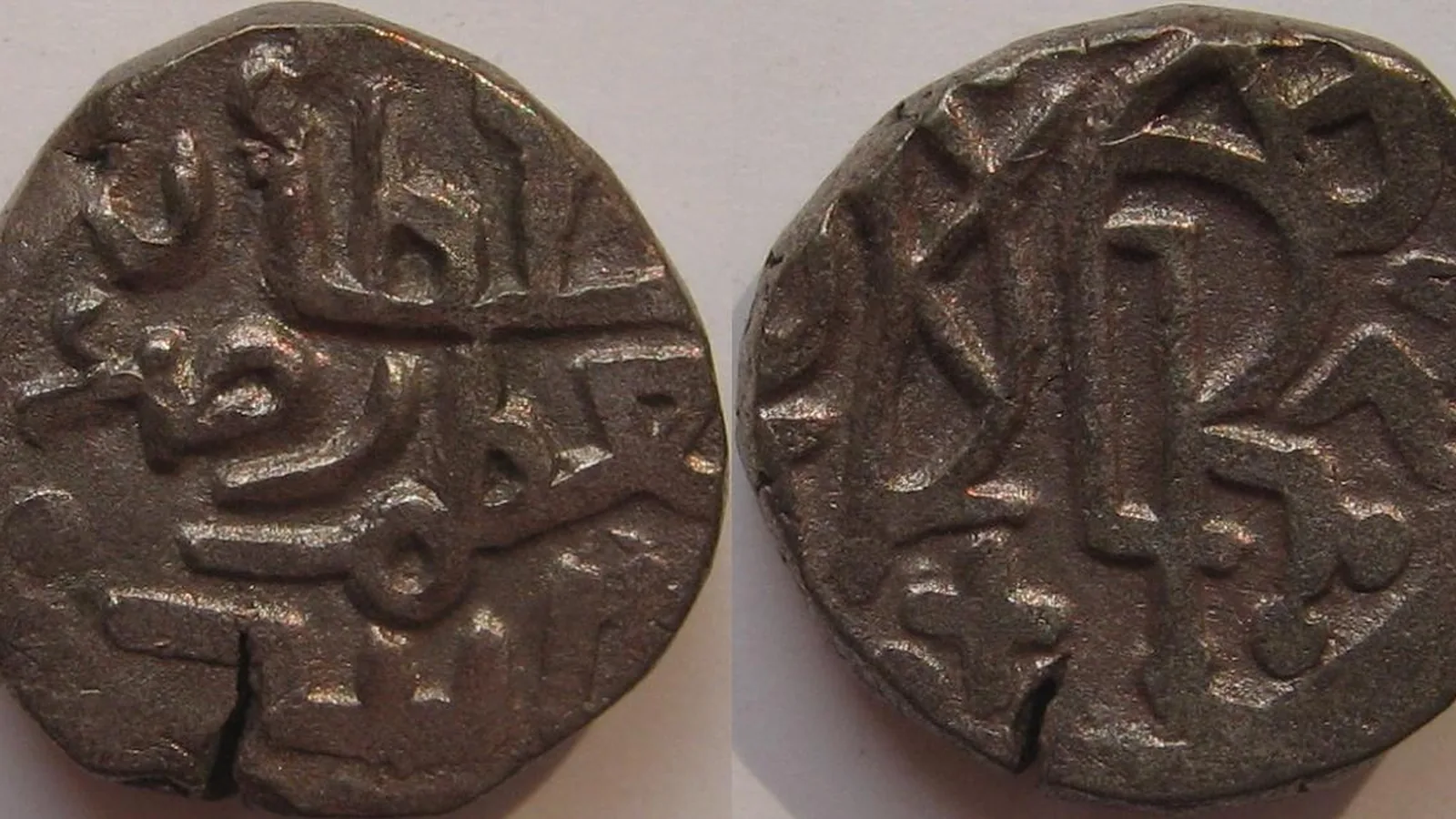
Sultan Bahram Shah marched an army out of Delhi against the couple. Raverty’s text records that Raziya and Altunia “were routed, and, having reached Kaithal, the troops along with them all abandoned them,” and that both “fell captive into the hands of Hindus and attained martyrdom” on “Tuesday, the 25th of Rabi’-ul-Awwal, in the year 638 H.” Raverty notes that one manuscript instead gives “Saturday, the 29th of Rabi’-al-Akhir,” a date he states “cannot be correct.” Her reign, by his count, ran “three years, six months, and six days”; Elliot and Dowson’s translation gives “three years and six days.” A coin struck in her name reads, in Raverty’s rendering, “The illustrious among women, the Queen of the Age,” and names her as the daughter of Iltutmish.
Key facts
- Iltutmish named his daughter heir after returning from the conquest of Gwalior, telling his court “there is no one more competent to guide the State than my daughter” (Elliot & Dowson translation of Minhaj).
- Minhaj dates Iltutmish’s death to 20 Sha’ban 633 H., rendered “the end of April, 1235” by Elliot & Dowson and “29 April 1236” by Encyclopaedia Iranica.
- Rukn al-Din Firuz Shah reigned “six months and twenty-eight days” and died “on Sunday, the 18th of Rabi’u-l awwal A.H. 634 (November, 1236 A.D.).”
- Minhaj called the new sultan “a great monarch . . . wise, just, and generous,” adding that she was “not born of the right sex.”
- Raziya gave the wazirate to “an upright officer” and command of the army to Malik Saif al-Din Aibak Bahtu, titled Katlagh Khan.
- Jamal al-Din Yaqut’s promotion to personal attendant “created jealousy among the Turkish generals and nobles”; Raverty found the later romance attached to the story in no source earlier than the sixteenth century.
- Malik Altunia married Raziya while holding her prisoner at Tabarhindah, then marched on Delhi with her a second time.
- Raziya and Altunia were routed near Kaithal and killed; Raverty dates her death to “Tuesday, the 25th of Rabi’-ul-Awwal . . . 638 H.” (1240), after a reign he counts as three years, six months and six days.
FAQ
How did Raziya become heir to the Delhi Sultanate?
Her father, Iltutmish, named her in writing as heir after returning from the conquest of Gwalior, directing his secretary to record her name over those of his sons because, he said, none of them was fit to rule. Minhaj-i Siraj Juzjani, a contemporary at the Delhi court, recorded the episode in the Tabaqat-i Nasiri.
Why did the Turkish nobles turn against Raziya?
Minhaj records that her promotion of Jamal al-Din Yaqut, superintendent of the royal stables, to personal attendant "created jealousy among the Turkish generals and nobles." That resentment fed the revolt that Malik Ikhtiyar al-Din Altunia led from Tabarhindah.
How did Raziya's reign end?
Altunia, who had imprisoned and then married her at Tabarhindah, marched with her on Delhi against Sultan Bahram Shah. Their forces were routed near Kaithal, and Raverty's translation of Minhaj dates her death to the 25th of Rabi al-Awwal, 638 H. (1240).
Sources
- Elliot & Dowson (John Dowson, ed.), The History of India, as Told by Its Own Historians: The Muhammadan Period, vol. II (London, 1869), "Tabakat-i Nasiri" section, Packard Humanities Institute, Persian Literature in Translation.
- H. G. Raverty, trans., Tabakat-i-Nasiri: A General History of the Muhammadan Dynasties of Asia, vol. 1 (London, 1881), Internet Archive scan of the Digital Library of India copy.
- Peter Jackson, "Eltotmes, Sams-al-Din," Encyclopaedia Iranica (Encyclopaedia Iranica Foundation).
Cite this article
- APA
- Our Earth's History. (2026, September 24). Iltutmish's written heir: Razia, sultan of Delhi, 1236–1240. Our Earth's History. https://ourearthshistory.com/south-asia/medieval/razia-sultan-delhi-1236-1240-iltutmish-heir-minhaj-tabaqat-i-nasiri/
- Chicago
- Our Earth's History. “Iltutmish's written heir: Razia, sultan of Delhi, 1236–1240.” Our Earth's History, September 24, 2026. https://ourearthshistory.com/south-asia/medieval/razia-sultan-delhi-1236-1240-iltutmish-heir-minhaj-tabaqat-i-nasiri/.
- MLA
- “Iltutmish's written heir: Razia, sultan of Delhi, 1236–1240.” Our Earth's History, 24 Sep. 2026, https://ourearthshistory.com/south-asia/medieval/razia-sultan-delhi-1236-1240-iltutmish-heir-minhaj-tabaqat-i-nasiri/.
Text licensed CC BY-NC-ND 4.0. Found an error? Tell us.