Fondest of making gifts and of shedding blood: Ibn Battuta's Delhi

TL;DR — Ibn Battuta met Muhammad bin Tughluq on June 8, 1334, was made a qadi of Delhi at 12,000 dinars a year, and left in 1342 as envoy to China.
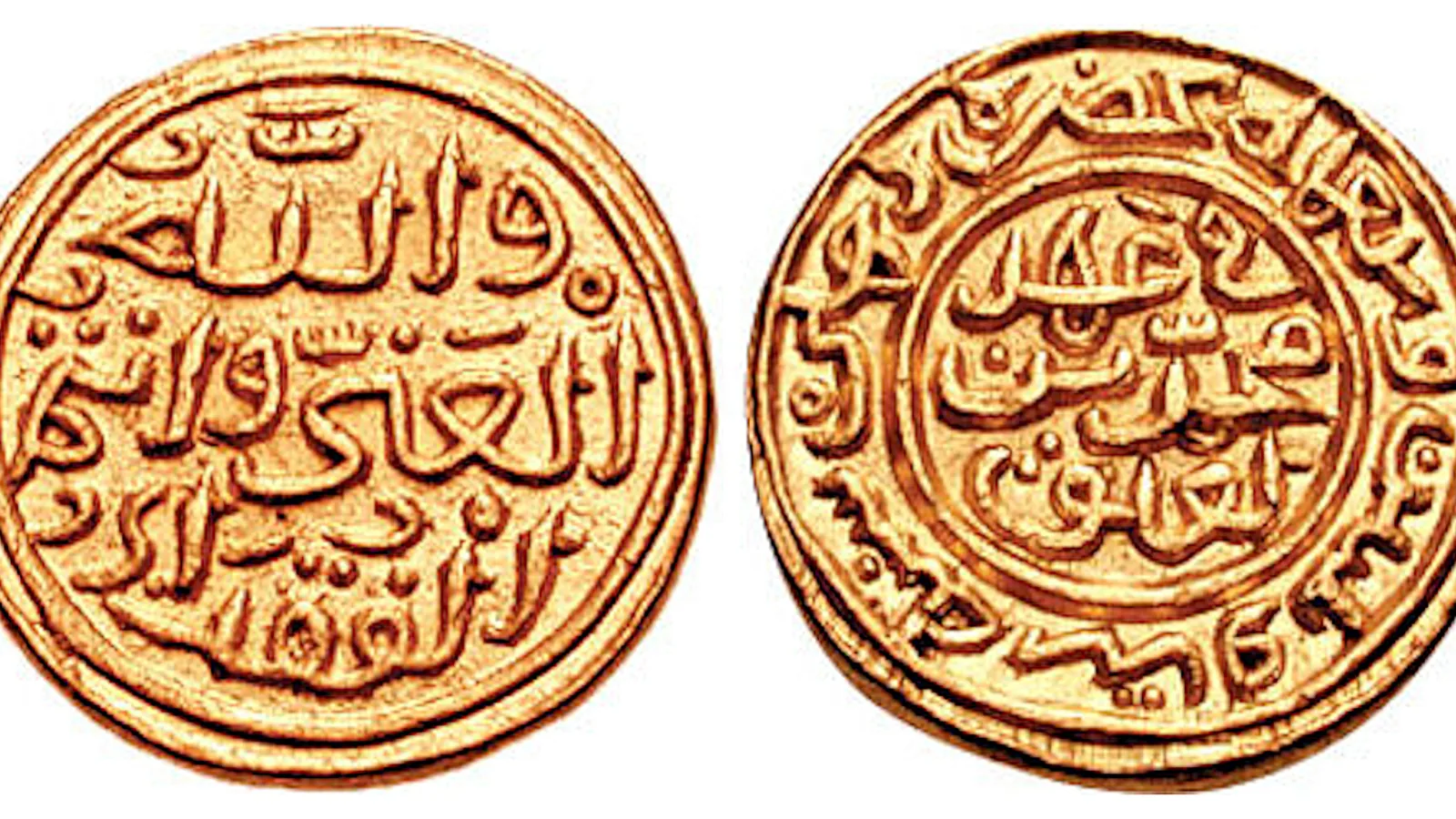
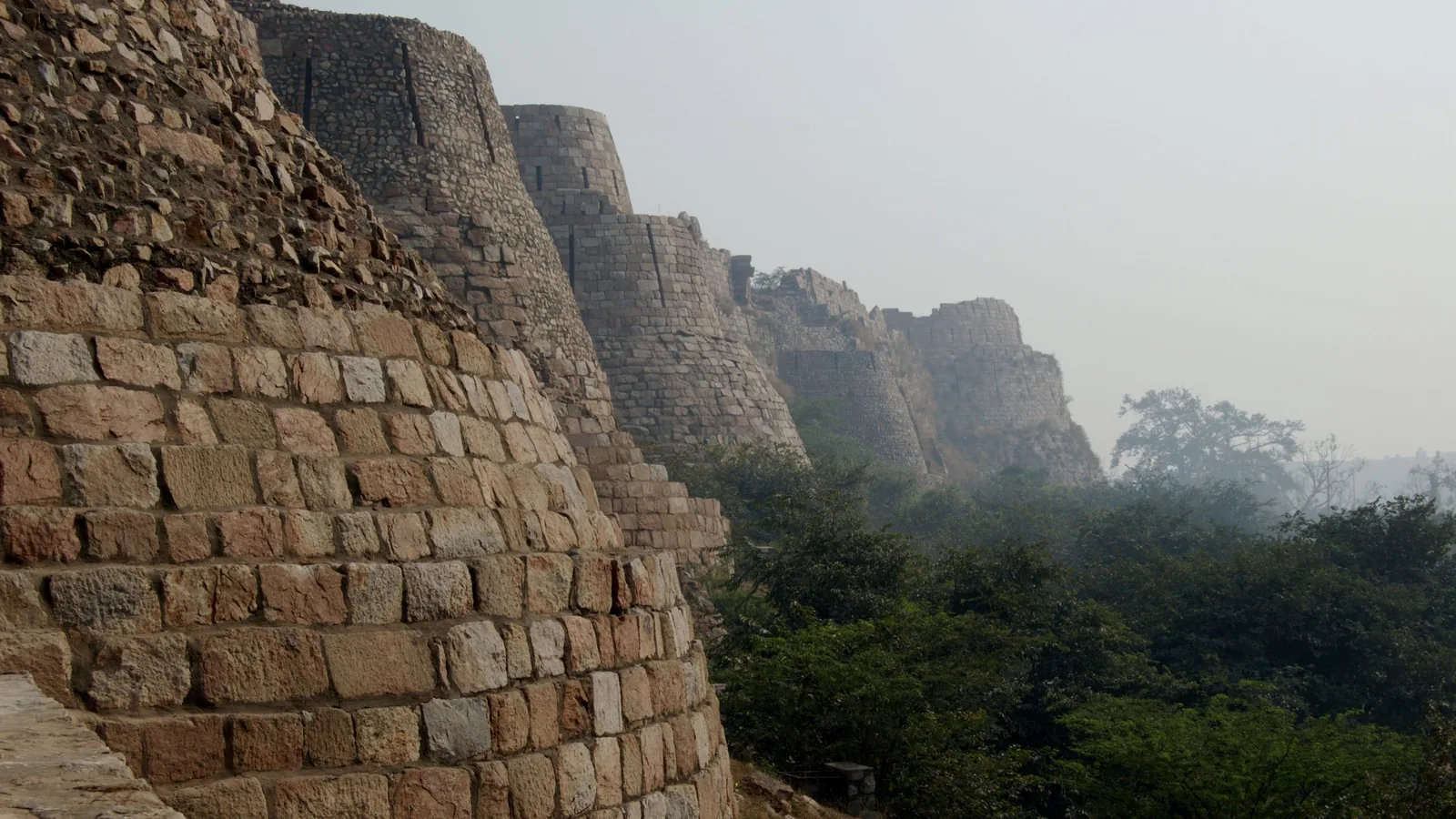
“This king is of all men the fondest of making gifts and of shedding blood. His gate is never without some poor man enriched or some living man executed.” So Ibn Battuta of Tangier described Sultan Muhammad Shah of Delhi, called Muhammad bin Tughluq, in H. A. R. Gibb’s 1929 translation of his travels (p. 197). He had come to be paid at that gate. On June 8, 1334, he went out with other newcomers to the castle of Tilbat, seven miles from the capital, and the sultan took his hand. He was made qadi, a judge, of the Malikite school of law at Delhi on 12,000 dinars a year, held the post for seven or eight years, and in 1342 left as the sultan’s ambassador to China. The sultan reigned from 1325 to 1351, in the Encyclopaedia Iranica’s dating. A billon coin of his father, struck at Delhi in 722 AH, 1322 to 1323, is in the American Numismatic Society’s collection.
Quick facts
- When
- September 12, 1333 (Ibn Battuta reaches the Indus) · June 8, 1334 (first audience with the sultan at Tilbat) · early December 1341 (permission to go to Mecca) · July 22, 1342 (the embassy to China leaves Delhi) · 1342 (shipwreck at Calicut)
- Where
- The Indus crossing and Multan in Sind; Delhi, the capital of the sultanate, then made up of four adjoining towns; the castle of Tilbat, seven miles from the capital; Calicut on the Malabar coast, in what is now Kerala
- Who
- Ibn Battuta of Tangier, appointed qadi of the Malikite rite at Delhi; Sultan Muhammad Shah, called Muhammad bin Tughluq, who reigned from 1325 to 1351; the merchant Shihab ad-Din of Kazarun; the poet Shams ad-Din; the sultan's half-brother Mas'ud Khan; the shaykh Shihab ad-Din; H. A. R. Gibb, translator (1929 and 1971)
- Outcome
- Ibn Battuta held his post for seven or eight years, fell into disfavor in 1341, withdrew, and was sent as the sultan's ambassador to China in 1342. At Calicut the junk carrying the sultan's present sank with all on board, his own ship sailed without him, and he was left on the beach with ten dinars and a carpet
September 12, 1333: the Indus, Multan and forty days to Delhi
Ibn Battuta reached the Indus on the night the new moon of Muharram 734 AH rose, September 12, 1333, and the sultan’s intelligence officers sent word of his party to the king (p. 181). Sind to Delhi was fifty days’ march, but a letter reached the sultan in five days by the post, mounted couriers with relays every four miles and foot runners carrying a rod with bells (p. 183).
He waited two months at Multan, then marched forty days to the capital (p. 189). The sultan, he wrote, honored strangers with governorships and high office, and a decree gave foreigners the title ‘Aziz, which Gibb renders “Honourable” (p. 184). Delhi was then four adjoining towns, the fourth of them, Jahan Panah, built by the reigning sultan as his own residence (pp. 193–194).
Shihab ad-Din's hundred thousand tangahs
A merchant of Kazarun, Shihab ad-Din, was robbed of his present on the road and fell ill; the sultan sent a courtier to the treasury for a hundred thousand tangahs of gold, a tangah being worth, Gibb’s text explains, two and a half Moroccan dinars, and had three ships fitted out to take him home (pp. 200–201). The poet Shams ad-Din wrote a Persian ode of 27 verses and received a thousand silver dinars for each verse, where former kings gave a thousand dirhams (p. 202).
An Indian noble accused the sultan of putting his brother to death without cause and cited him before the qadi; the sultan walked to the tribunal on foot and unarmed, lost, and gave satisfaction (p. 202). When famine drove a maund of wheat to six dinars, every person in Delhi was given six months’ provisions from the granary at a pound and a half a day (p. 203).
"Far too ready to shed blood"
The other half follows without a break. “In spite of all we have said of his humility, justice, compassion for the needy, and extraordinary generosity, the sultan was far too ready to shed blood,” Ibn Battuta wrote, and prisoners in chains filled the hall each day except Friday (p. 203). The sultan’s half-brother Mas’ud Khan, suspected of wishing to revolt, confessed under threat of torture and was beheaded in the market (pp. 203–204).
The gravest charge, in his words, was the emptying of Delhi and the removal of its people to Daulatabad. The order came before he arrived; he reports two punishments of men found still in the city, which he can only have had from others; and the scene of the sultan on his palace roof, looking over a city “where there was neither fire nor smoke nor lamp,” opens with “A person in whom I have confidence told me” (p. 204). He found the city “empty and unpopulated, save for a few inhabitants.” Gibb’s 1971 Hakluyt Society edition adds a note that Mahdi Husain’s study of the evidence found the account “greatly exaggerated,” the orders of 1327 and 1329 having fallen mainly on Muslim notables and shaykhs (vol. III, p. 707).

Twelve thousand dinars a year, less a tenth
Asked who among the newcomers could serve, Ibn Battuta answered that judgeships were “the occupation of my fathers before me,” and was summoned to do homage as qadi of the Malikite rite at Delhi (pp. 206–207). The stipend was 12,000 dinars a year and two villages on top of three already granted; payment lagged six months, and a tenth was deducted from every sum the sultan gave (pp. 207, 209). Gibb, in his 1929 introduction, called the post “a rich sinecure” (p. 6).
He owed merchants 55,000 dinars and used a custom of the country, the creditor stopping his debtor at the palace door with the cry “O enemy of the sultan” until paid. The sultan took the debt on himself, and the money came at last in three sacks, the 55,000 and the 12,000 together, less the tenth (pp. 207–209).
From the audience hall to the beach at Calicut
The disfavor came in 1341. Ibn Battuta had visited the shaykh Shihab ad-Din outside Delhi; the sultan ordered four slaves to stand beside him in the audience hall, a step, he wrote, from which few escaped. He fasted five days, then four more, and was released after the shaykh’s death (p. 211). He gave up his post, and, summoned to the sultan in Sind, came dressed as a mendicant and asked leave for Mecca, granted in early December 1341 (pp. 211–212).
“Forty days later,” the sultan sent horses, robes and money and named him ambassador to the king of China, “for I know your love of travel” (p. 212). The embassy left Delhi on July 22, 1342 (p. 215). Gibb’s introduction gives the Delhi years as “seven years or so,” the Iranica entry as eight; Beckingham wrote there that “As history, it is very unreliable,” and that its author once held that an elephant could climb the Qutb Minar. At Calicut the junk carrying the sultan’s present sank in a storm with all on board, and the kakam with his goods and slaves sailed without him, “leaving me alone on the beach,” with “nothing left with me at all except ten dinars and the carpet I had slept on” (pp. 236–237).
Key facts
- Ibn Battuta reached the Indus on the night of the new moon of Muharram 734 AH, September 12, 1333, and the sultan’s intelligence officers reported his arrival (Gibb 1929, p. 181).
- Sind to Delhi was fifty days’ march, but the post carried a letter in five days by mounted relays every four miles and foot runners (p. 183).
- He waited two months at Multan and marched forty days to the capital; the sultan’s decree gave foreigners the title ‘Aziz, “Honourable” (pp. 184, 189).
- The first audience was on June 8, 1334, at the castle of Tilbat, seven miles from Delhi (p. 206).
- The merchant Shihab ad-Din received a hundred thousand tangahs of gold and three ships; the poet Shams ad-Din a thousand silver dinars a verse for 27 verses (pp. 200–202).
- Appointed qadi of the Malikite rite at Delhi, he was paid 12,000 dinars a year plus villages, six months late and less a tenth (pp. 206–209).
- Four slaves were set beside him in the audience hall after his visit to the shaykh Shihab ad-Din; he fasted nine days in all and was freed at the shaykh’s death (p. 211).
- Permission for Mecca came in early December 1341; the China embassy left Delhi on July 22, 1342; at Calicut he was left with ten dinars and a carpet (pp. 212, 215, 236–237).
FAQ
When did Ibn Battuta meet Muhammad bin Tughluq?
On June 8, 1334, the 4th of Shawwal 734 AH, at the castle of Tilbat, seven miles from Delhi, where the newcomers were presented in order of precedence and given robes of linen embroidered in gold. He had reached the Indus on September 12, 1333.
What was Ibn Battuta paid as qadi of Delhi?
Twelve thousand dinars a year, with two villages added to three already assigned. By his own account the first payment took six months, and a tenth was deducted from all sums given by the sultan.
Did Ibn Battuta see the evacuation of Delhi to Daulatabad?
No. He wrote that the city was already "empty and unpopulated, save for a few inhabitants" when he arrived, and the story of the sultan on his palace roof rests, in his own words, on a person he trusted. The 1971 Hakluyt Society edition notes Mahdi Husain's finding that the account is greatly exaggerated.
Sources
- Ibn Battuta, Travels in Asia and Africa 1325–1354, translated and selected by H. A. R. Gibb (The Broadway Travellers, George Routledge & Sons, London, 1929), pp. 6, 13, 181–184, 189, 193–194, 197–209, 211–215 and 236–237; Internet Archive, identifier dli.ernet.16353 (full text).
- The Travels of Ibn Battuta, A.D. 1325–1354, vol. III, translated with revisions and notes by H. A. R. Gibb (Hakluyt Society, second series no. 141, Cambridge, 1971), foreword, pp. 657–658, 695, 707 (note 179) and 766–767; Internet Archive, identifier the-travels-of-ibn-battuta-volume-3 (full text).
- C. F. Beckingham, "EBN BAṬṬŪṬA," Encyclopaedia Iranica, vol. VIII, fasc. 1, pp. 4–6 (published December 15, 1997; last updated December 19, 2013).
- Encyclopaedia Iranica, "DELHI SULTANATE," vol. VII, fasc. 3, pp. 242–250 (1994), entry page.
- Encyclopaedia Iranica, "DELHI SULTANATE i. Political and Cultural History" (Tughluqid regnal dates; the refugee party of 734/1333; the sultan's favor to foreigners).
- Office of Resources for International and Area Studies (ORIAS), University of California, Berkeley, "The Travels of Ibn Battuta," overview page with the itinerary section "Delhi, the Capital of Muslim India: 1334–1341."
- American Numismatic Society, collection record 1938.50.29, "Billon Coin of Tughluq I, Delhi, 722 H." (date range 1322–1323).
Cite this article
- APA
- Our Earth's History. (2026, September 22). Fondest of making gifts and of shedding blood: Ibn Battuta's Delhi. Our Earth's History. https://ourearthshistory.com/south-asia/medieval/ibn-battuta-delhi-1334-muhammad-bin-tughluq-qadi/
- Chicago
- Our Earth's History. “Fondest of making gifts and of shedding blood: Ibn Battuta's Delhi.” Our Earth's History, September 22, 2026. https://ourearthshistory.com/south-asia/medieval/ibn-battuta-delhi-1334-muhammad-bin-tughluq-qadi/.
- MLA
- “Fondest of making gifts and of shedding blood: Ibn Battuta's Delhi.” Our Earth's History, 22 Sep. 2026, https://ourearthshistory.com/south-asia/medieval/ibn-battuta-delhi-1334-muhammad-bin-tughluq-qadi/.
Text licensed CC BY-NC-ND 4.0. Found an error? Tell us.