Why did Rajendra Chola send a fleet against Srivijaya in about 1025?

TL;DR — Rajendra’s inscriptions name the ports his ships took, Srivijaya, Kadaram and 11 more, and say nothing about why. Nilakanta Sastri wrote that the cause cannot be stated.
No surviving record says why Rajendra I sent ships against Srivijaya in about 1025; his inscriptions list the ports his army took and stop there. Rajendra was the son of Rajaraja I, whose reign had turned the Chola kingdom of the Tamil country into an empire with a standing army and a navy. Srivijaya, in the historian K. A. Nilakanta Sastri’s words, “controlled the sea routes from India to China” from Sumatra and the Malay peninsula. The two courts had been on good terms; a Srivijayan king had built a Buddhist monastery on the Chola coast with Rajaraja’s consent. The Tamil prasasti of Rajendra records the capture of the king of Kadaram and a chain of fortified ports. Sastri wrote that the reason “we cannot say.”
Quick facts
- When
- Rajaraja I crowned 985 · Thanjavur temple consecrated 1009–1010 · Rajendra co-ruler 1012 · Ganges campaign 1022–1023 · fleet against Srivijaya about 1025 · peace recorded 1089–1090
- Where
- Thanjavur, Gangaikondacholapuram and Nagapattinam on the Tamil coast; Srivijaya (Palembang, Sumatra), Kadaram and the Nicobar Islands
- Who
- Rajaraja I and his son Rajendra I of the Chola line; Sangrama Vijayottungavarman, Sailendra king of Kadaram and Srivijaya; K. A. Nilakanta Sastri, who edited the record
- Outcome
- The Chola prasasti says the king of Kadaram was captured and his treasure taken; the kingdom was handed back under Chola overlordship, and no motive is recorded
A temple and a treasury, 1010
Rajaraja crowned himself in the middle of 985. Sastri’s A History of South India, in its 1958 edition, called his 30 years “the formative period of Chola imperialism”: a kingdom barely recovered from a Rashtrakuta invasion became “possessed of a powerful standing army and navy.” He broke the Pandya and Kerala kings, then sent a naval expedition that overran northern Ceylon and destroyed Anuradhapura; Sastri gave no year for it.
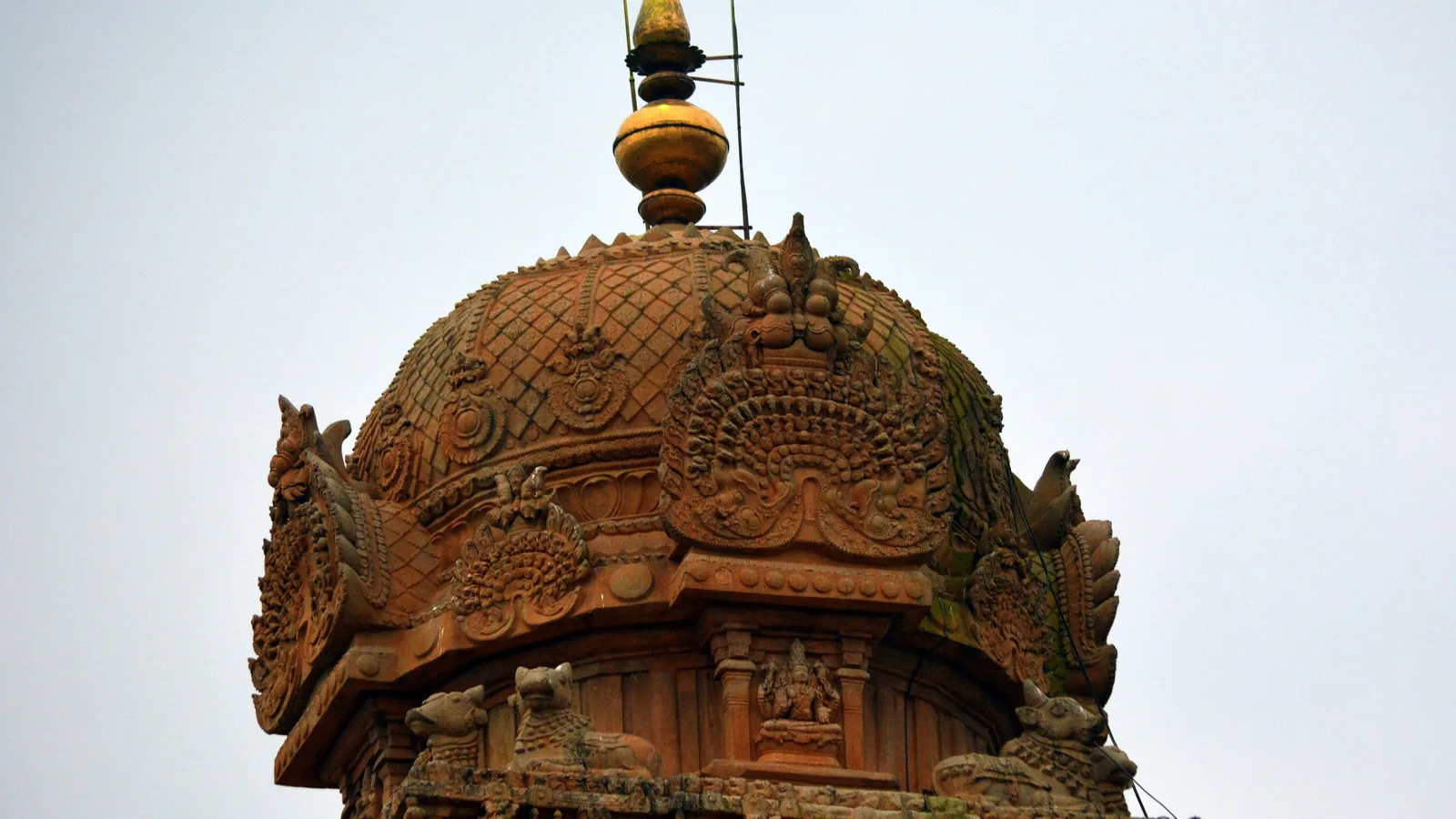
The money went into stone. According to the UNESCO listing prepared by the Archaeological Survey of India, Rajaraja began the Thanjavur temple, called Dakshina Meru in its inscriptions, in about 1003 and consecrated it with his own hands in the 25th (1009–1010); its tower rose 59.82 meters. K. V. Subrahmanya Aiyer, editing the Leiden plates for Epigraphia Indica in 1933, wrote that its gifts came from the booty of the Chera, Pandya and Chalukya wars. Sastri closed the reign with Rajaraja’s death in 1014; UNESCO gives 985–1012, the year Rajendra became co-ruler.
Rajendra's reach, 1014 to 1025
Rajendra finished the conquest of Ceylon; Sastri recorded that Mahinda V, the Sinhalese king, died a prisoner in the Chola country 12 years after his capture. Then his army marched through Vengi and Kalinga to the Ganges. Rajendra camped on the Godavari to hold the army’s line of return, crowned his nephew Rajaraja as king of Vengi on August 16, 1022, and went home to a new capital, Gangaikondasolapuram, “the city of the Chola who took the Ganges.”
The Tiruvalangadu copper plates, found in 1906, give that campaign a motive in the king’s own voice: Rajendra, “laughing at Bhagiratha who had brought down the Ganges to the earth from heaven by the power of his austerities, wished to sanctify his own country with the waters of the Ganges.”
What the inscriptions say about 1025
“Very soon after,” Sastri wrote, came the fleet. The Tiruvalangadu plates gave it half a verse: the king conquered Kataha with troops that had crossed the ocean. The Tamil prasasti, published by E. Hultzsch in 1891, told more. The king, “having despatched many ships in the midst of the rolling sea and having caught Sangrama-vijayottunga-varman, the king of Kadaram, together with elephants in his glorious army, (took) the large heap of treasures.” Then it named the places taken: Srivijaya “with the jewelled wicket-gate,” Mayirudingam “surrounded by the deep sea (as) by a moat,” 10 more, and last Kadaram “of fierce strength, which was protected by the deep sea.” Sastri dated the expedition to about 1025.
H. Krishna Sastri, introducing volume III of South Indian Inscriptions in 1929, followed George Coedès in placing Srivijaya at Palembang in Sumatra and put Kadaram in lower Burma. By 1955 Nilakanta Sastri, citing Coedès’s 1918 study, took Kadaram to be Kedah on the Malay peninsula, a dependency of Srivijaya whose name the Cholas used for the whole kingdom.
On the cause, the record is blank. “We can get no direct answer to these questions from contemporary records,” Sastri wrote in The Cōḷas. Sastri set out two possibilities: an attempt by Srivijaya to obstruct Chola trade with China, or “more probably, a simple desire on the part of Rajendra to extend his digvijaya to the countries across the sea . . . and thereby add lustre to his crown.” A digvijaya was the circuit of victory expected of a great king. Krishna Sastri had supposed in 1929 that the king of Kadaram, “proving refractory,” forced Rajendra to “the extreme step” of conquering his whole kingdom.
The campaign ended in plunder and withdrawal. Sastri called it “a complete success,” with Kadaram and the capital Srivijaya sacked and their king taken, and wrote that it “apparently ended with the restoration of the kingdom to its ruler subject to his acknowledging Chola suzerainty.” No evidence showed the Cholas tried to rule these lands; “at best they might have received a periodical tribute.”
The Buddhist monastery at Nagapattinam
The friendship that preceded the war survives on 21 copper plates in the Leiden University Museum. Their Tamil portion records that in Rajaraja’s 21st regnal year, about 1005, the lord of Kadaram was building a monastery for the Buddha at Nagapattinam on the Chola coast, and that Rajaraja gave it the whole revenue of the village of Anaimangalam, 8,943 kalam of paddy a year. A Sanskrit preface added under Rajendra names the builder as Chulamanivarman of the Sailendra family, lord of Srivijaya.
Aiyer asked how a foreign king came to build in “the heart of the distant Chola dominion.” Rajaraja’s inscriptions listed conquests from Kalinga to Ceylon and never mentioned Kataha, so Aiyer concluded that the Sailendra king built with permission, as a friend. R. C. Majumdar, in a note in the same volume, agreed that relations were friendly early in Rajendra’s reign, “but soon hostility broke out.” He read the Tiruvalangadu plates, dated in Rajendra’s sixth year, as the first sign of it, which puts the fighting earlier than Sastri’s 1025.
The Smaller Leiden plates recorded the end of the quarrel. In the 20th year of Kulottunga I, two envoys of the king of Kadaram asked the Chola king to confirm in copper the tax exemption of the monastery’s village. Majumdar wrote that “diplomatic relations were again established, and friendly feelings revived, after a struggle of more than half a century,” and dated the peace to 1089–1090.
The bronzes
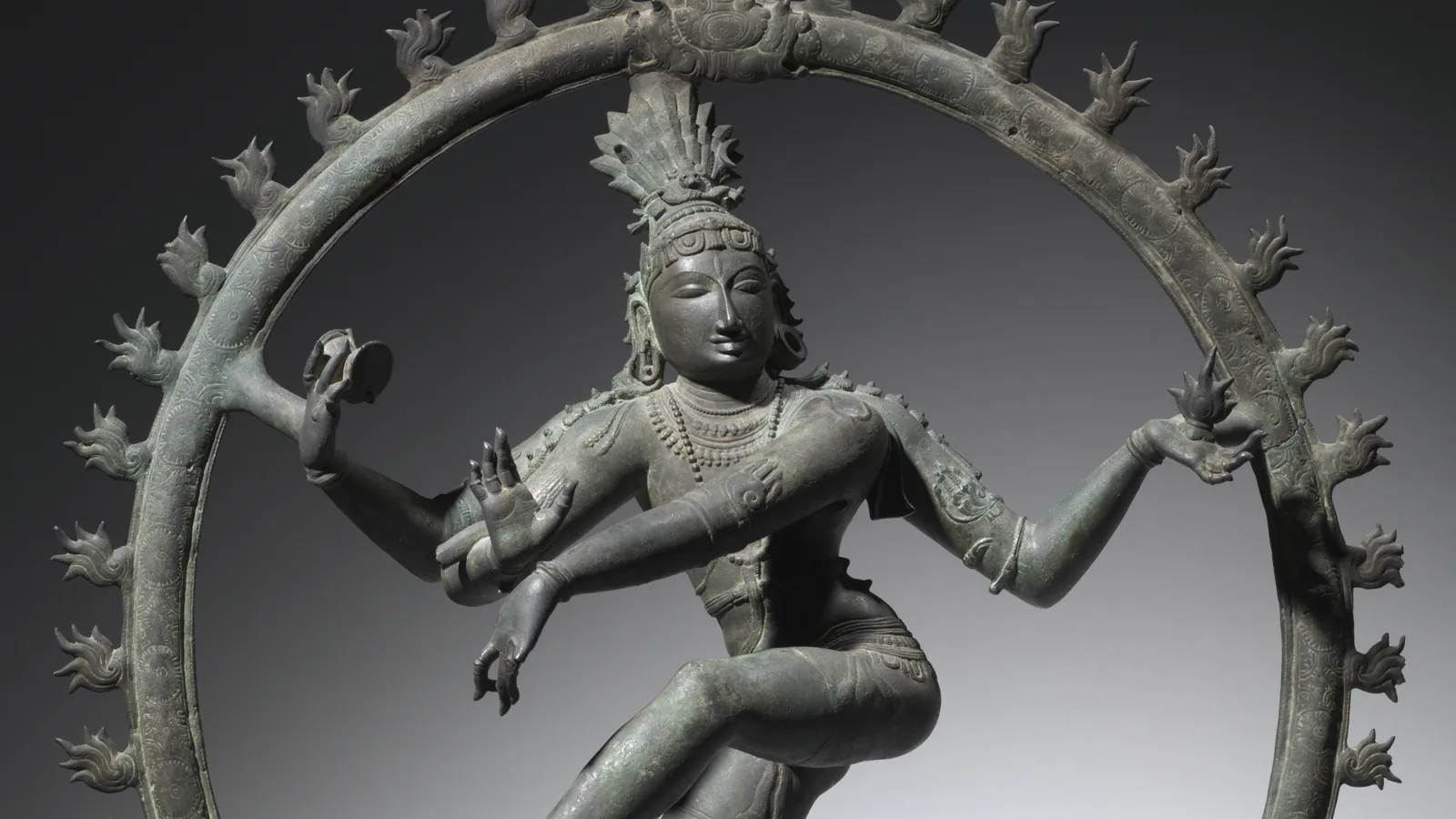
The court that sent the fleet also cast bronze. The Cleveland Museum of Art holds a Nataraja, Shiva as the Lord of Dance, made in Tamil Nadu in the 1000s and bought in 1930: the god dancing in a ring of fire, one foot on a dwarf who personifies ignorance. The UNESCO listing calls the bronzes at Rajendra’s own temple “masterpieces of Chola metal icons.”

What remains open
The motive is the largest gap: Sastri left it as a choice between trade and glory, and no Srivijayan account of the war is known. The second gap is timing, since Majumdar’s reading puts hostilities in Rajendra’s sixth year.
What the sources agree on is the shape of the century. A Srivijayan king built at Nagapattinam with Chola money in about 1005, a Chola fleet sacked his heir’s ports in about 1025, and his dynasty’s envoys were back at the Chola court asking for tax relief by 1090. The inscriptions record the war as a list of gates and moats, and leave the reason to the reader.
Key facts
- Rajaraja I crowned himself in 985; Sastri ends his reign at his death in 1014, UNESCO at 1012, the year Rajendra became co-ruler.
- The Thanjavur temple, Dakshina Meru in its inscriptions, was consecrated in Rajaraja’s 25th regnal year (1009–1010); its tower stands 59.82 meters.
- Rajendra’s army reached the Ganges in 1022–1023; he crowned his nephew at the Godavari on August 16, 1022 and built the capital Gangaikondasolapuram, whose temple was finished in 1035.
- The Tamil prasasti records the capture of Sangrama Vijayottungavarman, king of Kadaram, with his elephants and treasure, and lists Srivijaya, Pannai, Malaiyur, Ilangasoka, Talaittakkolam, Manakkavaram and Kadaram among the places taken.
- Sastri dated the expedition to about 1025 and wrote that its cause “we cannot say.”
- The Larger Leiden plates record a Srivijayan king building a Buddhist monastery at Nagapattinam in about 1005 with a Chola grant of 8,943 kalam of paddy a year.
- The Smaller Leiden plates show envoys of Kadaram at the Chola court in 1089–1090, which Majumdar read as peace “after a struggle of more than half a century.”
FAQ
What did Rajendra Chola conquer in Southeast Asia?
His Tamil prasasti lists Srivijaya, Pannai, Malaiyur, Mayirudingam, Ilangasoka, Mappappalam, Mevilimbangam, Valaippanduru, Talaittakkolam, Madamalingam, Ilamuridesam, Manakkavaram and Kadaram, and says the king of Kadaram was captured with his elephants and treasure. Sastri wrote that the kingdom was then restored to its ruler under Chola overlordship.
Why did the Cholas attack Srivijaya?
No contemporary record gives a reason. Nilakanta Sastri set out two possibilities, an attempt by Srivijaya to obstruct Chola trade with China or Rajendra's wish to extend his conquests overseas, and wrote that the question could not be settled. H. Krishna Sastri in 1929 supposed the Srivijayan king had turned "refractory."
Where was Kadaram?
The Archaeological Survey of India placed it in lower Burma in 1929. Nilakanta Sastri in 1955, following George Coedès, identified it with Kedah on the Malay peninsula, a dependency of Srivijaya whose name the Chola inscriptions used for the whole kingdom.
Sources
- K. A. Nilakanta Sastri — A History of South India from Prehistoric Times to the Fall of Vijayanagar (1958 ed.), full text at the Internet Archive.
- K. A. Nilakanta Sastri — The Cōḷas, 2nd ed. (University of Madras, 1955), full text at the Internet Archive.
- Archaeological Survey of India — South Indian Inscriptions, Vol. III, Part IV with H. Krishna Sastri's introduction on the Chola kings (1929), full text at the Internet Archive.
- Archaeological Survey of India — Epigraphia Indica, Vol. XXII (1933–34), Nos. 34–36: K. V. Subrahmanya Aiyer, "The Larger Leiden Plates" and "The Smaller Leiden Plates"; R. C. Majumdar, "Note on the Sailendra Kings," full text at the Internet Archive.
- UNESCO World Heritage Centre — "Great Living Chola Temples" (inscribed 1987, extended 2004).
- Cleveland Museum of Art — "Nataraja, Shiva as the Lord of Dance," 1000s, Tamil Nadu, collection record 1930.331.
Cite this article
- APA
- Our Earth's History. (2026, September 21). Why did Rajendra Chola send a fleet against Srivijaya in about 1025? Our Earth's History. https://ourearthshistory.com/south-asia/medieval/chola-1025-rajendra-fleet-srivijaya/
- Chicago
- Our Earth's History. “Why did Rajendra Chola send a fleet against Srivijaya in about 1025?” Our Earth's History, September 21, 2026. https://ourearthshistory.com/south-asia/medieval/chola-1025-rajendra-fleet-srivijaya/.
- MLA
- “Why did Rajendra Chola send a fleet against Srivijaya in about 1025?” Our Earth's History, 21 Sep. 2026, https://ourearthshistory.com/south-asia/medieval/chola-1025-rajendra-fleet-srivijaya/.
Text licensed CC BY-NC-ND 4.0. Found an error? Tell us.