Ibn Battuta's 29 years: what the Rihla records, and what it invents
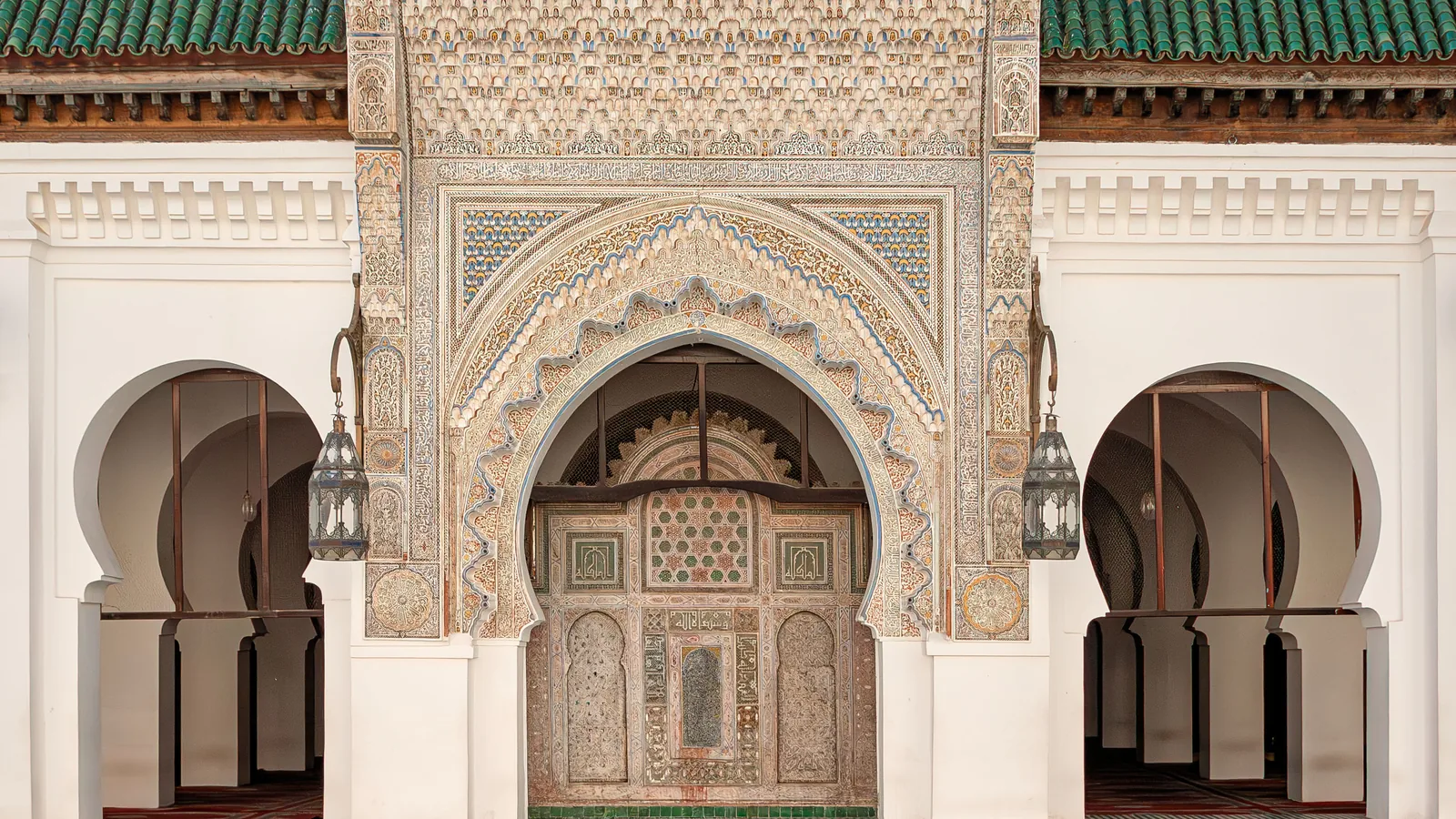
_cropped.jpg)
TL;DR — The Rihla dates its own departure and dictation and prices its Delhi post at 12,000 dinars; its editors call the Bulghar ride a fabrication and the China chapters doubtful.
“I left Tangier, my birthplace, on Thursday, 2nd Rajab 725 [June 14, 1325], being at that time twenty-two years of age.” So opens the Rihla, the travel book Ibn Battuta dictated in Fez three decades later, in H. A. R. Gibb’s 1929 translation; Gibb’s note makes the age 21 years and four months by the solar calendar. The book carries him to Mecca, East Africa, the Golden Horde, Delhi, the Maldives and, on its own telling, China, then home and across the Sahara to Mali. In some chapters it records dates and salaries with a clerk’s care. In others, the scholars who edited and retraced it read invention.
Quick facts
- When
- Left Tangier June 14, 1325 · Indus crossed September 12, 1333 · back in Fez late 1349 · in Mali June 28, 1352 to February 27, 1353 · dictation finished December 9, 1355
- Where
- Tangier, Mecca, Mogadishu and Kilwa, Anatolia, the Golden Horde, Delhi, the Maldives, the ports of south China, Fez, Mali
- Who
- Ibn Battuta of Tangier; the scribe Ibn Juzayy; the sultans Abu Inan of Fez, Muhammad ibn Tughluq of Delhi and Mansa Sulayman of Mali; the editors H. A. R. Gibb and C. F. Beckingham; the historian Ross E. Dunn
- Outcome
- A travel book that gives exact dates and salaries in some chapters and, by its editors' reading, invents the ride to Bulghar and overstates the visit to China; distance estimates run from 73,000 to 77,640 miles depending on the estimator
The route as the book dates it
He traveled first as a pilgrim. He reached Alexandria on April 5, 1326, entered Damascus on August 9, and went on with the caravan to Mecca; Charles F. Beckingham’s entry in the Encyclopaedia Iranica places a first tour of Iraq and Persia in 1326 to 1327. From Aden he sailed down the African coast to Zayla, Mogadishu and Kilwa; Ross E. Dunn’s 1986 biography dates that voyage to early 1329 or 1331, the two chronologies he prints side by side. Anatolia followed, Konya, Birgi, Bursa and Nicaea, then a ship from Sinope to the Crimea and the camp of Uzbeg Khan of the Golden Horde, whom the Rihla ranks among “the seven mighty kings of the world.” He crossed the Indus on September 12, 1333, in the Iranica’s dating, and spent eight years in the service of Muhammad ibn Tughluq, sultan of Delhi. A wreck off Calicut, the Maldives, Ceylon, Bengal, Sumatra and China come next, and Dunn has him back in Fez late in 1349.
The last journey went south. He bought camels at Sijilmasa, left on February 13, 1352, passed the salt mines of Taghaza, and, in the book’s own dates, arrived at the capital of Mali on June 28, 1352, and left it on February 27, 1353. The sultan was Mansa Sulayman, “a miserly king, not a man from whom one might hope for a rich present,” though the audience on the three-stepped platform called the pempi, under a silk umbrella topped by a golden bird, fills a page. He came home by Timbuktu and Gao, calling the Niger the Nile.
The qadi of Delhi, in the book's words
The Delhi chapters show the traveler’s own interests most plainly. In Gibb’s Hakluyt Society translation, the appointment arrives through a court officer: “the Master of the World has appointed you qadi of the royal city of Dihli and has fixed your stipend at 12,000 dinars a year,” with villages assigned to that amount, 12,000 dinars in cash, a horse, and a robe bearing the figure of a mihrab. The sultan then spoke himself: “Do not think that the office of qadi of Dihli is one of the minor functions; it is the highest of functions in our estimation.” He followed the school of Malik while the people were Hanafis, so the sultan gave him two deputies.
The same volume records what the post cost. His creditors put his debt at 55,000 dinars; the sultan ordered it paid from the treasury, and the money came to his house in three sacks, less a tenth “according to their custom.” In 1341, by Dunn’s dating, the sultan sent him as envoy to the Mongol emperor of China, and the mission ended in wreck off the Malabar coast. In the Maldives he married several women, by his own count, held the post of qadi for about eight months, and had about 25 men beaten and paraded in the bazaars for keeping divorced wives in their houses.
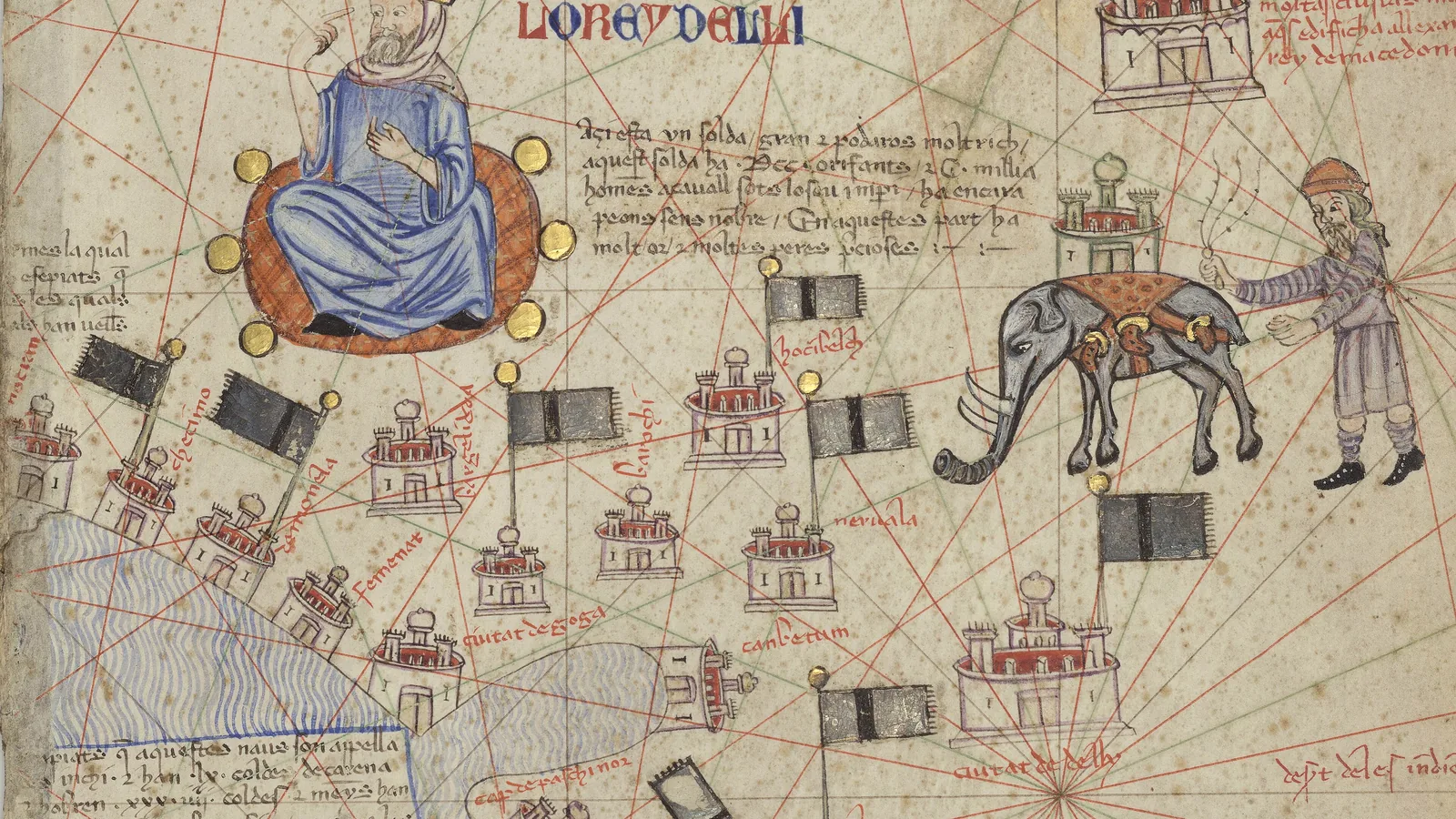

73,000 miles, or 75,000: whose estimate
No one measured the road. Dunn’s figure is “approximately 73,000 miles,” which his note calls his own calculation, across territory equal to about 44 modern countries. The same note gives the older estimates: Henry Yule, in Cathay and the Way Thither (1913 to 1916), put the total at more than 75,000 miles without counting journeys made while living in India, and Mahdi Husain gave 77,640. A Berkeley teaching site built on Dunn’s book rounds to 75,000. Each number rests on a decision about which trips happened, and that is where the editors part ways.
What the book invents
Two passages carry most of the doubt. In the steppe chapter, the Rihla has Ibn Battuta leave Uzbeg’s camp during Ramadan, ride to Bulghar on the middle Volga and back, more than 800 miles, all within the month. Stephen Janicsek’s 1929 article in the Journal of the Royal Asiatic Society, “Ibn Battuta’s Journey to Bulghar: Is it a Fabrication?”, argued that the description of Bulghar came from earlier Arabic geographies and that the time allowed made the ride impossible. Dunn accepts the case and writes that the Bulghar trip “is the only section of the Rihla whose falsity has been proven beyond almost any doubt.” Literate readers, he adds, expected a traveler to describe the most northerly Muslim community, and the book obliged them.
China divides the editors. Beckingham, who completed Gibb’s translation, writes in the Iranica of “alleged travels in China and Southeast Asia” and of “this pretended visit to China,” and adds Yemen, Oman and eastern Anatolia to the movements he finds not credible. Dunn is milder: the extent of the China visit “is uncertain but was probably limited to the southern coastal region,” and no one, in his view, has made a convincing case that the traveler never reached the ports of south China. On Hangzhou the two nearly meet. Dunn calls the description “cursory, blurred, and defective,” and the Hakluyt volume’s note on the city sets that phrase beside Yule’s “several very questionable statements.” The Rihla, Dunn reminds his readers, was a literary survey of the Muslim world, not a diary kept on the road.
Fez, Ibn Juzayy and a date of December 9, 1355
The book ends at the Marinid court. “I arrived at the royal city of Fa’s [Fez],” the last page reads, and the colophon states that the dictation was finished on 3 Dhu’l-Hijja 756, which Gibb converts to December 9, 1355. The scribe was Ibn Juzayy, a young scholar of Andalusian family, working at the order of the sultan Abu Inan. Dunn dates the commission to early 1356 and gives the collaboration about two years, a chronology that does not fit the colophon’s date; he finds no evidence that Ibn Battuta ever checked the finished manuscript, and Ibn Juzayy died in 1356 or 1357. Beckingham’s entry gives the arrival in Fez after Mali as Dhu’l-Qa’da 754, December 1353, two years before the dictation closed. Ibn Khaldun wrote in the Muqaddima of the skepticism with which the stories were heard at that court. Ibn Battuta died in 770 of the Hijra, 1368 to 1369, as qadi, in Ibn Hajar’s phrase, of “some town or other.”
Key facts
- The Rihla gives the departure from Tangier as Thursday, 2 Rajab 725, which Gibb converts to June 14, 1325; the traveler was 22 by lunar years and 21 years and four months by solar reckoning.
- Beckingham dates the Indus crossing to 1 Muharram 734, September 12, 1333, and gives eight years in the service of Muhammad ibn Tughluq at Delhi.
- The Delhi appointment as qadi carried a stipend of 12,000 dinars a year, villages to that amount, 12,000 dinars in cash, a horse and a robe of honor; the sultan later paid a debt of 55,000 dinars on his behalf.
- The visit to Mali is dated in the text: arrival June 28, 1352, departure February 27, 1353, under Mansa Sulayman.
- Distance estimates are the estimators’ own: Dunn about 73,000 miles; Yule more than 75,000, excluding travel while resident in India; Mahdi Husain 77,640.
- The ride from Uzbeg Khan’s camp to Bulghar and back, more than 800 miles in one Ramadan, was argued to be a fabrication by Stephen Janicsek in 1929; Dunn calls it the only section proven false beyond almost any doubt.
- The colophon dates the end of the dictation to 3 Dhu’l-Hijja 756, December 9, 1355; Beckingham gives the return to Fez from Mali as December 1353; Dunn dates Abu Inan’s commission to early 1356.
FAQ
Did Ibn Battuta really go to China?
The editors disagree. Charles Beckingham, in the Encyclopaedia Iranica, calls the visit "pretended" and the travels in China and Southeast Asia "alleged." Ross Dunn writes that the extent of the visit is uncertain but was probably limited to the southern coastal region, and that no one has made a convincing case that he never reached the ports of south China. Both find the description of Hangzhou weak.
How far did Ibn Battuta travel?
There is no measured figure. Dunn calculated about 73,000 miles across territory equal to about 44 modern countries. Henry Yule estimated more than 75,000 miles, not counting journeys made while he lived in India, and Mahdi Husain gave 77,640. The Berkeley teaching site rounds to 75,000.
Who wrote the Rihla down, and when?
Ibn Battuta dictated it in Fez to Ibn Juzayy, a scholar of Andalusian family, at the order of the Marinid sultan Abu Inan. The book's colophon dates the end of the dictation to December 9, 1355. Dunn places the commission in early 1356 and the work over about two years, a chronology that does not fit the colophon.
Sources
- Fordham University, Internet Medieval Sourcebook — Ibn Battuta, Travels in Asia and Africa, 1325–1354, trans. H. A. R. Gibb (London, 1929), selections: the departure from Tangier, East Africa, the Golden Horde, Mali, and the colophon.
- The Travels of Ibn Battuta, A.D. 1325–1354, vol. III, trans. H. A. R. Gibb (Hakluyt Society), full text on the Internet Archive: the Delhi audience, the qadi appointment, the 55,000-dinar debt.
- The Travels of Ibn Battuta, A.D. 1325–1354, vol. IV, ed. H. A. R. Gibb and C. F. Beckingham (Hakluyt Society, 1994), full text on the Internet Archive: the Maldives, the China voyage, the editors' note on Hangzhou.
- Ross E. Dunn, The Adventures of Ibn Battuta: A Muslim Traveler of the 14th Century (University of California Press, 1986), full text on the Internet Archive: the 73,000-mile estimate and its note, the Bulghar note, the China chapter, the composition of the Rihla.
- Encyclopaedia Iranica — Charles F. Beckingham, "Ebn Baṭṭūṭa," vol. VIII, fasc. 1, pp. 4–6 (1997; updated December 19, 2013).
- University of California, Berkeley, ORIAS — "The Travels of Ibn Battuta: A Virtual Tour," by Nick Bartel (1999), rehosted 2012, built on Dunn's book.
Cite this article
- APA
- Our Earth's History. (2026, September 21). Ibn Battuta's 29 years: what the Rihla records, and what it invents. Our Earth's History. https://ourearthshistory.com/west-asia/medieval/ibn-battuta-rihla-29-years-records-and-inventions/
- Chicago
- Our Earth's History. “Ibn Battuta's 29 years: what the Rihla records, and what it invents.” Our Earth's History, September 21, 2026. https://ourearthshistory.com/west-asia/medieval/ibn-battuta-rihla-29-years-records-and-inventions/.
- MLA
- “Ibn Battuta's 29 years: what the Rihla records, and what it invents.” Our Earth's History, 21 Sep. 2026, https://ourearthshistory.com/west-asia/medieval/ibn-battuta-rihla-29-years-records-and-inventions/.
Text licensed CC BY-NC-ND 4.0. Found an error? Tell us.