One Cairo storeroom, 193,000 fragments: the Geniza goes to Cambridge
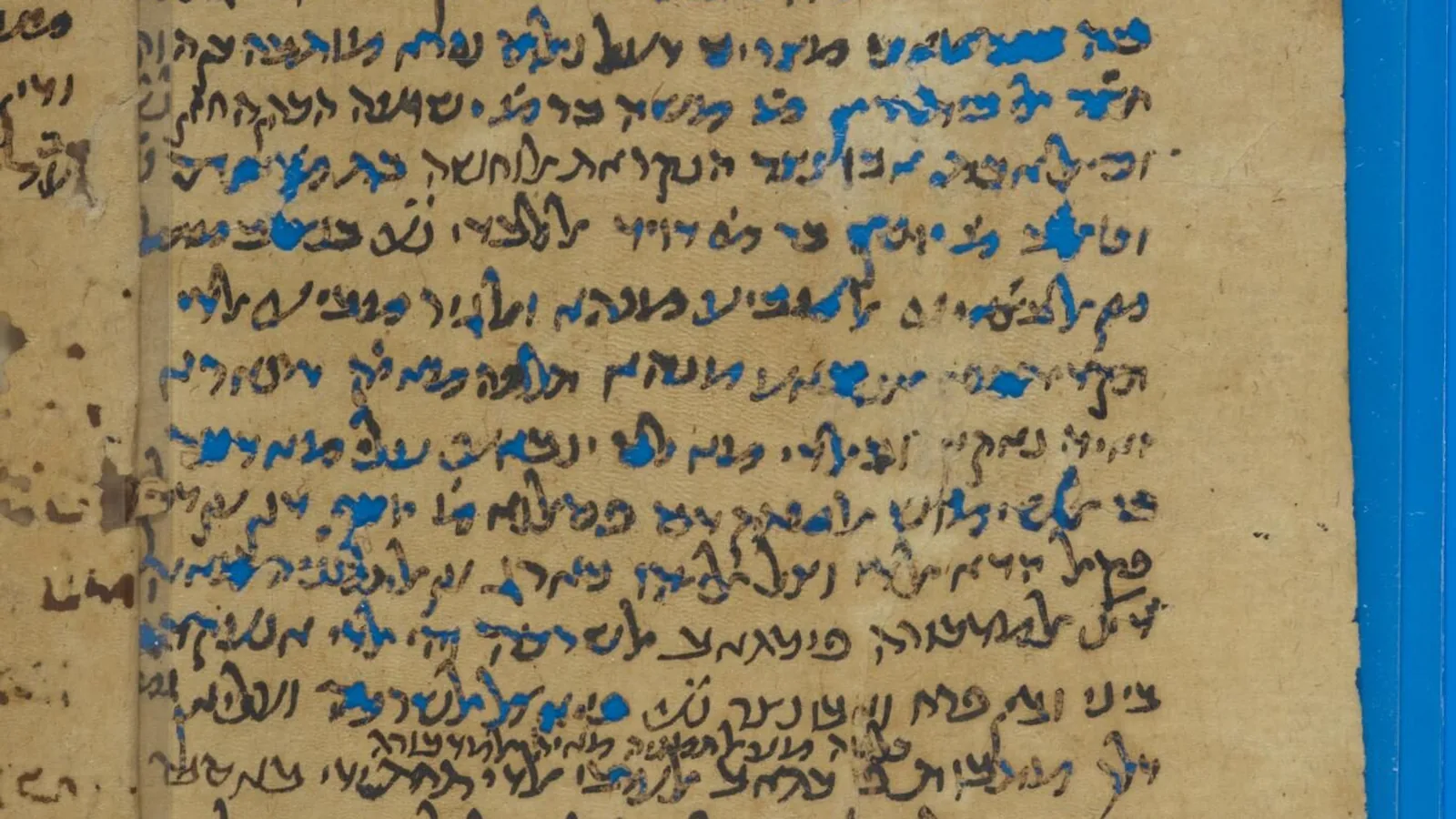

TL;DR — Solomon Schechter emptied the Ben Ezra Synagogue’s storeroom in 1896–97; Cambridge counts 193,000 fragments, from Bible leaves to shopping lists, and is putting them online.
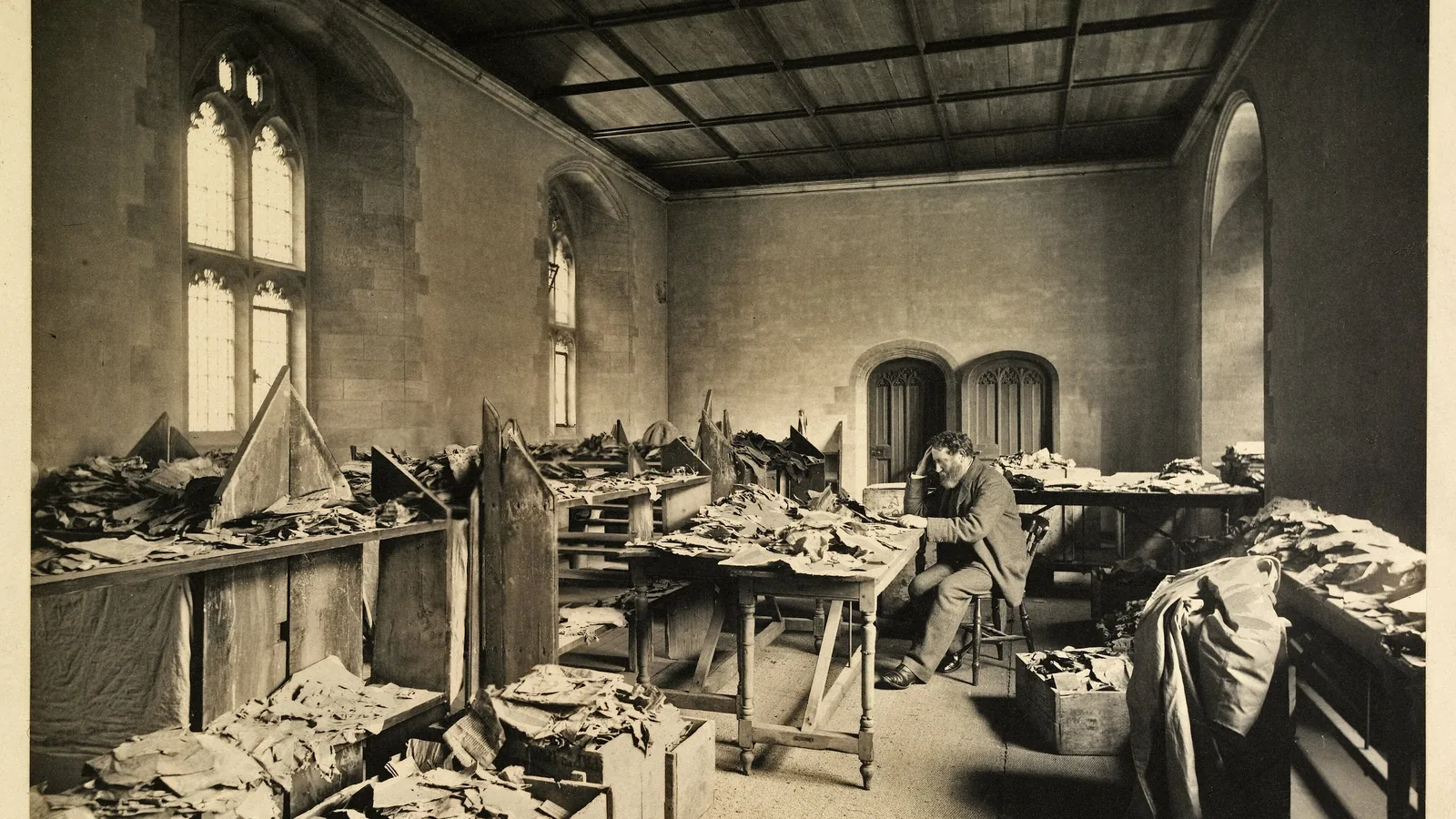
“It is a battlefield of books,” Solomon Schechter wrote of the room he climbed into by ladder at the Ben Ezra Synagogue in Fustat, Old Cairo, in the winter of 1896–97. The room was a geniza, where for centuries the Jewish community of Fustat had put its worn-out writings instead of throwing them away. Schechter shipped what he judged old enough to England, where the Taylor-Schechter Cairo Genizah Collection holds 193,000 fragments by the Cambridge Digital Library’s count. The road to Cairo began on May 13, 1896, the day Schechter identified a leaf of the lost Hebrew Ben Sira among fragments that two Cambridge sisters had bought in Egypt.
Quick facts
- When
- 11th century onward, papers placed in the storeroom · January 3, 1896, Elkan Adler's entry by his own account · May 13, 1896, the Ben Sira leaf identified · mid-December 1896 to 1897, Schechter in Cairo · 1910–12 Mosseri's digs · 2006 Mosseri loan · August 2013 Lewis-Gibson purchase
- Where
- The Ben Ezra Synagogue in Fustat, Old Cairo, in what is now Egypt; Cambridge University Library; the Bodleian Library, Oxford
- Who
- Solomon Schechter; Charles Taylor, Master of St John's College; Agnes Smith Lewis and Margaret Dunlop Gibson; Aaron Bensimon, Grand Rabbi of Cairo; Youssef M. Cattaui; Elkan Nathan Adler; Jacques Mosseri; Moses Maimonides
- Outcome
- The Taylor-Schechter Cairo Genizah Collection, 193,000 fragments by the Cambridge Digital Library's count, plus the 7,000-piece Mosseri and 1,700-piece Lewis-Gibson collections, with images going online at Cambridge and transcriptions at Princeton
A storeroom without a door
Cambridge University Library explains the rule: under rabbinic law, once a holy book can no longer be used, it cannot be destroyed or casually discarded, and texts containing the divine name should be buried or, if burial is not possible, placed in a genizah. Schechter, writing in 1908, traced the word to the Hebrew verb ganaz, “hiding-place,” and compared the practice to burial: “when the writing is worn out, we hide the book to preserve it from profanation.”
The geniza, he wrote, sat at the end of the synagogue’s gallery, “a sort of windowless and doorless room of fair dimensions,” entered “through a big, shapeless hole reached by a ladder.” What went in was the surprise. The community, the library records, deposited Bibles and prayer books but also shopping lists, marriage contracts, divorce deeds, pages from Arabic fables, amulets and business letters. Schechter gave the reason: leases and court records were written in Hebrew letters, and anything resembling Scripture in form was too sacred to treat as refuse. The result, in his phrase, was “a combination of sacred lumber-room and secular record office.”
Two sisters and a leaf, May 13, 1896
Agnes Smith Lewis and Margaret Dunlop Gibson, twin sisters born in 1843, bought manuscripts as they passed through Egypt on their way to St. Catherine’s monastery in Sinai, according to the Cambridge unit. Their friend Schechter recorded the outcome himself: “the fragment of the original of Ecclesiasticus, which it was my good fortune to discover on May 13, 1896, in the Lewis-Gibson collection of fragments.” Ecclesiasticus is the Christian name for the book of Ben Sira, written in the second century BC; the library states that its Hebrew text was lost until the geniza yielded a tenth-century copy. Lewis wrote to the press, and, Schechter added, that led to further fragments turning up at Oxford.
Others had been inside before him. Elkan Nathan Adler, whose 1905 book Jews in Many Lands lists visits to Egypt in 1888, 1895, 1898 and 1901, wrote that the building’s restoration probably led to the geniza’s discovery, “into which it was the author’s privilege to be the first European to enter, on January 3, 1896,” a date his own list of voyages does not include.
Schechter in Cairo: bags, dust and bakhshish
“It was such a Genizah that I set out to visit in the middle of December, 1896,” Schechter wrote. The money came from Charles Taylor, Master of St. John’s College. In Cairo he called on Aaron Bensimon, the Grand Rabbi, with an introduction from Herman Adler, Chief Rabbi in London, and thanked Bensimon and Youssef M. Cattaui, president of the Jewish community, for opening the synagogue’s property to him. The beadles who kept the geniza were told he could take “what, and as much as, I liked. Now, as a matter of fact, I liked all.”
The work was filthy. The room was dark and gave off clouds of dust “as if protesting against the disturbance of its inmates.” The keepers refused day wages and asked for bakhshish. Most of his time went to discarding printed pages, while “every piece of paper or parchment that had any claim to respectable age was packed in bags and conveyed to the forwarding agent to be shipped to England.” He put the haul at “about a hundred thousand” fragments; the Cambridge Digital Library’s count is 193,000, and the unit’s own page rounds it to almost 200,000. The documents alone, by his dating, ran from the eighth century to the fourteenth.
What Schechter left behind
Papers remained in Fustat. Jacques Mosseri, a Cairo businessman born in 1884, and Raymond Weill found documents around the synagogue after 1897, and expeditions between 1910 and 1912 dug around the precincts of Ben Ezra, according to the Cambridge unit’s page, which reads the finds as papers buried when the chamber was emptied during the 1890s reconstruction. Mosseri thought he had “roughly 4000 fragments”; the count is more than 7,000. After his death in 1934 the collection went out of sight until the 1970s, when Israel Adler of the Jewish National Library in Jerusalem microfilmed it in ten days, and in 2006 the family lent it to Cambridge for 20 years.
The sisters’ manuscripts, given to Westminster College, were offered to the library in 2012 at £1.2 million. In August 2013 Cambridge and the Bodleian Libraries at Oxford bought the 1,700 pieces jointly, with £500,000 from the Polonsky Foundation, £350,000 arranged through Robert Littman of the Littman Library of Jewish Civilisation, and £100,000 from the Parasol Foundation.
Shelfmarks, scans and a letter in Maimonides' hand
Each fragment at Cambridge carries a shelfmark such as T-S K5.13. The unit’s inventory, compiled with the Friedberg Genizah Project as of 2006, totals 137,653 shelfmarks and 161,360 folios. The library states that tens of thousands of manuscripts are viewable on the Cambridge Digital Library and that more will be added “until all of Cambridge’s Genizah manuscripts are online with accompanying identifications.” A Wellcome Trust project catalogued the 2,000 fragments that bear on medieval medicine. The Princeton Geniza Project calls the geniza “a snapshot of everyday life over the past thousand years” and offers keyword search of transcriptions. The Friedberg Jewish Manuscript Society portal shows images that, by its terms, remain their owners’ property.
One item shows what a single shelfmark holds. The Cambridge Digital Library describes T-S 12.192 as a letter of recommendation in the hand of Moses Maimonides for Isaac al-Darʿī, addressed to a man the letter calls al-Šayḵ al-Ṯiqa at Minyat Zifta, asking that community to pay the poll tax for Isaac and his son, newly arrived in Egypt and bound for Damietta; the back carries the address in Arabic script, to travel by way of Ibrāhīm al-Darʿī. A tax favor asked for a stranger, in the hand of the head of Egypt’s Jews, went into the storeroom with the shopping lists and came out in Cambridge.

Key facts
- Cambridge University Library’s rule: a holy book that can no longer be used may not be destroyed; texts with the divine name are buried or placed in a genizah.
- Schechter identified the Hebrew Ben Sira leaf in the Lewis-Gibson fragments on May 13, 1896, by his own 1908 account.
- He set out for Cairo in mid-December 1896 with money from Charles Taylor, Master of St. John’s College, and an introduction from Chief Rabbi Herman Adler to Aaron Bensimon of Cairo.
- Schechter estimated his haul at about 100,000 fragments; the Cambridge Digital Library counts 193,000, and the unit’s page says almost 200,000.
- Elkan Adler wrote in 1905 that he was the first European to enter the geniza, on January 3, 1896.
- Mosseri’s 1910–12 digs produced more than 7,000 pieces, microfilmed in the 1970s and lent to Cambridge in 2006 for 20 years.
- The 1,700-piece Lewis-Gibson Collection was bought jointly by Cambridge and the Bodleian in August 2013 for £1.2 million.
- The 2006 inventory totals 137,653 shelfmarks and 161,360 folios; a 2,000-fragment medical corpus has been catalogued online.
FAQ
What is a geniza?
A storeroom for writings that can no longer be used. Cambridge University Library explains that rabbinic law forbids destroying a worn-out holy book, so texts with the divine name are buried or placed in a genizah. Schechter derived the word from the Hebrew verb ganaz, "hiding-place."
How many fragments did Schechter bring from Cairo?
Schechter's own estimate in 1908 was "about a hundred thousand." The Cambridge Digital Library gives the Taylor-Schechter Collection as 193,000 fragments, and the unit's page says almost 200,000. The 2006 inventory counts 137,653 shelfmarks, some of which cover more than one leaf.
Where can the Cairo Geniza be read online?
Cambridge puts images and descriptions on the Cambridge Digital Library, with more added until the whole collection is online. The Princeton Geniza Project offers searchable transcriptions in Judaeo-Arabic, Hebrew and Arabic, and the Friedberg Jewish Manuscript Society portal shows images from many owning libraries to registered users.
Sources
- Cambridge University Library, Taylor-Schechter Genizah Research Unit — "A Priceless Collection" and "Frequently asked questions." The definition of a genizah, the rabbinic rule, the list of everyday documents, Ben Sira, the Mosseri loan, the digitization statement, and the shelfmark examples.
- Cambridge University Library, Genizah Research Unit — "How the Collection is organised" and "Projects." The T-S K5.13 example, the Old, New and Additional Series, the inventory totals, the 2,000 medical fragments, and the bibliography counts.
- Cambridge University Library, Genizah Research Unit — "Lewis-Gibson Genizah Collection" and "Jacques Mosseri Genizah Collection." The August 2013 purchase and its donors; Mosseri, Weill, Gottheil and Chapira; the 1970s microfilm; the 2006 loan.
- Cambridge Digital Library — "Cairo Genizah" collection page. The 193,000-fragment count, Charles Taylor's funding, and the "I liked all" quotation.
- Cambridge Digital Library — item T-S 12.192, "Cairo Genizah: Letter," autograph recommendation by Moses Maimonides for Isaac al-Darʿī.
- Solomon Schechter — "A Hoard of Hebrew Manuscripts," in Studies in Judaism: Second Series (Philadelphia, Jewish Publication Society of America, 1908), full text on the Internet Archive. The genizah definition, the December 1896 departure, Bensimon and Cattaui, the ladder, the battlefield passage, the dust and bakhshish, the hundred-thousand estimate, and the May 13, 1896 date.
- Elkan Nathan Adler — Jews in Many Lands (Philadelphia, Jewish Publication Society, 1905), full text on the Internet Archive. The chapter "Egypt in 1888," the list of his voyages, and the January 3, 1896 sentence.
- The Princeton Geniza Project — home page. The project's own description of the corpus and its search functions.
- Friedberg Jewish Manuscript Society — portal terms of use. The ownership statement on the images displayed.
Cite this article
- APA
- Our Earth's History. (2026, September 22). One Cairo storeroom, 193,000 fragments: the Geniza goes to Cambridge. Our Earth's History. https://ourearthshistory.com/west-asia/medieval/cairo-geniza-ben-ezra-fragments-schechter-1897/
- Chicago
- Our Earth's History. “One Cairo storeroom, 193,000 fragments: the Geniza goes to Cambridge.” Our Earth's History, September 22, 2026. https://ourearthshistory.com/west-asia/medieval/cairo-geniza-ben-ezra-fragments-schechter-1897/.
- MLA
- “One Cairo storeroom, 193,000 fragments: the Geniza goes to Cambridge.” Our Earth's History, 22 Sep. 2026, https://ourearthshistory.com/west-asia/medieval/cairo-geniza-ben-ezra-fragments-schechter-1897/.
Text licensed CC BY-NC-ND 4.0. Found an error? Tell us.