From 800,000 to two million: the dead of Baghdad, February 1258
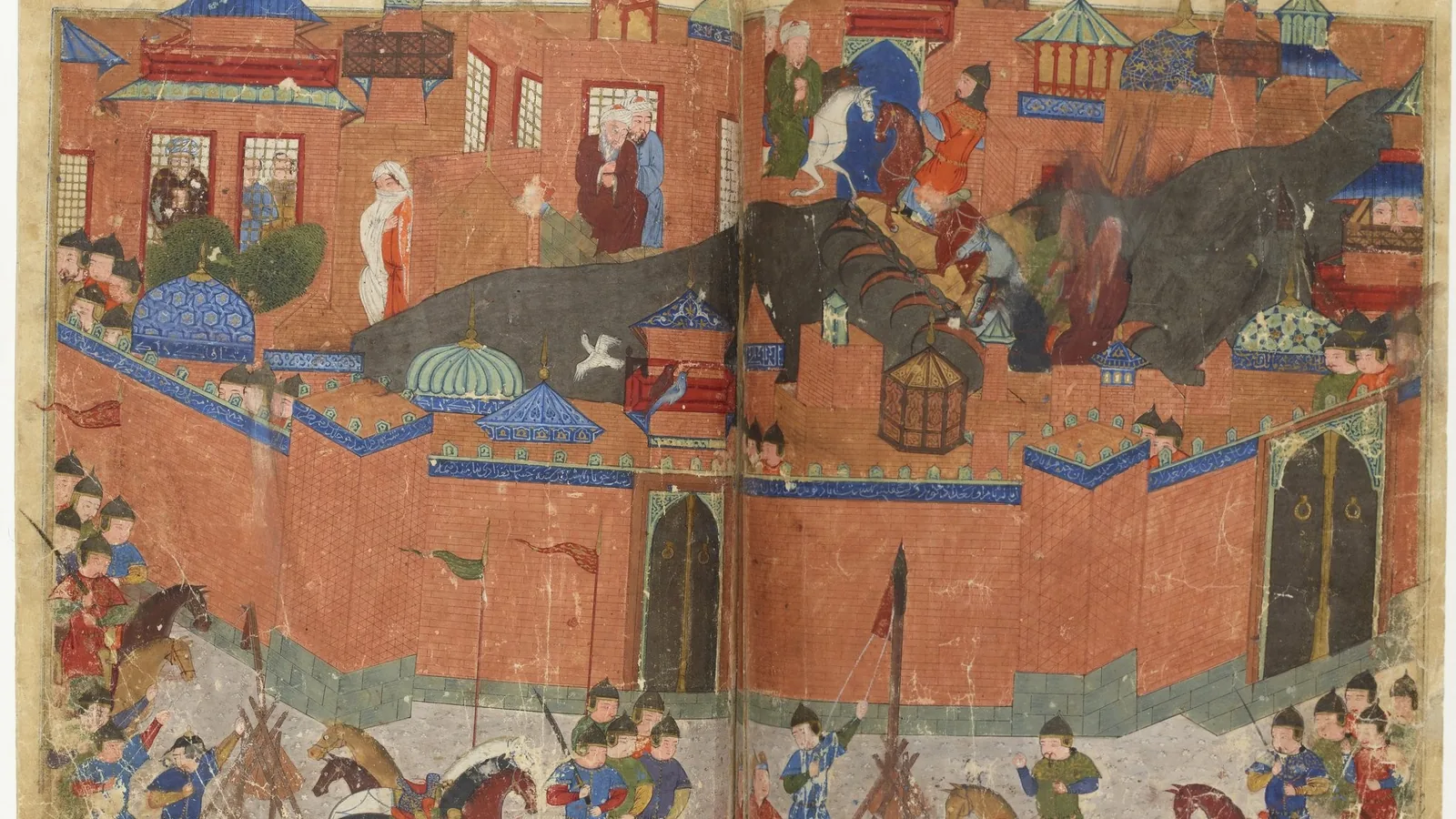

TL;DR — Baghdad fell to Hülegü on February 13, 1258; the caliph died a week later. One chronicle counted “more than 800,000” dead; later copyists raised it to two million.
“The city was taken on 13 February 1258 and subjected to a week of looting and massacre,” Reuven Amitai writes in the Encyclopaedia Iranica entry on Hülegü. George E. Lane dates the death of the caliph al-Musta’sim to 14 Safar 656, February 20, 1258, an event the astronomer Nasir al-Din Tusi “witnessed first hand.” The Abbasid caliphate was, in Amitai’s phrase, “virtually extinguished.” A Baghdad chronicle, al-Hawadith al-jami’a, gave “more than 800,000”; according to a 2024 paper in Medical History by Jonathan Brack, Michal Biran and Amitai, the copyist Ibn Shakir al-Kutubi turned that into 1,800,000, al-Dhahabi settled on 300,000, al-Maqrizi on about one million, Baybars al-Mansuri on more than 1,300,000, and Ibn Kathir recorded a figure that “reached 2,000,000.”
Quick facts
- When
- 1251 Möngke's commission to Hülegü · 1255 the caliph fails to appear in person · 1257 inconclusive negotiations · February 13, 1258 the city taken · February 20, 1258 (14 Safar 656) death of al-Musta'sim · 1259 Juvayni governor of Baghdad, Maragha observatory begun · 1261 a shadow caliph under the Mamluk sultan · about 1261–62 the observatory operational
- Where
- Baghdad on the Tigris, founded in 762; Alamut; the Halba Gate; Azerbaijan; Maragha
- Who
- Hülegü; the caliph al-Musta'sim; Nasir al-Din Tusi; the vizier Ibn al-Alqami; 'Ala' al-Din 'Ata-Malik Juvayni; the copyists al-Kutubi, al-Dhahabi, Ibn Kathir, Baybars al-Mansuri and al-Maqrizi
- Outcome
- The Abbasid caliphate was, in Reuven Amitai's words, "virtually extinguished"; a Mamluk sultan enthroned a shadow caliph in 1261; the death toll in the chronicles runs from 300,000 to two million; Tusi's observatory at Maragha was working by about 1261–62
Möngke's orders and the caliph who did not come
After Möngke was raised to Great Khan in 1251, Amitai writes, he sent his brother Qubilai against China and Hülegü against the Muslim lands. The historian Rashid al-Din, whose account favors the Ilkhanid line, recorded the orders as three: destroy the Nizari Isma’ilis, subdue the Kurds and Lurs, and subjugate the caliph. Amitai adds that the contemporary Juvayni does not confirm this.
At the end of 1255 Hülegü summoned the region’s rulers to submit in person. Al-Musta’sim had made a gesture of submission earlier, but he did not come, “a decision he was later to rue.” Late in 1257 Hülegü ordered his generals to converge on Baghdad. “Throughout the year there had been inconclusive negotiations between the khan and the caliph al-Mosta’sim,” Amitai writes, and then: “Early in 1258 the attack on the city commenced.” The city, founded by al-Mansur in 762 and the seat of the caliphs, in Hugh Kennedy’s words, “until the sack of the city in 656/1258 by the Mongols,” fell on February 13. The caliph and most of his family were killed.
"Ordered me to observe the stars": Tusi between Alamut and the Halba Gate
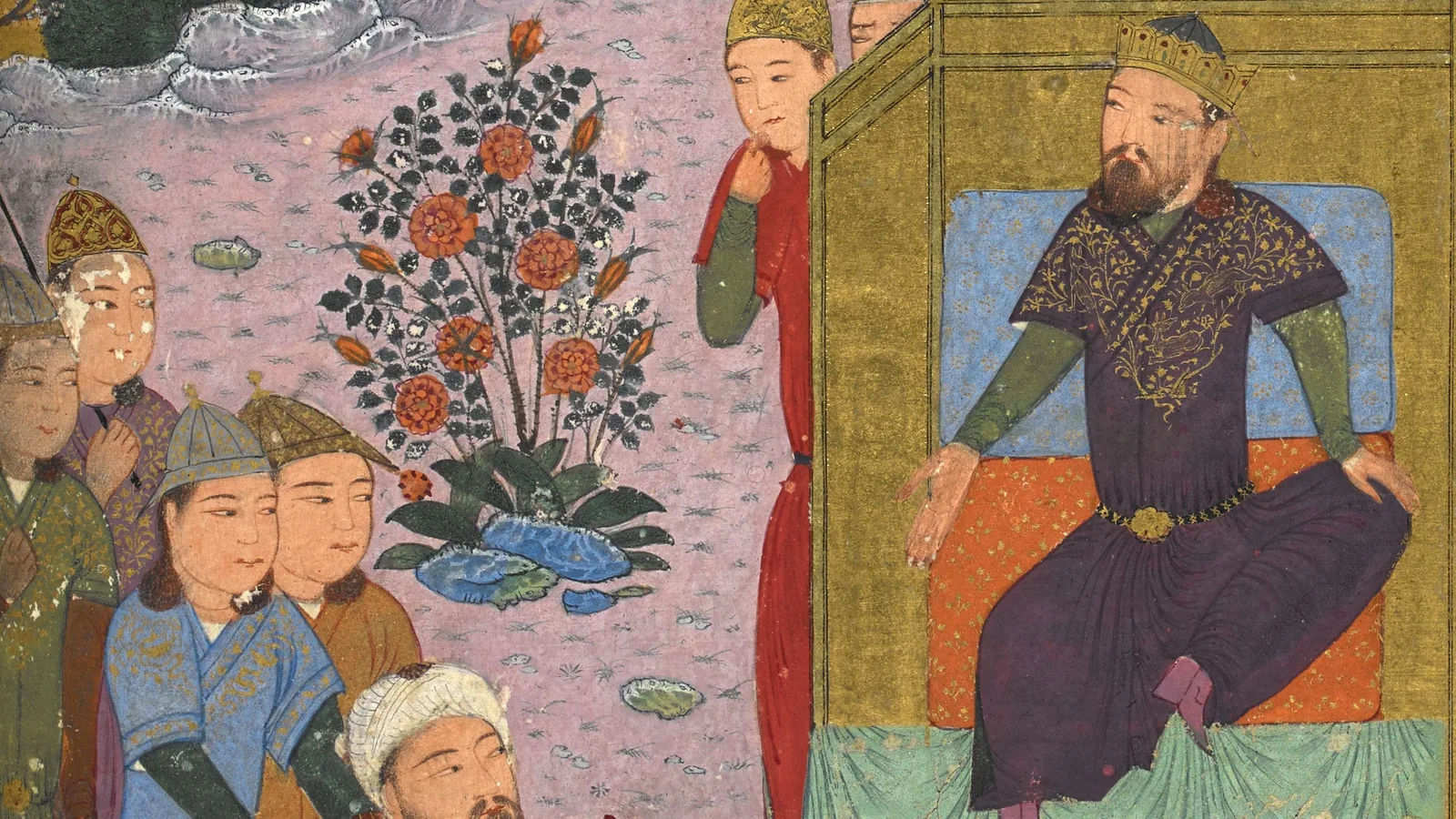
Tusi had been at Alamut, the Isma’ili fortress, when it fell in November 1256. In his own words, as Lane quotes them, he was brought forth from that place and “ordered me to observe the stars.” Hülegü asked him to cast the risk of attacking the caliph, and Tusi, as Rashid al-Din told it, answered that the only outcome would be the caliph’s replacement on his throne. Amitai’s entry goes further: Tusi “became a trusted advisor to Hülegü in both religious and practical matters, and among other things he encouraged the khan to attack Baghdad.”
In the last phase of the siege, Lane writes, Tusi carried a personal letter to the caliph and was posted at the Halba Gate to screen those who came out to surrender. With the caliph’s last vizier, the Shi’i Ibn al-Alqami, who died in June 1258, he probably had a hand in the decision to protect the Shi’i shrines of Iraq.
More than 800,000, then 1,800,000: a copyist's slip
The chronicle at the head of the chain is al-Hawadith al-jami’a, long attributed to the Baghdad historian Ibn al-Fuwati. Brack, Biran and Amitai write that it was most likely composed by a contemporary with intimate knowledge of events in Baghdad who “in high probability was not Ibn al-Fuwaṭī.” Its sentence on the dead, as translated in Medical History, reads: “It was said that the number of dead in Baghdad was more than 800,000 souls, besides those children thrown into the mud, and those who died in the canals, wells, and cellars, perishing from hunger and fear.”
The 2024 paper follows the figure into later hands. Al-Kutubi, who died in 1363, copied the passage and, in the authors’ note, “800,000 has become 1,800,000.” Al-Dhahabi, who died in 1348, gave a little over 1,800,000 from a count Hülegü ordered, then added: “The most truthful [report] is that they reached 300,000.” Ibn Kathir, who died in 1373, listed the options: “It was said 300,000, [also] it was said 1,800,000, and [finally] it was said that the dead reached 2,000,000.” Neither paper cites a modern demographic estimate, and the story that the Tigris ran black with ink appears in none of the chronicles they quote.
._Folio_89v_(British_Library,_Or_2780).jpg)
Pestilence, waba', and a 2021 paper answered in 2024
A second count came from disease. Akhbar-i Mughulan, in the hand of Qutb al-Din al-Shirazi, was translated by Lane in 2018. It records of the siege: “Pestilence [wabā’] struck and many people died.” The dead were thrown into the Tigris, and most of the Mongol army fell sick. When the army returned to Azerbaijan in 1258, the same text says, a waba’ struck most of the soldiers; Hülegü himself was ill for 20 days.
Nahyan Fancy and Monica H. Green read these lines in 2021 alongside genetic studies placing the origin of the Black Death lineage in the thirteenth century: “One of these outbreaks was connected to the Mongol siege and conquest of Baghdad in 1258.” Brack, Biran and Amitai reread the Persian, Syriac and Arabic texts in 2024 and answered: “We conclude that there is no evidence for the appearance of Plague during or immediately after the Mongol conquests in the Middle East, certainly not for its transmission by the Mongols.” The chronicler, they observe, wrote waba’, pestilence, and never ta’un, the word for plague.
1259 and after: a governor for Baghdad, an observatory at Maragha
The historian ‘Ala’ al-Din ‘Ata-Malik Juvayni had ridden with Hülegü to the siege. “In 1259, a year after the capture of Baghdad, Hülegü put him in charge of its administration,” Lane writes. Tusi received endowment funds for an observatory and, George Saliba writes, “was also allowed to have his pick of the books that could be salvaged from Baghdad and the other cities of Iraq during the Mongol devastation,” and of a librarian, the young Baghdadi Ibn al-Fuwati. Bar Hebraeus, the Syriac chronicler, wrote that every religious endowment in the Mongol lands was under Tusi’s control. Rashid al-Din called him the most learned and wisest man in the world; Edward Browne, in the twentieth century, called him a “double-dyed traitor.”
Construction at Maragha began in 1259, and Saliba, citing Aydın Sayılı’s 1960 study, writes that “the observatory seems to have become operational by about 1261-62.” Its tables, the Zij-i Ilkhani, dedicated to Hülegü, were excerpted in England by John Greaves in 1650 and 1652. In 1261, Amitai writes, a Mamluk sultan enthroned an Abbasid survivor who had fled to Syria as a shadow caliph. By about 1261–62 the observatory at Maragha was at work.
Key facts
- Möngke, Great Khan from 1251, sent Hülegü against the Muslim lands; Rashid al-Din recorded orders to destroy the Isma’ilis, subdue the Kurds and Lurs and subjugate the caliph (Amitai, Iranica).
- Al-Musta’sim did not appear in person when summoned at the end of 1255, and negotiations through 1257 were “inconclusive” (Amitai).
- “The city was taken on 13 February 1258 and subjected to a week of looting and massacre” (Amitai).
- The caliph died on 14 Safar 656, February 20, 1258, an event Tusi “witnessed first hand” (Lane).
- Al-Hawadith al-jami’a gave “more than 800,000” dead; al-Kutubi copied 1,800,000, al-Dhahabi chose 300,000, al-Maqrizi about one million, Baybars al-Mansuri more than 1,300,000, Ibn Kathir “2,000,000” (Brack, Biran and Amitai, 2024).
- Akhbar-i Mughulan records “Pestilence [wabā’] struck and many people died”; Fancy and Green (2021) read it as plague; Brack, Biran and Amitai (2024) found “no evidence” of plague.
- Juvayni was put in charge of Baghdad in 1259 (Lane); a Mamluk sultan enthroned a shadow caliph in 1261 (Amitai).
- The Maragha observatory, begun in 1259, was operational by about 1261–62; its Zij-i Ilkhani was excerpted by John Greaves in 1650 and 1652 (Saliba).
FAQ
How many people died when the Mongols took Baghdad in 1258?
The earliest figure, in the Baghdad chronicle al-Hawadith al-jami'a, is "more than 800,000." Later writers gave 300,000 (al-Dhahabi), about one million (al-Maqrizi), more than 1,300,000 (Baybars al-Mansuri), 1,800,000 (al-Kutubi) and two million (Ibn Kathir). Neither Medical History paper cites a modern demographic estimate.
When did the caliph al-Musta'sim die?
On 14 Safar 656, February 20, 1258, a week after the city was taken on February 13. George E. Lane gives the date from the account Nasir al-Din Tusi appended to Juvayni's history.
Did the plague break out at Baghdad in 1258?
A pestilence, waba', is recorded in Akhbar-i Mughulan and al-Hawadith al-jami'a. Fancy and Green argued in 2021 that it was Yersinia pestis; Brack, Biran and Amitai answered in 2024 that the texts give no evidence of plague. The question is open.
Sources
- Reuven Amitai, "HULĀGU KHAN," Encyclopaedia Iranica, vol. XII, fasc. 5, pp. 554–557 (published December 15, 2004; updated June 11, 2013).
- Reuven Amitai, "IL-KHANIDS i. Dynastic History," Encyclopaedia Iranica, vol. XII, fasc. 6, pp. 645–654 (published December 15, 2004; updated March 27, 2012).
- George E. Lane, "ṬUSI, NAṢIR-AL-DIN i. Biography," Encyclopaedia Iranica (published April 19, 2018; updated April 20, 2018).
- George Saliba, "ṬUSI, NAṢIR-AL-DIN ii. As Mathematician and Astronomer," Encyclopaedia Iranica (published July 20, 2009; updated April 20, 2018).
- George E. Lane, "JOVAYNI, ʿALĀʾ-AL-DIN," Encyclopaedia Iranica, vol. XV, fasc. 1, pp. 63–68 (published June 15, 2009; updated May 8, 2017).
- Hugh Kennedy, "BAGHDAD i. The Iranian Connection: Before the Mongol Invasion," Encyclopaedia Iranica, vol. III, fasc. 4, pp. 412–415 (published December 15, 1988; updated October 19, 2016).
- Nahyan Fancy and Monica H. Green, "Plague and the Fall of Baghdad (1258)," Medical History 65, no. 2 (2021), pp. 157–177, doi:10.1017/mdh.2021.3 (open access).
- Jonathan Brack, Michal Biran and Reuven Amitai, "Plague and the Mongol Conquest of Baghdad (1258)? A Reevaluation of the Sources," Medical History 68, no. 4 (2024), pp. 392–410, doi:10.1017/mdh.2023.38 (open access, CC BY 4.0).
Cite this article
- APA
- Our Earth's History. (2026, September 22). From 800,000 to two million: the dead of Baghdad, February 1258. Our Earth's History. https://ourearthshistory.com/west-asia/medieval/baghdad-february-1258-hulegu-mustasim-death-toll-source-chain/
- Chicago
- Our Earth's History. “From 800,000 to two million: the dead of Baghdad, February 1258.” Our Earth's History, September 22, 2026. https://ourearthshistory.com/west-asia/medieval/baghdad-february-1258-hulegu-mustasim-death-toll-source-chain/.
- MLA
- “From 800,000 to two million: the dead of Baghdad, February 1258.” Our Earth's History, 22 Sep. 2026, https://ourearthshistory.com/west-asia/medieval/baghdad-february-1258-hulegu-mustasim-death-toll-source-chain/.
Text licensed CC BY-NC-ND 4.0. Found an error? Tell us.