Not as big as Saint Denis: William of Rubruck measures Karakorum, 1254
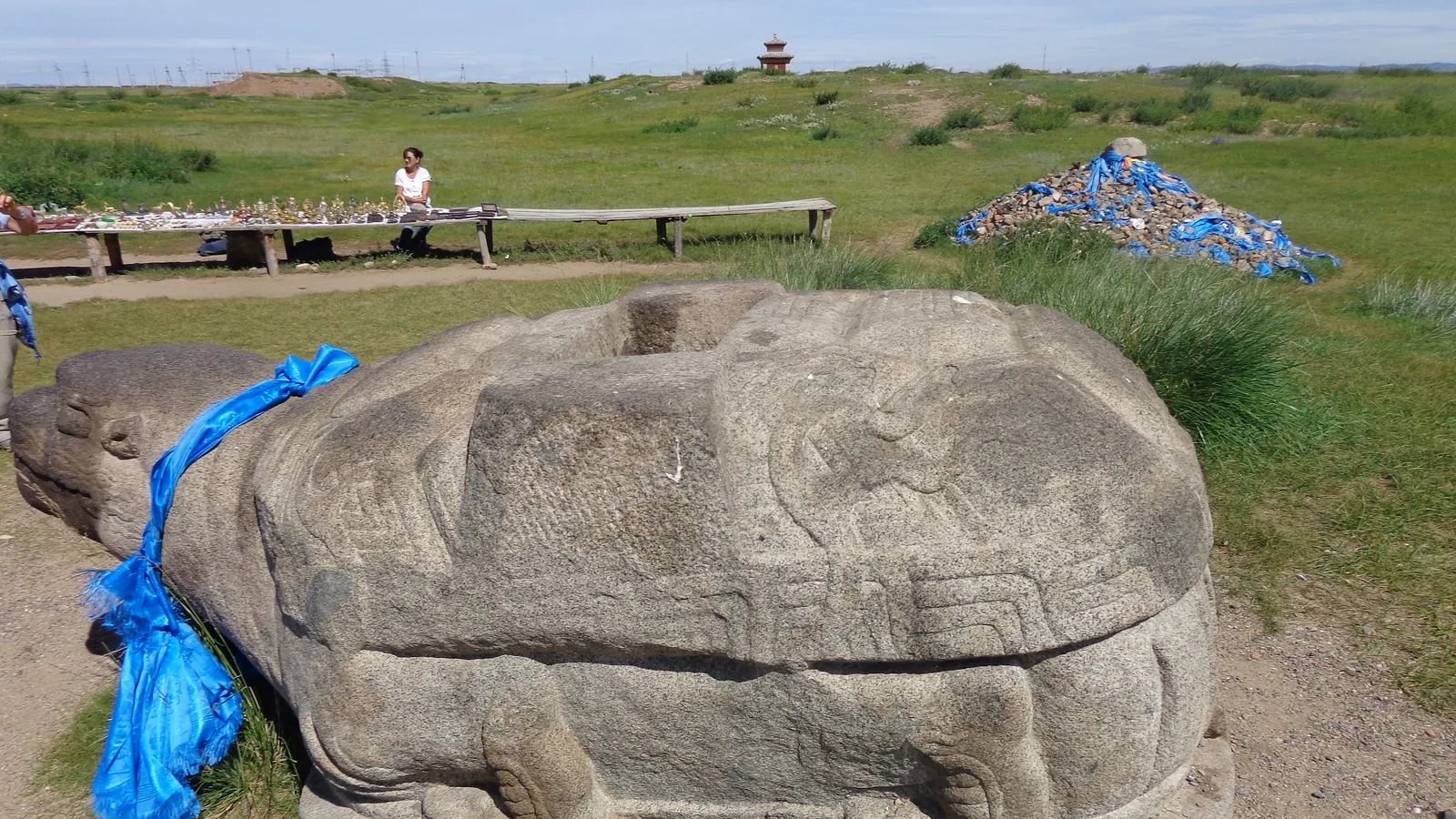

TL;DR — William of Rubruck entered Karakorum on May 7, 1254: a mud-walled town smaller than Saint Denis, a silver fountain by a Parisian captive, a khan who ordered a debate.
“Of the city of Caracarum you must know that, exclusive of the palace of the Chan, it is not as big as the village of Saint Denis, and the monastery of Saint Denis is ten times larger than the palace.” The writer was William of Rubruck, a Franciscan friar reporting to Louis IX of France. He had entered the Black Sea from Constantinople on May 7, 1253, reached Mongke Khan’s camp on December 27, and entered the city on May 7, 1254. His report also describes a silver tree that poured four drinks, a debate of three religions, and the khan’s creed. Rubruck carried Mongke’s answer west, but he never handed it to the king.
Quick facts
- When
- May 7, 1253 (Rubruck enters the Black Sea from Constantinople) · December 27, 1253 (reaches Mongke's ordu) · May 7, 1254 (enters Karakorum) · May 30 and 31, 1254 (the debate; audience with Mongke) · about July 8, 1254 (final audience, per Rockhill) · August 15, 1255 (chapter at Tripoli; ordered to stay at Acre)
- Where
- Karakorum on the Orkhon River, in what is now Mongolia; Constantinople; Tripoli and Acre on the Syrian coast
- Who
- Friar William of Rubruck; Mongke Khan; the goldsmith William Buchier of Paris; Paquette of Metz; King Louis IX of France; the translator W. W. Rockhill (1900); Leonardo Olschki (1946); Peter Jackson (Encyclopaedia Iranica)
- Outcome
- Rubruck's report to Louis IX described a walled town with two quarters, 12 temples, two mosques and one church, and a silver drink-fountain made by a Parisian captive; Mongke ordered a debate of Christians, Muslims and Buddhists on May 30, 1254, gave the friar a letter demanding submission, and sent him home. Rubruck never delivered it in person; the king had sailed for France a year before he reached the coast
Twelve idol temples, two mosques and one church
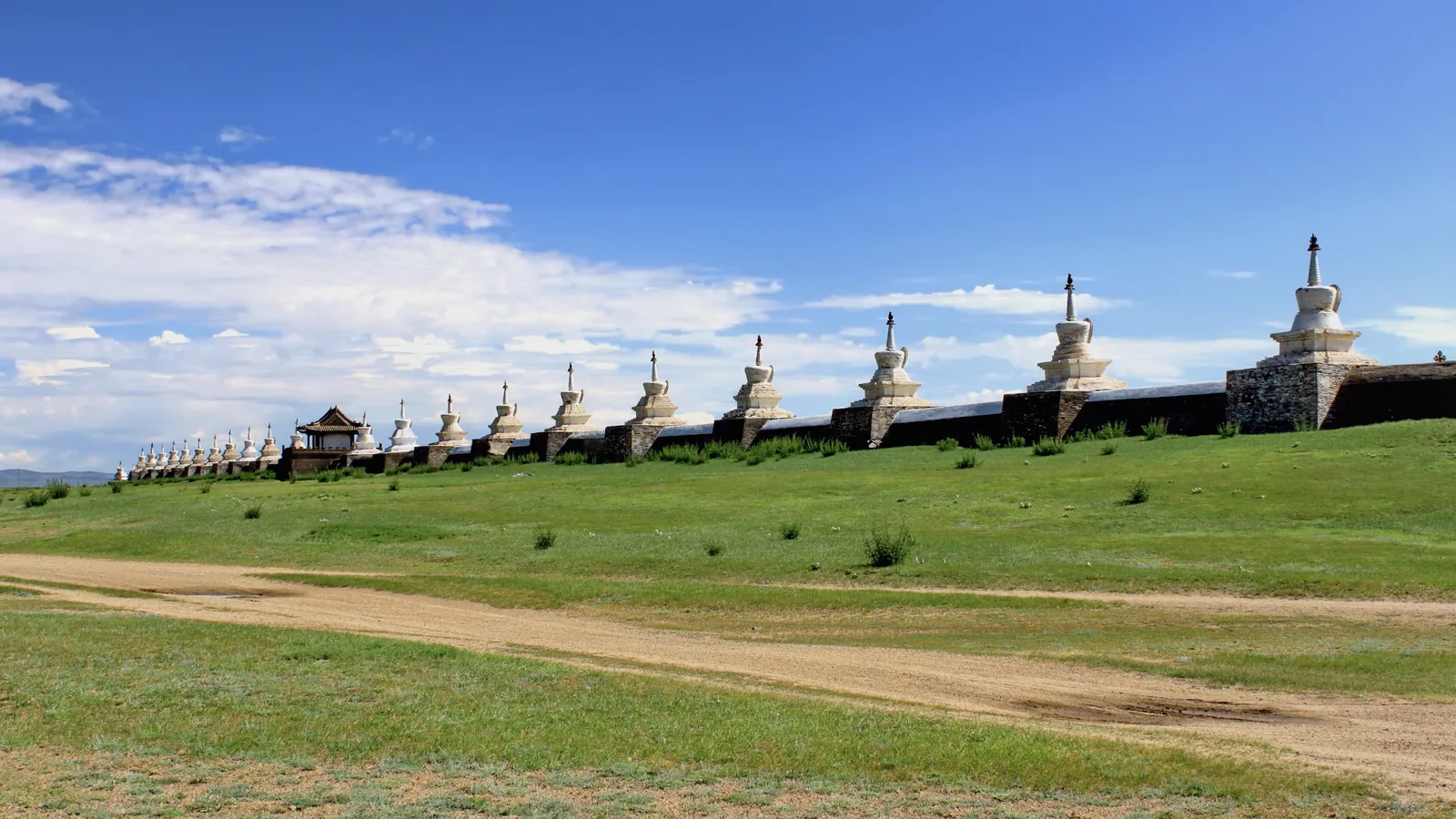
Karakorum stood on the Orkhon River in what is now Mongolia. “There are two quarters in it; one of the Saracens in which are the markets, and where a great many Tartars gather on account of the court . . . the other is the quarter of the Cathayans, all of whom are artisans.” Rubruck counted “twelve idol temples of different nations, two mahummeries in which is cried the law of Machomet, and one church of Christians in the extreme end of the city.” The church was Nestorian; Encyclopaedia Iranica’s survey of Christianity in Central Asia cites his report for Nestorians south of Lake Balkhash.
Each gate had its market. “The city is surrounded by a mud wall and has iiii gates. At the eastern is sold millet and other kinds of grain . . . at the western one, sheep and goats are sold; at the southern, oxen and carts are sold; at the northern, horses are sold.” Rockhill’s 1900 edition places the ruins on the Orkhon’s left bank.
William Buchier of Paris and the silver tree
Rubruck heard of the man who made the palace fountain from Paquette of Metz, a captive at Mongke’s camp: “there was in Caracarum a certain master goldsmith, William by name, a native of Paris: and his family name was Buchier, and the name of his father was Laurent Buchier.” Mongke had given him “three hundred iascot, that is three thousand marks,” and 50 workmen. Leonardo Olschki wrote in 1946 that Guillaume Boucher was taken prisoner at Belgrade in 1242 and lived at Karakorum as a slave, first of Tolui’s widow.
Since milk skins were unseemly there, “master William the Parisian had made for him a great silver tree, and at its roots are four lions of silver, each with a conduit through it, and all belching forth white milk of mares.” Four pipes ran up the trunk to gilded serpents, “and from one of these pipes flows wine, from another caracosmos, or clarified mare’s milk, from another bal, a drink made with honey, and from another rice mead.” At the top stood “an angel holding a trumpet, and underneath the tree he made a vault in which a man can be hid.” When drink was wanted the head butler called to the angel, the hidden man blew into a pipe, the angel “blows the trumpet right loudly,” and servants in a cellar outside poured the liquors in.
May 25, 1254: an order to compare doctrines
On May 25 the khan’s secretaries told the friar that Christians, Saracens and Tuins, the Buddhist clergy, each said “his doctrine is the best,” and that Mongke wished them to “make a comparison, each one writing down his precepts, so that he himself may be able to know the truth.”
On Pentecost eve, May 30, the parties met before three umpires, a Christian, a Saracen and a Tuin, and a rule was read aloud: “This is the order of Mangu, and let no one dare say that the commandment of God differs from it. And he orders that no one shall dare wrangle or insult any other, or make any noise by which this business shall be interfered with, on penalty of his head.” The Christians put Rubruck against a Tuin from Cathay. Asked whether any god was omnipotent, the Tuin at last answered that none was; the Saracens laughed. Rubruck asked how a man who cannot serve two masters could serve so many gods. “The audience told him to answer, but he remained speechless.” No one, Rubruck wrote, asked to become a Christian. “When this was over, the Nestorians as well as the Saracens sang with a loud voice, while the Tuins kept silence, and after that they all drank deeply.”
"We Moal believe that there is only one God"
On Pentecost day, May 31, Mongke called the friar and the Tuin before him, blamed the interpreter for a report that Rubruck had called him a Tuin, and held out his staff with the words “Fear not.” Then came his creed: the Moal, as the Mongols called themselves, believed in “only one God,” by whom they lived and died, and for whom they kept “an upright heart.” As God gave “the different fingers of the hand,” so he “gives to men divers ways.” The Christians had the Scriptures and did not keep them, he said; the Mongols had diviners, obeyed them and lived in peace. Rockhill’s note adds that a Chinese Buddhist work, the Pien wei lu, gives Mongke the same hand with Buddhism as the palm and the other religions as fingers.
Acre, August 1255: the report travels without him
Rockhill dates the final audience to “on or about the 8th July 1254.” Mongke’s letter opened with the words “in Heaven there is only one eternal God, and on Earth there is only one lord, Chingis Chan,” and told the king of the French to “send your ambassadors to us,” as proof of “peace or war with us.” The scribes had first written the friars down as ambassadors; “Call us not ambassadors,” Rubruck told them, and had it struck out. Louis had given him expense money and letters of commendation, Rockhill’s introduction states, “carefully avoiding giving them any official character.” Peter Jackson, in Encyclopaedia Iranica, wrote that the Mongols took the group for an official embassy, which is why Sartaq sent it to Batu and Batu on to Mongke.
Rubruck reached Tripoli, where the Franciscans held their chapter on the Assumption, August 15, 1255, “and the Provincial ordered me to remain at Acon, not allowing me to come to you.” Jackson adds that Louis had embarked for home a year earlier, and that Roger Bacon later met the friar in France and cited him in the Opus Maius. The city itself lost its rank soon after, in 1256 by Rockhill’s note or 1260 by a 2020 paper in Scientific Reports. The report went to the king by a messenger from Acre after August 15, 1255; its author stayed behind under his vow of obedience.

Key facts
- Rubruck entered the Black Sea from Constantinople on May 7, 1253, reached Mongke’s ordu on December 27, 1253, and entered Karakorum on May 7, 1254 (Rockhill 1900).
- He wrote that the city, “exclusive of the palace of the Chan,” was “not as big as the village of Saint Denis,” and that the monastery there was ten times larger than the palace.
- Inside the mud wall were a Saracen quarter with the markets and a Cathayan quarter of artisans, “twelve idol temples of different nations,” two mosques and one Christian church; the four gates sold grain, sheep and goats, oxen and carts, and horses.
- The silver tree was made by William Buchier of Paris, son of Laurent Buchier; Mongke gave him “three hundred iascot, that is three thousand marks,” and 50 workmen.
- Four silver lions poured mare’s milk and four gilded serpents poured wine, caracosmos, bal and rice mead, on the signal of an angel’s trumpet worked by a man hidden in a vault under the tree.
- Olschki (1946) wrote that Guillaume Boucher was captured at Belgrade in 1242 and lived at Karakorum as a slave, first of Tolui’s widow.
- Mongke’s message of May 25, 1254 ordered a comparison of doctrines; on May 30 a rule was read “on penalty of his head,” and the Tuin opposing Rubruck “remained speechless.”
- On May 31 Mongke stated that the Moal believed in one God and compared religions to “the different fingers of the hand”; on August 15, 1255 the Provincial at Tripoli ordered Rubruck to stay at Acre, so the report went to Louis IX by a messenger.
FAQ
Was William of Rubruck an ambassador of Louis IX?
No. Rockhill's introduction states that the king gave him money for expenses and letters commending him but avoided "giving them any official character," and at Karakorum the friar had the scribes strike the word "ambassadors" from Mongke's letter. Peter Jackson wrote that the Mongols nonetheless treated the party as an official embassy.
Who made the silver tree fountain at Karakorum?
A goldsmith from Paris whom Rubruck calls William Buchier, son of Laurent Buchier. Leonardo Olschki's 1946 study names him Guillaume Boucher and states that he was captured at Belgrade in 1242. Mongke paid him 300 iascot, which Rubruck reckoned at 3,000 marks, and gave him 50 workmen.
What happened at the religious debate of May 30, 1254?
Christians, Muslims and Buddhists met before three umpires under an order forbidding insults "on penalty of his head." Rubruck argued with a Buddhist who answered that no god was omnipotent and then fell silent; the Nestorians and Saracens sang, the Buddhists kept silence, and all drank. The next day Mongke told the friar that God gives men different ways as he gives the hand different fingers.
Sources
- William of Rubruck, The Journey of William of Rubruck to the Eastern Parts of the World, 1253–55, as Narrated by Himself, translated and edited by William Woodville Rockhill (Hakluyt Society, London, 1900): the report to Louis IX, including the chapters on Karakorum, the silver tree, the debate of May 30, 1254, the audience of May 31, Mongke's letter and the return to Tripoli and Acre. Full text on the Internet Archive, identifier journeyofwilliam00ruys.
- Rockhill's introduction and editorial notes in the same 1900 volume: Louis IX's letters "carefully avoiding giving them any official character"; the site of the ruins on the Orkhon; the note dating the final audience to about July 8, 1254; the note on the Pien wei lu. Internet Archive record.
- Leonardo Olschki, Guillaume Boucher: A French Artist at the Court of the Khans (Oxford University Press, London, 1946): the goldsmith's capture in 1242 and his status at Karakorum. Internet Archive (Digital Library of India copy), identifier in.ernet.dli.2015.36553.
- Peter Jackson, "William of Rubruck," Encyclopaedia Iranica (published 2000, updated October 22, 2012): the Mongols' misreading of the mission, the return in 1255, Louis's departure and Roger Bacon's use of the report.
- Encyclopaedia Iranica, "Christianity iii. In Central Asia and Chinese Turkestan": Rubruck's account of Nestorian Christians south of Lake Balkhash in the mid-13th century.
- Wilkin, Bemmann et al., data cited in "Economic Diversification Supported the Growth of Mongolia's Nomadic Empires," Scientific Reports 10, 3916 (2020), full text at Europe PMC: the move of the capital in 1260.
Cite this article
- APA
- Our Earth's History. (2026, September 22). Not as big as Saint Denis: William of Rubruck measures Karakorum, 1254. Our Earth's History. https://ourearthshistory.com/central-asia/medieval/rubruck-karakorum-1254-silver-tree-mongke-debate/
- Chicago
- Our Earth's History. “Not as big as Saint Denis: William of Rubruck measures Karakorum, 1254.” Our Earth's History, September 22, 2026. https://ourearthshistory.com/central-asia/medieval/rubruck-karakorum-1254-silver-tree-mongke-debate/.
- MLA
- “Not as big as Saint Denis: William of Rubruck measures Karakorum, 1254.” Our Earth's History, 22 Sep. 2026, https://ourearthshistory.com/central-asia/medieval/rubruck-karakorum-1254-silver-tree-mongke-debate/.
Text licensed CC BY-NC-ND 4.0. Found an error? Tell us.