Merv, December 2, 1510: Shah Ismail's feint against Shaybani Khan
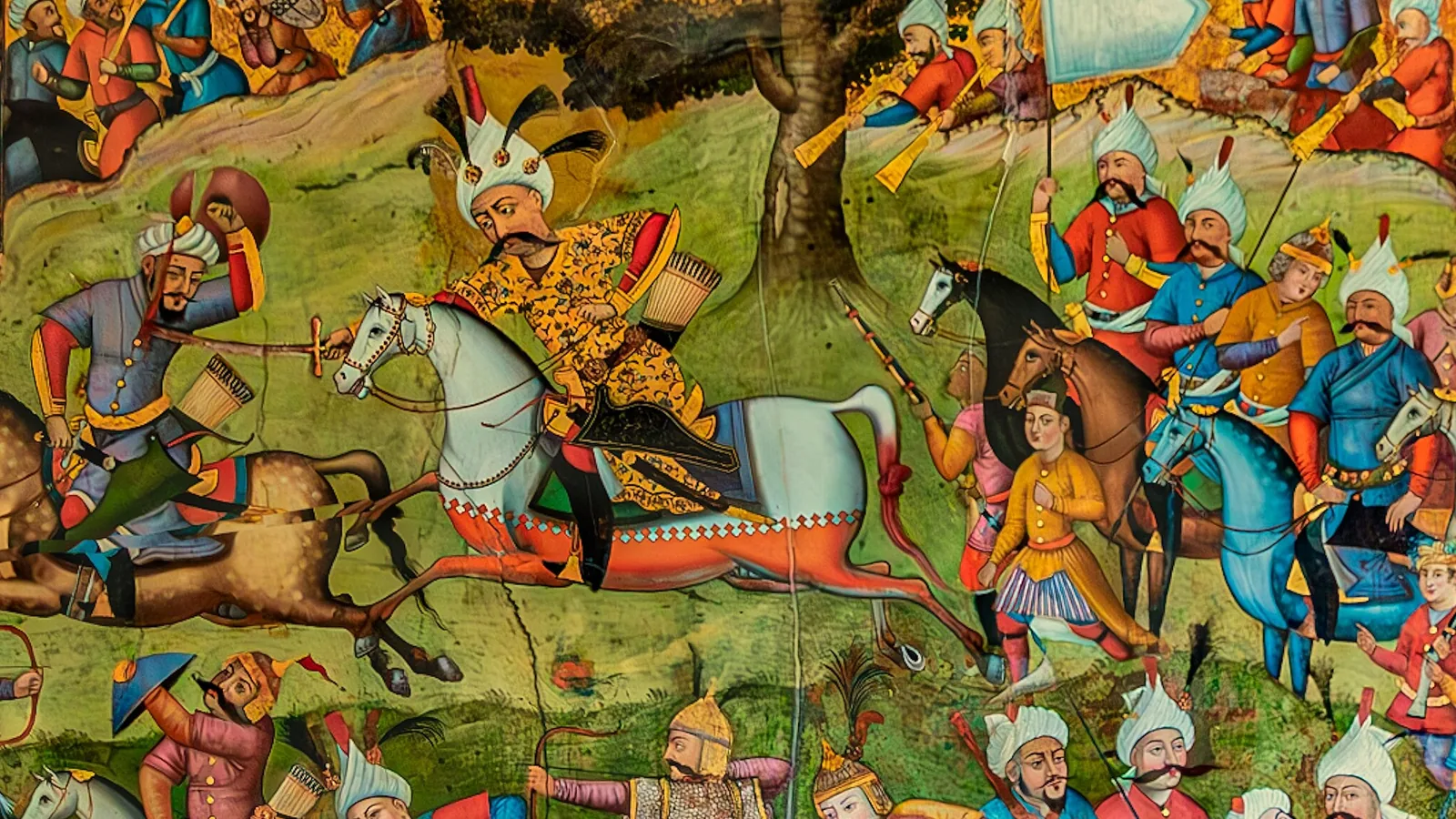
,_between_Ismail_I_and_Shaybani_Khan._Chehel_Sotoun,_Isfahan,_painted_circa_1647.jpg)
TL;DR — Shah Ismail feigned a retreat from Merv on December 2, 1510, then trapped and killed Shaybani Khan — a victory undone at Ghijduvan two years later.
Encyclopaedia Iranica dates the battle to “his great victory over Moḥammad Šībānī (Šaybak) Khan at Marv on 30 Šaʿbān 916/2 December 1510, recorded in the chronogram ‘fatḥ-e šāh-e dīn-panāh.’” Annette Beveridge, translating Babur’s memoirs, checked the day of the week and independently reached “Friday Sha’bān 29th 915 AH. (Friday December 2nd 1510 AD.)” Both agree on the Gregorian day: Ismail’s Safavid army trapped and killed Shaybani Khan, founder of the Uzbek state, outside Merv after luring him out with a false withdrawal. Babur, whose sister had married Shaybani Khan, retook Samarkand with Ismail’s help the next year, lost it again at Ghijduvan in 1512, and gave up Transoxiana for India. Ismail’s own run of victories ended four years later, at Chaldiran.
Quick facts
- When
- December 2, 1510 (30 Sha'ban 916 AH), battle of Merv; Rajab 917/October 1511, Babur retakes Samarkand; 3 Ramadan 918/November 12, 1512, battle of Ghijduvan; 2 Rajab 920/August 23, 1514, battle of Chaldiran
- Where
- Merv, on the Khorasan frontier (now Mary, Turkmenistan); Samarkand and Ghijduvan (now Uzbekistan); near Khoy, in northwestern Azerbaijan
- Who
- Shah Ismail I of Safavid Persia; Muhammad Shaybani Khan, founder of the Uzbek state; Babur, Timurid prince and later founder of the Mughal dynasty; the Safavid officer Najm-e Thani; Ottoman Sultan Selim I
- Outcome
- Shaybani Khan was killed and the Uzbek state he had built broke apart; Babur's Safavid-backed return to Samarkand was undone at Ghijduvan in 1512; Ismail was routed at Chaldiran in 1514 and never again led his army in battle
Shaybani Khan's decade of conquest
Muhammad Shaybani Khan was a grandson of Abu’l-Khayr, ruler of an earlier Uzbek confederation. He took Samarkand in 907/1501, then extended his rule through Farghana, Khorezm, and Balkh to Herat by 913/1507, ending that year with more territory, Iranica states, than any political leader in the region since Shahrukh, who died in 1447. His advance had already cost Babur, who had briefly held Samarkand himself, his throne. Iranica traces the weakness beneath the expansion to its foundation in one man: “the loyalties generated by his successes were to his person rather than to his clan.”
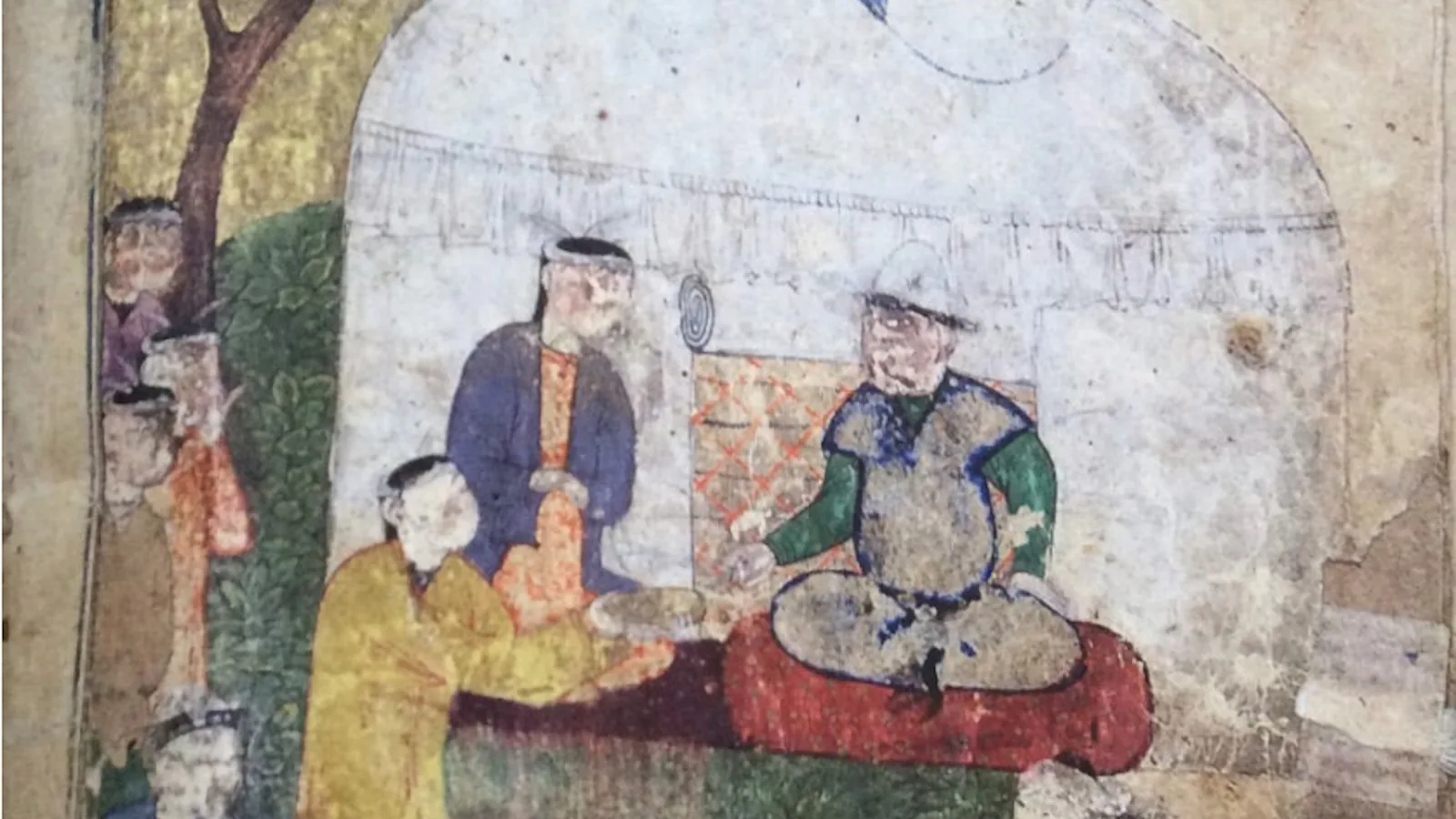
.jpg)
1510: the feint outside Merv
Babur’s own diary is missing for these years; a detailed account comes instead from a supplement translated by John Leyden and William Erskine and later revised by Lucas King, compiled from later chronicles, chiefly Mirza Sikandar and Khafi Khan. By its telling, Shaybani Khan fell back into the fortress of Marv Shahjahan after a sharp fight outside the walls. Ismail, with the siege dragging on, announced he was going home and pulled his army back toward Iraq. “The feint succeeded.” Shaybani Khan pursued with an army the supplement puts at 25,000 men; Ferishta’s figure of 100,000 the translators call “very defective.” About ten miles out his force crossed a river, and Ismail’s cavalry, 17,000 strong by the same supplement, cut the bridge behind them and attacked. Shaybani Khan fled with about 500 men into a walled enclosure built to pen travelers’ cattle, its one exit sealed off, and died falling from his horse as he tried to jump the wall toward the river.
A drinking cup for Bayezid
Encyclopaedia Iranica’s entry on Chaldiran restates the outcome in one sentence: Ismail “had the skull of the defeated pro-Ottoman Uzbek ruler Moḥammad Šaybānī Khan made into a drinking cup and sent it to Bāyazīd together with a number of demands.” The Leyden-Erskine and King supplement tells the same story, drawn from the same later chronicle tradition rather than any contemporary account. Iranica’s entry on Ottoman-Persian relations describes Bayezid II in these years as “already old and ill and confined to Istanbul” and “helpless against Shah Esmāʿīl.”
"All the Aūzbegs have crossed the Amū"
At first Babur’s side could not confirm the death. Mirza Khan wrote to Babur: “It is not known . . . whether Shāhī Beg Khān has been killed or not. All the Aūzbegs have crossed the Amū.” Word of Babur’s sister followed. Khan-zada Begim, married first to Shaybani Khan and then to Sayyid Hadi, was widowed a second time when both men died in the fighting at Merv, then returned to Babur at Qunduz under Safavid escort, “and with her came an envoy from Ismāʿīl proffering friendship.”
Retaking Samarkand, 1511 to 1514
The Uzbek clans Shaybani Khan had led chose no single successor; a qoreltay in spring 1511 elected Kuchkunji, the eldest surviving Abu’l-Khayrid, khan of a state now run by consensus. Babur retook Samarkand a third time, in Rajab 917/October 1511, with a Qizilbash force and a promise, kept, to strike coins in Ismail’s name. Iranica records the price: Babur had “to make an outward profession of the Shiʿite faith and to adopt the Turkman costume of the Safavid troops.” The Uzbeks counterattacked the next spring, defeating him at Kul-i Malik in 918/1512. Advancing to relieve him, the Safavid officer Najm-e Thani took Qarshi, where Beveridge records 15,000 people were killed. Babur’s Qizilbash allies were then routed at Ghijduvan, north of Bukhara, “on Tuesday Ramẓān 3rd (Nov. 12th)” by Beveridge’s reckoning, a date Iranica also gives as 3 Ramadan 918/12 November 1512, when Qizilbash troops deserted from “resentment at being placed under the command of” Najm-e Thani, who was killed. The Leyden-Erskine and King supplement instead dates the battle nearly two years later, October 22, 1514, the only one of the three to do so. Babur “abandoned his Transoxanian ambitions and retreated into northern India”; Beveridge notes his failure to support Najm-e Thani “was made a reproach to his son Humāyūn in 951 AH. (1544 AD.)” Ismail’s own army broke at Chaldiran, near Khoy in Azerbaijan, on 2 Rajab 920/23 August 1514, against Ottoman Sultan Selim I, and he fled “with some 300 of his followers.” In Iranica’s words, “he never again led his troops into battle.”
Key facts
- Iranica dates the battle of Merv to 30 Sha’ban 916/December 2, 1510; Beveridge independently reached the same date.
- Shaybani Khan, grandson of Abu’l-Khayr, had conquered Samarkand, Khorezm, Balkh, and Herat between 1501 and 1507.
- Ismail’s feint drew him out of Merv in pursuit with a force the Leyden-Erskine and King supplement puts at 25,000 men.
- Ismail’s cavalry, 17,000 strong by that supplement, cut the bridge behind him and attacked.
- Shaybani Khan died falling from his horse while escaping a walled cattle enclosure near the river.
- Iranica and the same supplement both describe his skull made into a drinking cup sent to Sultan Bayezid II.
- Babur retook Samarkand in October 1511 as a Safavid client, then lost it at Ghijduvan on November 12, 1512.
- Ismail was routed by Selim I at Chaldiran on August 23, 1514, and never again led his army in the field.
FAQ
When did Shah Ismail defeat Shaybani Khan at Merv?
On December 2, 1510 (30 Sha'ban 916 AH by Iranica, 29 Sha'ban 915 AH by Beveridge), both giving the same Gregorian date.
What happened to Shaybani Khan's skull?
Iranica's entry on Chaldiran and the Leyden-Erskine and King supplement, which draws on later Persian chronicles, both record it made into a drinking cup and sent to Sultan Bayezid II. Neither says whether he received it.
Why did Babur lose Samarkand again after 1511?
His Safavid-backed force was routed at Ghijduvan on November 12, 1512, after Qizilbash troops deserted rather than serve under Najm-e Thani, the Persian officer killed there.
Sources
- Encyclopaedia Iranica, "ESMĀʿĪL I ṢAFAWĪ: i. Biography" — dates the victory over Shaybani Khan at Marv to 30 Šaʿbān 916/2 December 1510 and covers Babur's 1511 recapture of Samarkand and the 1512 defeat at Ḥojdovān.
- Encyclopaedia Iranica, "BĀBOR, ẒAHĪR-AL-DĪN MOḤAMMAD" — on Babor's terms as a Safavid client in Samarkand and his abandonment of Transoxiana after Ghijduvan.
- Encyclopaedia Iranica, "ČĀLDERĀN, battle of" — the skull-cup tradition sent to Bayezid and the course of the 1514 battle near Khoy.
- Encyclopaedia Iranica, "CENTRAL ASIA vi. In the 16th-18th Centuries" — Shaybani Khan's conquests to 1507 and the Uzbek clans' consensual khanate after his death.
- The Memoirs of Babur, tr. John Leyden and William Erskine, rev. Lucas King, vol. II, Supplement — the feigned retreat, the pursuit, Shaybani Khan's death and the skull-cup account drawn from later chronicles.
- The Babur-nama in English, tr. Annette S. Beveridge (Project Gutenberg ebook #44608) — the December 2, 1510 date footnote, Mirza Khan's letter, Khan-zada Begim's return and the Ghijduvan battle date.
- Encyclopaedia Iranica, "OTTOMAN-PERSIAN RELATIONS i. UNDER SULTAN SELIM I AND SHAH ESMĀʿĪL I" — on Sultan Bayezid II's position against Shah Ismail before Chaldiran.
Cite this article
- APA
- Our Earth's History. (2026, September 23). Merv, December 2, 1510: Shah Ismail's feint against Shaybani Khan. Our Earth's History. https://ourearthshistory.com/central-asia/early-modern/merv-december-2-1510-shaybani-khan-ismail-feint-ghijduvan-1512/
- Chicago
- Our Earth's History. “Merv, December 2, 1510: Shah Ismail's feint against Shaybani Khan.” Our Earth's History, September 23, 2026. https://ourearthshistory.com/central-asia/early-modern/merv-december-2-1510-shaybani-khan-ismail-feint-ghijduvan-1512/.
- MLA
- “Merv, December 2, 1510: Shah Ismail's feint against Shaybani Khan.” Our Earth's History, 23 Sep. 2026, https://ourearthshistory.com/central-asia/early-modern/merv-december-2-1510-shaybani-khan-ismail-feint-ghijduvan-1512/.
Text licensed CC BY-NC-ND 4.0. Found an error? Tell us.