Was the Great Game spycraft, or Russia's conquest of Central Asia?
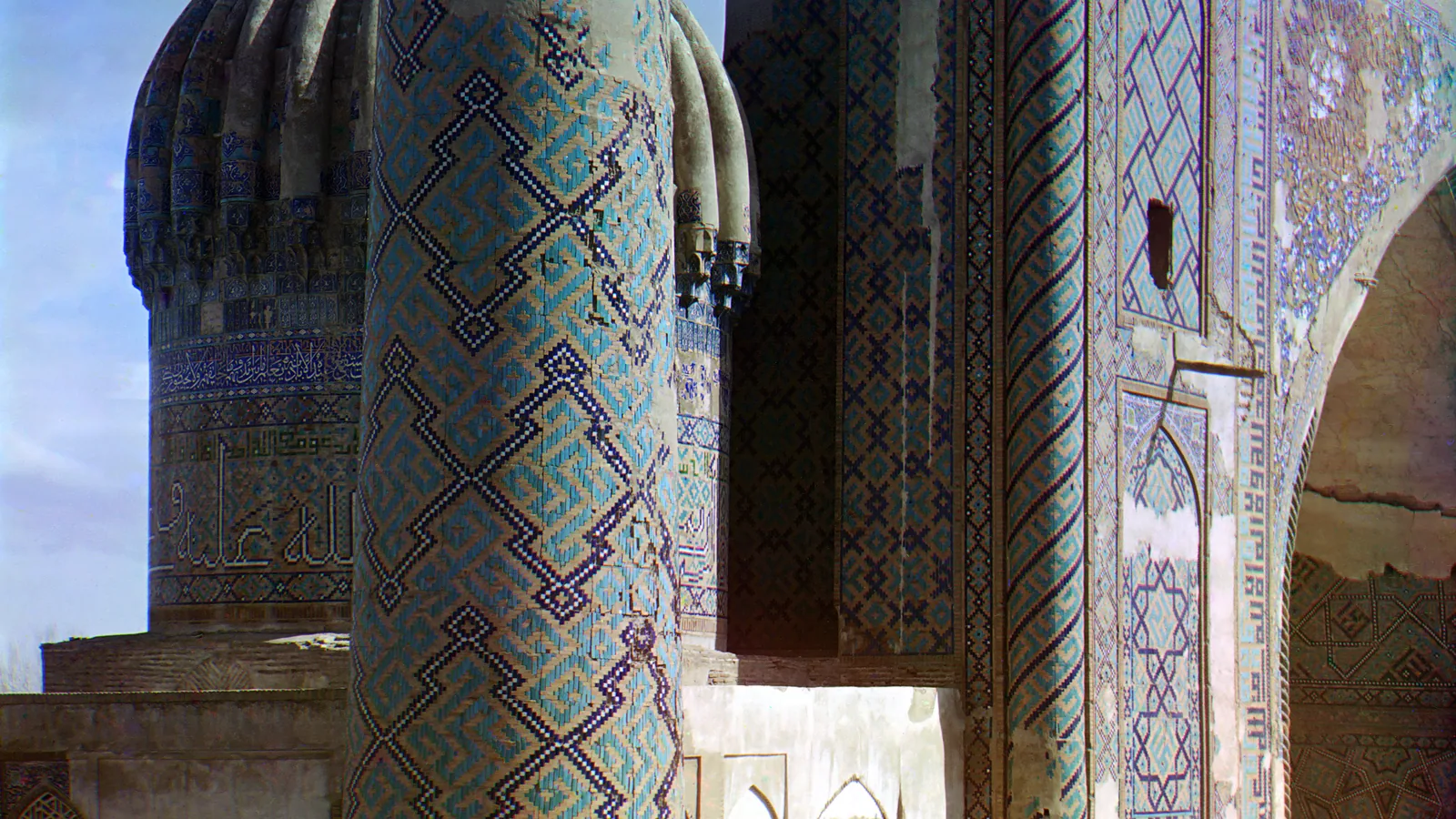

TL;DR — The name was British; the events were Russian. Between 1865 and 1884 Russian armies took Tashkent, Samarkand, Khiva, Kokand, Gök-Tepe and Merv, and the peoples there lost.
The “Great Game” was a British phrase for a British fear, while the events it names were a Russian conquest of Central Asia between 1865 and 1884. A captain named Arthur Conolly wrote the words in a private letter in 1840; Rudyard Kipling’s novel Kim carried them into common speech in 1901, in a sense that had little to do with Russia. Britain sent one army into Afghanistan and lost it in the snow between Kabul and Jalalabad in January 1842. Russia stormed Tashkent in 1865, took Samarkand in 1868, made Khiva a dependency in 1873, abolished the Khanate of Kokand in 1876, broke the Teke Turkmen at Gök-Tepe in 1881 and occupied Merv in 1884. The two empires never fought each other; in 1885 they came close, then drew the Afghan frontier by commission.
Quick facts
- When
- 1838 (Simla Manifesto) · January 6 to 13, 1842 (retreat from Kabul) · June 1842 (Conolly and Stoddart executed at Bukhara) · June 27, 1865 (Tashkent stormed) · May 2, 1868 (Samarkand) · June 10, 1873 (Khiva) · February 2, 1876 (Kokand abolished) · January 1881 (Gök-Tepe) · March 1884 (Merv) · April 27, 1885 (Gladstone's vote of credit) · 1887 (Russo-Afghan border fixed)
- Where
- Kabul and the passes to Jalalabad, in what is now Afghanistan; Bukhara, Tashkent, Samarkand, Khiva and Kokand, in what is now Uzbekistan; Gök-Tepe and Merv, in what is now Turkmenistan; the Panjdeh oasis on the Murghab river
- Who
- Arthur Conolly and Henry Rawlinson; Lady Sale and Vincent Eyre; Dost Mohammad Khan and his son Akbar; the generals Chernyaev, von Kaufman and Skobelev; Amir Muzaffar al-Din of Bukhara and Muhammad Rahim Khan of Khiva; the Teke Turkmen; William Gladstone; the historians J. W. Kaye, M. E. Yapp, Yuri Bregel and Alexander Morrison
- Outcome
- Britain lost an army in Afghanistan in 1842 and twice withdrew; Russia annexed the khanates and the Turkmen oases between 1865 and 1884; the two empires never fought each other and drew the Afghan border by commission in 1887
Where the phrase came from
Conolly, an officer of the 6th Bengal Cavalry, had ridden from Persia to India in 1830. In the summer of 1840 he wrote to Major Henry Rawlinson at Kandahar about the work ahead in Afghanistan: “You’ve a great game, a noble game before you.” The historian J. W. Kaye printed the letter in Lives of Indian Officers in 1867 and used the phrase himself for the whole Afghan venture, writing of the Kabul uprising of November 1841 that “the ‘great game’ had exploded.” Conolly went on to Bukhara to plead for a captive colonel, Charles Stoddart, and the amir of Bukhara put both men to death in June 1842, the date Kaye settled on.
Kipling gave the words their fame. In Kim (1901) the trainer of spies Lurgan Sahib thinks of “the Great Game that never ceases day and night, throughout India.” M. E. Yapp of the School of Oriental and African Studies, in a lecture to the British Academy on May 16, 2000, wrote that the term in Kim meant secret intelligence work inside and outside India and was spoken almost only by Indian characters; the clash with a Russian agent was “a relatively minor, slightly absurd incident.” The current sense, Anglo-Russian rivalry in Central Asia, “became common only after the second world war.”
What Britain feared: Kabul, January 1842
The fear was older than the phrase. According to the Encyclopaedia Iranica entry by Ludwig Adamec and James Norris, the British in India had been alarmed by the Russian advance long before 1838, when the governor general Lord Auckland issued the Simla Manifesto to depose Dost Mohammad Khan of Kabul and restore Shah Shuja. The Army of the Indus reached Kabul in 1839. In November 1841 the city rose; Alexander Burnes was killed, then the envoy William Macnaghten.
Two people who were there wrote down what came next. Lady Sale, wife of a brigadier, recorded that the force marched out on January 6, 1842: “The force consisted of about 4500 fighting men, and 12,000 followers,” on a day with “the snow nearly a foot deep on the ground; the thermometer considerably below freezing point.” Lieutenant Vincent Eyre of the Bengal Artillery, a prisoner of Dost Mohammad’s son Akbar, gave the same count and wrote that by the evening of January 10 the column had lost “about 12,000 men” including followers. He recorded the last stand at Gandamak on January 13, where the survivors “could only muster about twenty muskets,” and wrote that the surgeon William Brydon “was the only officer of the whole Cabul force, who reached that garrison in safety” at Jalalabad. Both journals were printed in London in 1843.
What Russia did: from Tashkent to Merv
The Russian side is a list of dates, supplied by Yuri Bregel’s Iranica entry. General Mikhail Chernyaev, military governor of the new Turkestan region, stormed Tashkent on June 27, 1865, and the tsar proclaimed its annexation in August 1866. A governorate-general of Turkestan was created in 1867 under General Konstantin von Kaufman, with the right to make war and treaties on his own authority; Central Asians called him “Half-Emperor.” Von Kaufman took Samarkand on May 2, 1868, and Khiva on June 10, 1873. After a rebellion in the Fergana valley, the Khanate of Kokand was abolished on February 2, 1876.
Then came the Turkmen. In August 1879 the Teke repulsed a Russian column with heavy losses at the fortress of Gök-Tepe, near what is now Ashgabat. General Mikhail Skobelev returned in 1880, and in January 1881 he stormed the fortress after a three-week siege. Bregel writes that “about 15,000 Teke Turkmen were killed.” The Turkmen of Merv accepted Russian sovereignty at the end of 1883, and Russian troops occupied the oasis in March 1884; the Iolotan and Panjdeh oases up the Murghab were annexed the same year.
The khanates and the Turkmen as actors
The people of the region acted, and lost, on their own account. Bregel records that Amir Muzaffar al-Din of Bukhara, “yielding to the militant mullahs of Bukhara and Samarkand,” proclaimed holy war against Russia in April 1868, lost two battles in a month and signed peace on June 30 that opened the country to Russian merchants. Muhammad Rahim Khan of Khiva, in the treaty of August 24, 1873, declared himself the “obedient servant” of the emperor, gave up the right bank of the Amu Darya and lost control of his foreign relations; that July von Kaufman’s troops had killed hundreds of the Khivan Turkmen in a punitive raid. The Teke fought twice at Gök-Tepe, once winning. In Bregel’s entry the British appear only at the frontier.
Panjdeh, April 1885, and the line drawn
The one moment the two empires nearly fought came after Merv. On April 27, 1885, William Gladstone asked the House of Commons for a vote of credit of 11 million pounds, 6.5 million of it for “special preparations,” the largest such vote, he said, in 70 years apart from the Crimean War. Russian and Afghan troops had met at Panjdeh in “a bloody engagement on the 30th of March,” and, he told the House, “the attack was a Russian attack.” He described the Afghan frontier as running between the amir and “what was until yesterday Turcoman territory, but has now become by a rapid process Russian territory.” He also said: “It is not a case of war.” Iranica’s political history of Afghanistan records that British policy after 1880 was a buffer state between British India and Russian Turkestan, and that bilateral commissions delimited the northwest border from 1884; Bregel dates the final line between the Tejen and the Amu Darya to 1887.
What remains open
Two readings of the label stand in print. Yapp argued that continuous rivalry “did not exist to the extent which has been suggested” and that the real problem of Indian defense was internal policing. Alexander Morrison’s 2021 book is described by Marianne Kamp of Indiana University, in a review printed by its publisher, as a work that “demolishes the ‘Great Game’ story of Russia’s expansion, so entrenched in English language scholarship.” Kamp adds that the Russian accounts remain “far more abundant” than the Central Asian ones. The dates do not change under either reading. A British army died in Afghanistan in 1842 and Britain withdrew again in 1881; Russian armies took the khanates and the oases, and stayed.
Key facts
- Arthur Conolly wrote “a great game, a noble game” to Henry Rawlinson in the summer of 1840; Kaye printed the letter in 1867 and Kipling’s Kim spread the phrase in 1901.
- Yapp (2000): in Kim the term meant intelligence work throughout India; the Anglo-Russian sense became common only after 1945.
- The Kabul column of January 6, 1842, was about 4,500 soldiers and 12,000 followers (Sale, Eyre); Eyre named Brydon as the only officer to reach Jalalabad.
- Russian dates per Bregel: Tashkent June 27, 1865; Samarkand May 2, 1868; Khiva June 10, 1873; Kokand abolished February 2, 1876; Gök-Tepe January 1881; Merv March 1884.
- About 15,000 Teke Turkmen were killed at Gök-Tepe in January 1881, by Bregel’s figure.
- Gladstone’s vote of credit of April 27, 1885, was 11 million pounds; he told the Commons “It is not a case of war.”
- The Russo-Afghan border from the Tejen to the Amu Darya was fixed in 1887 by commission.
FAQ
Who coined the phrase "the Great Game"?
Arthur Conolly, a British officer, in a letter to Henry Rawlinson written in the summer of 1840. J. W. Kaye printed it in 1867, and Kipling's Kim (1901) made it famous. Yapp wrote that the phrase in its modern sense became common only after 1945.
Did Britain and Russia ever fight each other in Central Asia?
No. The closest call was the Panjdeh crisis of spring 1885, when Gladstone asked Parliament for 11 million pounds but told the Commons it was not a case of war. The two governments then fixed the Afghan border by commission, finishing in 1887.
What did Russia actually conquer?
The Khanate of Kokand, annexed piece by piece from 1864 to 1876; Bukhara and Khiva, reduced to dependencies in 1868 and 1873; and the Turkmen oases of Akhal (1881) and Merv (1884). Bregel's count for Gök-Tepe alone is about 15,000 Teke dead.
Sources
- Internet Archive — Lady Sale, A Journal of the Disasters in Affghanistan, 1841-2 (London, 1843), full text.
- Internet Archive — Vincent Eyre, The Military Operations at Cabul, which ended in the Retreat and Destruction of the British Army, January 1842 (London, 1843), full text.
- Internet Archive — J. W. Kaye, Lives of Indian Officers, vol. II (London, 1867), chapter on Captain Arthur Conolly, full text.
- Project Gutenberg — Rudyard Kipling, Kim (1901), eBook 2226, plain text.
- UK Parliament, Historic Hansard — "Supply, considered in Committee: £11,000,000, Naval and Military Operations, 1885-6 (Vote of Credit)," House of Commons, April 27, 1885, vol. 297 cc847-66.
- The British Academy — M. E. Yapp, "The Legend of the Great Game," Elie Kedourie Memorial Lecture, May 16, 2000, edited extract (PDF).
- Encyclopaedia Iranica — Yuri Bregel, "Central Asia vii. In the 18th-19th Centuries" (2000, updated 2017).
- Encyclopaedia Iranica — Ludwig W. Adamec and James Alfred Norris, "Anglo-Afghan Wars" (1985, updated 2018).
- Encyclopaedia Iranica — "Afghanistan x. Political History" (1983, updated).
- The Times of Central Asia — Stephen M. Bland, "Rediscovered Correspondence from the Man Behind the 'Great Game'" (May 23, 2025).
- Cambridge University Press — Alexander Morrison, The Russian Conquest of Central Asia: A Study in Imperial Expansion, 1814-1914 (2021), book page with reviews.
Cite this article
- APA
- Our Earth's History. (2026, September 20). Was the Great Game spycraft, or Russia's conquest of Central Asia? Our Earth's History. https://ourearthshistory.com/central-asia/modern/great-game-russia-britain-central-asia/
- Chicago
- Our Earth's History. “Was the Great Game spycraft, or Russia's conquest of Central Asia?” Our Earth's History, September 20, 2026. https://ourearthshistory.com/central-asia/modern/great-game-russia-britain-central-asia/.
- MLA
- “Was the Great Game spycraft, or Russia's conquest of Central Asia?” Our Earth's History, 20 Sep. 2026, https://ourearthshistory.com/central-asia/modern/great-game-russia-britain-central-asia/.
Text licensed CC BY-NC-ND 4.0. Found an error? Tell us.