Peter's decree of February 14, 1716, and a column split in five
.jpg)
TL;DR — Peter I’s decree of February 14, 1716, sent Prince Alexander Bekovich-Cherkassky toward Khiva; in 1717 his column was split into five and destroyed.
On February 14, 1716, Peter I signed a nine-point decree sending Prince Alexander Bekovich-Cherkassky to the khan of Khiva as envoy, backed by 4,000 regular troops. The second point told him to follow the Amu Darya, inspect the dam believed to block its old channel and, «ежели возможно, оную воду паки обратить в старой ток» (if possible, to turn that water back into its old course). After fighting and an oath of peace with Khan Shir Ghazi, his detachment was divided into five parts and destroyed. Researchers cited by the Russian historian Igor Kurukin count 3,000 to 3,500 men in the expedition; a Khivan court history of the early 19th century gives 30,000.
Quick facts
- When
- February 14, 1716 (Peter's decree) · autumn 1716 (forts on the eastern Caspian shore) · June 7, 1717 (the column leaves Guryev) · August 15, 1717 (camp on the Karagach) · late August or early September 1717 (the column is divided and destroyed) · summer 1718 (1,200 dead in the coastal garrisons) · March 1721 (the Khivan envoy dies in the Peter and Paul Fortress)
- Where
- Astrakhan; Guryev, now Atyrau in Kazakhstan; the Ustyurt plateau; the Karagach camp and Porsu, near Khiva, in what is now Uzbekistan; Tyub-Karagan and the Krasnovodsk spit on the Caspian coast
- Who
- Peter I; Prince Alexander Bekovich-Cherkassky, captain of the Preobrazhensky Guards; Shir Ghazi, khan of Khiva; the Turkmen guide Khoja Nefes; Major von Frankenberg; the Khivan envoy Veis-Magomet
- Outcome
- The detachment was divided into five parts and destroyed, Bekovich-Cherkassky was killed and survivors were sold as slaves. Peter abandoned the plan to turn the Amu Darya and to place Central Asia under a Russian protectorate
A decree of nine points, February 14, 1716
In 1714, writes Kurukin, of the Russian State University for the Humanities, a Turkmen from the Mangyshlak peninsula named Khoja Nefes reached St. Petersburg by way of Astrakhan and told the court that the Amu Darya had once run into the Caspian until the Khivans closed it with a dam. For Peter, turning the river back meant a water route toward India.
The man chosen, from the Kabardian princely family of the Bekmurzins, was baptized in 1697 and served in the Preobrazhensky Guards. In the autumn of 1714 he put to sea with 1,744 infantry and Cossacks, 33 gunners with 19 guns and 100 sailors.
In February 1716 he reported to Peter in person and was made a captain of the Guards. The decree that followed, printed in the Complete Collection of Laws of the Russian Empire, ordered a fort for a thousand men at the old river mouth. Its fourth point read «Хана Хивинского склонять к верности и подданству» (to incline the Khan of Khiva to loyalty and subjecthood), with the promise of hereditary rule and a Russian guard. A merchant was to go up the river and on to India. The ninth point closed the list: «Для всего сего надлежит дать регулярных 4000 человек» (for all this, 4,000 regular troops are to be given).
Cherkassky's objection and three Caspian forts
An undated petition, filed in the Cabinet papers next to Peter’s autograph of the decree, carries Cherkassky’s reply. He asked to march by the well-known caravan road from the Yaik River instead of the unexplored dry channel, warning that an armed arrival would be read as hostile: «зело тамошние народы страшны ваших людей» (the peoples there greatly fear your men). Peter allowed the caravan road and left the other points in force.
By researchers’ counts that Kurukin cites, from 1714 to 1716 Cherkassky received three infantry regiments, 617 dragoons and about 2,000 Cossacks, and the three expeditions cost 218,081 rubles on incomplete figures.
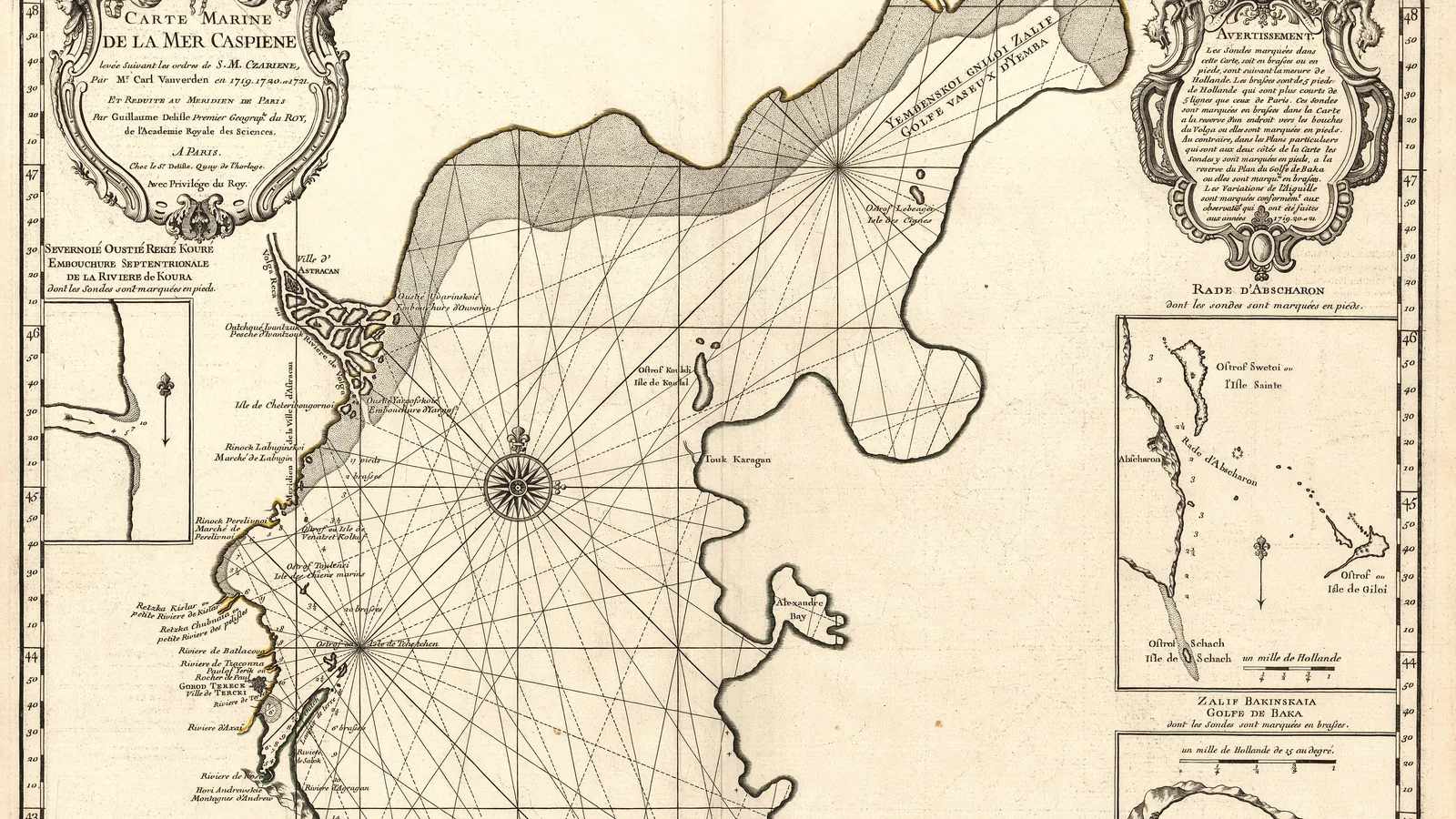
In 1716 the flotilla founded forts on Mangyshlak, in the bay that now carries his name and, as the main base, near the mouth of the Uzboy on the Krasnovodsk spit. One regiment stayed at Tyub-Karagan and two at Krasnovodsk. Envoys sent to Khiva reported that Shir Ghazi took the gifts but would not receive them. Peter allowed that the khan might reject friendship and kept the orders to build a fort on the Amu Darya and break the dam.
June 7, 1717, and 65 days of steppe
Researchers count 3,000 to 3,500 people in the expedition, Kurukin writes, with 3,000 horses, 200 camels and 500 carts carrying spades, picks and hatchets for the works. The column gathered at Guryev, now Atyrau in Kazakhstan, waited there for more than a month and left for the steppe on June 7.
The fullest 19th-century narrative is an article by D. Golosov in the Russian military journal Voennyi sbornik, issue 10 of 1861, signed February 19, 1861, 144 years after the events. Golosov worked from the depositions of men who came back from Khiva. He counted 300 versts to the Emba River in 10 days and 1,350 versts of steppe in 65 days in all. The wells held too little water, and Kurukin writes that a thousand Cossacks who had lost their horses were left at one well.
On August 15, 1717, Cherkassky camped on the Karagach river. Kurukin writes that the Khivan army arrived with the khan three days later; Golosov puts the first attack on August 17 and says the fighting ran on for two more days, with 10 Russians killed by musket fire.
Divided into five at Porsu
Shir Ghazi’s messengers said the attacks had been made without the khan’s knowledge. Golosov wrote that on the advice of his treasurer, Dosim-Bai, the khan adopted «коварный план» (a treacherous plan) to destroy the whole detachment and agreed to peace the better to deceive the prince. The khan and the prince exchanged oaths on the Quran.
Cherkassky then rode with the khan toward the capital under a guard of 700 dragoons and Cossacks. At a place that a Russian officer’s report of 1874 names as Porsu, the khan asked him to divide the force, citing short supplies. Khoja Nefes testified that it was split into two parts of 600 men and three of 400; Kurukin adds that if these figures are trusted, about a thousand men were lost on the march. Golosov wrote that Major von Frankenberg refused the order until a fourth one threatened him with court-martial, and then divided the detachment «на пять отдельных частей» (into five separate parts).
As the soldiers and Cossacks followed the Khivans to their promised quarters, they were attacked. Bekovich-Cherkassky was killed in the same attack, some days after August 20, 1717, by Golosov’s chronology; Golosov gives no day, but writes that the Caspian garrisons had the news no later than September 1717. In Khiva, Kurukin writes, several dozen prisoners were brought out for execution until the akhun, the head of the Khivan clergy, talked the khan out of it; Golosov gives about 40. The captives were sold in the slave markets. The coastal forts were evacuated, and reports reaching Astrakhan recorded 500 dead at Tyub-Karagan and 700 at Krasnovodsk by the summer of 1718.
Two counts, a tenfold gap
Cherkassky’s field chancery was lost with his detachment, Kurukin writes, and the Russian account rests largely on a Senate inquiry that questioned the few survivors. The Encyclopaedia Iranica entry by Yuri Bregel gives “a force of about 3,000 men” and says the party was “totally annihilated by the Khivans in 1717.” I. G. Bezgin’s bibliography of 1891 summarizes a count of 1,500 Yaik Cossacks taken to Khiva, nearly all of whom died there.
Khivan writings give other numbers. Shermukhammed Munis, poet and historian at the Khivan court in the early 19th century, wrote in his history Firdaws al-iqbal that 30,000 Russians entered the khanate «с намерением овладеть Хорезмом» (with the intention of taking Khwarazm). In 1720 Shir Ghazi sent Peter an envoy, Veis-Magomet, with a letter that survives and was published in 2018. In Kurukin’s quotation the khan blamed Cherkassky, who had «вторгся в наши владения» (invaded our domains), and said his men had fought for two days before destroying part of the force and capturing the rest. The envoy said in St. Petersburg that the khan held 2,000 Russian prisoners. Golosov wrote that Shir Ghazi spread word of an army of 100,000, which in fact numbered no more than 24,000.
After the envoy of 1720
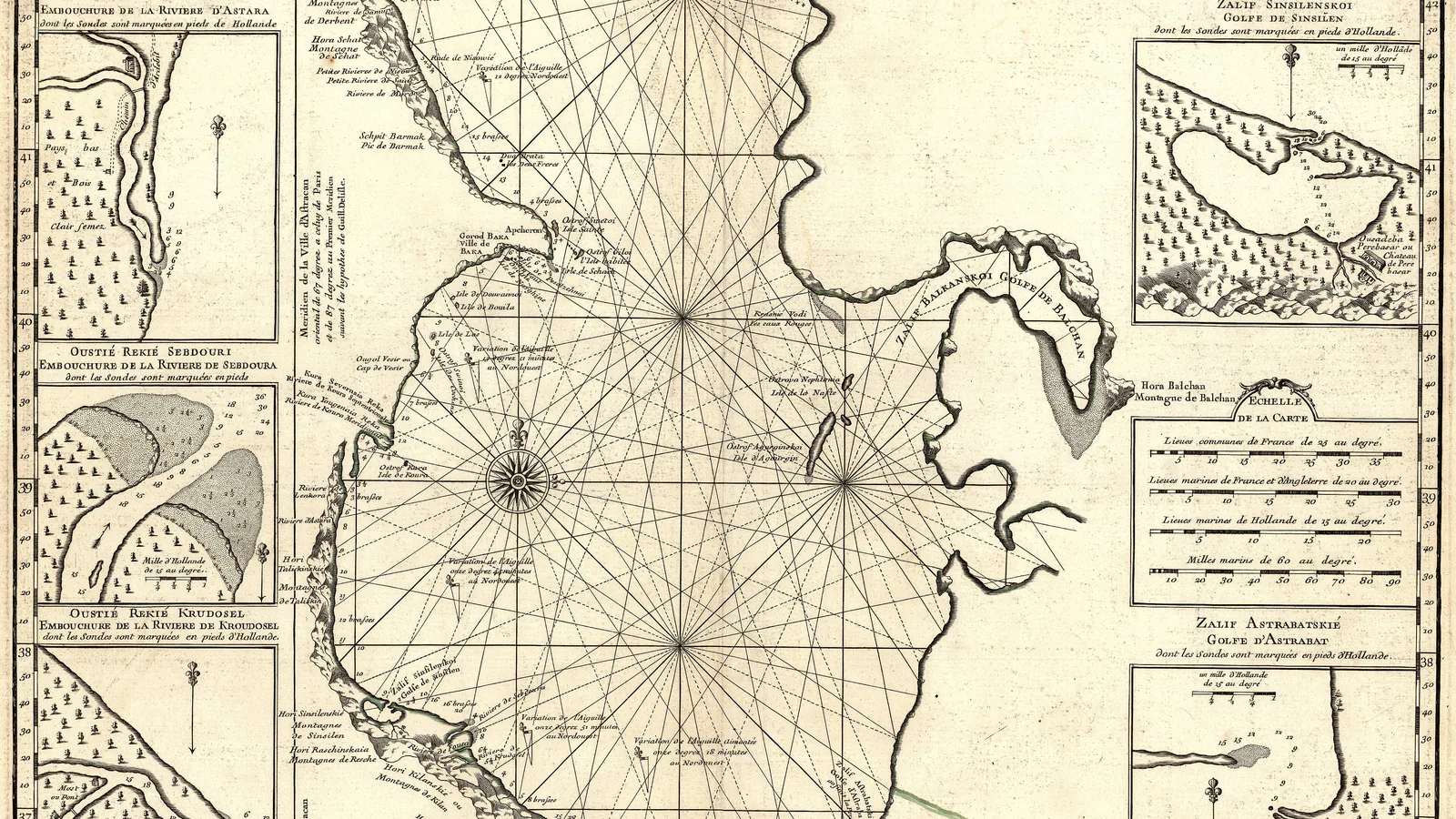
In March 1721 the Khivan mission was sent to the Peter and Paul Fortress, where Veis-Magomet died a few days later; the others were sentenced to hard labor at Rogervik. In 1720 naval officers completed the first reliable map of the Caspian Sea. It showed no mouth of the Amu Darya, and Peter gave up turning the river and the plan of a Russian protectorate over Central Asia. Only at the end of the 19th century was the Uzboy shown to be the bed of another river, flowing out of the Sarykamysh lake.
The Presidential Library describes an undated manuscript of the period in the Library of the Russian Academy of Sciences, «Карта, на которой море Каспийское, море Аральское и Аму-Дарья река» (map on which the Caspian Sea, the Aral Sea and the Amu Darya river), assigned by its handwriting and paper to the first quarter of the 18th century.
The historian Roman Pochekaev traces how the defeat was remembered. In 1870 the governor-general of Turkestan, Konstantin von Kaufman, wrote that on the strength of 1717 and 1839 «Хива считает себя неуязвимой в отношении к нам» (Khiva considers itself invulnerable in relation to us). In 1874 N. A. Ivanov, head of the Amu Darya Department, reported to Kaufman that a column had entered «Старое Порсу» (Old Porsu), where by tradition Bekovich’s detachment had been treacherously killed and buried.
.jpg)
Key facts
- In 1714 the Turkmen Khoja Nefes told the court in St. Petersburg that the Amu Darya had once flowed to the Caspian until the Khivans dammed it (Kurukin 2021).
- Peter’s decree of February 14, 1716, in nine points, ordered a fort at the old river mouth, an attempt to turn the water back into its old course, the khan’s submission and 4,000 regular troops (Kurukin 2021).
- The three expeditions of 1714 to 1717 cost 218,081 rubles on incomplete figures (Kurukin 2021).
- The column left Guryev on June 7, 1717, and covered about 1,350 versts in 65 days (Golosov 1861).
- On August 15, 1717, it camped on the Karagach; after fighting and an exchange of oaths it was split into two parts of 600 and three of 400, by Khoja Nefes’s testimony (Kurukin 2021).
- Bekovich-Cherkassky was killed in the attack that followed, some days after August 20, 1717 (Golosov 1861; Kurukin 2021).
- By the summer of 1718, 500 men had died at Tyub-Karagan and 700 at Krasnovodsk (Kurukin 2021).
- Researchers cited by Kurukin count 3,000 to 3,500 men in the expedition and Iranica about 3,000; the Khivan historian Munis gives 30,000, and the khan’s envoy in 1720 claimed 2,000 prisoners.
FAQ
What did Peter the Great order Bekovich-Cherkassky to do in 1716?
His decree of February 14, 1716, ordered a fort for a thousand men at the supposed old mouth of the Amu Darya, a journey to Khiva as envoy along the river, an attempt to turn its water back into its old course, the khan's submission to Russia, a merchant sent on to India and 4,000 regular troops for the whole task.
How many men did Bekovich-Cherkassky take to Khiva in 1717?
Russian researchers cited by Igor Kurukin count 3,000 to 3,500 people, and the Encyclopaedia Iranica gives about 3,000. The Khivan court historian Shermukhammed Munis wrote of 30,000 Russians. The two figures differ tenfold.
What happened to the Russian prisoners taken at Khiva?
Several dozen were brought out for execution in Khiva until the head of the Khivan clergy dissuaded the khan. The prisoners were sold in the slave markets; some escaped and others were ransomed years later. The khan's envoy said in 1720 that his master held 2,000 Russian prisoners.
Sources
- I. V. Kurukin (Russian State University for the Humanities), "Somneniia kapitana Cherkasskogo: plany i real'nost' khivinskogo pokhoda 1717 goda," Izvestiya of Saratov University, History, International Relations 21, no. 4 (2021), pp. 424-430, CC-BY 4.0, on CyberLeninka.
- D. Golosov, "Pokhod v Khivu v 1717 g. otriada, pod nachal'stvom leib-gvardii Preobrazhenskogo polka kapitana kniazia Aleksandra Bekovicha-Cherkasskogo," Voennyi sbornik no. 10 (1861), text on Vostochnaia Literatura (vostlit.info).
- R. Yu. Pochekaev, "Pamiat' ob ekspeditsii A. Bekovicha-Cherkasskogo v russko-khivinskikh otnosheniiakh XVIII-XIX vv.," Novoe proshloe no. 1 (2016), pp. 132-146, on CyberLeninka.
- Yuri Bregel, "CENTRAL ASIA vii. In the 18th-19th Centuries," Encyclopaedia Iranica.
- Boris Yeltsin Presidential Library, "Biblioteka Petra I" (The Library of Peter I), exhibition page on Caspian and Amu Darya maps held by the Library of the Russian Academy of Sciences.
- I. G. Bezgin, Kniazia Bekovicha-Cherkasskogo ekspeditsiia v Khivu (St. Petersburg: R. Golike, 1891), bibliographic monograph, on Voennaia Literatura (militera.lib.ru).
Cite this article
- APA
- LETTER. (2026, September 28). Peter's decree of February 14, 1716, and a column split in five. Our Earth's History. https://ourearthshistory.com/central-asia/early-modern/bekovich-cherkassky-khiva-1717-peter-decree/
- Chicago
- LETTER. “Peter's decree of February 14, 1716, and a column split in five.” Our Earth's History, September 28, 2026. https://ourearthshistory.com/central-asia/early-modern/bekovich-cherkassky-khiva-1717-peter-decree/.
- MLA
- LETTER. “Peter's decree of February 14, 1716, and a column split in five.” Our Earth's History, 28 Sep. 2026, https://ourearthshistory.com/central-asia/early-modern/bekovich-cherkassky-khiva-1717-peter-decree/.
Text licensed CC BY-NC-ND 4.0. Found an error? Tell us.