The IAEA's 1998 table: 456 tests at Semipalatinsk, 116 above ground
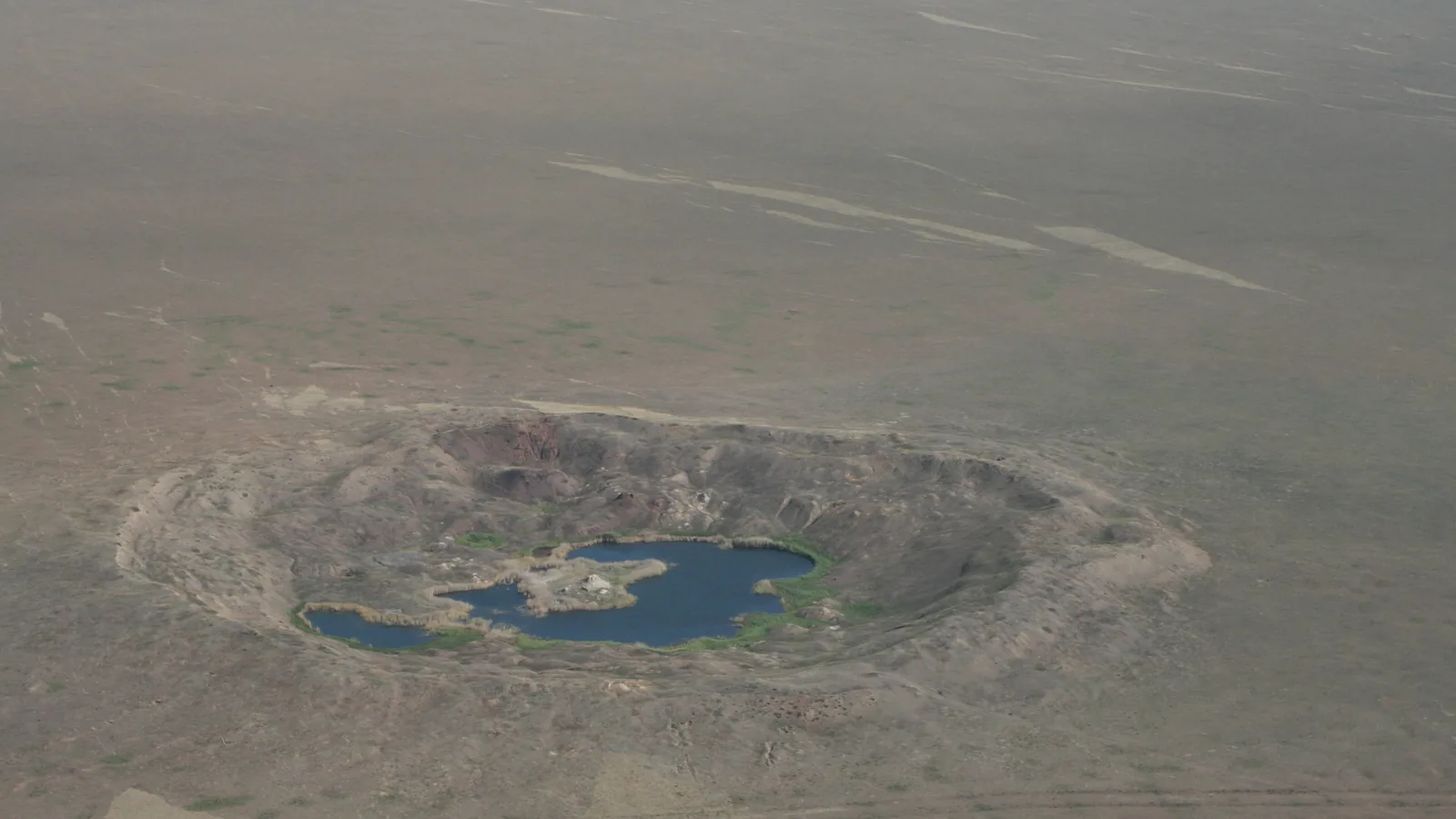

TL;DR — The IAEA counted 456 nuclear tests at Semipalatinsk, 116 above ground, between 1949 and 1989; the site closed in August 1991, and the UN keeps August 29 as the date.
The International Atomic Energy Agency (IAEA) published its assessment of the Semipalatinsk test site in November 1998, and its first table closes with one line: “Total: 456 nuclear tests, of which 116 were above ground, 4 were excavation tests and 336 were underground explosions.” A footnote beneath it reads: “The number differs depending on the source of information and the definition of ‘nuclear test’, ranging from 456 to 470.” The same table dates the first test to August 29, 1949, at the area labeled “Š,” with the words “Ground Zero” beside it. Testing on that stretch of steppe in what is now Kazakhstan ran 40 years, above ground until 1962 and underground after that, and the site closed in August 1991. On December 2, 2009, the United Nations General Assembly adopted resolution 64/35, initiated by Kazakhstan, and declared August 29 the International Day against Nuclear Tests.
Quick facts
- When
- August 29, 1949 (first test) · December 25, 1962 (last of the 116 above-ground explosions, per the IAEA) · January 15, 1965 (first underground test at Balapan; Chagan, Lake Balapan) · October 4 and October 19, 1989 (last tests at Degelen and Balapan) · August 1991 (closure) · September 24, 1993 (US–Kazakhstan Joint Statement of Intent) · August 13, 1996 (Decree
- Where
- The Semipalatinsk test site, a 19,000 km2 zone in northeastern Kazakhstan, 800 km north of Almaty, with three technical areas, Ground Zero, Degelen Mountain and Balapan
- Who
- The Soviet nuclear test program; the International Atomic Energy Agency (report of November 1998); the National Nuclear Center of the Republic of Kazakhstan; the United Nations General Assembly; the Scientific Research Institute for Radiation Medicine and Ecology, Semipalatinsk
- Outcome
- The IAEA counted 456 tests, 116 above ground, over 40 years, with a footnote that other sources count up to 470. The site closed in August 1991; 181 Degelen tunnels and 13 Balapan boreholes were closed from 1996 to 2001; on December 2, 2009, resolution 64/35 declared August 29 the International Day against Nuclear Tests
"Ranging from 456 to 470"
The report’s text breaks the 116 down: “There were 116 explosions between 29 August 1949 and 25 December 1962 [1], including 30 that were carried out on the surface. Five of these surface tests were not successful and resulted in the dispersion of plutonium in the environment.” Peer-reviewed papers count differently. B. Grosche and seven co-authors, in Radiation Research in 2011, wrote of “118 atmospheric and surface nuclear tests carried out from 1949 to 1962.” A 2024 paper in the Journal of Radiation Research led by V. Stepanenko counted 111 atmospheric tests, 86 in the air and 25 on the surface, “between 1949 and 1963.” The end of testing carries two dates as well. The IAEA table gives October 4, 1989, at Degelen and October 19, 1989, at Balapan; Stepanenko’s paper takes the second as “the last test.”
Ground Zero, Degelen and Balapan
The IAEA report describes the site as “a 19 000 km2 zone in the northeast of the country, 800 km north of the capital Almaty.” Its table lists three technical areas: “Š,” Ground Zero, at N 50°26′ E 77°50′, for the surface and atmospheric shots; “G,” Degelen Mountain, at N 49°46′ E 77°59′, for the tunnel tests; and “B,” Balapan, at N 49°43′ E 78°29′, for the boreholes. Over the 40 years, the report states, “the total energy released from the explosions was equivalent to 17.4 Mt of TNT equivalent.” The move below ground followed a treaty: “After the signing of the Treaty Banning Nuclear Weapons Tests in the Atmosphere, in Outer Space and Under Water in 1963, testing was conducted underground.”
At Balapan the table’s entry reads “First underground test 1965-01-15” and continues “including the peaceful nuclear explosion which produced Lake Balapan.” The text names that shot Chagan and describes “a lake about 0.5 km in diameter and about 100 m deep with cliffs up to 100 m high, called Lake Balapan or the ‘Atomic Lake’.” In 1998 the report found both places “heavily contaminated” and estimated that “persons making daily visits to Ground Zero or Lake Balapan would receive annual exposures in the region of 10 mSv.”
August 1991, and the date the United Nations chose
Stepanenko’s group states the end plainly: “The SNTS was closed on August, 1991, and the National Nuclear Center of the Republic of Kazakhstan is located on this territory.” SNTS is the paper’s shorthand for the site. The United Nations’ observance page gives what came 18 years later: “On 2 December 2009, the 64th session of the United Nations General Assembly declared 29 August the International Day against Nuclear Tests by unanimously adopting resolution 64/35.” The resolution, the page continues, “was initiated by the Republic of Kazakhstan, together with a large number of sponsors and cosponsors with a view to commemorating the closure of the Semipalatinsk Nuclear Test site on 29 August 1991.” Its preamble holds that “every effort should be made to end nuclear tests in order to avert devastating and harmful effects on the lives and health of people.”
On the protests before the closure the page gives one sentence: “Also in the 1980s, US groups conducted mass protests at the Nevada Test Site in the United States, and a powerful anti-testing campaign, known as the Nevada-Semipalatinsk Movement, emerged in Kazakhstan, home to the principal Soviet test site at Semipalatinsk.” The Nuclear Threat Initiative’s country page adds that Kazakhstan was an “inaugural member of the Central Asian Nuclear Weapons-Free Zone (CANWFZ) in 2006,” a zone made “under the Semipalatinsk Treaty.”
Tunnels sealed, 1996 to 2001
The National Nuclear Center of the Republic of Kazakhstan (NNC RK) dates the elimination work to September 24, 1993, when, its program page states, the two governments “signed a Joint Statement of Intent.” Then, “On August 13, 1996, the Government of Kazakhstan officially designated (Decree #1002) the National Nuclear Center RK as an executive agent for all nuclear weapons infrastructure elimination programs.” The center sums up the result: “The work fulfilled in period 1996 to 2001 resulted in closure of 181 tunnels in the Degelen Mountain Complex and 13 unused test holes at the Balapan Testing Field.”
From “2008 through 2021,” the center’s radioecology page states, its specialists then covered “the entire test site area – larger than 18,300 km²,” with “collection of over 30,000 environmental samples.” A law “dated July 5, 2023, #16-VIII ZRK ‘On the Semipalatinsk Nuclear Safety Zone’” governs the former site, the center states, without printing its articles. On September 16, 2026, at the 70th session of the IAEA General Conference in Vienna, Kazakhstan held a side event titled “35th Anniversary of the Closure of the Semipalatinsk Test Site: From National Tragedy to National Pride.”
Dispanser No. 4 and a cohort of 19,545
Grosche’s 2011 paper draws on the Scientific Research Institute for Radiation Medicine and Ecology (SRIRME) in Semipalatinsk, the successor to “‘Dispanser No. 4,’ a local research institution founded in 1957 for the purpose of investigating the health impact of fallout exposures.” Its cohort held “19,545 persons of exposed and comparison villages in the Semipalatinsk region” followed from 1960 to 1999. On deaths from heart and vessel disease the authors wrote: “Our results suggest that within this population and at the level of doses estimated, there is no detectable risk of radiation related mortality from cardiovascular disease.” The paper makes no claim beyond that sentence.
Dose reconstruction went on in an international study whose abstracts, indexed by Europe PMC, list authors at the International Agency for Research on Cancer. Stepanenko’s 2024 paper opens where the IAEA table opens: “The first nuclear test in the USSR was conducted at the Semipalatinsk Nuclear Test Site (SNTS) on August 29, 1949,” and “During the following 40 years, 456 nuclear explosions were carried out.” Twenty-six years separate that paper from the table printed in Vienna in November 1998, with the same first date, August 29, 1949, and the same total, 456.
Key facts
- The IAEA’s 1998 table totals “456 nuclear tests, of which 116 were above ground, 4 were excavation tests and 336 were underground explosions,” and its footnote gives a range of “456 to 470” depending on source and definition.
- The first test took place on August 29, 1949, at technical area “Š,” Ground Zero, N 50°26′ E 77°50′ (IAEA, Table I).
- The IAEA counts 116 above-ground explosions between August 29, 1949, and December 25, 1962, 30 of them on the surface; Grosche (2011) counts 118 to 1962 and Stepanenko (2024) counts 111 to 1963.
- The total energy released over 40 years was “equivalent to 17.4 Mt of TNT equivalent” (IAEA); Stepanenko’s paper gives 6.58 Mt for the atmospheric tests alone.
- Chagan, on January 15, 1965, the first underground test at Balapan, produced Lake Balapan, “about 0.5 km in diameter and about 100 m deep” (IAEA).
- The last tests were on October 4, 1989, at Degelen and October 19, 1989, at Balapan (IAEA, Table I); the site closed in August 1991 (Stepanenko, 2024).
- From 1996 to 2001, 181 tunnels at Degelen and 13 unused test holes at Balapan were closed under Decree #1002 of August 13, 1996 (NNC RK); from 2008 to 2021 the center surveyed more than 18,300 km² and collected over 30,000 samples.
- On December 2, 2009, the UN General Assembly adopted resolution 64/35, initiated by Kazakhstan, declaring August 29 the International Day against Nuclear Tests.
FAQ
How many nuclear tests were carried out at Semipalatinsk?
The IAEA's 1998 report counts 456, of which 116 were above ground, 4 were excavation tests and 336 were underground explosions. Its footnote states that other sources, with other definitions of a nuclear test, count up to 470.
When was the Semipalatinsk test site closed?
In August 1991, according to the 2024 paper by Stepanenko and co-authors. The United Nations page on the International Day against Nuclear Tests gives the date as August 29, 1991, and resolution 64/35 of December 2, 2009, fixed that day as the observance.
What is the "Atomic Lake" at Semipalatinsk?
Lake Balapan, the crater left by the Chagan explosion of January 15, 1965, the first underground test at the Balapan technical area. The IAEA describes it as a lake about 0.5 km across and about 100 m deep, with cliffs up to 100 m high, and found the area heavily contaminated in 1998.
Sources
- International Atomic Energy Agency, Radiological Conditions at the Semipalatinsk Test Site, Kazakhstan: Preliminary Assessment and Recommendations for Further Study (IAEA, Vienna, November 1998; STI/PUB/1063), Table I, footnote 1, Section 2 and the dose estimates for Ground Zero and Lake Balapan.
- National Nuclear Center of the Republic of Kazakhstan, "STS Nuclear Infrastructure Elimination and Conversion" (Joint Statement of Intent of September 24, 1993; Decree #1002 of August 13, 1996; 181 tunnels and 13 test holes closed 1996–2001).
- National Nuclear Center of the Republic of Kazakhstan, "Radioecological Surveys" (survey of 2008–2021, contaminated locations, law #16-VIII ZRK of July 5, 2023).
- National Nuclear Center of the Republic of Kazakhstan, news item of September 17, 2026, on the side event "35th Anniversary of the Closure of the Semipalatinsk Test Site: From National Tragedy to National Pride," Vienna, September 16, 2026.
- United Nations, "International Day against Nuclear Tests" (observance page: resolution 64/35 of December 2, 2009, preamble excerpts, the Nevada-Semipalatinsk Movement).
- Nuclear Threat Initiative, Kazakhstan country overview (Semipalatinsk inheritance, the Central Asian Nuclear Weapons-Free Zone of 2006 and the Semipalatinsk Treaty).
- B. Grosche, D. T. Lackland, C. E. Land, S. L. Simon, K. N. Apsalikov, L. M. Pivina, S. Bauer and B. I. Gusev, "Mortality from Cardiovascular Diseases in the Semipalatinsk Historical Cohort, 1960–1999, and its Relationship to Radiation Exposure," Radiation Research 176(5): 660–669 (2011), PMC3866702.
- V. Stepanenko and co-authors, "Comparison of external dose estimates using different retrospective dosimetry methods in the settlements located near Semipalatinsk Nuclear Test Site, Republic of Kazakhstan," Journal of Radiation Research (2024), PMC10803160.
- Europe PMC (EMBL-EBI), search results and abstracts for Apsalikov et al. (Radiat Environ Biophys, 2019), Drozdovitch et al. (Radiat Environ Biophys, 2025) and Stepanenko et al. (J Radiat Res, 2025) on the Semipalatinsk dose studies.
Cite this article
- APA
- Our Earth's History. (2026, September 22). The IAEA's 1998 table: 456 tests at Semipalatinsk, 116 above ground. Our Earth's History. https://ourearthshistory.com/central-asia/contemporary/semipalatinsk-august-29-1949-456-tests-iaea-1998-closure-august-1991-un-64-35/
- Chicago
- Our Earth's History. “The IAEA's 1998 table: 456 tests at Semipalatinsk, 116 above ground.” Our Earth's History, September 22, 2026. https://ourearthshistory.com/central-asia/contemporary/semipalatinsk-august-29-1949-456-tests-iaea-1998-closure-august-1991-un-64-35/.
- MLA
- “The IAEA's 1998 table: 456 tests at Semipalatinsk, 116 above ground.” Our Earth's History, 22 Sep. 2026, https://ourearthshistory.com/central-asia/contemporary/semipalatinsk-august-29-1949-456-tests-iaea-1998-closure-august-1991-un-64-35/.
Text licensed CC BY-NC-ND 4.0. Found an error? Tell us.