A 1954 newspaper advertisement: how four Dead Sea Scrolls were sold
.jpg)
TL;DR — A Bedouin shepherd found seven scrolls at Qumran in 1947. Four, sold to Archbishop Samuel, were advertised for sale in 1954, and Yigael Yadin bought them for Israel.
The Israel Antiquities Authority’s Leon Levy Dead Sea Scrolls Digital Library states: “For thousands of years the Judean Desert held secrets buried in its sands, only to be revealed by a young Bedouin shepherd in 1947.” Eliezer Lipa Sukenik, a Hebrew University professor, bought three of the resulting scrolls on November 29, 1947, as the Israel Museum and the Antiquities Authority both state.
Quick facts
- When
- 1947 (Cave 1 find) · November 29, 1947 (Sukenik's purchase) · 1952 (Cave 4) · June 1, 1954 (Wall Street Journal advertisement) · 1965 (Shrine of the Book opens) · 2025 (PLOS ONE dating study)
- Where
- Qumran caves, Judean Desert, on the northwest shore of the Dead Sea; Jerusalem; New Jersey; Washington
- Who
- A Ta'amireh Bedouin shepherd; the dealer Khalil Eskander Shahin (Kando); Metropolitan Athanasius Samuel; Eliezer Lipa Sukenik; Yigael Yadin; Mladen Popović and Maruf A. Dhali
- Outcome
- Sukenik bought three scrolls in 1947; Samuel's four went to the United States and were advertised for sale in 1954; Yadin bought them for the State of Israel and the seven texts were reunited by 1955
Kando, Samuel and a shepherd's find
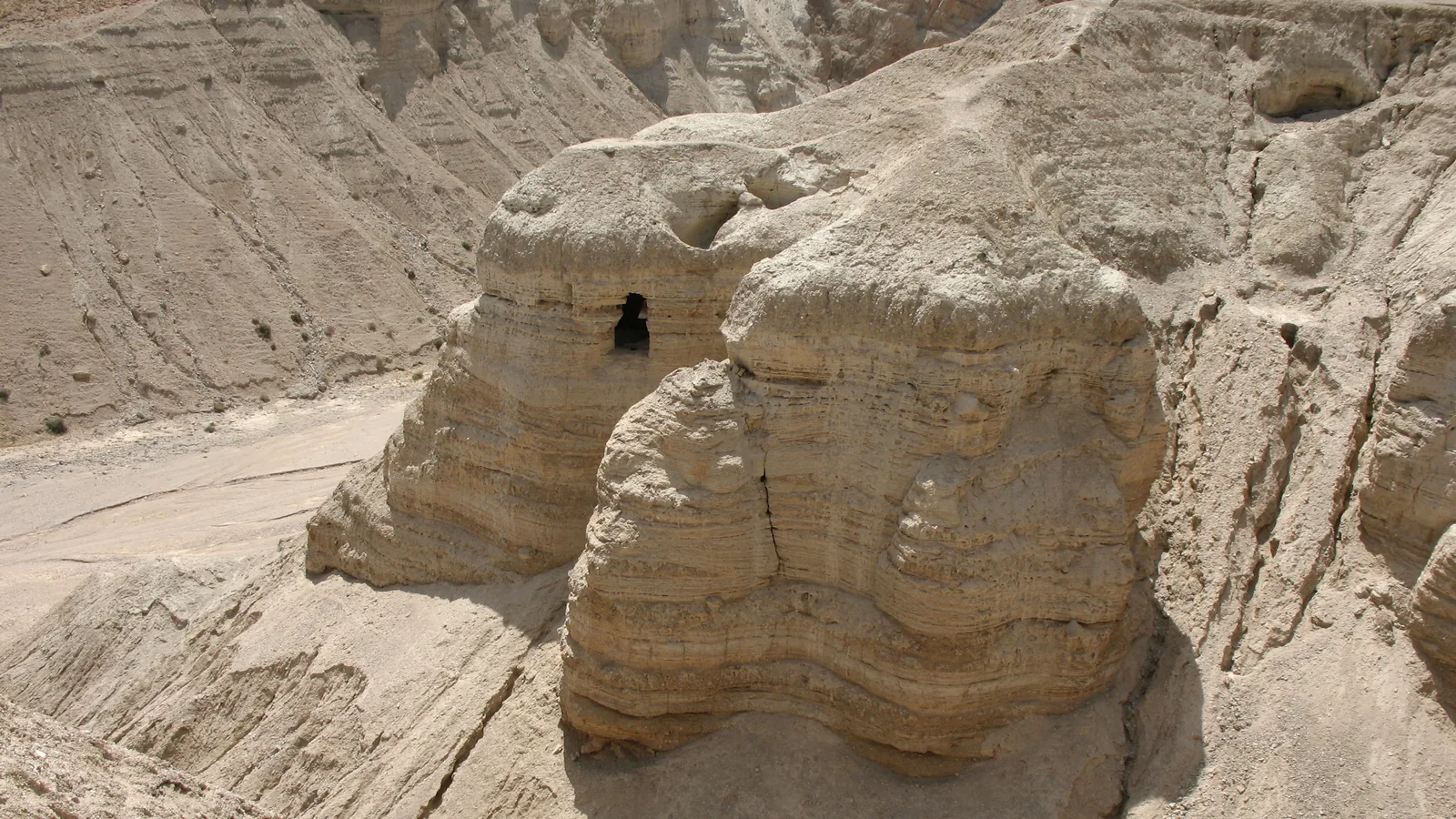
According to the Antiquities Authority, a Ta’amireh Bedouin shepherd threw a stone into a cliffside opening near Qumran, heard a jar break, and returned to pull “a total of seven scrolls” from the cave later called Cave 1. He sold four to the Bethlehem dealer Khalil Eskander Shahin, known as Kando, and three to a second dealer, Salahi. Kando resold his four to Metropolitan Athanasius Samuel, head of the Syrian Orthodox monastery of St. Mark in Jerusalem.
Sukenik heard of the find through an Armenian antiquities dealer and met a contact at a boundary point in British-ruled Jerusalem to examine a scrap of leather; he later traveled to Bethlehem to see the three scrolls Salahi held. His diary records the moment: “My hands shook as I started to unwrap one of them. I read a few sentences. It was written in beautiful biblical Hebrew. The language was like that of the Psalms, but the text was unknown to me. I looked and looked, and I suddenly had the feeling that I was privileged by destiny to gaze upon a Hebrew Scroll which had not been read for more than 2,000 years.” He completed the purchase of the three scrolls, the War Scroll, the Hodayot and a second copy of Isaiah, on November 29, 1947.
A smuggled shipment, dated two ways
The Antiquities Authority’s timeline states that regional unrest led Samuel “to smuggle his precious four Scrolls out of the country, relocating them to a Syrian Church in New Jersey” in 1949. The Israel Museum’s Digital Dead Sea Scrolls project gives a different year for the same move: “In 1948 Samuel smuggled the four scrolls in his possession to the United States.” The two institutions that curate and display the scrolls do not agree on whether the four texts left the country in 1948 or in 1949.
The Wall Street Journal, June 1, 1954
The Antiquities Authority publishes the wording Samuel placed in the newspaper on June 1, 1954: “The Four Dead Sea Scroll - Biblical Manuscripts dating back to at least 200 BC, are for sale. This would be an ideal gift to an educational or religious institution by an individual or group. Box F 206, The Wall Street Journal.” The 2018 conservation paper in The Book and Paper Group Annual names the buyer: “They were bought, through an intermediary, by Yigal Yadin, Sukenik’s son, who was a leading Israeli archaeologist.” The Antiquities Authority’s own timeline records the same purchase as made “on behalf of the State of Israel.” A year later, per the authority’s timeline, “Yadin joins the four Scrolls with the three already located at the Hebrew University,” reuniting the original seven by 1955.
Cave 4 and the caves that followed
Bedouin treasure hunters found a second cave in 1952. The Antiquities Authority’s discovery-sites page describes Cave 4 as yielding “thousands of fragments from hundreds of manuscripts, comprising 75% of all material from the Qumran caves.” The Hebrew University’s Orion Center gives a different figure for the same cave, stating that it “was found by the Bedouin later in 1952 . . . and yielded over 16,000 scroll fragments.” The Orion Center’s tour also places the site itself in context: Qumran sits “on a plateau between the cliffs of the Judean desert and the Dead Sea,” near the ruins the Bedouin and later archaeologists searched cave by cave. Cave 1 itself was formally excavated in 1949, after archaeologists located it; that dig, per the Antiquities Authority, “yielded the remains of at least 70 manuscripts, including bits of the original seven Scrolls.”

Storage, conservation and a digital library
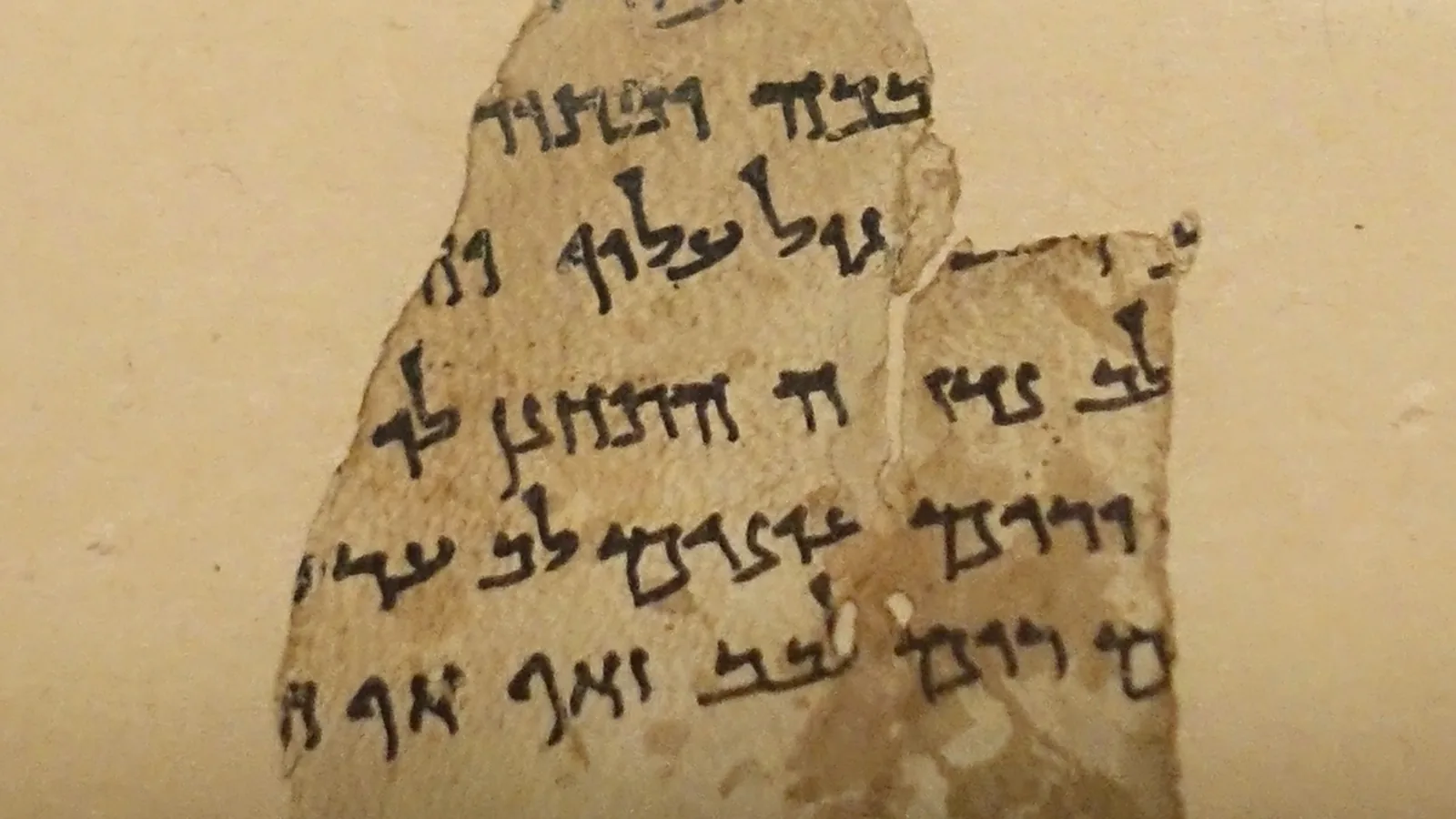
The Israel Museum’s own account of the building that now holds the original seven scrolls states that the Shrine of the Book “was built as a repository for the first seven scrolls discovered at Qumran in 1947” and “was dedicated in an impressive ceremony on April 20, 1965.” The scrolls themselves needed rescuing from decades of handling: the 2018 conservation paper describes “extensive use of pressure sensitive tape, castor oil, British Museum leather dressing, and acrylic adhesives” during the first forty years, and states that without intervention “the world would soon have 40 volumes of publication but no original scrolls.” In 1991, the Antiquities Authority set up a dedicated conservation lab “with the assistance of an international committee of experts sponsored by the Getty Conservation Institute,” a fact the authority’s own conservation page and the 2018 paper both state independently. The Leon Levy Dead Sea Scrolls Digital Library later photographed the collection with multi-wavelength imaging technology from the company MegaVision, a project the Antiquities Authority describes as built in partnership with Google’s research and development center in Israel and funded chiefly by the Leon Levy Foundation, with support from the Arcadia Fund and early funding from the Yad Hanadiv foundation.
A 2025 study in PLOS ONE by Mladen Popović and Maruf A. Dhali of the Qumran Institute at the University of Groningen added a new layer of dating evidence. The authors describe their method in one line: “we present Enoch, an AI-based date-prediction model, trained on the basis of 24 14C-dated scroll samples.” Applied to undated manuscripts, the model’s radiocarbon-linked predictions ran older than the handwriting-based estimates palaeographers had used for decades, giving several Qumran texts earlier date ranges than previously assigned.
Key facts
- A Ta’amireh Bedouin shepherd found seven scrolls in Cave 1 near Qumran in 1947, per the Israel Antiquities Authority’s Leon Levy Dead Sea Scrolls Digital Library.
- Four scrolls went through the dealer Kando to Metropolitan Athanasius Samuel; three went to Eliezer Lipa Sukenik, who bought them on November 29, 1947.
- The Antiquities Authority dates Samuel’s smuggling of the four scrolls to the United States to 1949; the Israel Museum dates the same move to 1948.
- The Wall Street Journal ran Samuel’s advertisement on June 1, 1954, offering “The Four Dead Sea Scroll” for sale.
- Yigael Yadin, Sukenik’s son, bought the four scrolls through an intermediary on behalf of the State of Israel; the authority’s timeline records the seven scrolls reunited in 1955.
- Bedouin treasure hunters found Cave 4 in 1952; the Antiquities Authority describes its fragments as “hundreds of manuscripts,” while the Hebrew University’s Orion Center gives a figure of “over 16,000 scroll fragments.”
- The Shrine of the Book, built to house the first seven scrolls, was dedicated in Jerusalem on April 20, 1965, per the Israel Museum.
- A 2025 PLOS ONE study by Popović and Dhali applied an AI model, Enoch, trained on 24 radiocarbon-dated samples, to date undated Qumran manuscripts.
FAQ
When were the Dead Sea Scrolls discovered?
A Bedouin shepherd found seven scrolls in a cave near Qumran, later called Cave 1, in 1947, according to the Israel Antiquities Authority. Eliezer Lipa Sukenik bought three of them on November 29, 1947.
What was the 1954 Wall Street Journal advertisement about?
On June 1, 1954, an advertisement offered "The Four Dead Sea Scroll" for sale as "an ideal gift to an educational or religious institution." Yigael Yadin answered it through an intermediary and bought the four scrolls on behalf of the State of Israel.
How many fragments came from Qumran Cave 4?
Sources disagree. The Israel Antiquities Authority describes Cave 4, found by Bedouin in 1952, as yielding "thousands of fragments from hundreds of manuscripts." The Hebrew University's Orion Center puts the number at "over 16,000 scroll fragments."
Sources
- Israel Antiquities Authority, Leon Levy Dead Sea Scrolls Digital Library, "Discovery and Publication"
- Israel Antiquities Authority, Leon Levy Dead Sea Scrolls Digital Library, "Discovery Sites"
- Israel Antiquities Authority, Leon Levy Dead Sea Scrolls Digital Library, "Conservation"
- Israel Antiquities Authority, Leon Levy Dead Sea Scrolls Digital Library, "The Digital Library"
- Ashlyn Oprescu, Orit Rosengarten and Pnina Shor, "Multispectral Imaging and the Digitization of the Dead Sea Scrolls," The Book and Paper Group Annual 37 (American Institute for Conservation, 2018)
- The Israel Museum, Jerusalem, Digital Dead Sea Scrolls project, "Discovery"
- The Israel Museum, Jerusalem, Digital Dead Sea Scrolls project, "The Shrine of the Book"
- The Orion Center for the Study of the Dead Sea Scrolls, Hebrew University of Jerusalem, Virtual Qumran Tour, "Caves"
- Mladen Popović and Maruf A. Dhali, "Dating ancient manuscripts using radiocarbon and AI-based writing style analysis," PLOS ONE (2025)
Cite this article
- APA
- Our Earth's History. (2026, September 26). A 1954 newspaper advertisement: how four Dead Sea Scrolls were sold. Our Earth's History. https://ourearthshistory.com/west-asia/contemporary/dead-sea-scrolls-qumran-cave-1-1947-sukenik-1954-advertisement-yadin/
- Chicago
- Our Earth's History. “A 1954 newspaper advertisement: how four Dead Sea Scrolls were sold.” Our Earth's History, September 26, 2026. https://ourearthshistory.com/west-asia/contemporary/dead-sea-scrolls-qumran-cave-1-1947-sukenik-1954-advertisement-yadin/.
- MLA
- “A 1954 newspaper advertisement: how four Dead Sea Scrolls were sold.” Our Earth's History, 26 Sep. 2026, https://ourearthshistory.com/west-asia/contemporary/dead-sea-scrolls-qumran-cave-1-1947-sukenik-1954-advertisement-yadin/.
Text licensed CC BY-NC-ND 4.0. Found an error? Tell us.