How did the Ottoman Empire become the Republic of Turkey by 1923?
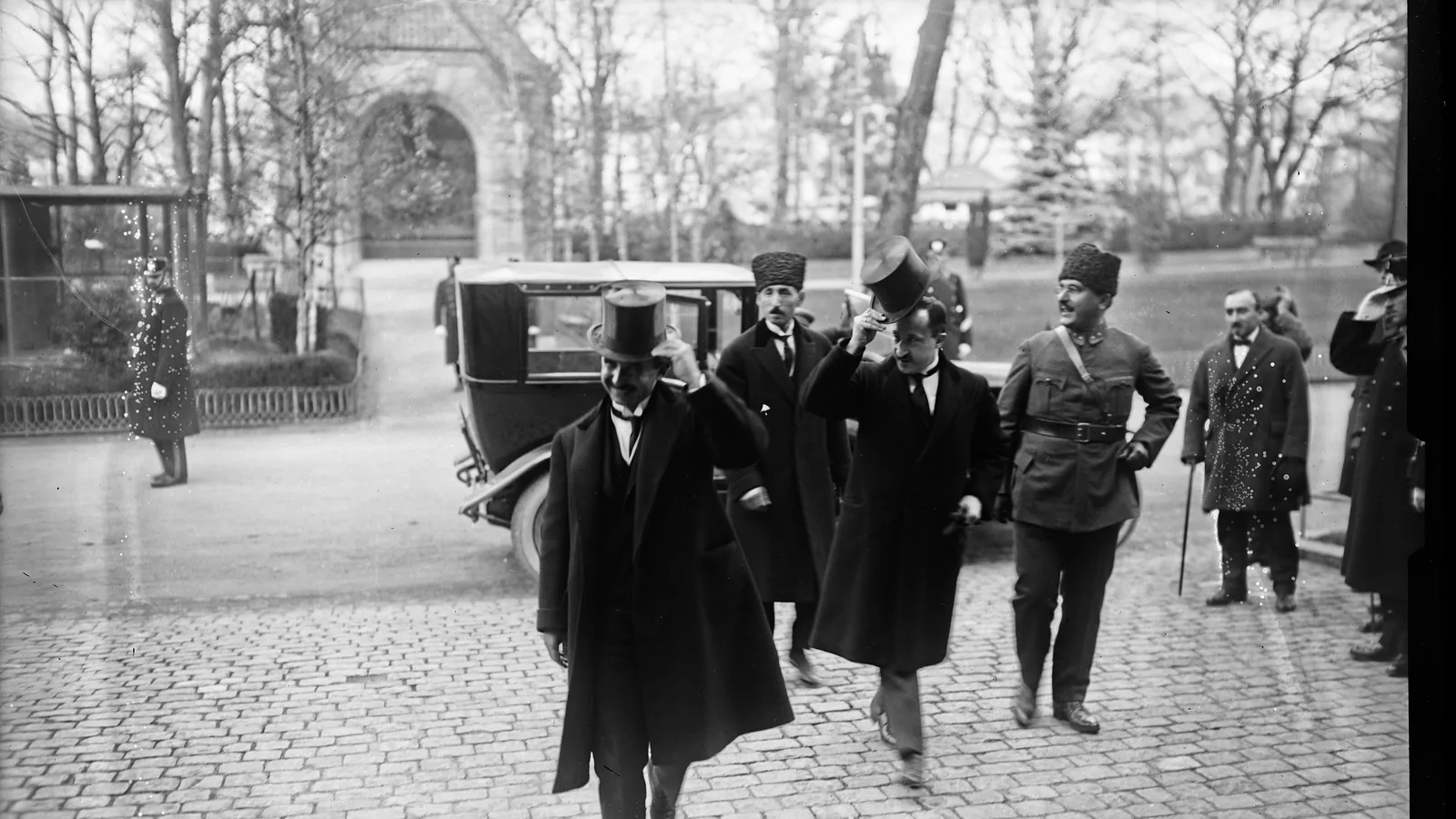

TL;DR — Because a second treaty replaced a first: Sèvres (1920) partitioned Anatolia; the Ankara assembly fought to Smyrna, ended the sultanate and won Lausanne (1923), which recognized its borders.
The Ottoman Empire became the Republic of Turkey because the Ankara assembly under Mustafa Kemal replaced the Treaty of Sèvres (1920) with the Treaty of Lausanne (July 24, 1923). Sèvres, signed on August 10, 1920, by the sultan’s ministers, handed Smyrna to Greek administration, promised Kurdish autonomy and an Armenian frontier, and restored the capitulations, the legal privileges of foreigners. The assembly that had met in Ankara since April 23, 1920, refused to discuss it, drove the Greek army out of Anatolia by September 1922 and abolished the sultanate on November 1, 1922. Lausanne fixed Turkey’s frontier at the Maritza river, abolished the capitulations and folded in the compulsory exchange of about 1.5 million Greeks and Muslims. The republic followed on October 29, 1923.
Quick facts
- When
- October 30, 1918 (Armistice of Mudros) · May 15, 1919 (Greek landing at Smyrna) · April 23, 1920 (Ankara assembly opened) · August 10, 1920 (Sèvres signed) · August 23 to September 13, 1921 (Sakarya) · August 30, 1922 (Dumlupınar) · November 1, 1922 (sultanate abolished) · January 30, 1923 (exchange convention) · July 24, 1923 (Lausanne signed) · October 29, 1923 (republic) · March 3, 1924 (caliphate abolished)
- Where
- Constantinople, the Ottoman capital, now Istanbul; Ankara (Angora in the treaties) in central Anatolia; Smyrna, now Izmir, on the Aegean; Sèvres outside Paris; Lausanne in Switzerland; the Straits; the Maritza river in Thrace; the Mosul vilayet
- Who
- Mustafa Kemal (Atatürk), president of the Ankara assembly; Sultan Mehmed VI (Wahideddin in the speech); İsmet Pasha, Turkey's chief delegate at Lausanne; Lord Curzon, British foreign secretary; Eleftherios Venizelos for Greece; General Trikupis, captured in 1922
- Outcome
- Sèvres was signed by the sultan's government and rejected by Ankara; Lausanne recognized Turkey's frontier at the Maritza, left Mosul to the League, abolished the capitulations and folded in the compulsory exchange of about 1.5 million people; the republic was proclaimed on October 29, 1923, and the caliphate abolished on March 3, 1924
Mudros, October 1918: an armistice and the landings
The armistice was granted, in the words of the Sèvres preamble, “on the request of the Imperial Ottoman Government” on October 30, 1918. Mustafa Kemal, in the six-day speech he gave at Ankara in October 1927 (read here in the English translation published in Leipzig in 1929), listed the Allied warships at Constantinople and French, British and Italian troops in the provinces. On May 15, 1919, he recorded, “the Greek Army, with the consent of the Entente Powers, had landed at Smyrna.” His own account opens four days later, when he landed at Samsun on the Black Sea.
Two governments, 1919 to 1920: Istanbul signs, Ankara refuses
By the spring of 1920 the empire had two governments. At Ankara, a circular reproduced in Kemal’s speech announced: “On Friday, 23rd April, after prayer, the Grand National Assembly, if God be willing, will be opened.” On August 10, 1920, the sultan’s plenipotentiaries, General Haadi Pasha, Riza Tevfik Bey and Rechad Haliss Bey, signed at Sèvres.
The text partitioned Anatolia. Article 69 kept Smyrna under nominal Turkish sovereignty while Turkey “transfers to the Greek Government the exercise of her rights of sovereignty,” with a request to the League for union with Greece allowed after five years. Article 62 ordered “a scheme of local autonomy for the predominantly Kurdish areas lying east of the Euphrates,” with a path to independence through the League Council. Article 88 recognized Armenia “as a free and independent State,” and Article 89 left its frontier in four eastern vilayets to the arbitration of the American president. Article 40 gave six powers two votes each on a Commission of the Straits and Turkey one; Article 261 restored the capitulations and extended them to Allies that had never held them. Part IV, on minorities, spoke of “the massacres perpetrated in Turkey during the war” and voided the 1915 law on abandoned properties.
Kemal said in 1927 that the draft “was not even regarded as a base for discussion by the Grand National Assembly of Turkey.”
The war with Greece to September 1922
The Greek army, in the Lausanne Project’s words, “fought its way deep into Anatolia.” Kemal dated the battle on the Sakarya river from August 23 to September 13, 1921, “twenty-two days and twenty-two nights.” The final offensive opened on August 26, 1922; by August 30, in Kemal’s account, the main Greek force was “partly decimated and partly made prisoners,” and General Trikupis (Nikolaos Trikoupis), its commander, was among the captives. The Project, a research group on the 1923 settlement, records that in September 1922 the Greek army had gone and “the great Ottoman city of Izmir was in flames.” The House of Commons was told on July 24, 1923, that British claims of 40 million pounds included “the estimated damage caused to British nationals by Kemalist operations and the Smyrna fire.” Before the armistice talks at Mudania on October 3, Kemal demanded that Thrace “as far as the Maritza” be restored at once.
November 1922: a sultanate abolished, a conference opened
On October 28, 1922, the Allies invited Ankara to a peace conference at Lausanne and, Kemal said, “insisted on recognising the existence of a Government in Constantinople” and invited it as well. His response: “This twofold invitation led to the final abolition of the personal monarchy.” The caliphate and the monarchy “were actually separated from one another by the Act of 1st November, 1922.” On November 17 an official telegram read, “Wahideddin has left the Palace to-night”; a letter read to the assembly the next day recorded that the sultan had left Constantinople “on board an English man-of-war.”
The conference opened at Lausanne in November 1922. Turkey sent İsmet Pasha, its foreign minister; Britain sent Lord Curzon. The Lausanne Project records a break from February 4 to April 24, 1923, after İsmet refused to be pushed into signing Curzon’s draft.
Lausanne, July 24, 1923: what the text gave and took
The preamble aimed “to bring to a final close the state of war which has existed in the East since 1914.” Article 2 ran the frontier with Greece along the Maritza. Article 3 left the Iraq frontier to a “friendly arrangement” within nine months, failing which “the dispute shall be referred to the Council of the League of Nations.” Article 23 sent the Straits to a separate convention; Kemal said its commission’s chair was “finally given to us.” Article 28 was one sentence: each party accepted “the complete abolition of the Capitulations in Turkey in every respect.” Articles 37 to 44 replaced the Sèvres minority clauses with guarantees for “non-Moslem minorities” alone; no article named Kurdistan, Armenia or Smyrna.
Kemal set the two texts side by side in 1927. Of Kurdistan: “We naturally refused to discuss this question.” Of the Armenian frontier: “This question is postponed.” He called Lausanne “the document which reveals in a decisive manner the failure of a vast plot which had been hatching for centuries against the Turkish nation.” That was his account, given to his own party; the Project writes that for Armenians, Kurds and Arabs the treaty “was something very different,” and quotes Ara Toranian calling it “the crime of the century that came after the crime of the century.” Where Germany had signed the peace of 1919 as presented, Turkey had negotiated with an army in the field.
The exchange, Mosul and the republic
Article 142 gave the convention of January 30, 1923, “the same force and effect as if it formed part of the present Treaty.” Its first article ordered, from May 1, 1923, “a compulsory exchange” of Turkish nationals of the Greek Orthodox religion and Greek nationals of the Muslim religion. Article 2 excepted two groups, “The Greek inhabitants of Constantinople” and “The Moslem inhabitants of Western Thrace”; Lausanne’s Article 14 excepted Imbros and Tenedos. The Project puts the number displaced at 1.5 million. Mosul stayed open until 1925, when the League awarded the province to Iraq.
The assembly ratified the treaty in August 1923. On October 29, 1923, at 8:30 in the evening, it carried the resolution proclaiming the republic. On March 3, 1924, it passed the law abolishing the caliphate and expelling the Ottoman dynasty.
Sèvres was signed by a sultan’s ministers for a state that could not enforce it. Lausanne was signed for an assembly whose army had taken Smyrna, and its clauses recorded the ground that army held.
Key facts
- The Armistice of Mudros was granted on October 30, 1918, “on the request of the Imperial Ottoman Government” (Sèvres preamble).
- The Grand National Assembly opened at Ankara on Friday, April 23, 1920 (Kemal, 1927).
- Sèvres was signed on August 10, 1920; Article 69 gave Greece the exercise of sovereignty at Smyrna, Article 88 recognized Armenia, Article 261 restored the capitulations.
- The Sakarya battle ran from August 23 to September 13, 1921; the final offensive of August 26 to 30, 1922, captured General Trikupis (Kemal).
- The Act of November 1, 1922, separated the caliphate from the monarchy; the sultan left on a British warship on November 17 (Kemal).
- The exchange convention of January 30, 1923, was compulsory from May 1, 1923, and excepted the Greeks of Constantinople and the Muslims of Western Thrace; about 1.5 million people were displaced (League of Nations Treaty Series; Lausanne Project).
- Lausanne, July 24, 1923: Maritza frontier (Article 2), Iraq frontier to the League if unsettled (Article 3), capitulations abolished (Article 28); Mosul went to Iraq in 1925.
- The republic was proclaimed on October 29, 1923; the caliphate was abolished on March 3, 1924 (Kemal).
FAQ
Why was the Treaty of Sèvres never carried out?
It was signed on August 10, 1920, by the sultan's government in Constantinople, while the assembly at Ankara, in Kemal's words, did not regard it "as a base for discussion." After the Greek army left Anatolia in September 1922, the Allies negotiated a new treaty with Ankara, and Lausanne's preamble described a state of war still open since 1914.
What did the Treaty of Lausanne change compared with Sèvres?
It dropped the Smyrna zone, Kurdish autonomy and the Armenian frontier, ran the Thracian border along the Maritza, abolished the capitulations in Article 28, and left Mosul to a nine-month negotiation and then the League Council, which awarded it to Iraq in 1925.
Who was excluded from the Greek-Turkish population exchange?
Article 2 of the convention of January 30, 1923, excepted the Greek inhabitants of Constantinople and the Muslim inhabitants of Western Thrace; Article 14 of the Lausanne treaty excepted the islands of Imbros and Tenedos.
Sources
- Treaty of Sèvres (1920), Preamble and Part I, text hosted by hri.org (archived): "The Treaty of Peace between the Allied and Associated Powers and Turkey, signed at Sèvres, August 10, 1920."
- Treaty of Sèvres (1920), Part II (Frontiers of Turkey), Articles 27 to 35, text hosted by hri.org (archived).
- Treaty of Sèvres (1920), Part III (Political Clauses), Articles 36 to 139, including Constantinople, the Straits, Kurdistan, Smyrna and Armenia, text hosted by hri.org (archived).
- Treaty of Sèvres (1920), Part IV (Protection of Minorities), Articles 140 to 151, text hosted by hri.org (archived).
- Treaty of Sèvres (1920), Part IX (Economic Clauses), Article 261 on the capitulations, text hosted by hri.org (archived).
- Treaty of Lausanne (1923), Preamble, text hosted by hri.org (archived): "Treaty of Peace with Turkey signed at Lausanne, July 24, 1923."
- Treaty of Lausanne (1923), Part I (Political Clauses), Articles 1 to 45, text hosted by hri.org (archived).
- Treaty of Lausanne (1923), Part V (Miscellaneous Provisions), Articles 119 to 143, text hosted by hri.org (archived).
- League of Nations Treaty Series, vol. 32 (1925), no. 807: "Convention concerning the Exchange of Greek and Turkish Populations, and Protocol, signed at Lausanne, January 30, 1923," United Nations Treaty Collection (PDF).
- Internet Archive: A Speech Delivered by Ghazi Mustapha Kemal, President of the Turkish Republic, October 1927, English translation (K. F. Koehler, Leipzig, 1929), OCR text.
- The Lausanne Project ("They All Made Peace, What Is Peace?"): "The Treaty of Lausanne," background, conference and key events.
- UK Parliament, Historic Hansard: "Turkey (British Claims)," HC Deb, July 24, 1923, vol. 167, c. 195.
Cite this article
- APA
- Our Earth's History. (2026, September 21). How did the Ottoman Empire become the Republic of Turkey by 1923? Our Earth's History. https://ourearthshistory.com/west-asia/contemporary/from-ottoman-empire-to-turkey-lausanne-1923/
- Chicago
- Our Earth's History. “How did the Ottoman Empire become the Republic of Turkey by 1923?” Our Earth's History, September 21, 2026. https://ourearthshistory.com/west-asia/contemporary/from-ottoman-empire-to-turkey-lausanne-1923/.
- MLA
- “How did the Ottoman Empire become the Republic of Turkey by 1923?” Our Earth's History, 21 Sep. 2026, https://ourearthshistory.com/west-asia/contemporary/from-ottoman-empire-to-turkey-lausanne-1923/.
Text licensed CC BY-NC-ND 4.0. Found an error? Tell us.