D'Arcy's 1901 concession and the oil strike at Masjed Soleyman, May 1908
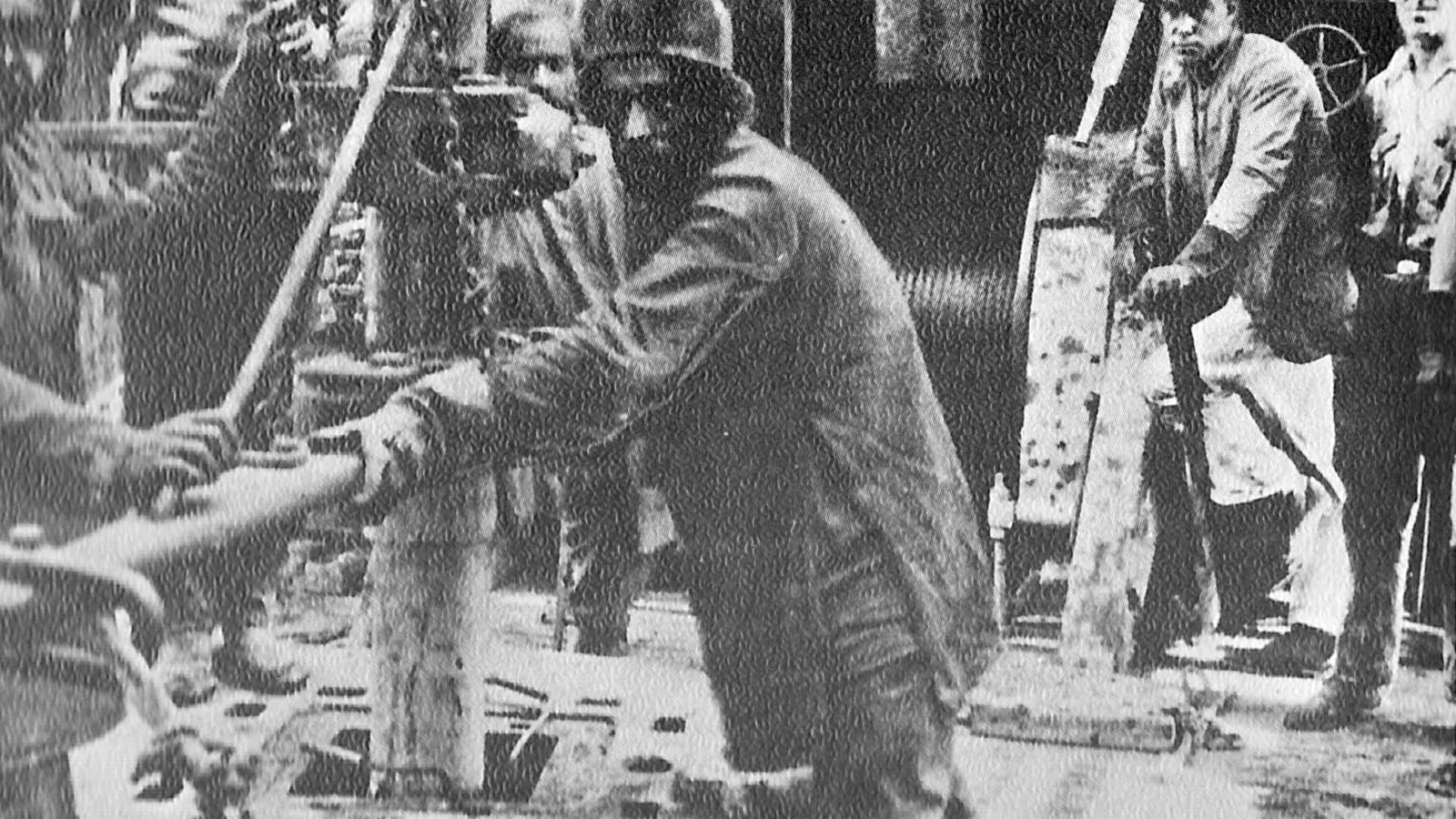

TL;DR — William Knox D’Arcy signed a 60-year Persian oil concession on May 28, 1901. A well at Masjed Soleyman struck oil on May 26, 1908, and Churchill asked the Commons for a government stake in 1914.
Muzaffar al-Din Shah signed a 60-year concession with William Knox D’Arcy on May 28, 1901, giving him the exclusive right to “search for and obtain, exploit, develop, render suitable for trade, carry away and sell natural gas, petroleum, asphalt and ozokerite” across most of Persia, according to the Encyclopaedia Iranica entry on D’Arcy by Fuad Rouhani. The concession excluded five northern provinces, Azerbaijan, Gilan, Mazandaran, Astarabad and Khorasan, to avoid antagonizing Russia. D’Arcy paid 20,000 pounds in cash and 20,000 pounds in shares within a month of forming a company, and owed 16 percent of net profits from any subsidiary each year afterward. All assets were to revert to the Persian government, without compensation, when the 60 years ended.
Quick facts
- When
- May 28, 1901 (concession signed) - January 1908 (third well started) - May 26, 1908 (oil struck) - 1909 (Anglo-Persian Oil Company formed) - 1912 (Abadan refinery opens) - June 17, 1914 (Churchill's Commons speech)
- Where
- Masjed-e Soleyman, Khuzestan, in southwestern Persia; the Abadan refinery on the Persian Gulf; the House of Commons in London
- Who
- Muzaffar al-Din Shah; William Knox D'Arcy; engineer George Reynolds; Antoine Kitabgi; Winston Churchill, First Lord of the Admiralty
- Outcome
- The 1901 concession funded seven years of failed drilling before a well at Masjed Soleyman struck oil on May 26, 1908. The Anglo-Persian Oil Company followed in 1909, the Abadan refinery in 1912, and in 1914 Churchill asked the Commons to fund a government stake in the company.
Kitabgi's search for an investor
Earlier concessions had failed. Iranica’s Kazemi entry records that in 1872 Naser al-Din Shah granted the first major mineral concession, including petroleum, to Baron Julius de Reuter; it was later canceled, and a second Reuter mining concession in 1889 led to unsuccessful exploration near Semnan and the Persian Gulf. The Persian commissioner Antoine Kitabgi, working with former British minister to Tehran Sir Henry Drummond Wolff, then looked for a British backer. Wolff introduced D’Arcy to Kitabgi in a letter of November 1900 as “a capitalist of the highest order who declares himself disposed to examine the affair.” Kitabgi and D’Arcy met in Paris on January 8, 1901, and D’Arcy agreed in principle to apply for a concession.
Tehran's ministers and a pipe-bearer
D’Arcy’s agent Alfred Marriot told the Persian grand vizier, Amin al-Soltan, on April 26, 1901, that the concession would surpass the Baku oil industry, and the British minister in Tehran, Sir Arthur Hardinge, wrote to D’Arcy on May 12, 1901, that Kitabgi “had secured in a very thorough manner the support of all the principal ministers and courtiers, not even forgetting the personal servant who brings His Majesty’s pipe and morning coffee.” Kazemi’s Iranica entry writes: “After handsome bribes to key Persian officials and active support from the British minister in Tehran.” Viceroy of India George Curzon doubted the venture would succeed, advising London not “to think the industrial regeneration of Persia is going to make a new start in Mr D’Arcy’s hands.”
Seven years without oil
D’Arcy’s First Exploitation Company began drilling near Qasr-e Shirin in 1903 and found nothing. By 1905, Iranica states, D’Arcy “had spent more than 225,000 pounds, mortgaged his remaining Australian stock holdings, and exhausted his ability to raise further capital,” and he opened talks with the French Rothschilds about selling the concession outright. BP’s company history dates the start of drilling to November 1902, in the Chiah Surkh mountains under engineer George Reynolds, and records that operations there were suspended on June 23, 1904, for lack of oil and money. The Royal Navy, which wanted a steady oil supply to replace coal, connected D’Arcy to Burmah Oil, and the Concessions Syndicate Ltd., backed by Burmah Oil, took over the concession under D’Arcy’s trusteeship in 1905. A second well on new ground also failed. Iranica’s Kazemi entry summarizes: “in 1905, the company discovered small quantities of oil, and three years later, a rich well was struck in Masjed-e Solaymān near the Persian Gulf.”
The third well, May 26, 1908
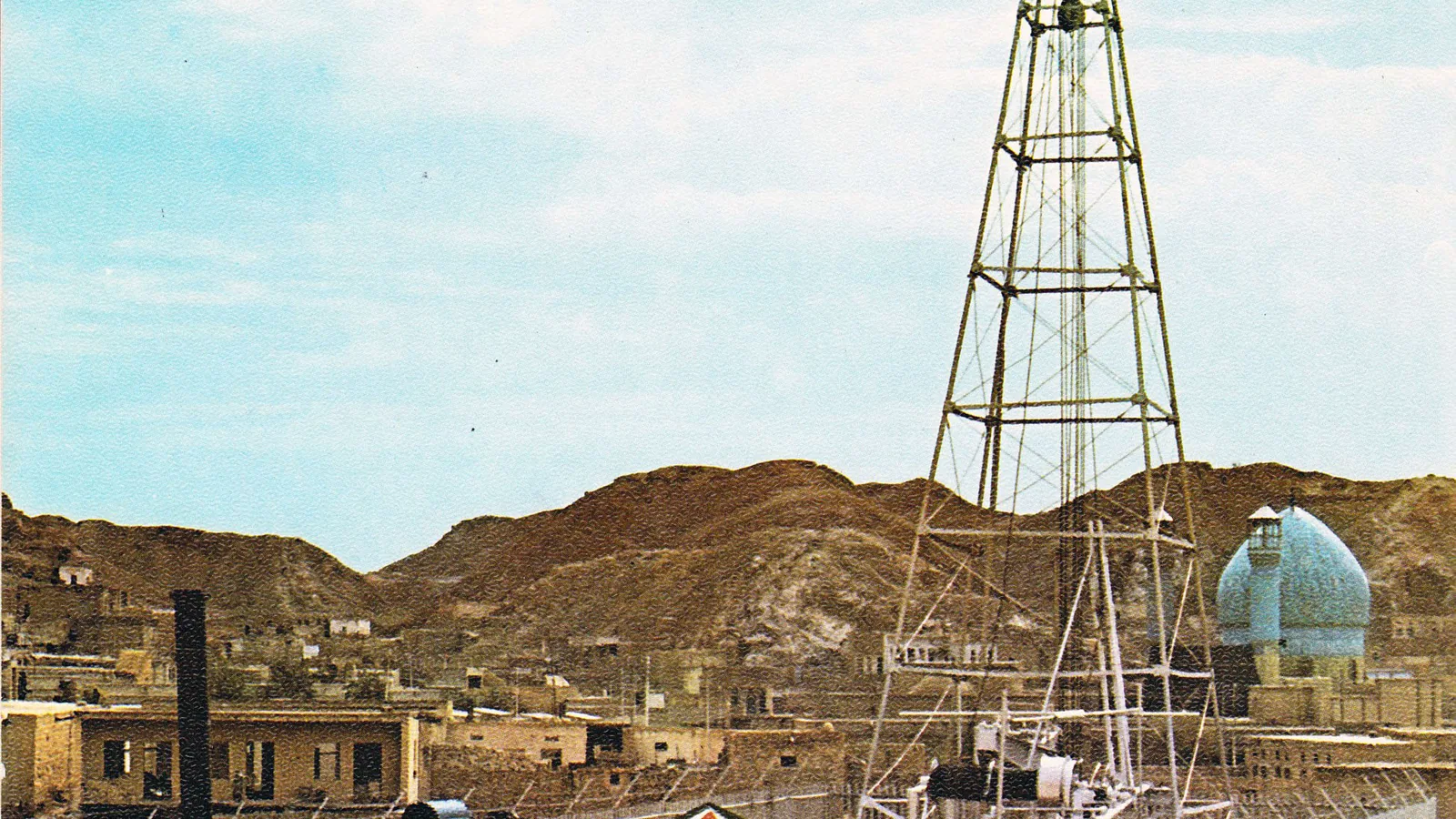
A third well was sunk in January 1908 at Masjed Soleyman, in Khuzestan, which Iranica’s D’Arcy entry places 80 miles northeast of Ahvaz and BP’s history places 125 miles northeast of Abadan. The syndicate was, in Iranica’s words, “on the verge of withdrawing from oil exploration entirely, abandoning this well too, when, on 24 Rabi II 1326/26 May 1908, a reservoir of considerable size was struck.” BP’s company history adds that the drill reached 1,180 feet at 4 a.m. that day. Telegrams from Persia traveled slowly, and D’Arcy learned the news five days later; BP’s history quotes him as saying, “If this is true, all our troubles are over,” and adding, “I am telling no one about it until I have the news confirmed.”

Anglo-Persian and the Abadan refinery
The Anglo-Persian Oil Company was incorporated on April 14, 1909, according to BP’s history, absorbing the rights and shares of the First Exploitation Company and the British-created Bakhtiari Oil Company. To settle resistance from the Bakhtiari tribe, the British allotted its chiefs 3 percent of the Bakhtiari Oil Company’s shares, and a 1909 agreement with Arab tribal leader Shaikh Khazal in Khuzestan guaranteed his rights along with cash and a 10,000-pound loan, Iranica’s Kazemi entry states. Abadan island was chosen for a refinery that opened in 1912 with an annual capacity of 120,000 tons, and BP’s history dates the first crude oil pumped from Masjed Soleyman to Abadan through the pipeline to October 1912. By 1918, Iranica’s entry on Iran’s oil and gas resources records, refining capacity had risen to around 20,000 barrels a day and crude production to 23,600 barrels a day.
On June 17, 1914, Winston Churchill, First Lord of the Admiralty, moved in the House of Commons “that it is expedient to authorise the issue, out of the Consolidated Fund, of such sums, not exceeding in the whole two million two hundred thousand pounds, as are required for the acquisition of share or loan capital of the Anglo-Persian Oil Company.” Iranica’s Kazemi entry gives the resulting government holding as 53 percent of the shares; Iranica’s D’Arcy entry gives it as “more than 50 percent of the voting rights.” Churchill’s speech, as recorded in Hansard, named no fixed percentage itself, describing a choice between ex-officio directors with a veto or an actual numerical majority on the board, and he told the Commons that Persian oil would supply the navy with “not the whole, not the greater part, not even for half, but a portion something less than half of our necessary supplies.” Sir Francis Hopwood and Sir Francis Black handled the financial negotiations, after a Special Commission headed by Admiral Slade, with oil experts Professor Cadman and Professor Blundstone, had inspected the fields.
Key facts
- Muzaffar al-Din Shah signed the D’Arcy concession on May 28, 1901, for 60 years, excluding five northern provinces (Iranica).
- The concession set D’Arcy’s payment at 20,000 pounds cash, 20,000 pounds in shares, and 16 percent of net profits a year (Iranica).
- By 1905 D’Arcy had spent more than 225,000 pounds and could raise no further capital, according to Iranica.
- The Concessions Syndicate Ltd., backed by Burmah Oil, took over the concession in 1905 under D’Arcy’s trusteeship (Iranica).
- A third well at Masjed Soleyman, Khuzestan, struck oil on May 26, 1908, after two earlier wells failed (Iranica).
- BP’s company history alone gives the strike’s time as 4 a.m. and its depth as 1,180 feet.
- The Anglo-Persian Oil Company was incorporated on April 14, 1909, and the Abadan refinery opened in 1912 (BP).
- On June 17, 1914, Churchill asked the Commons to approve two million two hundred thousand pounds for a government stake in the company (Hansard).
FAQ
When did William Knox D'Arcy sign the Persian oil concession?
Muzaffar al-Din Shah signed it on May 28, 1901, giving D'Arcy exclusive rights to Persian oil, gas, asphalt and ozokerite for 60 years, excluding five northern provinces, according to the Encyclopaedia Iranica entry on D'Arcy.
When was oil first struck at Masjed Soleyman?
On May 26, 1908, at a third well sunk in January 1908, after two earlier wells and years of drilling elsewhere had found nothing, Iranica's account of D'Arcy states.
What share of the Anglo-Persian Oil Company did the British government acquire in 1914?
Iranica's entry on the Anglo-Persian Oil Company gives 53 percent of the shares; its entry on D'Arcy gives more than 50 percent of the voting rights. Churchill's June 17, 1914, Commons speech, recorded in Hansard, names no fixed percentage.
Sources
- Farhad Kazemi, "Anglo-Persian Oil Company," Encyclopaedia Iranica, vol. II, fasc. 1, pp. 61-65, published December 15, 1985, last updated April 19, 2017.
- Fuad Rouhani, "D'Arcy, William Knox," Encyclopaedia Iranica, published December 15, 1994, last updated September 23, 2013.
- Amir Badakhshan and Farrokh Najmabadi, "Oil Industry ii. Iran's Oil and Gas Resources," Encyclopaedia Iranica, published July 20, 2004.
- BP plc, "Our history," corporate history pages covering 1901-1928.
- UK Parliament, House of Commons, Committee of the Whole House, June 17, 1914, "Anglo-Persian Oil Company" (Winston Churchill, First Lord of the Admiralty).
Cite this article
- APA
- LETTER. (2026, September 28). D'Arcy's 1901 concession and the oil strike at Masjed Soleyman, May 1908. Our Earth's History. https://ourearthshistory.com/west-asia/modern/masjed-soleyman-may-26-1908-darcy-concession-anglo-persian-oil/
- Chicago
- LETTER. “D'Arcy's 1901 concession and the oil strike at Masjed Soleyman, May 1908.” Our Earth's History, September 28, 2026. https://ourearthshistory.com/west-asia/modern/masjed-soleyman-may-26-1908-darcy-concession-anglo-persian-oil/.
- MLA
- LETTER. “D'Arcy's 1901 concession and the oil strike at Masjed Soleyman, May 1908.” Our Earth's History, 28 Sep. 2026, https://ourearthshistory.com/west-asia/modern/masjed-soleyman-may-26-1908-darcy-concession-anglo-persian-oil/.
Text licensed CC BY-NC-ND 4.0. Found an error? Tell us.