Fifty years of Persia's tobacco for 15,000 pounds a year: the Régie
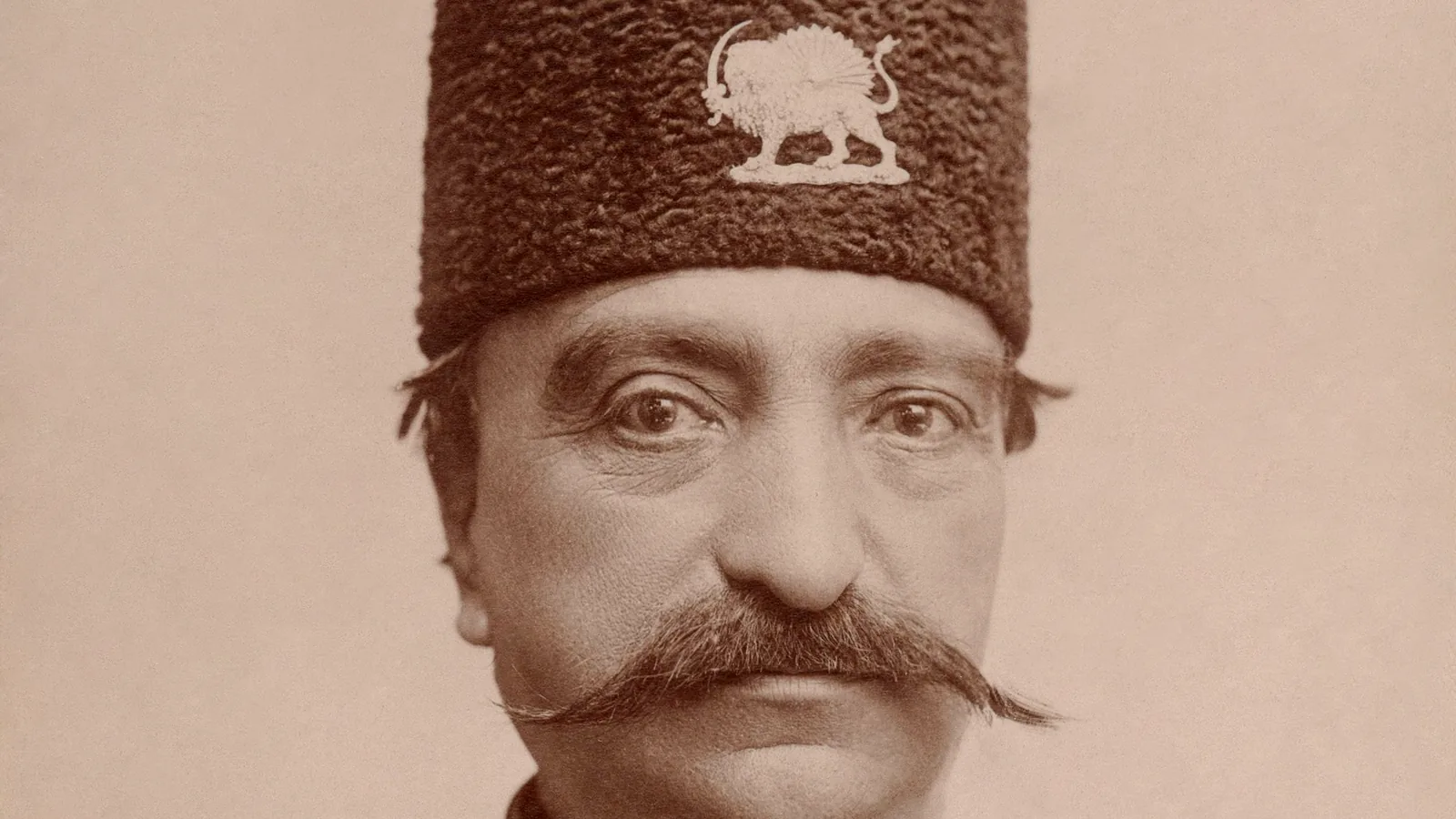

TL;DR — A 50-year tobacco monopoly granted in March 1890 was canceled by January 1892 after a fatwa stopped Persians smoking; the shah owed the company 500,000 pounds.
The Encyclopaedia Iranica entry on the grand vizier Amin al-Soltan, by Jean Calmard, describes the grant as “a fifty year monopoly of the production, sale, and export of Iran’s entire tobacco crop to Major G. F. Talbot (March, 1890).” In the Commons on May 26, 1892, Henry Labouchere gave the day and the price: “On the 8th March, 1890, the Shah of Persia gave a concession to a Mr. Talbot,” at 15,000 pounds a year and one-quarter of profits. It was known as the Tobacco Régie. A fatwa in the name of Mirza Hasan Shirazi, the senior Shia jurist, then stopped tobacco sales and smoking; Naser al-Din Shah canceled the concession in three steps ending on January 5, 1892, and agreed to pay the company 500,000 pounds borrowed from the Imperial Bank of Persia. Calmard calls it “the first successful uprising against Qajar rule.”
Quick facts
- When
- March 8, 1890 (concession granted, by Labouchere's statement to the Commons) · May 3 and November 3, 1890 (concession resold twice) · January 1891 (Afghani expelled from Tehran) · July 26, 1891 (Shirazi's first telegram to the shah) · September 1891 (monopoly canceled in Azerbaijan) · early December 1891 (the fatwa circulates; domestic monopoly canceled) · January 5, 1892 (total cancellation) · January 26, 1892 (Shirazi's closing telegram) · May 23 and 26, 1892 (the 500,000 pounds debated in the Commons)
- Where
- Tehran and the shrine of Shah Abd al-Azim; Samarra in Iraq, where Shirazi lived; Shiraz, Isfahan and Azerbaijan; the offices of the Imperial Tobacco Corporation of Persia in London; the House of Commons
- Who
- Naser al-Din Shah; his grand vizier Amin al-Soltan; Sir Henry Drummond Wolff, British minister in Tehran; Major Talbot, the concessionaire; Jamal al-Din al-Afghani; Sayyed Ali Fal-asiri; Mirza Hasan Shirazi and Mirza Hasan Ashtiani; J. W. Lowther, Henry Labouchere and Seymour Keay in the Commons
- Outcome
- The monopoly was canceled in three steps ending on January 5, 1892. The Persian government agreed to pay the corporation 500,000 pounds, borrowed from the Imperial Bank of Persia, which Calmard calls Iran's first foreign debt
Wolff, Amin al-Soltan and a concession sold twice in 1890
Sir Henry Drummond Wolff, the British minister in Tehran from 1887 to 1890, had worked with Amin al-Soltan on concessions for British subjects; Calmard lists the Karun river, opened to navigation in 1888 and 1889, and the Imperial Bank of Persia, founded in September 1889, beside the Régie. On April 26, 1892, J. W. Lowther, the under-secretary for foreign affairs, wrote that Major Talbot obtained the concession “without the intervention of Her Majesty’s Government, or their knowledge.” Hansard prints the man’s name both ways, “Mr. Gerald Francis Talbot” on May 23 and “Major G. H. Talbot” on May 26. That day Seymour Keay said that “Major A. C. Talbot and Major G. H. Talbot are brothers, and they are family connections of Lord Salisbury,” A. C. Talbot being the political resident in the Persian Gulf. Lowther replied, “It is not the same person. There are two gentlemen named Major Talbot,” and said nothing of brothers.
Talbot sold the concession on May 3, 1890 to the Eastern Concessions Syndicate, which sold it on November 3, 1890 to the Imperial Tobacco Corporation of Persia for 300,000 pounds, 83,000 in cash and 217,000 in shares. The corporation, with a capital of 650,000 pounds, issued a prospectus the same day forecasting an annual profit of 371,875 pounds.
Two telegrams from Samarra, July 1891
Calmard dates the first printed attacks to July and August 1890 in Qanun, Malkom Khan’s newspaper in London, and in Istanbul’s Akhtar. In Tehran, Jamal al-Din al-Afghani, a guest of the merchant Amin al-Zarb, preached from July 1890 out of sanctuary at the shrine of Shah Abd al-Azim. Nikki Keddie’s Iranica entry records that in January 1891 a leaflet attacking the concessions enraged the shah and Amin al-Soltan, who attributed it, “probably rightly,” to Afghani and “had his sanctuary violated and him taken by forced march in the dead of winter to Iraq.”
Hamid Algar’s Iranica entry on Shirazi, who lived at Samarra in Iraq, records that Sayyed Ali Fal-asiri, expelled from Shiraz for opposing the concession, traveled there to tell him; Afghani wrote too, though Algar doubts his letter “carried much weight.” Shirazi’s first telegram to the shah, dated July 26, 1891, protested “against both the banishing of Fālasiri and the granting of the tobacco monopoly. No answer was received.” A second telegram two months later also went unanswered. Shirazi then delegated authority to act for him to Mirza Hasan Ashtiani in Tehran.
"Tantamount to warfare against the Imam of the Age"
Early in December 1891 a decree over Shirazi’s signature circulated; Algar translates it from Kermani’s account: “from this day forward, the use of tobacco for water pipes (tonbāku) and pipe tobacco (tutun), in whatever form it may be, is tantamount to warfare against the Imam of the Age [the Twelfth Imam], may God hasten his reappearance.” Willem Floor’s Iranica entry records that “most Persians (including the women in the royal harem) stopped smoking voluntarily,” though Floor dates it December 3, 1890 to January 26, 1891, a year earlier than the other entries in the encyclopedia.
Algar states that “doubts were cast on its attribution to him, in the first place by the Persian government, which was anxious to subvert the almost universal effect of the fatwā.” His judgment is that “It can hardly have been a case of outright forgery,” since Shirazi had twice protested by telegram and never repudiated the decree; one explanation he offers is that “among the powers Mirzā Ḥasan had delegated to Āštiāni was precisely the issuance of a fatwā in his name at a suitable time.”
Cancellation in three steps, September 1891 to January 1892
Calmard lists the steps: “cancellation of the monopoly in Azarbaijan (September, 1891); cancellation of the monopoly over domestic markets (December, 1891); total cancellation (January, 1892).” Mansoureh Ettehadiyeh Nezam-Mafi dates the last to 4 Jomada II 1309, January 5, 1892, and calls the movement “a prelude to the Constitutional Revolution” of 1905 to 1911. Three weeks later, by Algar’s account, it was “a new fatwā from Mirzā Ḥasan and a telegram in confirmation sent to Āštiāni on 25 Jomādā II 1309/26 January 1892 that brought the whole episode to a close.” Calmard records the shah’s assassination on May 1, 1896 by Mirza Reza Kermani, “an Afḡānī devotee.”
May 1892: the Commons argues over 500,000 pounds
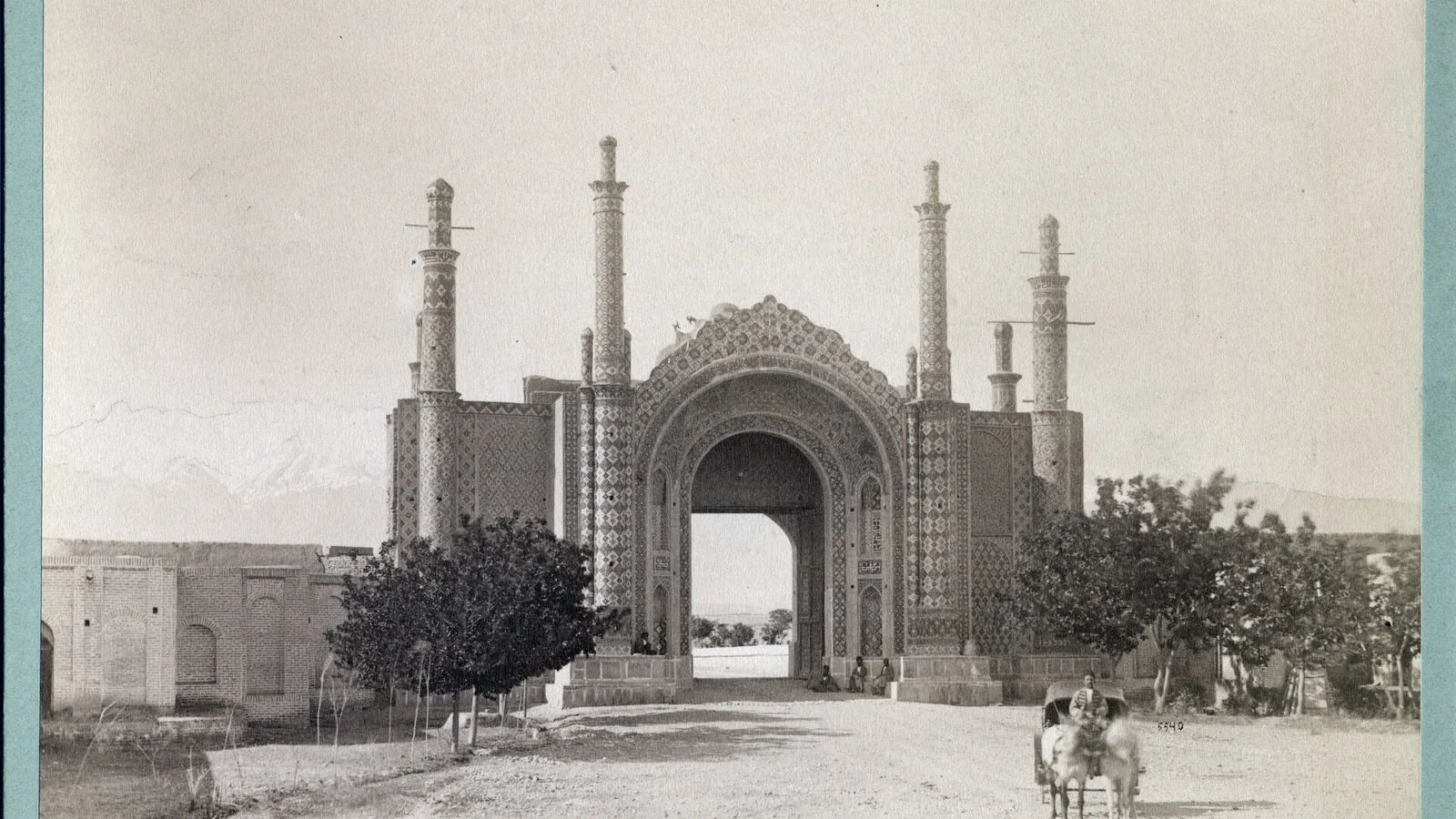
Amin al-Soltan bargained with M. Ornstein, the company’s director in Iran, the envoy Sir Frank Lascelles and Lord Salisbury; Calmard gives the result: “This was finally settled for 500,000 pounds which had to be borrowed from the Imperial Bank (Bānk-e Šāhanšāhī-e Īrān). This first foreign debt rendered Iran more dependent on great powers.” The Foreign Office files, FO 60/553 and 554, are at the National Archives.
On February 22, 1892, Lowther had told the Commons that the government was in touch with both sides on compensation; on May 23 he announced that “The Persian Government have agreed to pay £500,000 as compensation,” and broke down the company’s capital of 650,000 pounds: 300,000 for the concession, 350,000 in cash sent to Persia or held in London. On May 26 he said the stock, house property, furniture and machinery handed over must be shown to have cost 139,000 pounds, and the company’s spending in Persia was 55,000.
That evening, in committee of supply, Labouchere said “the Persian Government were advised by Her Majesty’s Government to pay the sum of £500,000 to the Corporation.” Lowther answered: “Her Majesty’s Government never pressed for that or any particular sum, all they pressed for was that the whole [claim] should be submitted to arbitration. The Persian Government did not see their way to arbitration, and made an offer to pay £500,000.”
Key facts
- Calmard’s Iranica entry describes the grant of March 1890 as “a fifty year monopoly of the production, sale, and export of Iran’s entire tobacco crop”; Labouchere told the Commons on May 26, 1892 that it was dated March 8, 1890, for 15,000 pounds a year and one-quarter of profits.
- Talbot sold the concession on May 3, 1890 to the Eastern Concessions Syndicate, which sold it on November 3, 1890 to the Imperial Tobacco Corporation of Persia for 300,000 pounds (83,000 cash, 217,000 in shares); the corporation’s capital was 650,000 pounds and its prospectus forecast a profit of 371,875 pounds a year (Hansard, May 1892).
- Hansard prints the concessionaire’s name both as “Mr. Gerald Francis Talbot” (May 23) and “Major G. H. Talbot” (May 26); Keay’s statement that he was the brother of Major A. C. Talbot, the political resident in the Persian Gulf, was neither confirmed nor denied by Lowther.
- Afghani was taken from sanctuary at Shah Abd al-Azim in January 1891 and marched to Iraq after a leaflet attacking the concessions (Keddie).
- Shirazi’s first telegram to the shah, dated July 26, 1891, protested the expulsion of Fal-asiri and the monopoly; it and a second telegram two months later got no answer (Algar).
- The fatwa of early December 1891 declared tobacco use “tantamount to warfare against the Imam of the Age”; the Persian government questioned its attribution, and Algar’s judgment is that “It can hardly have been a case of outright forgery.”
- The monopoly was canceled in Azerbaijan in September 1891, over domestic markets in December 1891, and in total on 4 Jomada II 1309 / January 5, 1892 (Calmard; Nezam-Mafi); Shirazi’s confirming telegram followed on January 26, 1892 (Algar).
- On May 23, 1892 Lowther told the Commons that Persia had agreed to pay 500,000 pounds; Calmard records that the sum was borrowed from the Imperial Bank and calls it Iran’s first foreign debt.
FAQ
Who was Major Talbot of the Persian tobacco concession?
The concessionaire of March 1890. Hansard for 1892 prints his name as "Mr. Gerald Francis Talbot" in Labouchere's written question of May 23 and as "Major G. H. Talbot" in Lowther's answer of May 26; Calmard's Iranica entry gives "Major G. F. Talbot." Seymour Keay told the Commons he was the brother of Major A. C. Talbot, the political resident in the Persian Gulf; Lowther confirmed only that they were two different men.
Did Mirza Hasan Shirazi really issue the tobacco fatwa of 1891?
The decree bore his signature, and the Persian government was the first to cast doubt on it. Hamid Algar, in the Encyclopaedia Iranica, writes that it "can hardly have been a case of outright forgery," because Shirazi had already protested twice by telegram and never repudiated the fatwa afterward; one possibility Algar raises is that Ashtiani issued it in Tehran under powers Shirazi had delegated to him.
How much did Persia pay to cancel the Tobacco Régie?
The sum was 500,000 pounds, announced in the Commons on May 23, 1892 and borrowed from the Imperial Bank of Persia. The corporation's own figures put the price of the concession at 300,000 pounds and its assets in Persia at 139,000 pounds; Lowther said the British government had pressed only for arbitration, and Labouchere said Persia had been advised by that government to pay.
Sources
- Encyclopaedia Iranica, "Atābak-e Aʿẓam, Amīn-al-Solṭān" (Jean Calmard, vol. II, fasc. 8, 1987): the terms of the concession, Wolff's policy, the Karun and Imperial Bank concessions, the three-step cancellation, the compensation talks and the 500,000-pound loan.
- Encyclopaedia Iranica, "Ḥasan Širāzi, Mirzā Moḥammad" (Hamid Algar, vol. XII, fasc. 1, 2003): Fal-asiri's journey to Samarra, the telegrams of July 26, 1891 and January 26, 1892, the text of the fatwa and the question of its attribution.
- Encyclopaedia Iranica, "Concessions ii. In the Qajar Period" (Mansoureh Ettehadiyeh Nezam-Mafi, vol. VI, fasc. 2, 1992): the date of total cancellation, 4 Jomada II 1309 / January 5, 1892.
- Encyclopaedia Iranica, "Tobacco" (Willem M. Floor, 2009, updated 2013): the abstention of most Persians including the royal harem, with the entry's own dates.
- Encyclopaedia Iranica, "Afḡānī, Jamāl-al-Dīn" (Nikki R. Keddie, vol. I, fasc. 5, 1983): the leaflet of January 1891, the expulsion to Iraq, the letter to Shirazi and the assassination of 1896.
- Encyclopaedia Iranica, "Amīn-al-Żarb, Ḥājj Moḥammad-Ḥasan" (Anne Enayat, vol. I, fasc. 9, 1989): Afghani's lodging in Tehran in 1886–87 and 1889–90.
- UK Parliament, Historic Hansard, House of Commons, February 22, 1892, vol. 1, c. 891, "Imperial Tobacco Corporation of Persia": Lowther's answer to Cuninghame Graham.
- UK Parliament, Historic Hansard, House of Commons, April 26, 1892, vol. 3, cc. 1390–1, "Persian Tobacco Monopoly": Lowther's written answer to Labouchere on how the concession was obtained and the 300,000-pound transfer.
- UK Parliament, Historic Hansard, House of Commons, May 23, 1892, vol. 4, cc. 1520–3, "The Persian Tobacco Concession": the 500,000-pound agreement and the corporation's capital of 650,000 pounds.
- UK Parliament, Historic Hansard, House of Commons, May 26, 1892, vol. 4, cc. 1903–5, "The Persian Tobacco Concession" (questions): the assets valued at 139,000 pounds and the 55,000 pounds spent in Persia.
- UK Parliament, Historic Hansard, House of Commons, May 26, 1892, vol. 4, cc. 1944–61, "The Persian Tobacco Concession" (committee of supply): the speeches of Labouchere, Lowther, Trevelyan, Keay, Bryce and Winterbotham.
- The National Archives (Kew), Discovery catalogue: FO 60/553 and FO 60/554, "Tobacco Regie in Persia. Major Talbot's Concession etc.," volumes 1 (1890–1891) and 2 (January to April 14, 1892).
Cite this article
- APA
- Our Earth's History. (2026, September 22). Fifty years of Persia's tobacco for 15,000 pounds a year: the Régie. Our Earth's History. https://ourearthshistory.com/west-asia/modern/tobacco-regie-iran-1890-1892-fatwa-cancellation/
- Chicago
- Our Earth's History. “Fifty years of Persia's tobacco for 15,000 pounds a year: the Régie.” Our Earth's History, September 22, 2026. https://ourearthshistory.com/west-asia/modern/tobacco-regie-iran-1890-1892-fatwa-cancellation/.
- MLA
- “Fifty years of Persia's tobacco for 15,000 pounds a year: the Régie.” Our Earth's History, 22 Sep. 2026, https://ourearthshistory.com/west-asia/modern/tobacco-regie-iran-1890-1892-fatwa-cancellation/.
Text licensed CC BY-NC-ND 4.0. Found an error? Tell us.