Rinderpest in Africa, 1889-1897, from Eritrea to the Cape
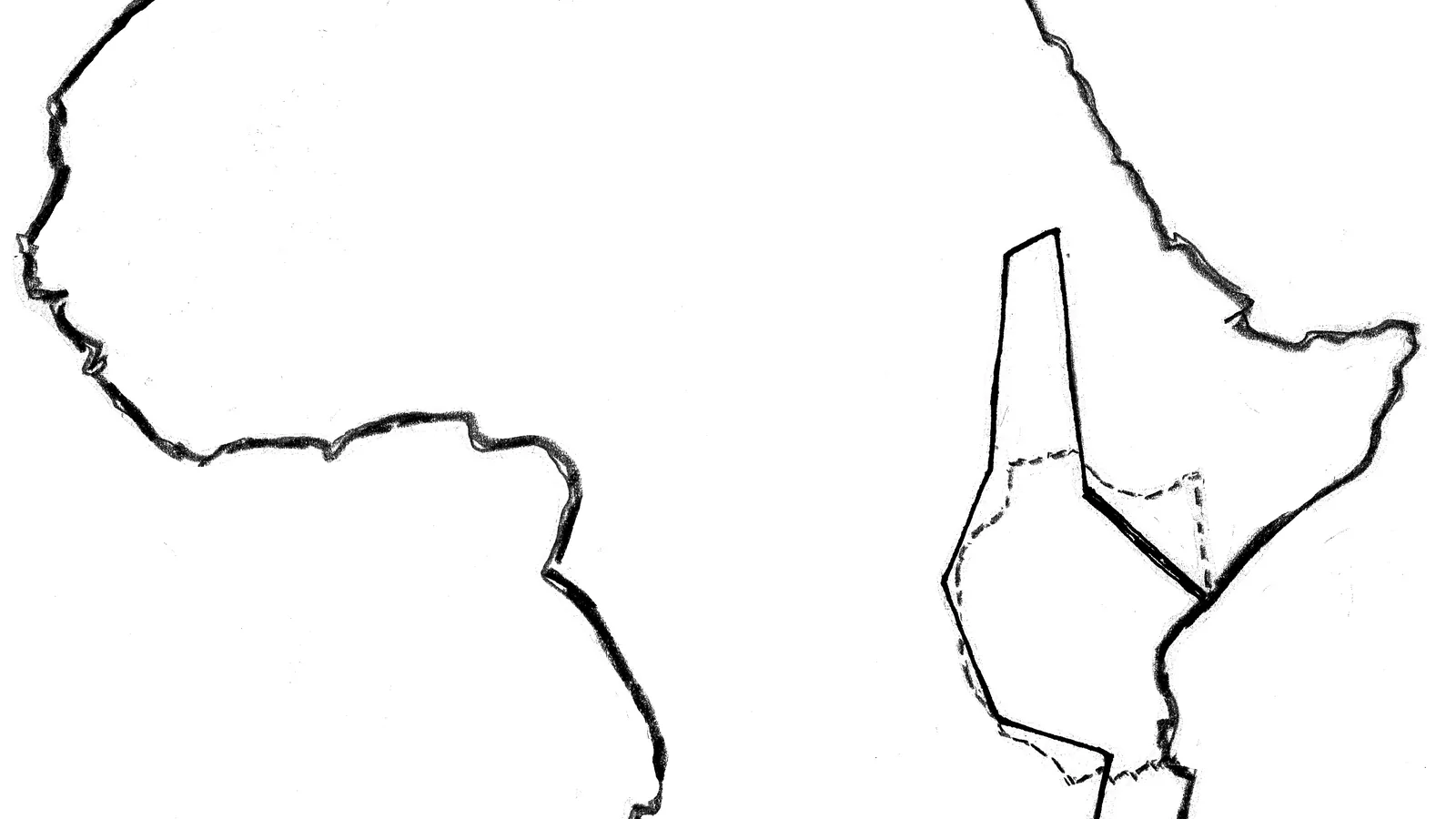

TL;DR — Rinderpest entered Africa with the Italian invasion of Eritrea in 1889, killed 90 to 95 percent of African cattle, per Headrick, and was declared eradicated worldwide in 2011.
“The outbreak of sleeping sickness was probably related to the epizootic of rinderpest that was introduced into Africa with the Italian invasion of Eritrea in 1889,” historian Daniel R. Headrick wrote in a 2014 paper in PLoS Neglected Tropical Diseases. African cattle “had no resistance,” Headrick wrote, and the virus “killed between 90 percent and 95 percent of them, along with many wild animals.” By 1896 the epizootic had reached the Cape of Good Hope, causing famine among herders across East Africa.
Quick facts
- When
- 1889 (rinderpest enters Africa with the Italian invasion of Eritrea) - 1896 (epizootic reaches the Cape of Good Hope) - 1897 (Robert Koch's rinderpest inoculation reported in the British Medical Journal) - 25 May 2011 (WOAH eradication declaration)
- Where
- Eritrea; the Great Rift Valley and highlands of Ethiopia; East Africa; the Cape of Good Hope, South Africa
- Who
- Italian colonial forces; Lord Lugard; Robert Koch; Arnold Theiler; the World Organisation for Animal Health (WOAH, formerly OIE); the Food and Agriculture Organization (FAO)
- Outcome
- Rinderpest killed 90 to 95 percent of African cattle within seven years and contributed to famine in Ethiopia; the virus was declared eradicated worldwide by the WOAH and FAO in May and June 2011, ten years after the last recorded case in Kenya.
Eritrea, 1889
Italian troops landed in Eritrea in 1889 and brought infected cattle with them, Headrick wrote. Rinderpest virus (RPV) is a single-stranded, negative-sense RNA virus of the family Paramyxoviridae, genus Morbillivirus, and it does not infect cattle alone. David M. Morens, Edward C. Holmes, A. Sally Davis and Jeffery K. Taubenberger, writing in The Journal of Infectious Diseases in 2011, noted that the virus “infects more than 40 other domestic and wild artiodactyl species” and “has been credited with decimation of native African wildlife species and even the decline of the European bison.” Morens and his coauthors described the toll in species terms: “rapid loss of virtually all of the cattle, buffaloes, elands, and wild swine, as well as many sheep, goats, and wildlife species, such as antelopes, gazelles, giraffes, hartebeest, and wildebeest.” A photograph reproduced in their paper carries the caption “Cattle dead of rinderpest in the years after the devastating African rinderpest panzootic, which began in 1887,” locating it around 1896 near Vryburg, Transvaal, South Africa, and crediting the Veterinary History Society of the Onderstepoort Veterinary Research Institute.
Ethiopia's famine
Morens and his coauthors opened their paper with a line from an Ethiopian poem of the 1890s: “Mota and Qaranyo, why are they not plowed? . . . I came from there to here without seeing an ox,” a line they said carries a double meaning, “I came from there to here over dead bodies.” The paper calls the crisis the “Great Ethiopian Famine” and dates it 1887 to 1892, attributing the term to Richard Pankhurst; Pankhurst’s own 1966 paper on the subject is titled “The Great Ethiopian Famine of 1888-1892: A New Assessment.” Morens and his coauthors described farmland going out of cultivation, rodents and locusts multiplying, families displaced from their land, smallpox spreading alongside the famine, and lions, leopards and jackals attacking people in daylight. They gave the human toll only as “speculative”: “Speculative estimates of the human death toll in affected parts of East Africa reach as high as one-half to two-thirds of the population.”
An empire's verdict, and a war it is blamed for
Headrick preserved a comment from the British colonial administrator Lord Lugard, who wrote that rinderpest “in some respects . . . has favoured our enterprise. Powerful and warlike as the pastoral tribes are, their pride has been humbled and our progress facilitated by this awful visitation. The advent of the white man had not else been so peaceful.” Morens and his coauthors wrote that “some historians cite rinderpest as an ultimate cause of the Matabele War,” without endorsing the claim. Headrick traced a further chain: wartime fighting, labor conscription and the requisitioning of crops and livestock drove farmers from their fields, which reverted to bush, the tsetse fly’s preferred habitat, and after rinderpest receded, wildlife recovered faster than cattle and brought the flies with it, a link he connected to later sleeping sickness epidemics in East and Central Africa.
Koch's inoculation, reported in 1897
Robert Koch and Arnold Theiler were, Morens and his coauthors wrote, among the first to try to develop a rinderpest vaccine, and their initial efforts were unsuccessful; a usable attenuated, goat-passaged vaccine did not appear until the 1920s. The British Medical Journal published a letter by George Turner titled “Professor Koch’s Rinderpest Inoculation” in its September 11, 1897 issue, volume 2, number 1915, pages 682 to 683, and ran an item titled “An Immunising Serum against Rinderpest” in its November 20, 1897 issue, volume 2, number 1925, page 1517. Elizabeth A. Clemmons, Kendra J. Alfson and John W. Dutton III, in a 2021 review in Animals, wrote that mortality “could reach 100 percent in susceptible populations,” and gave the scale of loss in their own terms: “The Great African Pandemic of the nineteenth century wiped out untold numbers of wild and domestic animals, leaving only around 5 percent of the previous cattle and herds of wild ungulates in sub-Saharan Africa.”
Declared eradicated, 2011
Clemmons and her coauthors wrote that “by 1960, RP had been eradicated from Europe, Russia, China and the Far East, but remained entrenched in India and Africa.” In 1994 the FAO established the Global Rinderpest Eradication Programme, crediting a 2010 deadline as one key to success in what Clemmons and her coauthors called “a 300-year global battle against RP.” The World Organisation for Animal Health states that “rinderpest was declared as eradicated worldwide by the WOAH and FAO in May and June 2011, respectively,” a declaration it places “ten years after the identification of the last case in Kenya,” and elsewhere gives that last case as “reported in 2001”; a photo caption on the same WOAH page, of a bronze buffalo monument at Kenya’s Meru National Park, dates the case it commemorates to 2010. The WOAH records that its members adopted Resolution No. 18 of the 79th General Session in May 2011, with a separate Resolution No. 15 of the same session recognizing the world’s freedom from the disease. Virus stocks and vaccine samples remained, by the WOAH’s account, in at least 15 laboratories worldwide, down from the 55 laboratories in 35 countries that a 2011 survey cited by Clemmons and her coauthors had counted, and the 21 countries and 22 facilities they reported for 2016. On May 25, 2011, rinderpest became, in the words of Morens and his coauthors, a disease “declared eradicated.”
Key facts
- Rinderpest entered Africa with the Italian invasion of Eritrea in 1889 and killed 90 to 95 percent of African cattle, spreading to the Cape of Good Hope by 1896 (Headrick, 2014).
- A photograph in Morens et al. (2011) captions the panzootic’s start as 1887, with a representative image from around 1896 near Vryburg, Transvaal, South Africa.
- Rinderpest virus infects more than 40 domestic and wild artiodactyl species beyond cattle, including buffaloes, elands, antelopes, gazelles, giraffes, hartebeest and wildebeest (Morens et al., 2011).
- Morens et al. (2011) date Ethiopia’s “Great Ethiopian Famine” to 1887-1892, while the title of the Pankhurst paper they cite gives 1888-1892.
- Human deaths in affected parts of East Africa are estimated by Morens et al. (2011) as “speculative,” at “as high as one-half to two-thirds of the population.”
- Robert Koch’s rinderpest inoculation was reported in the British Medical Journal on September 11, 1897, and an immunizing serum was reported in the same journal on November 20, 1897.
- Clemmons et al. (2021) write that the nineteenth-century pandemic left only about 5 percent of the previous cattle and wild ungulate herds in sub-Saharan Africa.
- The WOAH and FAO declared rinderpest eradicated worldwide in May and June 2011, respectively, ten years after the WOAH’s cited last case in Kenya; Morens et al. (2011) give the specific date May 25, 2011.
FAQ
When did rinderpest first reach Africa?
Rinderpest entered Africa in 1889, introduced with cattle brought by the Italian invasion of Eritrea, according to Daniel R. Headrick's 2014 account in PLoS Neglected Tropical Diseases. By 1896 the epizootic had reached the Cape of Good Hope in southern Africa.
How many cattle died in the African rinderpest panzootic?
Headrick (2014) gives a mortality of 90 to 95 percent of African cattle. Clemmons, Alfson and Dutton (2021) describe the result differently, writing that only about 5 percent of the previous cattle and wild ungulate herds remained in sub-Saharan Africa afterward.
When was rinderpest declared eradicated?
The World Organisation for Animal Health and the Food and Agriculture Organization declared rinderpest eradicated worldwide in May and June 2011, respectively. Morens et al. (2011) give the specific date of May 25, 2011, ten years after the WOAH's cited last case in Kenya.
Sources
- David M. Morens, Edward C. Holmes, A. Sally Davis, Jeffery K. Taubenberger, "Global Rinderpest Eradication: Lessons Learned and Why Humans Should Celebrate Too," The Journal of Infectious Diseases 204, no. 4 (2011): 502-505
- Daniel R. Headrick, "Sleeping Sickness Epidemics and Colonial Responses in East and Central Africa, 1900-1940," PLoS Neglected Tropical Diseases 8, no. 4 (2014): e2772
- George Turner, "Professor Koch's Rinderpest Inoculation," British Medical Journal 2, no. 1915 (September 11, 1897) 682-683
- "An Immunising Serum against Rinderpest," British Medical Journal 2, no. 1925 (November 20, 1897) 1517
- Elizabeth A. Clemmons, Kendra J. Alfson, John W. Dutton III, "Transboundary Animal Diseases, an Overview of 17 Diseases with Potential for Global Spread and Serious Consequences," Animals 11, no. 7 (2021): 2039
- World Organisation for Animal Health (WOAH), "Rinderpest" (disease overview page)
Cite this article
- APA
- LETTER. (2026, September 28). Rinderpest in Africa, 1889-1897, from Eritrea to the Cape. Our Earth's History. https://ourearthshistory.com/africa/modern/rinderpest-africa-1889-1897-eritrea-cape-cattle-eradication-2011/
- Chicago
- LETTER. “Rinderpest in Africa, 1889-1897, from Eritrea to the Cape.” Our Earth's History, September 28, 2026. https://ourearthshistory.com/africa/modern/rinderpest-africa-1889-1897-eritrea-cape-cattle-eradication-2011/.
- MLA
- LETTER. “Rinderpest in Africa, 1889-1897, from Eritrea to the Cape.” Our Earth's History, 28 Sep. 2026, https://ourearthshistory.com/africa/modern/rinderpest-africa-1889-1897-eritrea-cape-cattle-eradication-2011/.
Text licensed CC BY-NC-ND 4.0. Found an error? Tell us.