"Every record . . . has been lost": Isandlwana, London Gazette, 1879
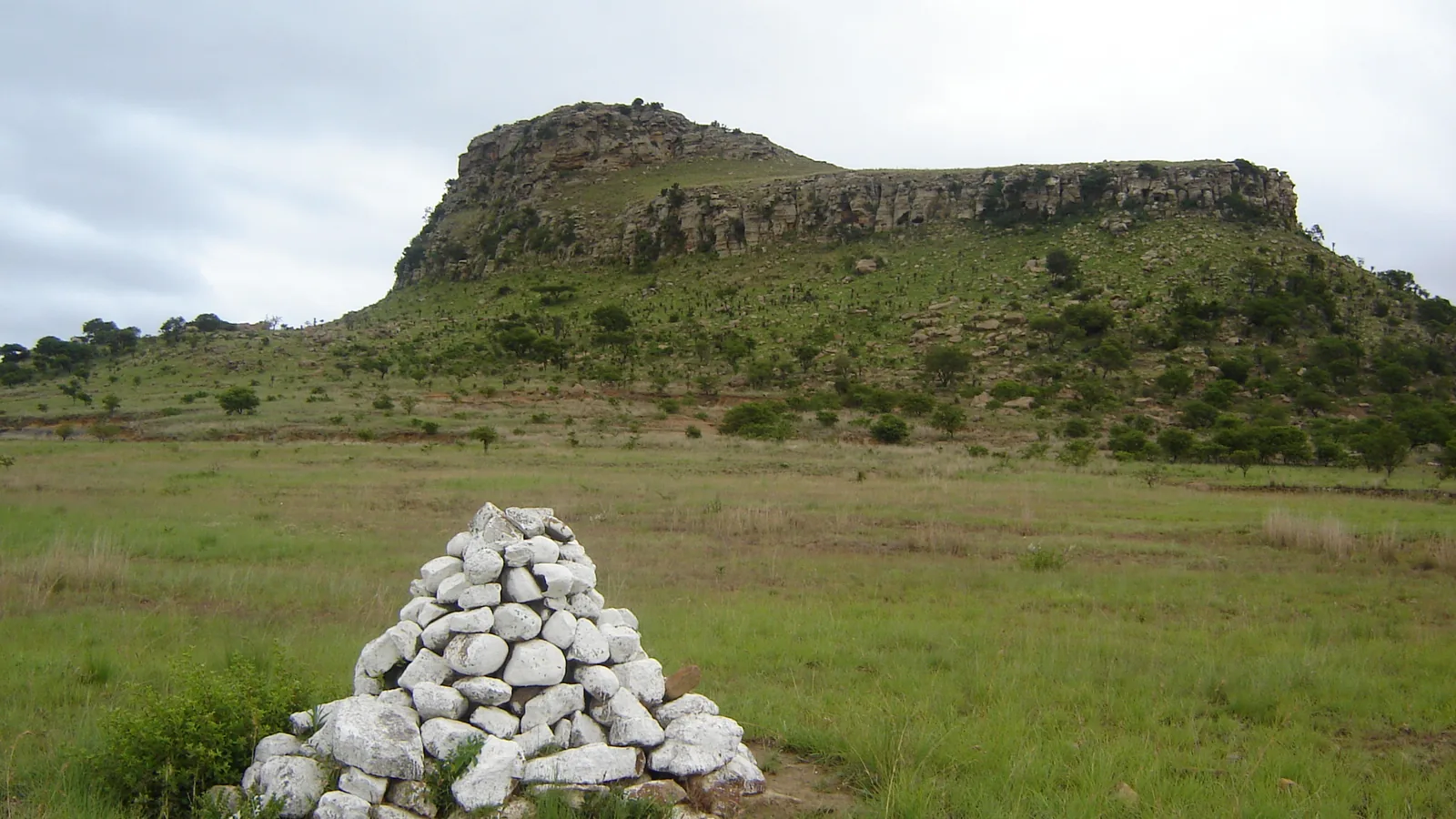

TL;DR — Chelmsford’s dispatch of February 3, 1879: every record of No. 3 Column was lost. The Gazette printed the dead by name, no total; the Commons divided 246 to 306.
“It will, I fear, be impossible to furnish an absolutely correct list of all those who perished on the 22nd January, as every record connected with the several corps belonging to No. 3 Column has been lost.” Lord Chelmsford wrote that on February 3, 1879, 12 days after a Zulu army overran his camp at Isandlwana, and the London Gazette printed it in a supplement published on March 5. The same supplement carried the “LIST of Officers and Men killed in action at the Camp, Isandhlwana Hill, Zululand, on the 22nd January, 1879,” unit by unit, from Lieutenant-Colonel Pulleine of the 1st Battalion, 24th Regiment, to the Natal Carbineers, with no total at the foot; the issue of March 11 added Commodore Sullivan’s note forwarding Lieutenant Milne’s report on “the lamentable affair at Isandhlwana.” On March 13 the War Office told the Commons the official returns had not come. By March 31 the Commons had divided, 246 to 306, on the ultimatum that opened the war.
Quick facts
- When
- September 14 and 28, 1878 (requests for two more regiments) · early December 1878 (the two regiments sent) · January 22, 1879 (the camp at Isandlwana overrun; Rorke's Drift attacked from about 4:30 p.m.) · January 27 (court of inquiry at Helpmakaar) · February 3 and 8 (Chelmsford's dispatches) · February 27 (Vote of Credit) · March 5 (Gazette supplement) · March 13 (no official returns) · March 27 to 31 (Dilke's resolution debated and defeated)
- Where
- the camp under Isandlwana hill, Zululand; the Buffalo River about five miles below Rorke's Drift; the mission store and hospital at Rorke's Drift; Helpmakaar, Natal; the House of Commons, London
- Who
- Lieutenant-General Lord Chelmsford; Sir Bartle Frere, High Commissioner; Sir Henry Bulwer, lieutenant-governor of Natal; Colonel Glyn, Lieutenant-Colonel Pulleine and Colonel Durnford; Major Clery, Lieutenant Cochrane and Captain Essex, witnesses; Umtegolalo, a Zulu prisoner; Lieutenants Chard and Bromhead; Sir Charles Dilke, Colonel Stanley, Ernest Noel and Lord Eustace Cecil in the Commons
- Outcome
- The Gazette printed the Isandlwana dead by name and unit with no total, and on March 13 the War Office had no official returns. Chard's report gave Rorke's Drift a garrison of 139 and 17 dead. Dilke's resolution regretting the ultimatum and Frere's retention was defeated on March 31, 246 to 306
Frere's telegram: "40,000 to 60,000 strong"
Sir Bartle Frere, the High Commissioner at the Cape, had asked for troops early. On February 13 the Chancellor of the Exchequer told the Commons that Frere asked in September 1878 for two more regiments of infantry, and that “the two regiments desired were sent out early in December.” A telegram from Frere quoted in the debate of March 27 gave his case: “Zulu Army 40,000 to 60,000 strong; well armed, unconquered, insolent, burning to clear out White men. Diplomacy and patience have absolute limits.” The ultimatum went to Cetshwayo’s representatives at the Lower Tugela Drift; Ernest Noel summarized it as the king giving up “his Army within 30 days . . . or there should be war.” Sir Henry Bulwer, lieutenant-governor of Natal, had written in December 1878 that 15 days “will hardly be a sufficient time,” and Sir Charles Dilke added, “As a matter of fact, the time was doubled.” Chelmsford entered Zululand with three columns: Colonel Pearson’s No. 1, Colonel Glyn’s No. 3, which he accompanied, and Colonel Wood’s No. 4.
Helpmakaar, January 27: the court hears the orders
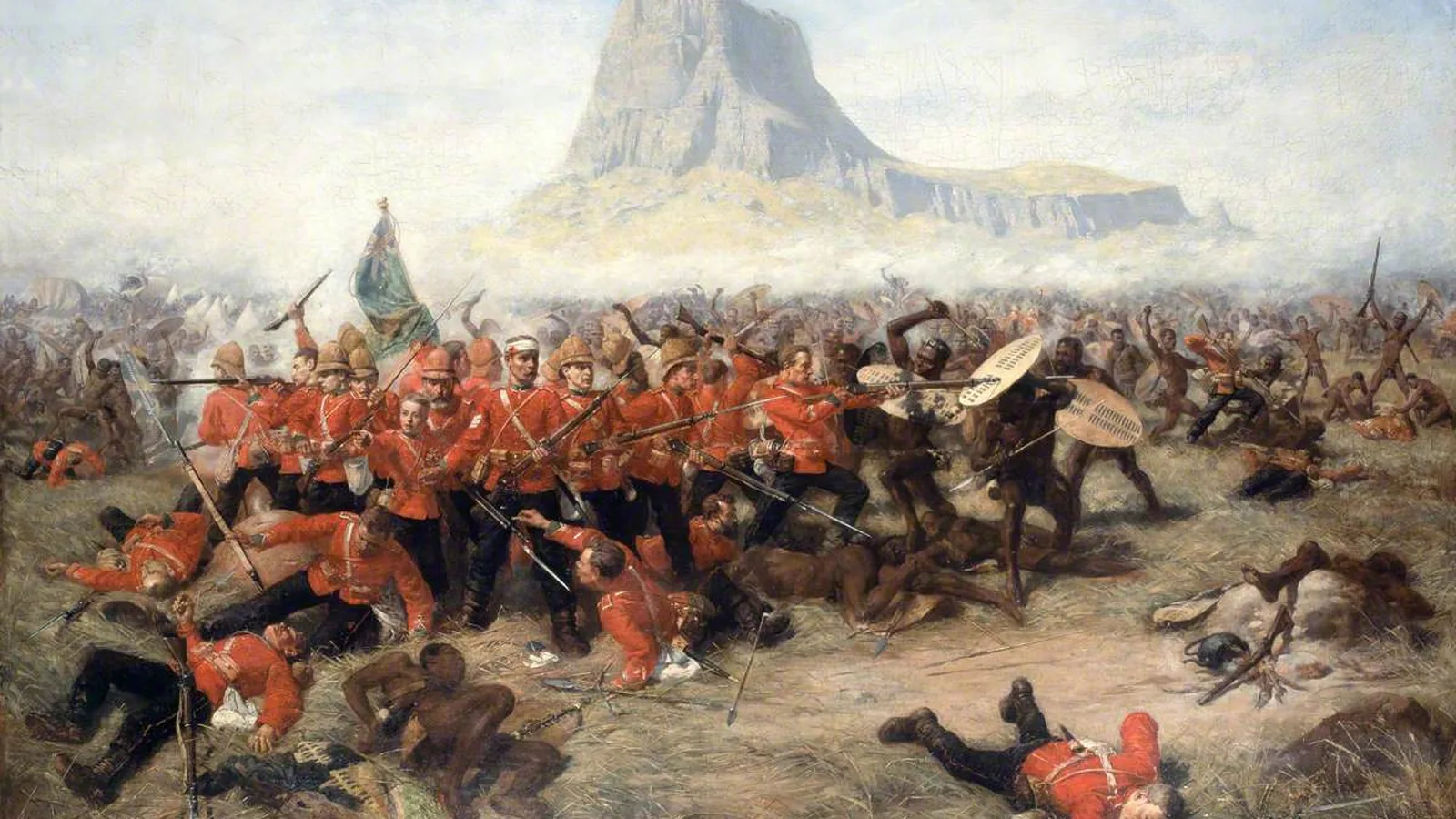
The court of inquiry sat at Helpmakaar on January 27 under Colonel F. C. Hassard. Major Clery, the senior staff officer of No. 3 Column, testified that Major Dartnell’s reconnaissance reported a large body of the enemy on the night of January 21, and that at dawn on the 22nd Chelmsford marched out with “the 2nd Battalion 24th Regiment, the Mounted Infantry, and four guns,” leaving Pulleine a written order to “draw in . . . your camp, or your line of defence . . . while the force is out.” Lieutenant Cochrane testified that Colonel Durnford’s No. 2 Column rode in from Rorke’s Drift “about 10 A.M.” and that “On arrival he took over command from Colonel Pulleine.” Captain Essex’s statement of January 24 began “about eight A.M., when a report arrived from a picquet . . . that a body of the enemy’s troops could be seen approaching from the north-east.” Near noon a fresh body appeared in the rear, and then “the enemy dashing forward in a most rapid manner poured in at this part of the line.” Essex put the attackers at “about 15,000.” The fugitives crossed the Buffalo River “at a point about five miles below Rorke’s Drift,” where “many men and horses were carried away by the stream”; by Essex’s count about 40 white men got over and about 25 or 30 reached Helpmakaar.
"Owing to the state of the moon": a prisoner's account
The supplement also printed the statement of a Zulu prisoner, Umtegolalo. He named the army as “Undi Corps, the Nokenke and Umcityu Regiments, and the Nkobamakosi and Inbonambi Regiments,” of “severally about 3000, 7000, and 10,000 strong,” and said they had “no intention whatever of making any attack on the 22nd January, owing to the state of the moon being unfavourable.” When Durnford’s mounted Basutos met the Umcityu and fired, “that regiment immediately sprung up without orders, and charged.” It is the supplement’s one account from the Zulu side.
_-_The_Battle_of_Isandlwana,_22_January_1879_-_NAM._1960-11-182_-_National_Army_Museum.jpg)
A wall of mealie bags at Rorke's Drift
Lieutenant Chard’s report of January 25 began at the river, where about 3:15 p.m. “two men came riding from Zululand at a galop” with news of “the disaster at Isandlana camp.” He and Lieutenant Bromhead joined the store and the hospital with walls of mealie bags and wagons. “About 4-30 p.m., 500 or 600 of the enemy came in sight around the hill”; “About 4 a.m. 23rd instant, the firing ceased.” Chard’s return gave the garrison as “total 139,” with 15 killed and 12 wounded, “of whom two have since died,” 17 dead in all. Chard counted the attackers at “about 3,000” and wrote, “We killed about 350.” Chelmsford’s dispatch of February 8 said the defense “no doubt saved Natal from a serious invasion.” Asked on March 27 whether the private soldiers as well as the officers would receive “any distinct and substantial recognition or reward,” Colonel Loyd Lindsay answered that “the matter is now under the consideration of the Commander-in-Chief and the Secretary of State for War.”
March 27: Dilke's resolution and a majority of 60
On February 27 the Chancellor of the Exchequer asked for a Vote of Credit of £1,500,000, to be “raised by the issue of Exchequer Bonds.” On March 27 Dilke moved that the House “regrets that the ultimatum which was calculated to produce immediate war should have been presented to the Zulu King without authority from the responsible advisers of the Crown, and that an offensive war should have been commenced without imperative and pressing necessity or adequate preparation,” and further regretted that after the censure in the dispatch of March 19 “the conduct of affairs in South Africa should be retained in his hands.” Colonel Stanley, the Secretary of State for War, answered on March 28. To the charge that Chelmsford had left the camp before daylight without knowing whether his men were alive or dead, he replied that “it is an undoubted fact, established by the evidence of a deserter . . . that none were spared,” so the general’s duty was “to pass on to the defence of Rorke’s Drift.” The camp “had not been intrenched,” he said, but that was “not to be expected” of “a Force in process of moving.” On Frere he said the government had set out its disagreements plainly and wished to retain him; Noel answered that if ministers thought the ultimatum right “they should say so,” and if not, their duty was “to recall Sir Bartle Frere.” On March 31 the House divided: “Ayes 246; Noes 306; Majority 60.”
Key facts
- On February 13, 1879, the Chancellor of the Exchequer told the Commons that Frere’s letter of September 14, 1878, and memorandum of September 28 had asked for two more regiments of infantry, and that “the two regiments desired were sent out early in December” (Hansard, February 13).
- Bulwer’s memorandum of December 1878 said 15 days for the ultimatum “will hardly be a sufficient time”; Dilke told the House “the time was doubled,” and Noel summarized the demand as the king giving up his army “within 30 days” (Hansard, March 27).
- Chelmsford’s invasion went in as No. 1 Column (Pearson), No. 3 Column (Glyn, with Chelmsford) and No. 4 Column (Wood) (Gazette 24690).
- The court of inquiry sat at Helpmakaar on January 27 under Colonel F. C. Hassard; Cochrane testified that Durnford arrived “about 10 A.M.” and took over command from Pulleine (Gazette 24690).
- Essex’s statement of January 24 put the attacking force at “about 15,000”; the Zulu prisoner Umtegolalo gave the regiments as “severally about 3000, 7000, and 10,000 strong” (Gazette 24690).
- Chard’s report of January 25 gave the Rorke’s Drift garrison as “total 139,” the dead as 17 including two who died of wounds, the attackers as “about 3,000” and the enemy dead as “about 350” (Gazette 24690).
- Chelmsford’s dispatch of February 3 said “every record connected with the several corps belonging to No. 3 Column has been lost”; on March 13 Lord Eustace Cecil told the Commons the War Office had “not yet received the official Returns” (Gazette 24690; Hansard, March 13).
- The Vote of Credit asked on February 27 was £1,500,000; Dilke’s resolution was defeated on March 31, “Ayes 246; Noes 306; Majority 60” (Hansard, February 27 and March 31).
FAQ
How many British soldiers died at Isandlwana on January 22, 1879?
The London Gazette printed the dead by name and unit, with no total, and Chelmsford wrote on February 3 that a fully correct list was impossible because the records of No. 3 Column were lost. On March 13 the War Office told the Commons it had no official returns. No total appears in the Gazette supplement or in the Hansard pages cited below.
What did Chard's report say about Rorke's Drift?
That the attack began about 4:30 p.m. on January 22 with "500 or 600 of the enemy," that the firing ceased about 4 a.m. on January 23, that the garrison numbered 139 with 17 dead, and that the attackers, in his estimate, numbered about 3,000, of whom about 350 were killed.
Was Frere recalled after Isandlwana?
No. The government censured him in a dispatch of March 19, 1879, and kept him in post. Dilke's resolution regretting both the ultimatum and Frere's retention was defeated on March 31 by 306 votes to 246.
Sources
- The London Gazette, issue 24690, Supplement to the London Gazette of Tuesday, March 4, published Wednesday, March 5, 1879, pp. 1935–1940 and 2199–2215: Lord Chelmsford's dispatches of February 3, 6, 8 and 9, 1879; the proceedings of the Court of Enquiry held at Helpmakaar on January 27, 1879 (Major Clery, Colonel Glyn, Captain Alan Gardner, Lieutenant Cochrane, Lieutenant Smith-Dorrien, Captain Nourse, Lieutenant Curling); Captain Essex's statement; Lieutenant Curling's report on the guns; Lieutenant Chard's report on Rorke's Drift of January 25, 1879, with casualty list and garrison return; the "LIST of Officers and Men killed in action at the Camp, Isandhlwana Hill, Zululand, on the 22nd January, 1879"; and the statement of the Zulu prisoner Umtegolalo. Page PDFs, first run.
- The London Gazette, issue 24690, pp. 2199–2215: second run of the same Zulu War papers in the supplement of March 5, 1879. Page PDFs.
- The London Gazette, issue 24693, March 11, 1879, pp. 2047–2048: Commodore F. W. Sullivan's dispatch of March 10, 1879, forwarding reports on the engagements at Inyezane and Isandhlwana, including Lieutenant Milne's report, plans and notes.
- UK Parliament, Historic Hansard: "South Africa — The Zulu War — The Reinforcements. — Questions," HC Deb February 13, 1879, vol 243 cc1072-4 (the Chancellor of the Exchequer on the requests of September 14 and 28, 1878, and the two regiments sent in December).
- UK Parliament, Historic Hansard: "South Africa — The Zulu War — The Vote of Credit. — Observations," HC Deb February 27, 1879, vol 243 cc1854-61.
- UK Parliament, Historic Hansard: "South Africa — The Zulu War — The Defeat at Isandula. — Question," HC Deb March 13, 1879, vol 244 c821 (Dr. Kenealy and Lord Eustace Cecil).
- UK Parliament, Historic Hansard: "South Africa — The Zulu War — Sir Bartle Frere. — Resolution [First Night]," HC Deb March 27, 1879, vol 244 cc1865-950; "[Adjourned Debate. Second Night.]," March 28, vol 244 cc2065-90; "[Adjourned Debate.]," March 31, 1879, with the division.
- UK Parliament, Historic Hansard: "South Africa — The Zulu War — Rewards for Service at Rorke's Drift. — Question," HC Deb March 27, 1879, vol 244 c1855 (Osborne Morgan and Colonel Loyd Lindsay).
Cite this article
- APA
- Our Earth's History. (2026, September 22). "Every record . . . has been lost": Isandlwana, London Gazette, 1879. Our Earth's History. https://ourearthshistory.com/africa/modern/isandlwana-january-22-1879-london-gazette-hansard/
- Chicago
- Our Earth's History. “"Every record . . . has been lost": Isandlwana, London Gazette, 1879.” Our Earth's History, September 22, 2026. https://ourearthshistory.com/africa/modern/isandlwana-january-22-1879-london-gazette-hansard/.
- MLA
- “"Every record . . . has been lost": Isandlwana, London Gazette, 1879.” Our Earth's History, 22 Sep. 2026, https://ourearthshistory.com/africa/modern/isandlwana-january-22-1879-london-gazette-hansard/.
Text licensed CC BY-NC-ND 4.0. Found an error? Tell us.