'Den rechten eygenaer off den vremden innemer': the Cape, 1652–1660
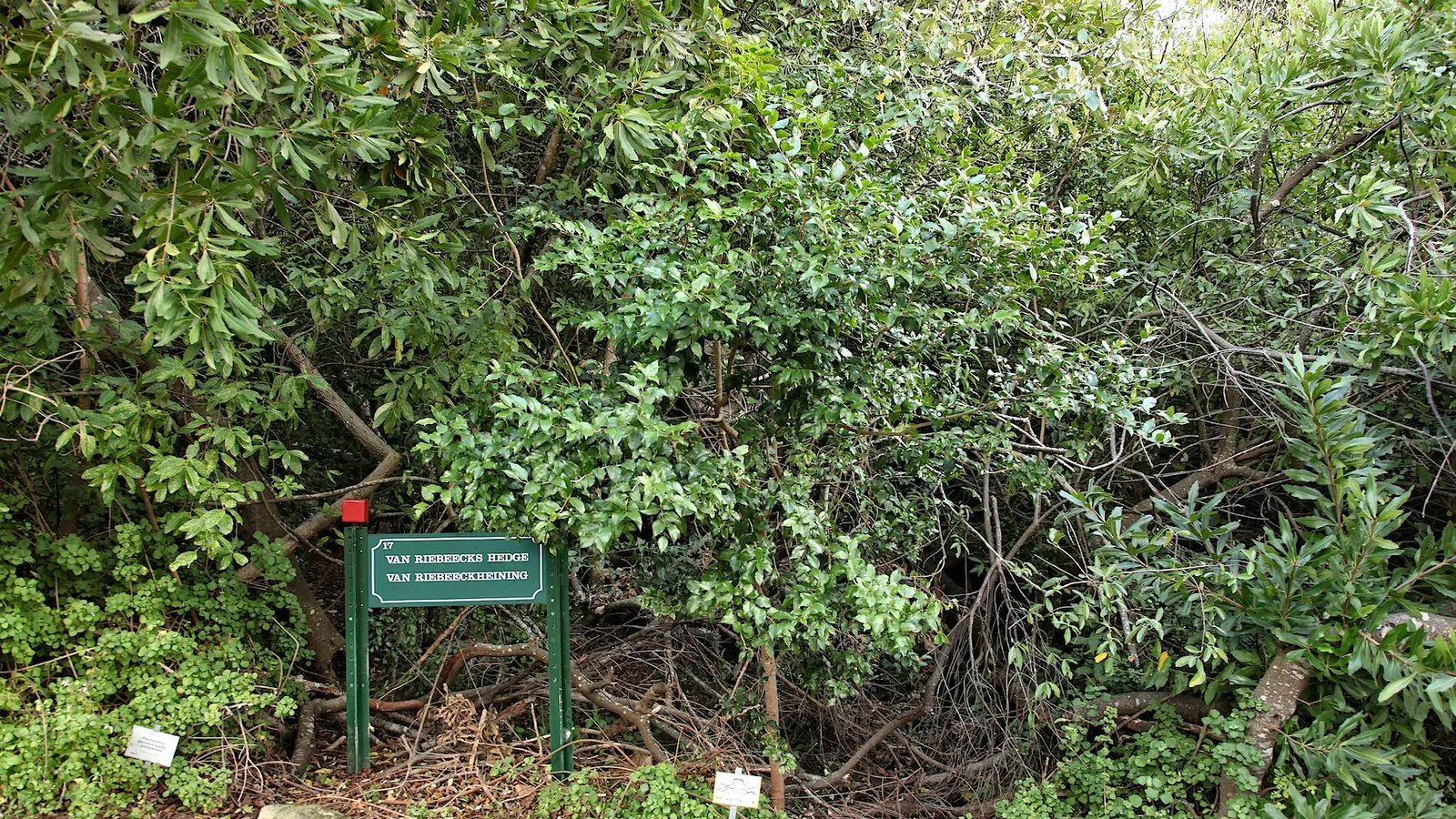

TL;DR — In April 1660 Khoekhoe leaders asked who should give way at the Cape; the Dutch East India Company said war had won the land, then planted a hedge.
On April 5 and 6, 1660, Khoekhoe leaders at the Company fort on Table Bay asked who should give way, “den rechten eygenaer off den vremden innemer” (the rightful owner or the foreign occupier). Jan van Riebeeck, commander of the Dutch East India Company (VOC) post, entered the question in his Daghregister, the station’s daily journal, together with the Company’s answer: the land had been won “door diffenciven oorlogh” (through defensive war) and would be kept. The same entry records that the leaders asked leave to gather wild bitter almonds and were refused, partly because the Company needed the almonds that year for a planned hedge. The South African National Biodiversity Institute (SANBI) dates that hedge to 1660.
Quick facts
- When
- April 6, 1652 (anchorage in Table Bay) · April 9, 1652 (fort staked out) · 1659 (fence with watchtowers begun) · April 5 and 6, 1660 (peace made in the fort) · April 27, 1660 (Gorachouqua envoys told to pass only through the barriers) · 1660 (wild-almond hedge planted) · 1662 (Van Riebeeck leaves for Batavia)
- Where
- Table Bay, at the foot of Table Mountain, in what is now Cape Town, South Africa; the Liesbeeck River and Kirstenbosch
- Who
- Jan Anthonisz van Riebeeck, commander for the Dutch East India Company; Herry, named in the journal as captain and chief of the Caepmans; Gogosöa; Choro, chief of the Gorachouqua; the interpreter Eva (Krotoa)
- Outcome
- The Caepmans' leaders argued for their natural ownership of the grazing land; the Company answered that the land had been won in a defensive war and would be kept, refused them the wild almonds, and planted those almonds as a boundary hedge in 1660
April 6, 1652: anchored before the fresh river
The Nationaal Archief records that Van Riebeeck landed at the Cape on April 6, 1652, sent to found a “verversingsstation” (refreshment station) at the foot of Table Mountain for VOC ships sailing to and from Asia. He brought 82 men and eight women, among them his wife.
His journal for that day records that a sloop sent ahead with the bookkeeper Adam Hulster found no ships in Table Bay. Just after sunset his ship, the Drommedaris, and the yacht De Goede Hope anchored in front of the fresh river on a sandy bottom in five fathoms.
On April 7 a cask of letters left by the last return fleet, dated February 25, told the ships expected at the Cape to land their horses and leave them with a local man “die Engelss spreeckt” (who speaks English). That evening two men came aboard, one with some English. By broken English words and signs, the journal records, they said they were only fishermen, and that cattle were always brought by “die van Saldania” (those of Saldania). The 1952 edition of the journal, edited by D. B. Bosman and H. B. Thom, identifies the English speaker as Autshumao, leader of the Goringhaicona, soon known to the Dutch as Harry or Herry. The same editors identify the Saldania people as the Goringhaiqua, whom the journal also calls Caepman.
Fort de Goede Hoop, a garden and a truce
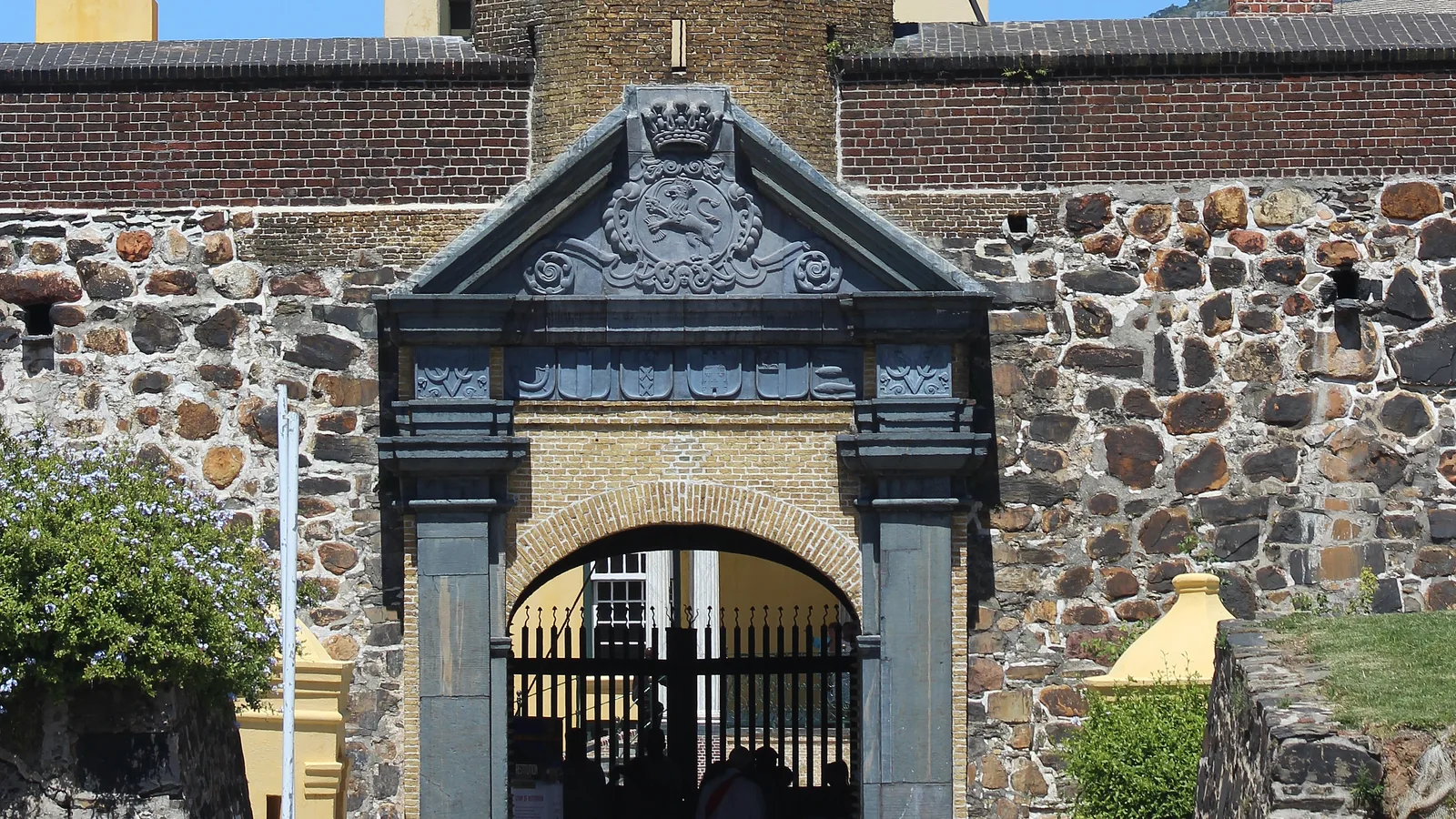
On April 8 the council chose a site close to the principal fresh river and sent 100 men ashore to work. On April 9 Van Riebeeck staked out the fort. The artefacts.co.za heritage database, citing the Standard Encyclopaedia of South Africa, describes four ramparts forming a square, a front addition of nearly 24 meters for a hospital and workshops, and a rear extension of about 52 meters for livestock. The earth fort was demolished when the stone Casteel de Goede Hoop was begun in 1666; Iziko Museums of South Africa dates the Castle of Good Hope to 1666 to 1679.
On April 10 a group of nine or ten men from Saldania arrived. The Strandlopers, who sat daily by the Dutch tents, ran at them with assegais and bows. The skipper Jan Jansz. Hooghsaet brokered a truce, and the Saldania men made signs that they would bring cattle and sheep for copper and tobacco. By April 29 the gardener brought out from the Netherlands had sown a few plots as a trial.
.jpg)
Peace in the fort, April 5 and 6, 1660
The settlement lay in the path of Khoekhoe grazing routes, SANBI states, and open conflict broke out during 1659 and 1660. In 1659 the Company began a wooden fence with watchtowers from the mouth of the Salt River through Rondebosch to Kirstenbosch, using the deeper parts of the Liesbeeck River as part of the line.
The journal entry for April 5 and 6, 1660, records that peace was made again in the fort with “den capiteyn ende overste van de Caepmans, Herry” (the captain and chief of the Caepmans, Herry) and all the principal and eldest men. Both sides promised not to harm each other; of the cattle taken in the raids, none was left to return. The leaders pressed the point that the Dutch had taken more and more of a land that had been theirs “van alle eeuwen” (for all ages), and asked whether they would be allowed to do the same if they came to Holland.
The Company answered first that there was not grass enough for both peoples’ cattle. The leaders replied, in Van Riebeeck’s record, that the Dutch had many cattle and covered their pastures with them while saying “‘t landt is niet groot genoegh voor ons beyden” (the land is not big enough for both of us), and then asked: “Wie sal dan met ‘t beste recht wijcken, den rechten eygenaer off den vremden innemer?” (Who then should give way with the better right, the rightful owner or the foreign occupier?) They held to “haer oude recht van natuyrlijck eygendom” (their old right of natural ownership).
In the end, the commander wrote, the word had to come out: they had lost the land in the war and must give it up. Because they would not return the cattle, their land had fallen to the Company, “door diffenciven oorlogh rechtvaerdigh als met ‘t swaert gewonnen” (rightfully won by defensive war, as by the sword), and the Company meant to keep it. The leaders complained in turn that colonists had taken a sheep or calf from them now and then, pulled beads and arm rings from their ears and arms and given them to their own slaves, and struck them. The commander was to show them the roads they might use and the limits they must stay beyond. Gogosöa, Herry and about 40 principal men received copper, beads and tobacco, food and drink.
Bitter almonds for a boundary
In the same entry the leaders asked at least to gather “de bitter-amandelen, daer in ‘t wilt veel wassende” (the bitter almonds that grow wild there in quantity) and to dig roots for winter food. The request was refused, the journal says, because the colonists could come to harm and because the Company needed the almonds that year to plant “de geprojecteerde lantweer ofte schuthegh” (the projected boundary or protective hedge), a reason not given to the Khoekhoe.
On April 27 three envoys of Choro, chief of the Gorachouqua, asked to be included in the renewed peace. The journal records the answer: yes, provided they used no passage other than straight through the barriers under the watch houses Kijck Uyt and Keert de Koe, which had been shown to the Caepmans. The next day the journal cites “de tolckinne Eva” (the interpreter Eva). A University of Cape Town research initiative identifies Krotoa, whom Van Riebeeck named Eva, as the niece of Autshumato and an interpreter for both sides.
To finish the barrier quickly, SANBI states, wild almond trees (Brabejum stellatifolium) and thorny shrubs were planted along the section between the river and Kirstenbosch. The institute’s own page states that “for many, this hedge marks the first step on the road to Apartheid.” Van Riebeeck left the Cape in 1662 on his promotion to the Council of Justice in Batavia; the wild almonds planted in 1660 remain at Kirstenbosch.
Key facts
- On April 6, 1652, Van Riebeeck arrived at Table Bay with 82 men and eight women to found a refreshment station for VOC ships (Nationaal Archief).
- On April 9, 1652, he staked out the fort; it was demolished when the stone castle was begun in 1666 (Daghregister, Deel 1; artefacts.co.za).
- Open conflict between the settlement and Khoekhoe herders broke out during 1659 and 1660, and a fence with watchtowers was begun in 1659 (SANBI).
- On April 5 and 6, 1660, the Caepmans’ leaders asked who should give way, “den rechten eygenaer off den vremden innemer” (Daghregister, Deel 3).
- The Company answered that the land had been won through defensive war and refused the leaders the wild bitter almonds, which it meant to plant as a hedge (Daghregister, Deel 3).
- The wild-almond hedge was planted in 1660, and a remnant survives at Kirstenbosch (SANBI).
FAQ
Who asked "den rechten eygenaer off den vremden innemer"?
Van Riebeeck's journal gives the words to the Caepmans' leaders at the peace talks of April 5 and 6, 1660, held with their captain Herry and the principal and eldest men. The entry records them as a group answer.
What is Van Riebeeck's Hedge?
A line of wild almond trees (Brabejum stellatifolium) and thorny shrubs planted in 1660 along the eastern boundary of the Dutch settlement at the Cape, between the Liesbeeck River and Kirstenbosch. SANBI states that the barrier was also meant to stop Khoekhoe raids on the settlement's livestock.
When did the Dutch arrive at the Cape?
Jan van Riebeeck's ships anchored in Table Bay on April 6, 1652. The Nationaal Archief gives the same date for his landing.
Sources
- Jan van Riebeeck, Daghregister, Deel 3, 1659–1662, ed. D. B. Bosman and H. B. Thom (1957): "April anno 1660" (entries of April 5 and 6, 27 and 28, 1660), Digitale Bibliotheek voor de Nederlandse Letteren (DBNL).
- Jan van Riebeeck, Daghregister, Deel 1, 1651–1655, ed. D. B. Bosman and H. B. Thom (1952): "Aprilis anno 1652" (entries of April 6 to 29, 1652, with editorial notes), DBNL.
- Nationaal Archief, Bronnenbox: "Nederlands fort op Kaap de Goede Hoop (1652)".
- South African National Biodiversity Institute (SANBI), "Kirstenbosch NBG: Van Riebeeck's Hedge".
- artefacts.co.za, "Fort de Goede Hoop details" (extracted from the Standard Encyclopaedia of South Africa, vol. 4, 1971).
- Iziko Museums of South Africa, "The Castle of Good Hope".
- University of Cape Town, Archive and Public Culture Research Initiative, "Love in the time of imperialism: Krotoa 'Eva' van Meerhof".
Cite this article
- APA
- LETTER. (2026, September 28). 'Den rechten eygenaer off den vremden innemer': the Cape, 1652–1660. Our Earth's History. https://ourearthshistory.com/africa/early-modern/van-riebeeck-cape-1652-1660-rechten-eygenaer-almond-hedge/
- Chicago
- LETTER. “'Den rechten eygenaer off den vremden innemer': the Cape, 1652–1660.” Our Earth's History, September 28, 2026. https://ourearthshistory.com/africa/early-modern/van-riebeeck-cape-1652-1660-rechten-eygenaer-almond-hedge/.
- MLA
- LETTER. “'Den rechten eygenaer off den vremden innemer': the Cape, 1652–1660.” Our Earth's History, 28 Sep. 2026, https://ourearthshistory.com/africa/early-modern/van-riebeeck-cape-1652-1660-rechten-eygenaer-almond-hedge/.
Text licensed CC BY-NC-ND 4.0. Found an error? Tell us.