An appeal on March 8, 1960: moving Abu Simbel 65 meters uphill
.jpg)
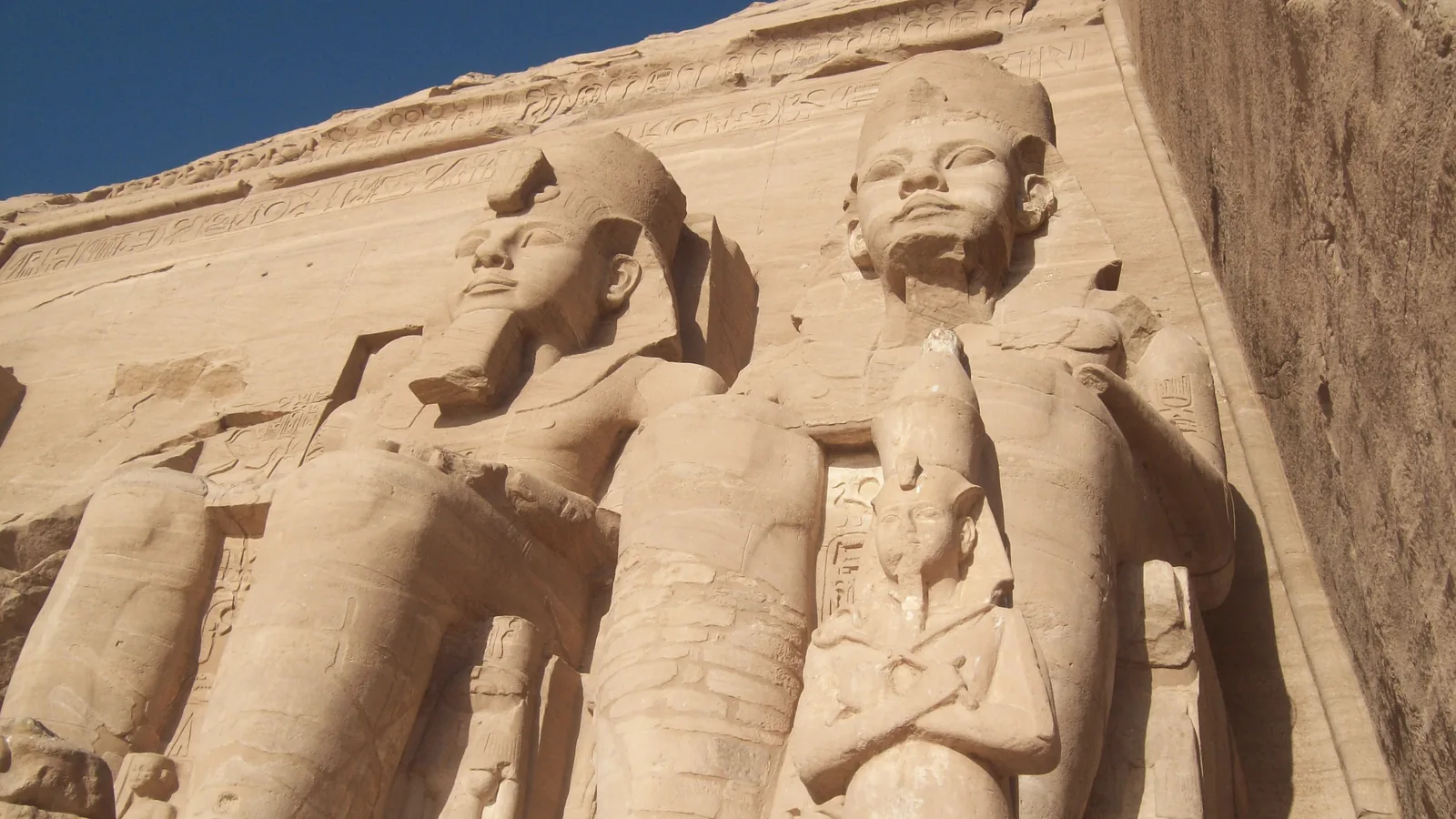
TL;DR — On March 8, 1960, UNESCO’s director-general appealed for funds to save Nubia’s monuments from the Aswan High Dam’s reservoir. Abu Simbel’s temples rose 65 meters by September 1968.
“In 1959, this cultural heritage was threatened with submersion by the waters of the artificial lake,” UNESCO’s 2020 commemorative brochure states, a lake the brochure says “would eventually be created by the building of the Aswan High Dam.” Egypt and Sudan had asked UNESCO for help independently of each other that year, and after construction on the dam formally began in January 1960, the director-general “launched on 8 March 1960 a solemn appeal to governments, institutions, public and private foundations and all persons of goodwill.” At the launch ceremony in Paris that day, André Malraux, France’s minister of state for cultural affairs, gave the official address, according to UNESCO’s own campaign page.
Quick facts
- When
- January 1960 (Aswan High Dam construction begins) · March 8, 1960 (UNESCO appeal) · June 1963 (cut-and-transfer method chosen) · April 1964 (Abu Simbel work begins) · September 22, 1968 (Abu Simbel work ends) · March 10, 1980 (campaign closes)
- Where
- Abu Simbel and Aswan, Egypt; Khartoum, Sudan; Paris, France
- Who
- UNESCO's director-general; André Malraux, French minister of state for cultural affairs; the Egyptian and Sudanese governments; Atlas Copco; Salini Impregilo (now Webuild)
- Outcome
- The two Abu Simbel temples were cut into more than 1,000 blocks and reassembled 65 meters higher and set back from the river; Egypt later gave four smaller temples to Spain, the Netherlands, the United States and Italy in thanks for their part in the campaign, which closed on March 10, 1980
March 8, 1960: an appeal and a ceremony
The brochure sets the appeal’s scale at the top of its cover page: over 20 years, 50 countries contributed, at a cost of 80 million dollars, to the rescue and relocation of 22 monuments. It separates the two figures that are often blurred together: “The amount raised by the Campaign was USD 40 million and the total cost was USD 80 million,” the difference covering work the Egyptian and Sudanese governments funded themselves. Seven countries gave technical assistance and 50 contributed money, the brochure states, listing donors from Afghanistan to Yugoslavia. The 1961 UNESCO Courier article “Abu Simbel: now or never” gives an earlier, higher estimate from the campaign’s first year: total Nubian rescue operations at 87 million dollars, with Abu Simbel alone put at 70 million. The same 1961 article describes the plan then under discussion, before the final method was chosen: the temples “sliced from the mountainside . . . encased in concrete boxes, and raised by giant jacks over two hundred feet.”
June 1963: cutting replaces jacking
Egypt chose a different method. UNESCO’s brochure records that in June 1963 the “Egyptian Government chooses the project to cut and transfer the two temples of Abu Simbel,” and that November the Executive Committee of the campaign met donor states in Cairo to sign the agreement for that work. Work began in April 1964 and ended on September 22, 1968, “the same date,” the brochure notes, “as the end of construction of the Aswan High Dam.”
1,000 blocks and two distances
Salini Impregilo, the project’s main contractor and now called Webuild, states on its own company history page that the temples were cut into “more than 1,000 blocks,” ceiling blocks weighing no more than 20 tonnes and facade blocks no more than 30, and rebuilt 65 meters higher and 280 meters inland. Dismantling ran from spring 1964 to April 1966, and reconstruction from January 1966 to September 1968, the company states, at a cost of about 40 million 1960s dollars and 40 million hours of labor, with stonecutters brought from Carrara, Italy, among a workforce of more than 2,000. Atlas Copco, which supplied pneumatic drills and compressors for the job, gives the same 65-meter rise but a different inland distance, 200 meters, on its Egypt history page, and adds that the temples had originally been carved as much as 60 meters into the cliff. Atlas Copco states the blocks were reassembled to a tolerance of plus or minus 5 millimeters, that 30,000 cubic meters of rock were cut from the new site, and that 330,000 cubic meters of rock were placed over the concrete domes built to support the reconstructed temples.
Other temples, other donors
UNESCO’s brochure records that Germany dismantled, transferred and rebuilt the temple of Kalabsha between 1961 and 1963. The Kalabsha structure Germany actually received was narrower than that entry suggests: Museumsinsel Berlin’s page on its Egyptian Museum states “the ancient Egyptian temple gate was presented to the Federal Republic of Germany as a gift by Egypt in 1971,” a gift the museum describes as gratitude “for Germany’s participation in the rescue of the Nubian temples threatened by the Aswan Dam.” The temple itself was rebuilt inside Egypt. Debod and Taffeh, along with the kiosk of Qertassi, were dismantled by the Egyptian Antiquities Service in the summer months of the campaign’s early years, the brochure states, while Dendur, Dakka and Maharraqa followed between 1962 and 1965 under the same service, with American funding covering Beit el-Wali, Wadi es-Sebua and the tomb of Penut at Aniba. Philae’s move came later: Egypt chose in the summer of 1968 to dismantle its temples and rebuild them on the neighboring island of Agilkia, work the brochure records as finished in August 1979.

Four temples, four countries
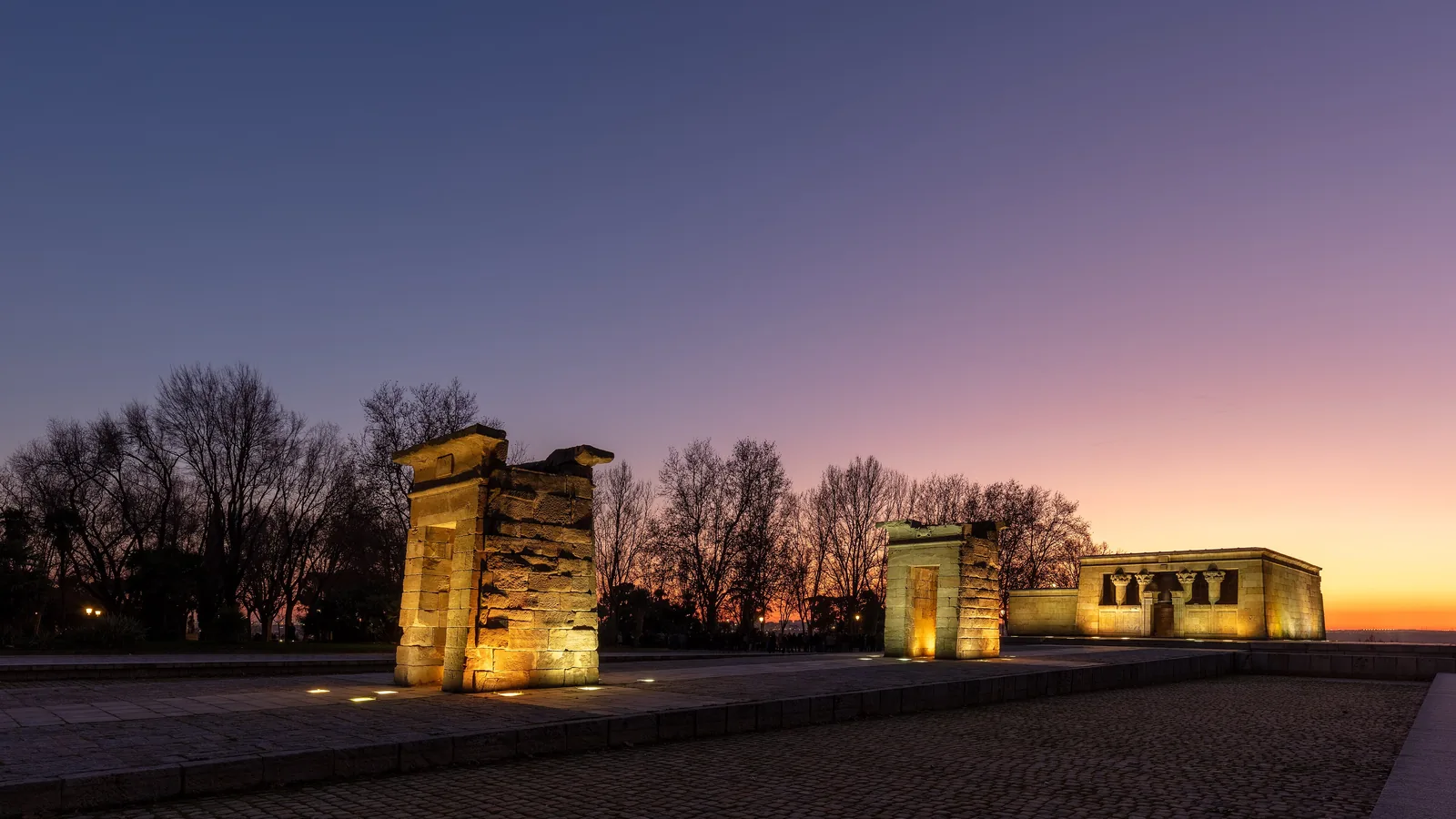
Egypt gave four temples “as tokens of its gratitude to countries which especially contributed to the success of the campaign,” the brochure states: Debod to Spain, Taffeh to the Netherlands, Dendur to the United States and Ellesyia to Italy. Madrid’s city government publishes the wording of the transfer itself: “El 30 de abril de 1968, el presidente de Egipto Gamal Abdel Nasser firmaba el decreto por el que se ofrecía ‘el templo de Debod al Estado Español y a su pueblo, en consideración a sus esfuerzos en la contribucion para el salvamento de los templos de Abu Simbel.’” The same page states that Spain had formally requested the temple in 1964, and that a UNESCO subcommittee meeting in Cairo adopted the decision in 1967, with UNESCO’s committee in Paris accepting it that June, before Nasser’s decree followed in April 1968. The Rijksmuseum van Oudheden in Leiden states that Taffeh “was a gift from the Egyptian authorities in gratitude for the Netherlands’ part in the campaign to save the Nubian monuments near Abu Simbel,” built under Augustus between 25 BC and AD 25, though the museum’s page does not give the year of the gift itself. Turin’s Museo Egizio states that the Egyptian government decided to give Ellesyia to Italy “come riconoscimento per la partecipazione del Paese alla vasta operazione di salvataggio,” and that the temple went on public display in Turin in the autumn of 1970.
Key facts
- UNESCO’s director-general launched the appeal to save Nubia’s monuments on March 8, 1960, in Paris, where André Malraux gave the official launch address (UNESCO campaign page).
- The campaign ran 20 years, drew 50 contributing countries and cost 80 million dollars in total, of which 40 million was raised through the campaign itself (UNESCO 2020 brochure).
- Egypt chose the cut-and-transfer method for Abu Simbel in June 1963; work ran from April 1964 to September 22, 1968 (UNESCO 2020 brochure).
- Webuild states the temples were cut into more than 1,000 blocks and moved 65 meters higher and 280 meters inland; Atlas Copco gives the same rise but 200 meters inland.
- Atlas Copco states reassembly held a tolerance of plus or minus 5 millimeters, with 330,000 cubic meters of rock placed over the new concrete domes.
- Kalabsha’s temple gate, not the whole temple, went to Germany in 1971, according to Museumsinsel Berlin.
- Spain received Debod by a decree Gamal Abdel Nasser signed on April 30, 1968, after Spain’s 1964 request and a 1967 UNESCO approval, per Madrid’s city government.
- Ellesyia went on public display in Turin in the autumn of 1970, according to the Museo Egizio.
FAQ
When was the UNESCO appeal to save Abu Simbel launched?
On March 8, 1960, in Paris. UNESCO's director-general issued the appeal, and André Malraux, France's minister of state for cultural affairs, delivered the official address at the launch ceremony, according to UNESCO's own campaign page.
How high were the Abu Simbel temples moved?
65 meters higher than their original position, according to both Atlas Copco and Webuild, the two companies that worked on the project. The two firms disagree on how far inland the temples moved, giving 200 meters and 280 meters.
Which countries received Nubian temples as gifts from Egypt?
Spain received Debod, the Netherlands received Taffeh, the United States received Dendur and Italy received Ellesyia, UNESCO's 2020 brochure states, as thanks to countries that contributed to the rescue campaign.
Sources
- UNESCO, "International Campaign to Save the Monuments of Nubia" (commemorative brochure, 2020)
- UNESCO, campaign launch page on the appeal of March 8, 1960
- The UNESCO Courier, "Abu Simbel: now or never" (October 1, 1961)
- Ayuntamiento de Madrid, "Templo de Debod - La donacion del templo de Debod a Espana"
- Museo Egizio, "Ellesiya 50 anni dopo: il salvataggio e il trasferimento del tempio a Torino"
- Rijksmuseum van Oudheden, "Temple of Taffeh"
- Museumsinsel Berlin, "Egyptian Museum and Papyrus Collection"
- Atlas Copco Egypt, "Abu Simbel - Unparalleled relocation project"
- Webuild, "Abu Simbel - How the temples were saved"
Cite this article
- APA
- Our Earth's History. (2026, September 26). An appeal on March 8, 1960: moving Abu Simbel 65 meters uphill. Our Earth's History. https://ourearthshistory.com/africa/contemporary/abu-simbel-1964-1968-nubia-campaign-aswan-high-dam-temples-moved/
- Chicago
- Our Earth's History. “An appeal on March 8, 1960: moving Abu Simbel 65 meters uphill.” Our Earth's History, September 26, 2026. https://ourearthshistory.com/africa/contemporary/abu-simbel-1964-1968-nubia-campaign-aswan-high-dam-temples-moved/.
- MLA
- “An appeal on March 8, 1960: moving Abu Simbel 65 meters uphill.” Our Earth's History, 26 Sep. 2026, https://ourearthshistory.com/africa/contemporary/abu-simbel-1964-1968-nubia-campaign-aswan-high-dam-temples-moved/.
Text licensed CC BY-NC-ND 4.0. Found an error? Tell us.