Article 17, two texts: the treaty clause behind Adwa, March 1, 1896
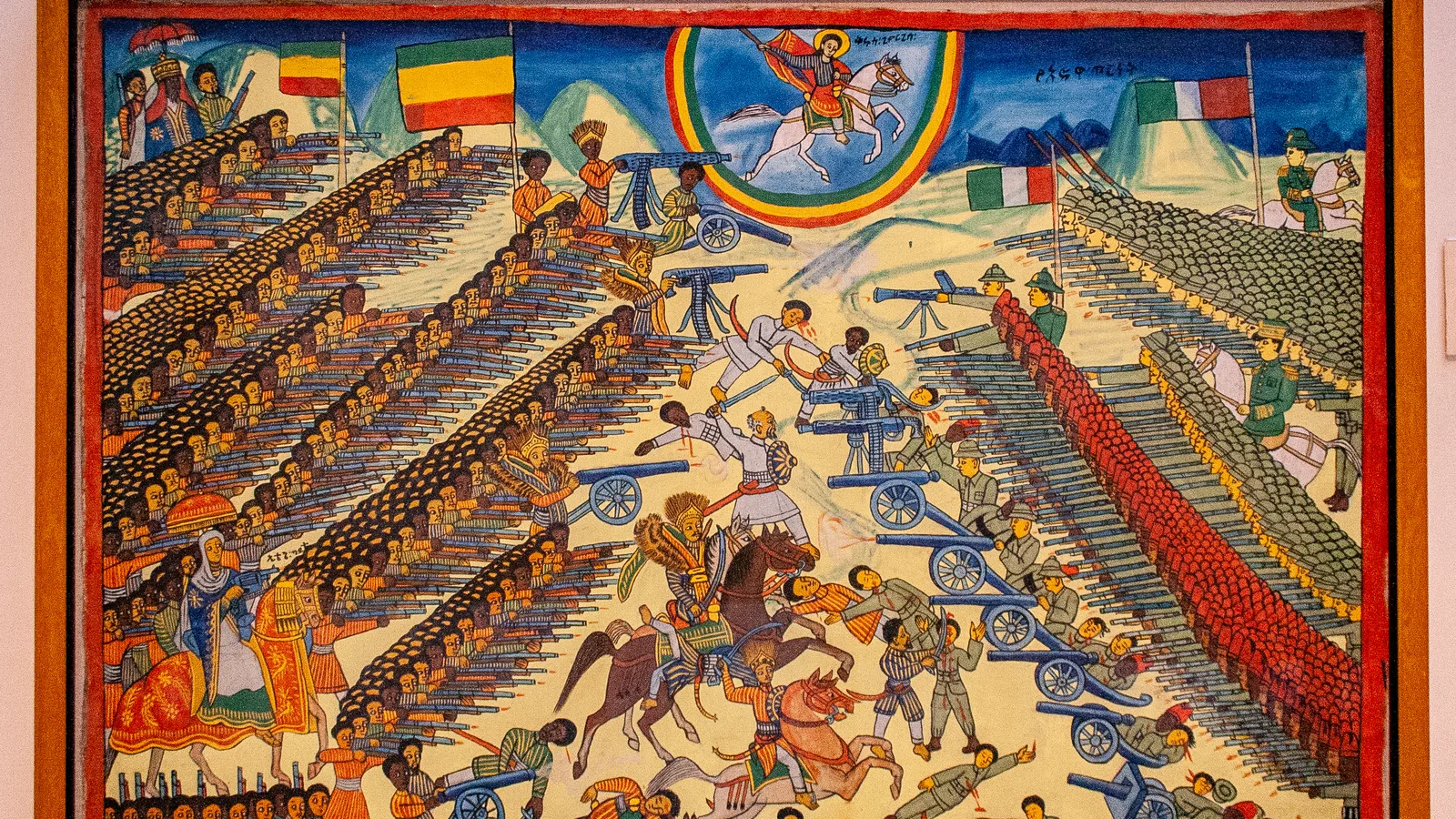

TL;DR — Article 17 of the Wuchale treaty says Menelik “consents” to use Italy in foreign business. Rome told the powers it would conduct it. Adwa, March 1, 1896, ended the claim.
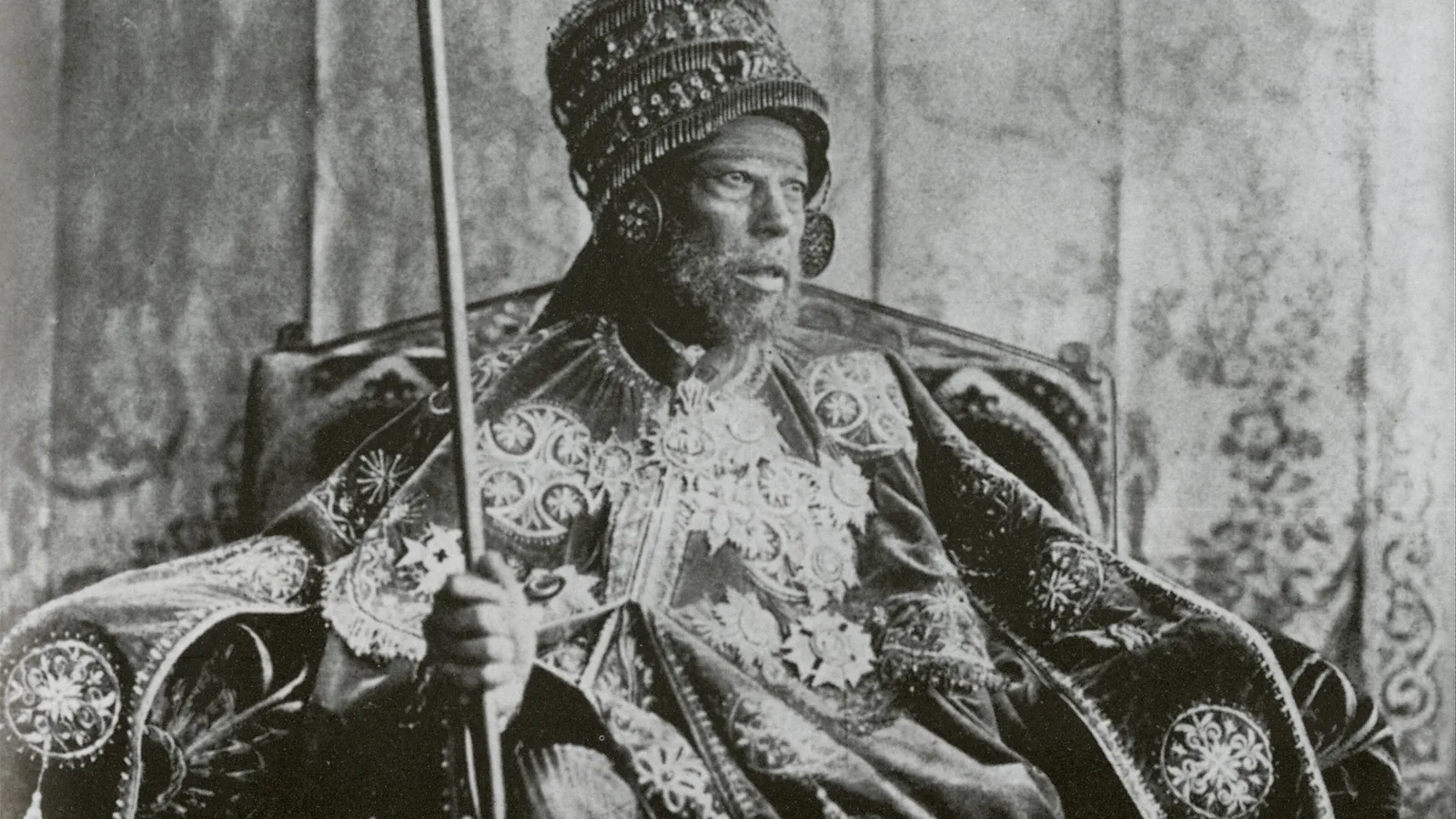
“Sua Maestà il Re dei Re d’Etiopia consente di servirsi del Governo di Sua Maestà il Re d’Italia per tutte le trattazioni di affari che avesse con altre potenze o governi.” That is Article 17 of the treaty signed in the camp at Wuchale on May 2, 1889, by Count Pietro Antonelli for King Umberto I and by Menelik II, King of Kings of Ethiopia. Literally: His Majesty the King of Kings of Ethiopia consents to make use of the Government of His Majesty the King of Italy for all the handling of affairs that he might have with other powers or governments. On October 12, 1889, T. Catalani wrote from London to Lord Salisbury that under this article Menelik “consents to avail himself of the Government of His Majesty the King of Italy for the conduct of all matters which he may have with other Powers or Governments,” and on Francesco Crispi’s instructions notified the stipulation under Article 34 of the Berlin General Act of 1885, the article on new possessions and protectorates. Seven years later, at Adwa in Tigre, Menelik’s army destroyed the force sent from Eritrea to make that reading hold.
Quick facts
- When
- May 2, 1889 (treaty signed at Wuchale) · October 12, 1889 (Italy's notification to Britain) · 1893 (Menelik's denunciation, by SAHO's dating) · December 1895 to January 1896 (Amba Alagi and the siege of Makalle) · night of February 29, 1896 (march from Entiscio) · March 1, 1896, 6 a.m. (battle opened) · October 26, 1896 (treaty of Addis Ababa)
- Where
- the camp at Wuchale (Uccialli); Grosvenor Square, London; Adwa and Mount Abba Garima in Tigre, northern Ethiopia; Entiscio and Raio on the Italian line of march; Asmara in Eritrea; Addis Ababa
- Who
- Menelik II, King of Kings of Ethiopia, and Empress Taytu; Count Pietro Antonelli, who signed for Italy; T. Catalani, who wrote the Italian notification from London; Francesco Crispi, Italian prime minister; General Oreste Baratieri and his brigade commanders Albertone, Arimondi, Dabormida and Ellena; Ras Makonnen, Ras Alula and Ras Mangesha; George Curzon in the Commons
- Outcome
- Italy's claim to conduct Ethiopia's foreign relations, notified to the powers in 1889, was defeated in the field on March 1, 1896; by the treaty of Addis Ababa of October 26, 1896, Italy renounced the protectorate and Menelik recognized Italian territory north of the Mareb, Belesa and Muna rivers; Crispi fell
Consente, and what Rome told London
Article 19 of the same treaty declared the Italian and Amharic versions in perfect agreement and both official. The verb in the Italian Article 17 is “consente,” consents; the clause contains no “must.” South African History Online (SAHO) describes the Amharic text as giving Ethiopia “the option to report to Italy when engaging with other European powers.” Catalani’s letter turned a consent into a notification, and Britain let it pass: on March 13, 1896, George Curzon, the under-secretary for foreign affairs, told the Commons that the treaty “was communicated to Her Majesty’s Government, and to which no objection was taken.”
Menelik tried diplomacy first, SAHO records, and “formally denounced the treaty in 1893.” Augustus Wylde, an Englishman who rode across the battlefield eight times after the war, dated the open quarrel to 1894, when Ras Mangesha of Tigre reported that the Italians “would not retire from Adowa until their version of the treaty of Ucciali had been accepted.”
Amba Alagi, Makalle and the camp at Entiscio
After the rains of 1895 the Italian force under General Oreste Baratieri occupied Adwa again, then Makalle, and pushed an outpost to Amba Alagi; by the end of the year, Wylde wrote, it held nearly the whole of Tigre. In December Ras Makonnen, Menelik’s nephew, defeated the Italians at Amba Alagi. The siege of Makalle began on December 8, 1895, and the fort capitulated in January 1896 “from starvation and thirst.” Menelik was already marching north with Empress Taytu; the Italians drew back to a line from Adigrat through Entiscio to Adi Quala.
Makonnen, who had signed the treaty’s additional convention with Crispi in Naples on October 1, 1889, then negotiated for the king with Baratieri. Before the talks ended, Wylde wrote, “the Italians very unwisely left their strong position round Entiscio on the last day of February to attack the Abyssinian position at Adowa.”
Three roads from Raio, before dawn on March 1
The Italian official statement, as Wylde printed it, gave Baratieri 14,519 rifles and 56 guns, not counting officers, camp followers or irregulars. By 11 p.m. on February 29 the army was on the road, 18 miles from Adwa. At Raio it split: General Albertone’s native brigade, about 4,000 rifles, took the southern road, General Dabormida’s 3,800 the northern, General Arimondi’s the center, while General Ellena’s 4,150 stayed at Raio in reserve.
The battle opened at six in the morning with an attack on Albertone’s position on the Semaiata ridge, opposite Mount Abba Garima; Menelik and Taytu watched from the old church of Edda Abba Garima. At 11 o’clock the remnant of the left wing surrendered to the king. Arimondi’s brigade, still in close formation at Raio, was attacked on front and flanks: “He fell at the head of his troops.” Dabormida fought toward Adi Abuna until Ras Alula, Ras Mikael and Ras Mangesha closed on him at five to one: “He fell towards the close of the day.” Wylde blamed the three-hour halt of Arimondi and the four-hour halt of the reserve. He put the Ethiopian side at not less than 120,000 fighting men, adding that no Ethiopian general could say how many took part. SAHO gives about 100,000 against 20,000.
The count on March 2, and a court at Asmara
The day after the battle, by Wylde’s count, Menelik held about 4,000 prisoners, Italian and native in equal numbers, some 65 cannon and about 11,000 rifles thrown away in the flight. Against that Wylde estimated the king’s own loss at 5,000 to 6,000 killed and about 8,000 badly wounded, a quarter of whom died. He gave no figure for the Italian dead.
Baratieri went before a Court of Inquiry at Asmara. Wylde wrote that everyone knew it “would end in a very unsatisfactory manner” and that its members, in Baratieri’s place, “would perhaps have done the same.” On March 19 Labouchere asked in the Commons whether the Italians were allies. Curzon answered: “There is no agreement of alliance between the two countries.” The next day he said the advance had been made “without previous communication with Her Majesty’s Government.”
Addis Ababa, October 26, 1896
Appletons’ Annual Cyclopaedia for 1900 records the end: on October 26, 1896, “through the mediation of Russia, a new treaty was signed at Adis Abeba, by which Italy renounced the protectorate over Abyssinia, and Menelek recognized as Italian territory all the country north of the Mareb, Balesa, and Muna rivers.” Italy came back across the same frontier in 1935, and the League of Nations did not stop it.
The same volume’s obituary of King Umberto states that “the disaster of Adowa in 1896 caused his final fall,” Crispi’s, and “compelled the abandonment of the Abyssinian enterprise.” The Italian text had said consents. The notification of October 12, 1889, had said conduct. The treaty of October 26, 1896, withdrew the notification’s claim; the Semaiata ridge had decided which word stood.

Key facts
- Article 17 of the Wuchale treaty, in the Italian text, reads “consente di servirsi del Governo di Sua Maestà il Re d’Italia”; Article 19 declared both texts official and in perfect agreement.
- The treaty was signed on May 2, 1889 (25 Miazia 1881), ratified by Umberto I on September 29, 1889, and put into force by decree of April 10, 1890, signed by Crispi.
- On October 12, 1889, Catalani notified Britain of Article 17 under Article 34 of the Berlin General Act; Curzon told the Commons on March 13, 1896, that no objection had been taken.
- SAHO dates Menelik’s formal denunciation of the treaty to 1893; Wylde dates the open dispute over its interpretation to 1894.
- The Italian official figure printed by Wylde: 14,519 rifles and 56 guns; Wylde’s estimate of the Ethiopian side: at least 120,000 fighting men; SAHO’s: about 100,000 against 20,000.
- The battle began at 6 a.m. on March 1, 1896; Albertone’s wing surrendered at 11; Arimondi and Dabormida were killed; Wylde counted about 4,000 prisoners and some 65 cannon taken.
- The treaty of Addis Ababa of October 26, 1896, signed through Russian mediation, ended Italy’s claim to a protectorate, and the defeat brought down Crispi (Appletons’ Annual Cyclopaedia).
FAQ
What did Article 17 of the Treaty of Wuchale actually say?
In the Italian text, that the King of Kings of Ethiopia "consents to make use of" the Italian government for all the affairs he might have with other powers. Italy's notification to Britain of October 12, 1889, restated this as the "conduct of all matters," and SAHO describes the Amharic text as giving Ethiopia only the option of doing so.
How large were the armies at Adwa?
The Italian official statement, as Wylde printed it, gave 14,519 rifles and 56 guns under Baratieri. Wylde estimated the Ethiopian side at not less than 120,000 fighting men, with at least 70,000 rifles on the field soon after the battle opened; SAHO gives about 100,000 Ethiopians against 20,000 Italians.
What happened to the treaty after the battle?
A new treaty signed at Addis Ababa on October 26, 1896, through Russian mediation, had Italy renounce the protectorate over Ethiopia while Menelik recognized Italian territory north of the Mareb, Belesa and Muna rivers. In Italy the defeat caused the fall of Prime Minister Francesco Crispi.
Sources
- Regno d'Italia — Trattato di amicizia e di commercio tra il Regno d'Italia e l'Impero d'Etiopia, signed at the camp of Uccialli, May 2, 1889 (25 Miazia 1881), with the royal decree of April 10, 1890; Italian text of all 20 articles, Wikisource (it).
- Sir Edward Hertslet, The Map of Africa by Treaty, 3rd ed., Vol. I (London, 1909): No. 13, Treaty of May 2, 1889, Article XVII; No. 14, Additional Convention, Naples, October 1, 1889; No. 15, Italian notification, Catalani to Salisbury, October 12, 1889. Internet Archive OCR text.
- Augustus B. Wylde, Modern Abyssinia (London, 1901), chapters on Abyssinian history, on Asmara after the campaign, and 'The Battle of Adowa' (strength table, order of march, casualties, the Court of Inquiry). Internet Archive OCR text.
- South African History Online — 'Remembering the Battle of Adwa' (April 7, 2021, updated July 5, 2024): the two texts of the treaty, the denunciation of 1893, and the army figures of about 100,000 and 20,000.
- UK Parliament, Historic Hansard — 'Arms for Abyssinia,' HC Deb March 13, 1896, vol 38 cc891-2 (Gibson Bowles, Curzon).
- UK Parliament, Historic Hansard — 'Great Britain and Italy,' HC Deb March 19, 1896, vol 38 cc1354-5 (Labouchere, Curzon, William Redmond).
- UK Parliament, Historic Hansard — 'Italy and Abyssinia,' HC Deb March 20, 1896, vol 38 c1470 (William Redmond, Curzon).
- Appletons' Annual Cyclopaedia and Register of Important Events of the Year 1900, Third Series, Vol. V (New York, 1901): 'Abyssinia' (the treaty of Adis Abeba, October 26, 1896) and 'Obituaries, Foreign: Humbert' (Crispi's fall). Internet Archive OCR text.
Cite this article
- APA
- Our Earth's History. (2026, September 22). Article 17, two texts: the treaty clause behind Adwa, March 1, 1896. Our Earth's History. https://ourearthshistory.com/africa/modern/adwa-1896-article-17-wuchale-treaty/
- Chicago
- Our Earth's History. “Article 17, two texts: the treaty clause behind Adwa, March 1, 1896.” Our Earth's History, September 22, 2026. https://ourearthshistory.com/africa/modern/adwa-1896-article-17-wuchale-treaty/.
- MLA
- “Article 17, two texts: the treaty clause behind Adwa, March 1, 1896.” Our Earth's History, 22 Sep. 2026, https://ourearthshistory.com/africa/modern/adwa-1896-article-17-wuchale-treaty/.
Text licensed CC BY-NC-ND 4.0. Found an error? Tell us.