'I yield to the superior force': Liliʻuokalani's protest of 1893
.jpg)
TL;DR — Liliʻuokalani yielded “to the superior force of the United States” on January 17, 1893; Cleveland called the landing an act of war, the Senate disagreed, and Congress apologized in 1993.
“I yield to the superior force of the United States of America,” Queen Liliʻuokalani wrote at Honolulu on January 17, 1893, in a protest addressed to Sanford B. Dole and the men who had proclaimed a Provisional Government that afternoon. She gave up her authority “under this protest and impelled by said forces,” and only “until such time as the Government of the United States shall, upon the facts being presented to it, undo the action of its representative, and reinstate me.” Dole signed for the paper without disputing a word of it. President Grover Cleveland quoted it to Congress that December; the Queen printed it in her 1898 memoir. Congress apologized for the overthrow in Public Law 103-150 of November 23, 1993.
Quick facts
- When
- January 14, 1893 (the Queen announces, then withdraws, a new constitution; the Committee of Safety forms) · January 16 (marines from the USS Boston land) · January 17 (Provisional Government proclaimed; the Queen signs her protest) · July 17, 1893 (Blount's report) · December 18, 1893 (Cleveland's message to Congress) · February 26, 1894 (Morgan's Senate report) · July 4, 1894 (Republic of Hawaii) · January 24, 1895 (abdication in ʻIolani Palace) · February 27, 1895 (sentence) · July 7, 1898 (Newlands Resolution) · November 23, 1993 (Public Law 103-150)
- Where
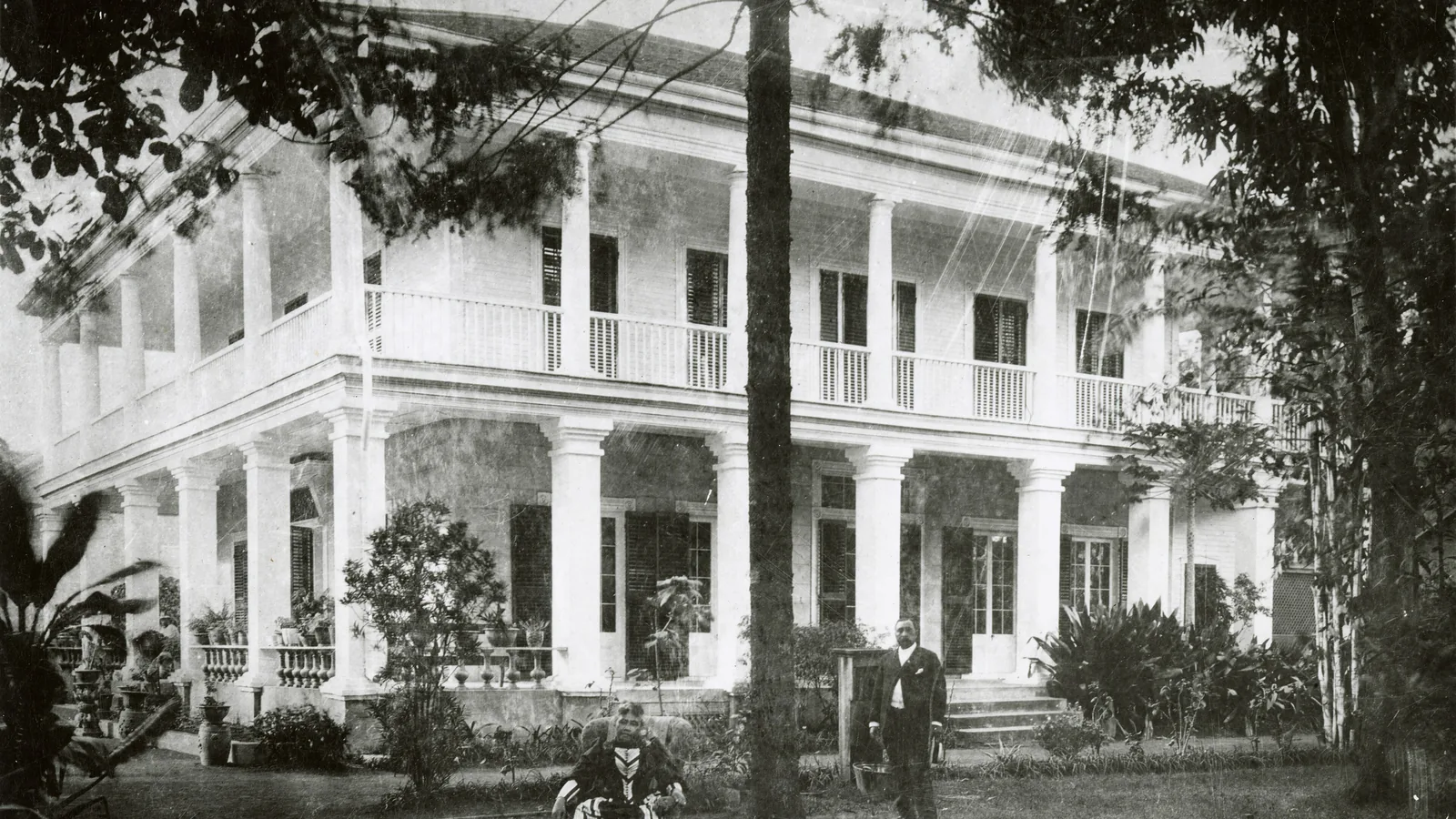
- Honolulu, on the island of Oʻahu, in what is now the state of Hawaiʻi; the Government building, Arion Hall across the street from it, ʻIolani Palace, and Washington Place on Beretania Street
- Who
- Queen Liliʻuokalani and her four ministers; Sanford B. Dole and the 13-member Committee of Safety; John L. Stevens, the United States minister; S. M. Damon; James H. Blount; President Grover Cleveland; Senator John T. Morgan; President William McKinley
- Outcome
- The Queen yielded her authority under a written protest that Dole received without dispute; a presidential inquiry found the American minister and the annexationists had acted together, a Senate committee found no irregularity, the islands were annexed by joint resolution in 1898, and Congress apologized for the overthrow in 1993
January 14 to 17, 1893: four days in Honolulu
On Saturday, January 14, 1893, the Queen announced a new constitution and, on the opposition of her ministers, withdrew it the same day. Late that afternoon 13 men in Honolulu named themselves a Committee of Safety. By Monday, January 16, they had resolved on a Provisional Government “to exist until terms of union with the United States of America have been negotiated and agreed upon,” and had asked the United States minister, John L. Stevens, for the protection of American troops. Between four and five o’clock that afternoon, Cleveland’s message states, a detachment of marines from the USS Boston landed with two pieces of artillery, “upwards of 160 in all,” and was quartered in Arion Hall, across a narrow street from the Government building.
The report of James H. Blount, Cleveland’s special commissioner, set down what faced them: about 50 of the Queen’s troops at ʻIolani Palace, 400 yards to the north, and 272 more at the barracks, with 14 pieces of artillery, 386 rifles and 16 revolvers. On the afternoon of Tuesday, January 17, members of the committee walked into the unguarded Government building and read a proclamation declaring the monarchy overthrown. No audience was there; 40 or 50 men, “some of them indifferently armed,” came in while it was read. Stevens recognized the new government the same afternoon. At the palace S. M. Damon, a banker who became vice president of the new government, told the Queen that she could surrender under protest and be heard in Washington. After more than an hour with her cabinet she agreed and signed the protest with her four ministers.
What Dole signed for
Dole wrote on the paper “Received from the hands of the late cabinet this 17th day of January, 1893,” and, Cleveland wrote, did so “without challenging the truth of any of its assertions.” Stevens’s dispatch of January 18 told it differently: the committee had taken the buildings, archives and treasury, and “this being an accomplished fact, I promptly recognized the Provisional Government as the de facto government.” An annexation treaty went to the Senate on February 15. Cleveland withdrew it and on March 11 sent Blount, a Georgian who had chaired the House Committee on Foreign Affairs, to Honolulu; Stevens’s account, he later wrote, was contradicted by Blount’s evidence and by Stevens’s own admissions.
Blount, Cleveland and the Senate, 1893 to 1894
Blount’s report is dated Honolulu, July 17, 1893. “Had the troops not been landed,” he concluded, “no measures for the organization of a new Government would have been taken.” He wrote that “the American minister and the revolutionary leaders had determined on annexation to the United States, and had agreed on the part each was to act to the very end.”
Cleveland’s message of December 18, 1893, adopted them. The landing, he wrote, “was of itself an act of war” unless made with Hawaiian consent or to protect American lives and property, and he found neither. “By an act of war, committed with the participation of a diplomatic representative of the United States and without authority of Congress, the Government of a feeble but friendly and confiding people has been overthrown. A substantial wrong has thus been done.” He would not resubmit the treaty, and he left the rest “to the extended powers and wide discretion of the Congress.”
Senator John T. Morgan’s Foreign Relations Committee report of February 26, 1894, read the landing the other way: since it “was not opposed by any objection, protest, or resistance the state of war did not supervene, and there was no irregularity or want of authority to place the troops on shore.” Four members of the committee filed minority views calling Stevens’s conduct “seriously reprehensible and deserving of public censure.”
Trial in the throne room, 1895
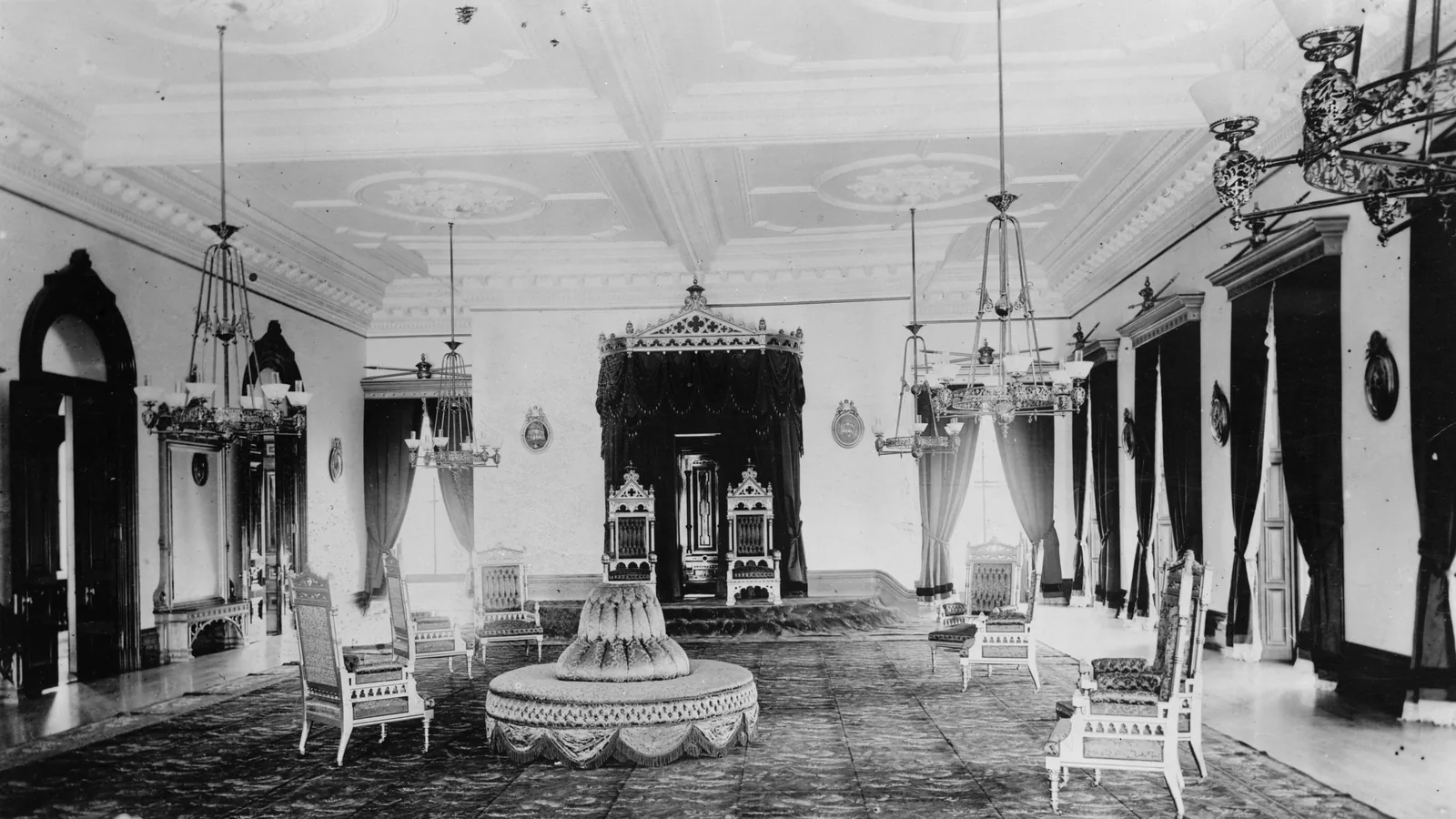
The Provisional Government declared itself the Republic of Hawaii on July 4, 1894. An armed attempt to restore the monarchy began on January 6, 1895, and failed. On January 16 Deputy Marshal Arthur Brown came up the walk of Washington Place with a warrant, and she was taken to ʻIolani Palace and held there. On January 24 she signed an abdication, which she wrote in 1898 was demanded of her. Her trial opened on February 8 in the former throne room before a military commission under W. A. Whiting, once her own attorney general, on a charge of misprision of treason. On February 27 she was sentenced to a fine of $5,000 and five years at hard labor. “I need not add that it was never executed,” she wrote.
On July 7, 1898, President William McKinley signed House Joint Resolution 259, the Newlands Resolution, which annexed the islands by simple majorities of both houses rather than the two-thirds Senate vote a treaty needed. On December 19, 1898, Liliʻuokalani wrote to the House of Representatives protesting the United States’ claim of ownership over Hawaiʻi.

Public Law 103-150, November 23, 1993
Senate Joint Resolution 19, approved 100 years after the protest, restates the events in whereas-clauses: Blount’s investigation “concluded that the United States diplomatic and military representatives had abused their authority,” and the Republic ceded 1,800,000 acres of crown, government and public lands “without the consent of or compensation to the Native Hawaiian people.” Another reads: “Whereas the indigenous Hawaiian people never directly relinquished their claims to their inherent sovereignty as a people or over their national lands to the United States, either through their monarchy or through a plebiscite or referendum.” The resolution then “apologizes to Native Hawaiians on behalf of the people of the United States for the overthrow of the Kingdom of Hawaii on January 17, 1893 with the participation of agents and citizens of the United States.” Its third section states that it is not “a settlement of any claims against the United States.” The Queen’s protest had asked the United States to “undo the action of its representative.” The 1993 law names the action, apologizes for it, and settles no claim.
Key facts
- The Committee of Safety, 13 men, formed in Honolulu late on January 14, 1893, the day the Queen announced and then withdrew a new constitution (Cleveland’s message, October 18, 1893 report).
- Marines from the USS Boston, “upwards of 160 in all,” landed with two pieces of artillery between four and five o’clock on January 16, 1893, and were quartered in Arion Hall (Cleveland’s message).
- The Queen’s forces on January 17 were about 50 troops at the palace and 272 at the barracks, with 14 pieces of artillery, 386 rifles and 16 revolvers (Blount Report).
- Liliʻuokalani signed her protest on January 17, 1893, with her four ministers; Dole endorsed it “Received from the hands of the late cabinet” (Cleveland’s message; memoir, Appendix B).
- Blount’s report of July 17, 1893, found that the American minister and the annexationists “had agreed on the part each was to act to the very end”; Morgan’s Senate report of February 26, 1894, found “no irregularity or want of authority to place the troops on shore.”
- The Queen was arrested on January 16, 1895, signed an abdication on January 24, was tried from February 8, and was sentenced on February 27 to a $5,000 fine and five years at hard labor, never carried out (memoir).
- Public Law 103-150, approved November 23, 1993, apologizes for the overthrow “with the participation of agents and citizens of the United States” and states that it settles no claims.
FAQ
What did Liliʻuokalani's protest of January 17, 1893 say?
That she yielded "to the superior force of the United States of America," whose minister had landed troops at Honolulu and declared he would support the Provisional Government, and that she did so only until the United States, "upon the facts being presented to it," should undo its representative's action and reinstate her.
How many United States troops landed in Honolulu in January 1893?
Cleveland's message to Congress puts the detachment from the USS Boston at "upwards of 160 in all," with two pieces of artillery, landed between four and five o'clock on the afternoon of January 16, 1893.
Did the United States government ever admit the overthrow was wrong?
Twice. President Cleveland told Congress on December 18, 1893, that "a substantial wrong has thus been done." Public Law 103-150 of November 23, 1993, apologizes to Native Hawaiians for the overthrow "with the participation of agents and citizens of the United States," while stating that it is not a settlement of any claims.
Sources
- Liliuokalani, Hawaii's Story by Hawaii's Queen (Boston: Lee and Shepard, 1898), full text at the Internet Archive; chapters XL, XLIII, XLV and XLVI and Appendix B (the protest of January 17, 1893).
- U.S. Department of State, Office of the Historian — Foreign Relations of the United States, 1894, Appendix II, House Ex. Doc. No. 47, 53rd Congress, 2nd session: President Cleveland's message of December 18, 1893, with the Secretary of State's report of October 18, 1893.
- U.S. Department of State, Office of the Historian — Foreign Relations of the United States, 1894, Appendix II, Document 265: Mr. Blount to Mr. Gresham, Honolulu, July 17, 1893 (the Blount Report).
- U.S. Senate, Committee on Foreign Relations — Report from the Committee on Foreign Relations and Appendix in Relation to the Hawaiian Islands, Senate Report No. 227, 53rd Congress, 2nd session, submitted by Mr. Morgan, February 26, 1894 (the Morgan Report), full text at the Internet Archive.
- GovInfo — Public Law 103-150, 107 Stat. 1510, S.J. Res. 19, Joint Resolution to acknowledge the 100th anniversary of the January 17, 1893 overthrow of the Kingdom of Hawaii (approved November 23, 1993).
- National Archives, Milestone Documents — Joint Resolution to Provide for Annexing the Hawaiian Islands to the United States (1898), Record Group 11.
- National Archives, Center for Legislative Archives — Hawaii Statehood, August 21, 1959, featured congressional documents, including the letter from Liliuokalani to the House of Representatives of December 19, 1898.
Cite this article
- APA
- Our Earth's History. (2026, September 22). 'I yield to the superior force': Liliʻuokalani's protest of 1893. Our Earth's History. https://ourearthshistory.com/oceania/modern/liliuokalani-protest-1893-hawaii-overthrow/
- Chicago
- Our Earth's History. “'I yield to the superior force': Liliʻuokalani's protest of 1893.” Our Earth's History, September 22, 2026. https://ourearthshistory.com/oceania/modern/liliuokalani-protest-1893-hawaii-overthrow/.
- MLA
- “'I yield to the superior force': Liliʻuokalani's protest of 1893.” Our Earth's History, 22 Sep. 2026, https://ourearthshistory.com/oceania/modern/liliuokalani-protest-1893-hawaii-overthrow/.
Text licensed CC BY-NC-ND 4.0. Found an error? Tell us.