Botany Bay, April 1770: what Cook and Banks wrote about the Gweagal spears

TL;DR — At Botany Bay in April 1770, Cook’s men fired on two Gweagal men and took spears from a hut. Banks counted forty or fifty; Cambridge holds four and has lent three for display in Australia.
Cook’s log for the ship’s “Sunday, 29th” records the anchoring at Botany Bay in the afternoon. His editor, W. J. L. Wharton, printed the log in 1893 “without any alteration or elision,” and explained in a preface why that date needs unpacking: ships of the period kept “Ship time,” in which the day began at noon before the civil reckoning, so an event logged in the afternoon of the “29th” falls, on the ordinary calendar, in the afternoon of April 28. Joseph Banks, sailing on the same ship, headed his own entry “1770 April 28. Botany Bay reached.” That is also the date the Cambridge Museum of Archaeology and Anthropology (MAA) gives today. What follows states each later date as its own journal recorded it.
Quick facts
- When
- April 28-29, 1770 (landing and first encounter); May 1 (Forby Sutherland's burial); May 5-6 (stingray catches); May 6-7 (departure)
- Where
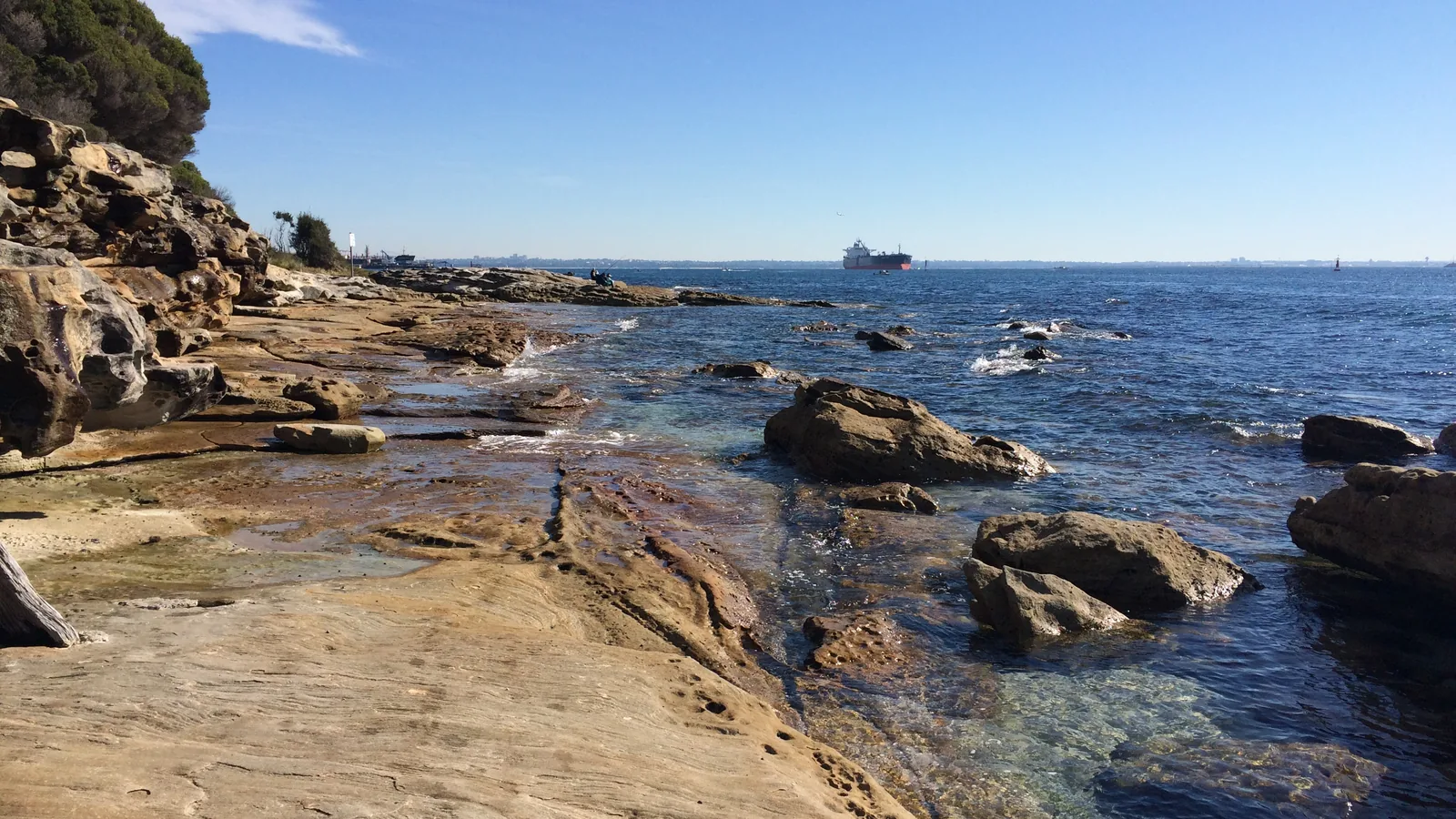
- Kamay, called Botany Bay, on the coast south of present-day Sydney
- Who
- Lieutenant James Cook, Joseph Banks, Daniel Solander, Tupaia, two Gweagal men, and children left in a bark hut
- Outcome
- Cook's men fired three muskets, took away spears left near the huts, and named the bay for Banks and Solander's plant collection; four of the spears now belong to the Museum of Archaeology and Anthropology in Cambridge
Cook's landing and a shield called a "Target"
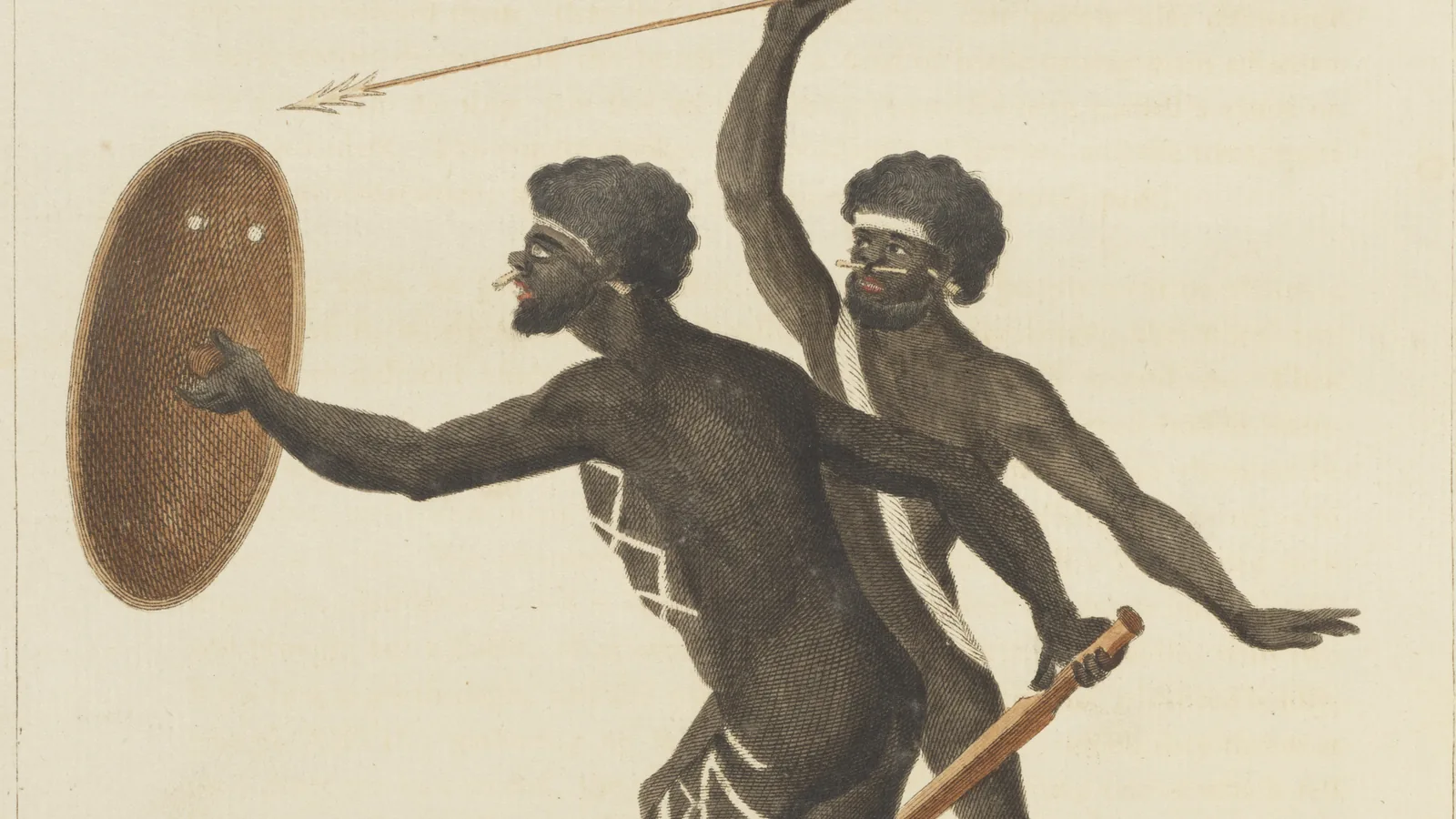
Men, women and children stood on shore as the boats approached; most ran, “except 2 Men, who seem’d resolved to oppose our landing,” Cook wrote. Nails and beads were offered and refused. Banks described the pair as “each armd with a lance of about 10 feet long and a short stick which he seemd to handle as if it was a machine to throw the lance,” shouting in a language Tupaia could not follow.
Cook fired a musket between the two men; a stone was thrown back, and a second musket loaded with small shot struck one man, who then “took up” what Cook called a “Target.” Banks named the same object a “sheild”: the older man, hit in the leg by that second shot, “minded it very little” until a third shot sent him running about a hundred yards to a house, from which he returned carrying it. Later in the voyage, summing up the people of New Holland, Banks described the object again: bark, “about 3 feet long and 1½ broad,” pierced through “with a single pointed lance near the center.”
Two darts, and children left undisturbed
Immediately after landing, Cook’s party had “2 darts” thrown at them, prompting a further shot before the two men withdrew. Nearby stood a small bark hut holding four or five children; the landing party left beads inside and went no further that day. The gifts, Cook noted the next morning, were “found laying in the Hutts,” untouched, “probably” because the people were “afraid to take them away.” Banks recorded the same outcome. He wrote that the party, judging from the distance that the shot “could have done them no material harm,” left the children’s shelter unopened, threw in “beads, ribbands, cloths etc.” and went away.
Forty or fifty lances, four that survive at Cambridge
Cook’s journal states only that “a quantity of Darts lay about the Hutts” and were taken away. Banks supplied a number: the lances found near the houses came “to forty or fifty,” ranging from six to fifteen feet in length, most tipped with four barbs of fish bone and a greenish gum that at first suggested poison to him, a suspicion later encounters made him doubt. Of that count, the Cambridge museum records that four survive in its keeping, given first to Trinity College and “later transferred to MAA,” catalogued today as D 1914.1 through D 1914.4. The museum’s page does not say what became of the rest.
Three spears lent to Canberra and Sydney
The Cambridge museum lent three of those four spears for display. Its page records that they were exhibited at the National Museum of Australia in Canberra and then at the Chau Chak Wing Museum at the University of Sydney, with support from the La Perouse Local Area Land Council, describing the arrangement as “this important loan and display” and as “the Museum’s loan back to Country.” It states the spears went on view in Sydney “for the first time in 250 years,” without giving a calendar year. As a counterpart, the La Perouse Land Council arranged a reciprocal loan to MAA of three contemporary spears made by Gweagal and Dharawal elder Rod Mason, managed by the Gujuga Foundation. Mason is quoted on the page: “There are pages missing from the history of all this stuff. The spears are the first pages . . . no one can take that away from us, because we’ve been doing it all our lives.”
From "Sting-Rays bay" to Botany Bay
Banks never used the name Botany Bay in his own entries for the anchorage, writing consistently of “Sting-Rays bay.” Cook’s journal traces where the earlier name came from: on May 5 the crew took “upwards of four hundred weight” of stingrays, including one fish of “240 pounds,” and on May 6 two more “weighing near 600 pounds.” Banks’s figures for those days differ: a fish of “239 pounds” gutted on May 4, and the largest catch of May 5 at “336 pounds” gutted. Wharton’s editorial note states that “the Bay was at first called Stingray Bay,” that the Admiralty’s own plan of it still carries that name, and that “none of the logs know Botany Bay.” Cook’s entry gives the reason for the later name: “the great quantity of plants Mr. Banks and Dr. Solander found in this place occasioned” it. Wharton adds that “it seems probable that Cook finally settled on the name after the ship left.” Cook’s journal has the ship leaving the bay early on the ship’s day of May 6-7, 1770, sailing north past an inlet he named Port Jackson.

Key facts
- Cook’s journal dates the anchoring “Sunday, 29th” by ship time, which Wharton’s preface explains ran a day ahead of the civil calendar; Banks headed his own entry “1770 April 28,” the date Cambridge’s museum also uses.
- Two Gweagal men opposed the landing; Cook fired three muskets, one loaded with small shot that struck a man Cook said took up a “Target” and Banks called a “sheild.”
- Two darts were thrown at the landing party before the two men withdrew, Cook wrote.
- Cook recorded only “A quantity of Darts” taken from the huts; Banks gave a figure, “forty or fifty.”
- Beads left with children in a hut were found untouched the next morning, both journals record independently.
- The Museum of Archaeology and Anthropology, Cambridge, holds four of the spears, D 1914.1-D 1914.4, received via Trinity College.
- The museum’s own term for the spears’ recent display in Sydney is “loan,” including a “loan back to Country,” alongside a reciprocal loan of three contemporary spears made by elder Rod Mason.
- Cook named the anchorage Botany Bay for Banks and Solander’s plant collection; Banks’s own journal calls it “Sting-Rays bay” throughout.
FAQ
Why do Cook's and Banks's journals give different dates for the landing at Botany Bay?
Cook's log used ship time, in which the day began at noon before the civil calendar, so his "Sunday, 29th" corresponds to the afternoon of April 28 in ordinary reckoning, the date Banks wrote and the one the Cambridge museum uses.
How many spears did Cook's men take, and how many survive today?
Banks put the number taken from the huts at "forty or fifty." The Museum of Archaeology and Anthropology in Cambridge holds four of them, catalogued D 1914.1 through D 1914.4; the museum's page does not say what happened to the rest.
Have the Gweagal spears gone back to Australia?
The Cambridge museum describes the arrangement as a "loan," including a "loan back to Country" for three of the four spears, shown in Canberra and then in Sydney.
Sources
- James Cook, "Captain Cook's Journal During His First Voyage Round the World," ed. W. J. L. Wharton (1893), Project Gutenberg ebook #8106
- Joseph Banks, "The Endeavour Journal of Sir Joseph Banks," Project Gutenberg of Australia eBook No. 0501141h
- Museum of Archaeology and Anthropology, University of Cambridge, "Contemporary Gweagal Spears by Rod Mason"
Cite this article
- APA
- LETTER. (2026, September 28). Botany Bay, April 1770: what Cook and Banks wrote about the Gweagal spears. Our Earth's History. https://ourearthshistory.com/oceania/early-modern/cook-banks-botany-bay-april-1770-gweagal-spears-stingray-harbour/
- Chicago
- LETTER. “Botany Bay, April 1770: what Cook and Banks wrote about the Gweagal spears.” Our Earth's History, September 28, 2026. https://ourearthshistory.com/oceania/early-modern/cook-banks-botany-bay-april-1770-gweagal-spears-stingray-harbour/.
- MLA
- LETTER. “Botany Bay, April 1770: what Cook and Banks wrote about the Gweagal spears.” Our Earth's History, 28 Sep. 2026, https://ourearthshistory.com/oceania/early-modern/cook-banks-botany-bay-april-1770-gweagal-spears-stingray-harbour/.
Text licensed CC BY-NC-ND 4.0. Found an error? Tell us.