Why did factories appear first in one corner of England?
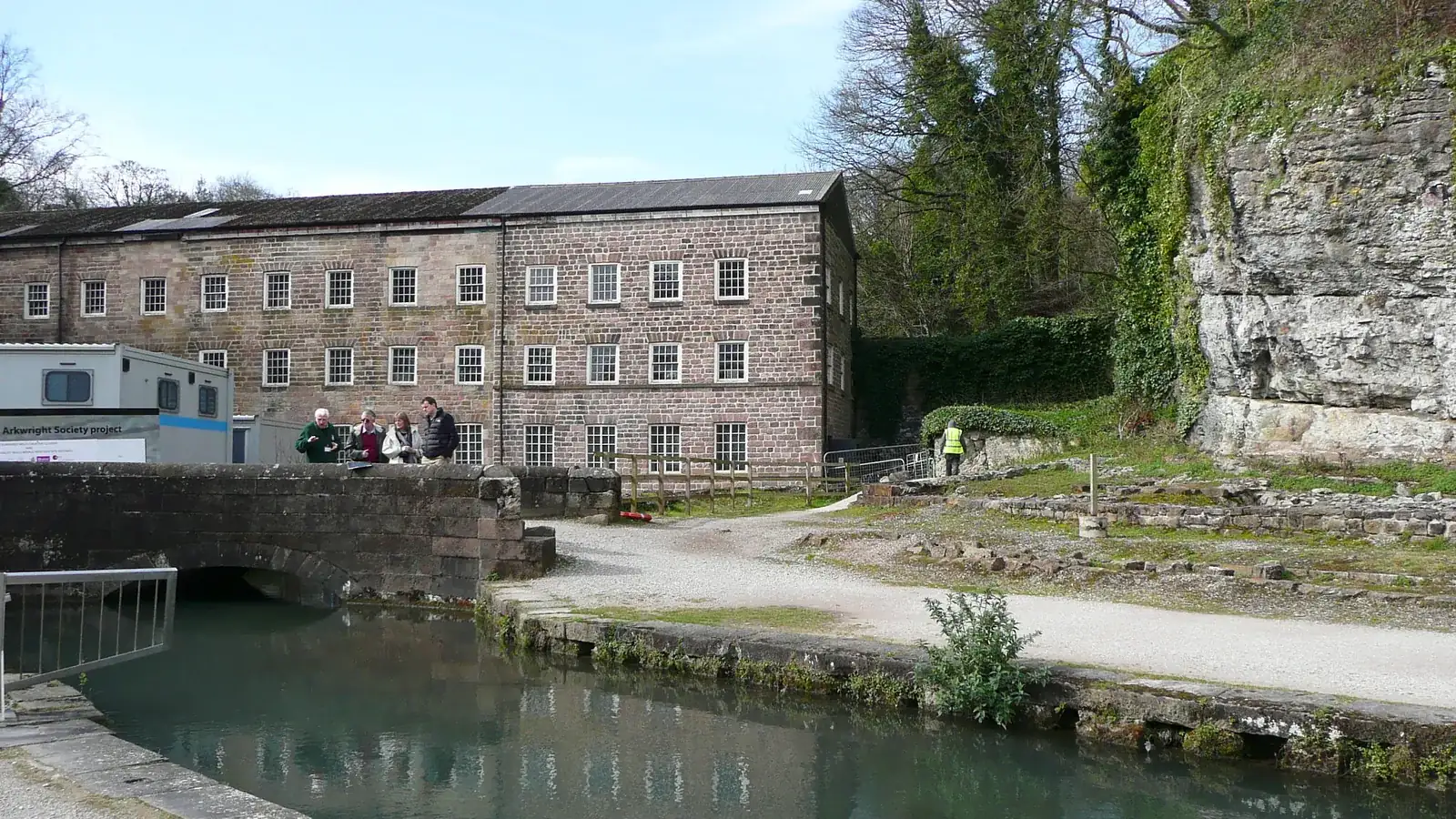

TL;DR — Lancashire spinners could not feed faster looms, so local inventors built machines; Arkwright’s Cromford mill of 1771 put them under one roof, and cheap coal spread the model.
Factories appeared first in Lancashire and the Derwent valley because machines built there from 1764 spun cotton faster than hands, and paid off where labor was dear and fuel cheap. After the flying shuttle of 1733 the weavers outran their spinners, and James Hargreaves, Richard Arkwright and Samuel Crompton answered with three spinning machines between 1764 and 1779. Arkwright’s needed a water wheel, so in 1771 he built a mill on the River Derwent at Cromford, in Derbyshire, and staffed it with women and children. Steam engines burning cheap coal then freed the mills from the rivers, and by the 1830s cotton was half of Britain’s exports. The economic historian Robert C. Allen argued that the machines were built and bought in Britain because British wages were high and British coal was cheap.
Quick facts
- When
- 1733 (flying shuttle) · 1764 (spinning jenny) · 1769 (water frame patent; Watt's separate condenser) · 1771 (Cromford mill) · 1779 (spinning mule) · 1785 (power loom) · 1832 (Sadler committee) · 1833 (Factory Act)
- Where
- Lancashire in northwest England, where the spinning machines were built and the steam mills later rose; Cromford on the River Derwent in Derbyshire, upstream from Derby, where the first water-powered cotton mill ran
- Who
- John Kay of the flying shuttle; James Hargreaves; Richard Arkwright and the clockmaker John Kay; Samuel Crompton; Edmund Cartwright; the economic historian Robert C. Allen; the witnesses Elizabeth Bentley and Matthew Crabtree
- Outcome
- Spinning machines that paid off where labor was dear and fuel cheap put cotton under one roof at Cromford in 1771; steam then moved the mills to the Lancashire coalfield, and by the 1830s cotton was half of Britain's exports
The problem: looms outran the spinners
Before 1760 cloth was made in cottages: children carded the fiber, women spun it on a wheel, men wove it on a hand loom, according to World History Encyclopedia. In 1733 John Kay invented the flying shuttle, which threw the weft across the warp and let one weaver make wider cloth faster. A spinning wheel still made one thread at a time, and the weavers ran short of yarn.
Hand-spun cotton was also strong enough only for the weft, according to the Cromford Mills site, so English “cotton” cloth had a warp of linen, wool or silk. Buyers wanted pure cotton because it washed and printed better, and Arkwright, a wigmaker in Lancashire, gave up wigs to look for a stronger thread.
Four machines in 21 years
Hargreaves built the spinning jenny in Lancashire in 1764 and patented it in 1770. World History Encyclopedia records that it spun eight threads at once, cost 70 shillings against one shilling for a wheel, and that British factories ran more than 20,000 of them by 1788.
Arkwright’s water frame, patented in 1769, spun with rollers instead of fingers and made a thread strong enough for warp. The Science Museum Group’s prototype of 1769 names its makers as John Kay and Richard Arkwright; this Kay was a clockmaker, not the man of the shuttle. The Cromford Mills site dates a first patent to 1768. Crompton’s mule of 1779 combined jenny and water frame; a large one carried 1,320 spindles. The power loom came last. Edmund Cartwright, a clergyman, wrote that at Matlock in 1784 some Manchester men told him that once Arkwright’s patent expired “hands never could be found to weave” all the yarn, and that he patented his loom on April 4, 1785; Richard Guest printed the account in 1823.
Cromford, 1771: what a factory was
In 1771 Arkwright built a water-powered spinning mill at Cromford on the River Derwent, and a second, larger one in 1776 to 1777; UNESCO’s listing of the valley dates the “Arkwright System” to these two buildings. World History Encyclopedia records that the site was far from any textile workers, and that the 1771 frame carried 129 spindles and was worked by women, since skilled male spinners were no longer needed.
The Cromford Mills site explains what was new: a mill had housed a handful of workers and one powered process, but here hundreds tended a sequence of powered machines that turned loose fiber into finished yarn, and the word “factory” was not yet common. Local lead mines had reached the water table, and the miners’ wives and children were, in the site’s words, “free to provide a cheap labour force for Arkwright.” In 1771 the mill offered paid work to children of seven: 13-hour days, six days a week. The model was copied across northern England, the United States and Germany.
Coal and steam: why the mills left the rivers
Thomas Newcomen’s steam pump drained a coal mine at Dudley in 1712, and James Watt improved the engine in 1769 and again in 1778 with Matthew Boulton, according to World History Encyclopedia. Britain in 1700 produced about 80 percent of Europe’s coal, 2.5 to 3 million tons a year, from four main fields, Lancashire among them, all near water transport.
Guest counted 14 steam-loom factories with about 2,000 looms around Manchester and Stockport in 1818 and 32 factories with 5,732 looms in 1821, and described “vast brick edifices” of 70 or 80 feet in the south of Lancashire that did the work of whole villages. By 1835 about 75 percent of cotton mills used steam, and in 1830 one Briton in 80 worked in a textile mill.
Who worked the machines
Joyce Burnette, an economic historian writing for EH.net, records that women worked the jenny and the water frame while mule spinning stayed male. A return by James Mitchell to the factory commissioners in 1834, covering 82 cotton factories, found 58 percent of the workers female. At the three Arkwright mills in 1800, 700 of 1,150 workers, 61 percent, were classed as children, according to the Cromford Mills site. Parliament’s history counts some 20,000 apprentices, many of them orphans under ten, in cotton mills in 1800.
In 1832 a Commons committee under Michael Sadler took evidence from the workers. Elizabeth Bentley, 23, said she had started in a Leeds flax mill at six, working from five in the morning to nine at night when trade was busy; asked what happened if she flagged, she said, “Strap us.” Matthew Crabtree, who began at eight, described 14-hour days and said of lateness, “I was most commonly beaten.” The questions were leading, as the 1930 editors of the printed evidence observed; the answers were printed in Parliamentary Papers for 1831 to 1832, and the Factory Act of 1833 barred children under nine and limited those aged nine to 13 to eight hours a day. Objections were older: a petition of Leeds woollen workers in 1786 said scribbling machines had “thrown thousands of your petitioners out of employ,” and the town’s cloth merchants answered in 1791 that cotton’s “amazing Success” had come by machinery.
Why Britain, and why Lancashire
Allen’s argument, as World History Encyclopedia presents it, runs on two prices. British wages had risen with population and towns in the 17th century while wages in France, Italy and Spain fell, and where wages were low a machine saved little; British coal was cheap, so an engine cost less to run than men. Allen wrote that “High wages increased the supply of British technology as well as the demand for it,” and set his case against a traditional view that credited Newtonian science, the Enlightenment and genius, since genius, in his reading, was not unique to Britain. The encyclopedia offers one test: jennies reached France from Lancashire in 1771 with a state subsidy and spread slowly, and in India, where labor was cheaper still, they were ignored.
Lancashire had the skills as well. Allen wrote that “without watch-makers, the water frame could not have been designed,” and World History Encyclopedia places the heart of the British clock trade in Lancashire, where the textile machines were built. The county also sat on a coalfield. The raw cotton came from plantations in the American South, where enslaved people picked it, according to the same encyclopedia.
The machines were built where yarn was short and mechanics were plentiful, the first factory rose where a river could turn 129 spindles, and the mills multiplied where coal was cheap enough to burn.
Key facts
- John Kay’s flying shuttle of 1733 sped up weaving; a spinning wheel still made one thread (World History Encyclopedia).
- Hargreaves’s jenny (Lancashire, 1764; patent 1770) spun eight threads, later 120, and cost 70 shillings against one for a wheel; over 20,000 were in use by 1788.
- Arkwright’s water frame was patented in 1769; the Science Museum Group holds the 1769 prototype made with the clockmaker John Kay, and the Cromford Mills site dates a first patent to 1768.
- Arkwright’s Cromford mill of 1771 and second mill of 1776 to 1777 are the “Arkwright System” in UNESCO’s Derwent Valley Mills listing of 2001.
- In 1800 the three Arkwright mills employed 1,150 workers, 700 of them classed as children (Cromford Mills).
- Britain produced about 80 percent of Europe’s coal in 1700 and 224 million tons a year by 1900; by 1835 about 75 percent of cotton mills ran on steam.
- The 1833 Factory Act barred children under nine and limited those aged nine to 13 to eight hours a day.
FAQ
Where was the first cotton factory?
Arkwright's water-powered spinning mill at Cromford on the River Derwent in Derbyshire, built in 1771. The Cromford Mills site calls it the first successful water-powered cotton spinning mill, and UNESCO listed the valley in 2001.
Why did the spinning machines come from Lancashire?
Hargreaves built the jenny there in 1764 and Arkwright was a Lancashire wigmaker whose water frame was built with a local clockmaker. World History Encyclopedia places the center of Britain's clock trade in Lancashire and quotes Allen that without watchmakers the water frame could not have been designed.
Who worked in the early mills?
Women and children. Women ran the jenny and water frame; a return of 1834 found 58 percent of cotton factory workers were female, and at the Arkwright mills in 1800, 61 percent were classed as children. Witnesses told the Sadler committee in 1832 of 14-hour days from the age of six or eight.
Sources
- World History Encyclopedia — Mark Cartwright, "The Textile Industry in the British Industrial Revolution" (March 1, 2023).
- World History Encyclopedia — Mark Cartwright, "Why the Industrial Revolution Started in Britain" (April 14, 2023).
- World History Encyclopedia — Mark Cartwright, "Coal Mining in the British Industrial Revolution" (March 17, 2023).
- World History Encyclopedia — Mark Cartwright, "Child Labour in the British Industrial Revolution" (April 12, 2023).
- World History Encyclopedia — Mark Cartwright, "The Steam Engine in the British Industrial Revolution" (February 8, 2023).
- World History Encyclopedia — Mark Cartwright, "The Impact of the British Industrial Revolution" (April 24, 2023).
- UNESCO World Heritage Centre — "Derwent Valley Mills," World Heritage List no. 1030, inscribed December 13, 2001.
- Cromford Mills (The Arkwright Society) — "Our History."
- Science Museum Group Collection — "Arkwright's prototype spinning machine, 1769," made by John Kay and Richard Arkwright.
- Science Museum Group Collection — "Reproduction of Hargreaves's original Spinning Jenny," object 1970-174.
- Fordham University, Internet Modern History Sourcebook — "Leeds Woollen Workers Petition, 1786," from J. F. C. Harrison, Society and Politics in England, 1780–1960 (1965), pp. 71–72.
- Fordham University, Internet Modern History Sourcebook — "Letter from Leeds Cloth Merchants, 1791," from Harrison, Society and Politics in England, pp. 72–74.
- Fordham University, Internet Modern History Sourcebook — Richard Guest, Compendious History of the Cotton Manufacture (Manchester, 1823), pp. 44–48, "The Steam Loom."
- The Victorian Web — "Evidence Given Before the Sadler Committee (1831–1832)," from Parliamentary Papers, 1831–32, XV, reprinted in Scott and Baltzly, Readings in European History Since 1814 (1930).
- UK Parliament, Living Heritage — "Early factory legislation."
- EH.net Encyclopedia (Economic History Association) — Joyce Burnette, "Women Workers in the British Industrial Revolution."
Cite this article
- APA
- Our Earth's History. (2026, September 20). Why did factories appear first in one corner of England? Our Earth's History. https://ourearthshistory.com/europe/early-modern/industrial-revolution-lancashire-cotton-why-there/
- Chicago
- Our Earth's History. “Why did factories appear first in one corner of England?” Our Earth's History, September 20, 2026. https://ourearthshistory.com/europe/early-modern/industrial-revolution-lancashire-cotton-why-there/.
- MLA
- “Why did factories appear first in one corner of England?” Our Earth's History, 20 Sep. 2026, https://ourearthshistory.com/europe/early-modern/industrial-revolution-lancashire-cotton-why-there/.
Text licensed CC BY-NC-ND 4.0. Found an error? Tell us.