Ninety thousand guilders at Alkmaar's orphan sale, February 5, 1637
,_RP-T-1967-86.jpg)
TL;DR — At Alkmaar on February 5, 1637, an orphan sale raised about 90,000 guilders — two days after a Haarlem tavern price drop that stopped the whole tulip trade.
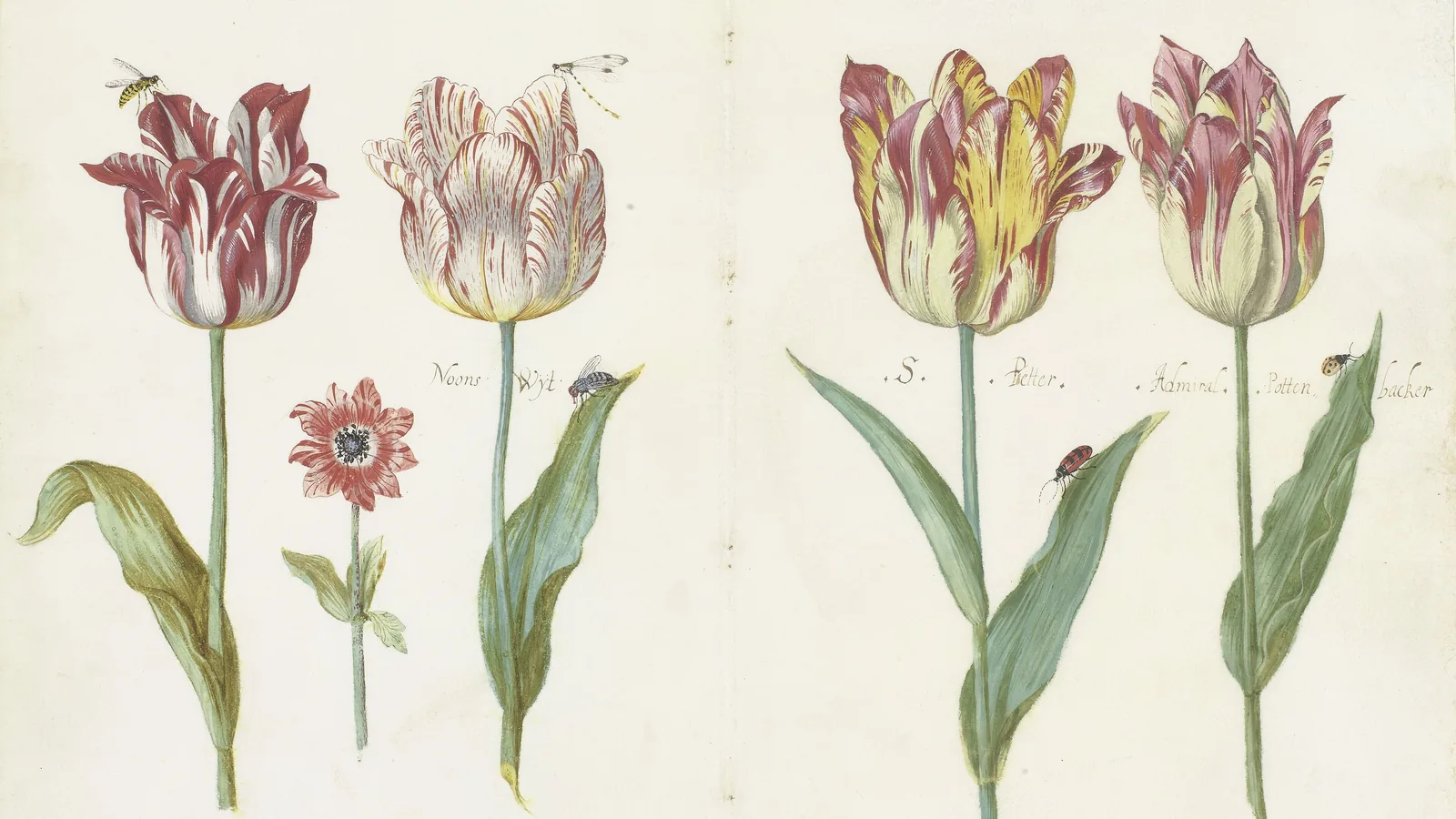
“Werden twee dagen later, op 5 Februari record-prijzen gemaakt op een openbare veiling, welke te Alkmaar gehouden werd ten behoeve van de weezen van den overleden kastelein van den Ouden Schuttersdoelen aldaar,” Ernst Heinrich Krelage wrote in his 1942/1946 history Bloemenspeculatie in Nederland, record prices were made two days later, on February 5, at a public auction held at Alkmaar for the benefit of the orphans of the deceased keeper of the Old Shooters’ Guild Hall there. About 70 bulbs, in 27 lots of 1,000 aces each plus some pound goods, brought a combined 90,000 guilders. Two days earlier, in a Haarlem tavern, buyers had watched the same pound of bulbs fetch 1,250 guilders, then 1,100, then 1,000 in three successive sales, and word of it “veroorzaakte algemeene verslagenheid,” Krelage’s pamphlet source records, caused general dismay. By the next day the entire tulip trade stood still.
Quick facts
- When
- February 3, 1637 (Haarlem tavern price drop) · February 5, 1637 (Alkmaar orphan auction) · April 27, 1637 (States of Holland suspend contracts) · May 1638 (Haarlem settlement regulation)
- Where
- Haarlem and Alkmaar, Holland (Dutch Republic)
- Who
- Ernst Heinrich Krelage (historian); Peter Garber (economist, Journal of Political Economy 1989); Charles Mackay (1841 popular author); Anne Goldgar (historian, University of Chicago Press 2007); Earl A. Thompson (economist, Public Choice 2007)
- Outcome
- Trade in tulip futures contracts stopped within a day of the Haarlem price drop; the States of Holland later suspended the contracts and left settlement to individual cities and courts, which never enforced them
Haarlem, February 3: three falling bids
Krelage quotes a 1637 dialogue pamphlet, Samen-spraeck tusschen Waermondt ende Gaergoedt, describing what happened that Tuesday: florists gathered at an inn and offered each other pound goods for sale. One man bid a pound of Croonen or Switsers bulbs at 1,250 guilders and was awarded the sale; asked to repeat the bid for a commission of two rijksdaalders, he got it for 1,100; a third time, for three rijksdaalders, he got it for 1,000. The pamphlet states the news “als een loopend vuurtje ging… door de geheele stad”, spread through the whole town like wildfire, and that the next day the trade stood still, with “een yder sach op den ander,” each man watching the other.
Alkmaar, February 5: an orphan sale sets the record
The Alkmaar auction two days later became the price list later copied into tulip books, according to Krelage: “Het zijn de prijzen van deze veiling, welke men steeds bijgeschreven vindt in de tulpenboeken.” The results were printed on a broadsheet and reproduced by pamphleteers on both sides of the speculation. Krelage also corrects a common attribution: the tulip book kept by Haarlem florist P. Cos labels its bulbs as sold at a Haarlem auction in 1637, but Krelage states no Haarlem tulip auction is known and that the prices attached to those pictures are Alkmaar’s, the Haarlem title, he writes, was added long after the fact. Bulbs traded in two ways: named “piece goods” sold by the bulb, and common “pound goods” sold by weight, measured in aces, as Garber’s 1989 paper notes of the accounting units used.
Garber, 1989: futures in the taverns
Peter Garber’s Journal of Political Economy paper traces how the contracts worked. Buyers and sellers met in colleges, informal tavern groups, to trade futures-style promises on bulbs still in the ground. Garber writes that “though it is always mentioned first among the list of obvious manias, no serious effort has ever been expended to investigate the market fundamentals that might have driven the tulip speculation,” and concludes that “most of the ‘tulipmania’ was not obvious madness.” High, rapidly depreciating prices for rare bulbs, he finds, were the ordinary pattern of the flower bulb trade; only the last month, when common bulb prices rose fast and crashed, remained a genuine puzzle. A 1643 estate auction of the bulb dealer J. van Damme raised 42,013 guilders, a value Garber judges comparable to the 68,553 guilders from the February 1637 estate auction that supplies most of the peak-price data, and rare bulbs such as the English Admiral, Admirael van der Eyck and General Rotgans fell no faster over six years than the industry’s normal pattern.
The States of Holland's suspension, April 27
Contracts made before the crash left buyers owing prices no longer obtainable. Garber writes that “on April 27, 1637, the states of Holland decided to suspend all contracts, giving the seller the right to sell contracted bulbs at market prices during the suspension,” with the buyer owing the difference between that price and the eventual settlement price. What followed, Garber notes, “becomes murky,” though he records that many cities followed Haarlem’s example: in May 1638 its council let buyers cancel a contract for 3.5 percent of the contract price. Garber adds that “ultimately the courts did not uphold any contracts for tulips.”

Mackay, 1841, and the sources he never named
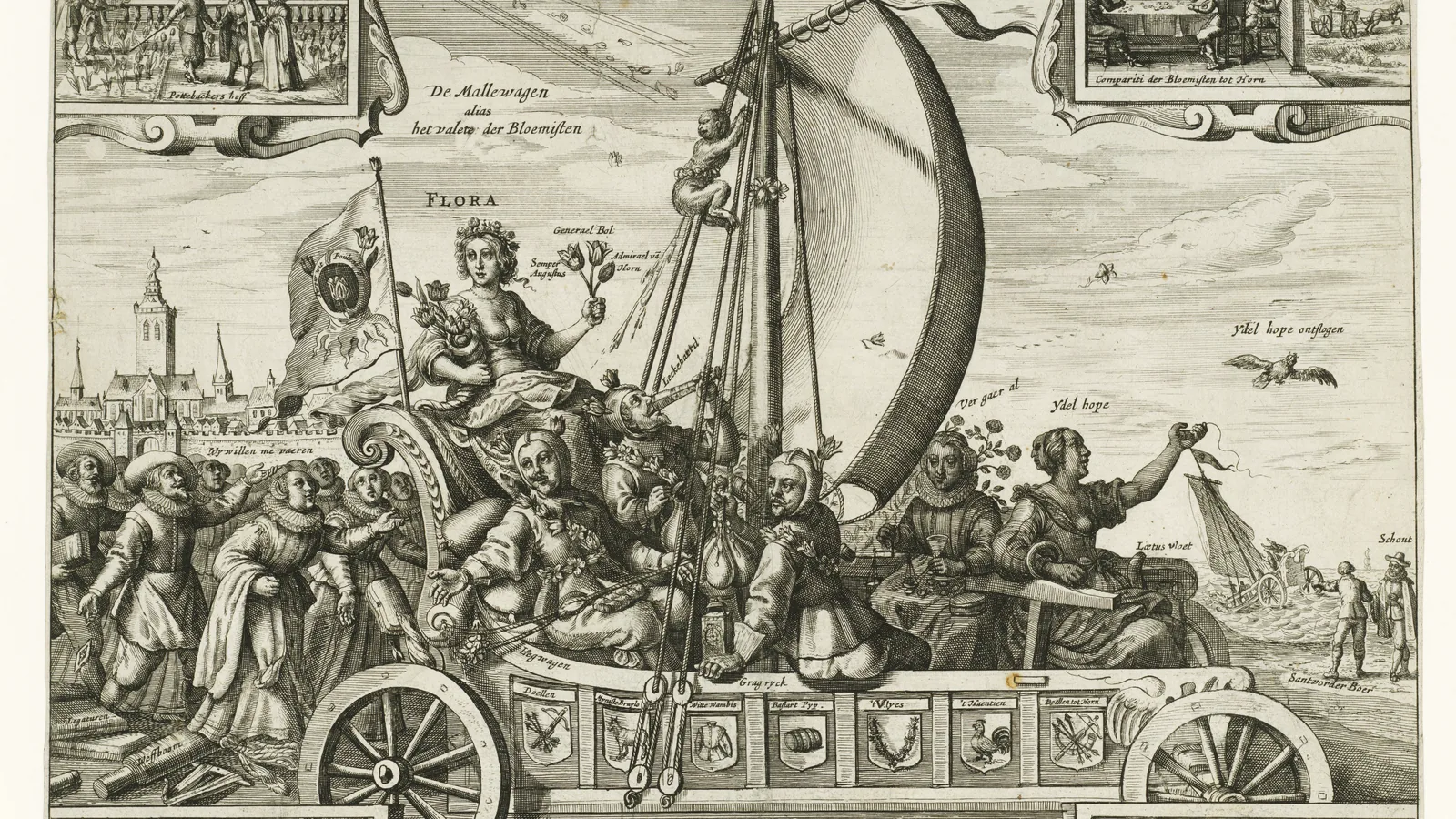
Garber traces the dramatic version most readers know to Charles Mackay’s 1841 (revised 1852) Extraordinary Popular Delusions and the Madness of Crowds. Modern references to the episode, Garber writes, depend on Mackay’s short account, and “Mackay provided neither the sources of these bulb prices nor the dates on which they were observed”, including a claim that a Semper Augustus bulb “was sold at the height of the speculation for 5,500 guilders,” a figure Garber calls of unknown origin and date. Garber finds that Mackay “plagiarized most of his description from Beckmann,” an 1846 source who drew on the same 1637 pamphlets and on Munting’s later accounts. Tracing the anecdote of a sailor eating a valuable bulb back further, Garber examined the 1743 travelogue by Blainville that Beckmann had cited, and reports that “a careful reading of Blainville turns up only a one-sentence report that a tulip speculation occurred from 1634 to 1637,” in a travel diary written in 1705, seventy years after the events it describes.
Goldgar and Thompson, 2007: two later reassessments
Anne Goldgar’s 2007 book Tulipmania, published by the University of Chicago Press, is described on the publisher’s page as using “extensive archival research” that “lays waste to the legends, revealing that while the 1630s did see a speculative bubble in tulip prices, neither the height of the bubble nor its bursting were anywhere near as dramatic as we tend to think.” Earl A. Thompson’s 2007 paper in Public Choice argues the episode was “an artifact created by an implicit conversion of ordinary futures contracts into option contracts” by Dutch buyers and officials limiting their own losses, concluding “there was thus nothing maniacal about prices in this period.” The Library of Congress research guide notes that “some modern scholars have begun [to] reevaluate long held assumptions including the idea that this was truly a bubble,” and that “total national trade didn’t collapse.” Garber leaves the final month of common-bulb prices unexplained; Thompson denies that even that month was a bubble.
Key facts
- On February 3, 1637, in a Haarlem tavern, a pound of Croonen or Switsers bulbs sold three times running for 1,250, then 1,100, then 1,000 guilders, and the tulip trade stopped the next day (Krelage, quoting the 1637 pamphlet Samen-spraeck).
- On February 5, 1637, an Alkmaar auction for the orphans of the deceased keeper of the Old Shooters’ Guild Hall sold about 70 bulbs, 27 lots of 1,000 aces plus pound goods, for a combined 90,000 guilders (Krelage).
- Krelage states the tulip book of Haarlem florist P. Cos wrongly labels its prices as from a Haarlem auction; no Haarlem tulip auction is known, and the prices are Alkmaar’s.
- The States of Holland suspended all tulip contracts on April 27, 1637, letting sellers resell at market price with buyers liable for the difference (Garber 1989).
- Haarlem’s city council, in May 1638, let buyers cancel contracts for 3.5 percent of the contract price; Garber records that many other cities followed; courts ultimately upheld no tulip contracts.
- Garber finds Mackay’s 1841 figure of 5,500 guilders for a Semper Augustus bulb is “of unknown origin and date,” and that Mackay plagiarized his account from an 1846 source, Beckmann.
- Garber traces the sailor-eating-a-bulb anecdote to a 1743 travelogue by Blainville, written seventy years after the speculation and containing only one sentence on it.
- Anne Goldgar (2007, University of Chicago Press) and Earl Thompson (2007, Public Choice) both conclude the episode was smaller and less catastrophic than Mackay’s account, though Thompson denies it was a bubble at all and Garber leaves the last month’s common-bulb prices unexplained.
FAQ
What happened at the Alkmaar auction of February 5, 1637?
An auction held for the orphans of the deceased keeper of Alkmaar's Old Shooters' Guild Hall sold about 70 tulip bulbs, in 27 lots of 1,000 aces each plus pound goods, for a combined 90,000 guilders. Krelage states these became the prices later copied into contemporary tulip books.
Where did the famous stories about tulip mania come from?
Most come from Charles Mackay's 1841 book *Extraordinary Popular Delusions and the Madness of Crowds*. Peter Garber's 1989 paper found that Mackay gave no sources or dates for his bulb prices and had drawn his account from an 1846 source, Beckmann, who in turn relied on 1637 dialogue pamphlets and later writers.
Did courts enforce the tulip futures contracts?
No. Garber's 1989 paper states that the States of Holland suspended the contracts on April 27, 1637, individual cities set their own settlement terms afterward, Haarlem allowed cancellation for 3.5 percent of the contract price in May 1638, and courts ultimately upheld none of the contracts.
Sources
- Peter M. Garber, "Tulipmania," The Journal of Political Economy, vol. 97, no. 3 (June 1989), pp. 535-560
- Library of Congress, Business Reference Services, "Business Booms, Busts, & Bubbles, Tulip Mania" research guide
- University of Chicago Press, book page for Anne Goldgar, Tulipmania: Money, Honor, and Knowledge in the Dutch Golden Age (2007)
- Earl A. Thompson, "The tulipmania: Fact or artifact?," Public Choice, vol. 130 (2007), pp. 99-114
- Ernst Heinrich Krelage, Bloemenspeculatie in Nederland: De Tulpomanie van 1636-'37 en de Hyacintenhandel van 1720-'36 (Amsterdam, 1942/1946), chapter III, "De windhandel," DBNL
Cite this article
- APA
- Our Earth's History. (2026, September 26). Ninety thousand guilders at Alkmaar's orphan sale, February 5, 1637. Our Earth's History. https://ourearthshistory.com/europe/early-modern/tulip-mania-february-5-1637-alkmaar-sale-mackay-1841-garber-goldgar/
- Chicago
- Our Earth's History. “Ninety thousand guilders at Alkmaar's orphan sale, February 5, 1637.” Our Earth's History, September 26, 2026. https://ourearthshistory.com/europe/early-modern/tulip-mania-february-5-1637-alkmaar-sale-mackay-1841-garber-goldgar/.
- MLA
- “Ninety thousand guilders at Alkmaar's orphan sale, February 5, 1637.” Our Earth's History, 26 Sep. 2026, https://ourearthshistory.com/europe/early-modern/tulip-mania-february-5-1637-alkmaar-sale-mackay-1841-garber-goldgar/.
Text licensed CC BY-NC-ND 4.0. Found an error? Tell us.