October 21 to November 19, 1604: Julfa emptied, New Julfa built
.jpg)
TL;DR — Arakel of Tabriz dated the Julfa deportation to October 21 to November 19, 1604; by early summer 1605 its merchants were building New Julfa across the river from Isfahan.
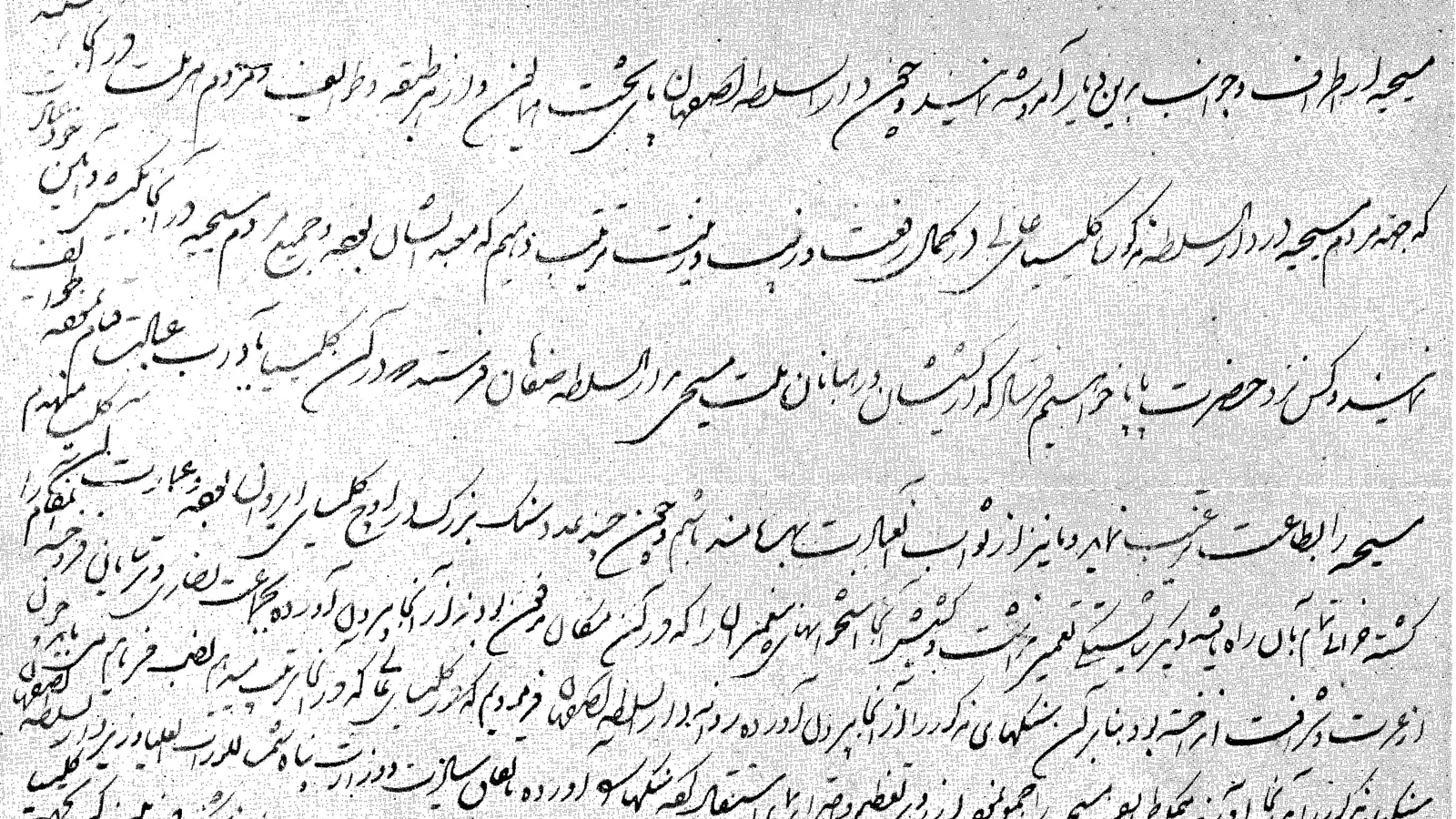
“In a matter of days all the towns and villages on the path of the retreating Safavid army were destroyed, and more than 400,000 people were deported to Iran. Julfa was completely demolished, and its entire population was forced to cross the river Aras into Iran.” So Vazken Ghougassian’s Encyclopaedia Iranica entry describes Shah Abbas I’s retreat before an Ottoman counterattack in the fall of 1604. The Armenian chronicler Arakel of Tabriz placed the deportation in the month of Navasard 1054, October 21 to November 19, 1604. The 400,000 is Ghougassian’s figure for the whole province of Chukhur-e Saʿd; a separate Iranica entry, after D. M. Lang, writes that “About 60,000 families are said to have been uprooted” from Julfa and its district, a household count for one town that cannot be added to the first. Julfa’s merchants, treated apart, began New Julfa in early summer 1605 on crown land on the right bank of the Zayandeh Rud, opposite Isfahan.
Quick facts
- When
- 1545 (Shah Tahmasp's farman on Julfa) · fall 1603 (Abbas I's campaign; three days at Julfa) · June 1604 (Yerevan taken) · October 21 to November 19, 1604 (deportation, by Arakel of Tabriz's dating) · early summer 1605 (New Julfa begun) · 1614 to 1615 (the Etchmiadzin stones) · 1636 (press at All Savior's) · 1655 to 1659 (Isfahan's Armenians moved to New Julfa) · 1722 to 1729 (Afghan occupation) · 1745 to 1746 (Nader Shah's fine and executions) · 1758 (famine) · 1832 (Fath-Ali Shah's order)
- Where
- Julfa on the left bank of the Aras in Nakhchivan, in what is now Azerbaijan; the Karadagh mountains, Khalkhal, Ahar and Meshkin; Tabriz; New Julfa on the right bank of the Zayandeh Rud opposite Isfahan
- Who
- Shah Abbas I; the merchants of Julfa; Khwaja Nazar, kalantar 1618 to 1636; Pietro Della Valle; Jean-Baptiste Tavernier; John Chardin; John Fryer; Archbishop Khachatur Kesaratsi; Yovhannes Ktrshents; Nader Shah; Karim Khan Zand; Fath-Ali Shah
- Outcome
- The province of Chukhur-e Saʿd was emptied and Julfa demolished. Its merchants built New Julfa in 1605 with an elected kalantar, 20 quarters, ten churches by 1619 and Iran's first press in 1636; after 1722 the town lost, by Ghougassian's reading of the censuses, more than 80 percent of its people by the 1780s
Julfa on the Aras, a crown town of 2,000 houses
Old Julfa stood on the Aras’s left bank in Nakhchivan, in what is now Azerbaijan. A farman of Shah Tahmasp dated 1545 made the town an endowment of the nearby monastery of St. Stephen, and Julfa was a crown domain that paid its taxes to the royal treasury. The English preacher John Cartwright, passing through in 1600, estimated around 10,000 people in about 2,000 houses.
In the fall of 1603 Abbas I opened his first campaign to recover the lands ceded to the Ottomans in 1589–90, and before advancing on Yerevan spent three days as the guest of Julfa’s merchants. Yerevan fell in June 1604; the shah moved toward Kars, met a strong Ottoman counteroffensive and retreated, ordering the province’s people into Iran and its crops and pastures destroyed to leave the Ottomans nothing.
Three days' notice, then the winter road through Karadagh
The deportation went forward in cold rain on muddy roads. Those who crossed the Aras went on through the Karadagh mountains to winter at Khalkhal, Ahar and Meshkin, and in the spring of 1605 were moved again, most of them to Gilan and Mazandaran. The merchants fared better: Ghougassian records three days’ notice, permission to take their movable wealth, reasonable transport, a winter at Tabriz, and in early summer 1605 temporary lodging in Isfahan. The wealth they carried paid for large houses and churches within a few years; Roger Savory’s Iranica entry on Abbas calls the settlers thousands of skilled Armenian artisans.
Pietro Della Valle, there in 1617 to 1619, found ten churches in New Julfa. In 1619 Abbas granted the settlers their land by decree, and Jean-Baptiste Tavernier later wrote that they, unlike other Christians under Muslim rule, could own land. Thomas Herbert put the early town at about 10,000 people; John Chardin, visiting three times between 1666 and 1676, believed 3,400 to 3,500 families and about 30,000 people lived there; John Fryer in 1677 estimated more than 6,000 families.
Khwaja Nazar: a decree of 1593, an avenue and a poll tax
In February 1593 Abbas had granted Khwaja Nazar, a merchant of Old Julfa, full freedom of trade and protection against governors, tax collectors, inspectors and customs officials, a year after making Gilan, where the silk grew, a crown domain. In 1619 he declared silk exports a crown monopoly and gave the Armenians the right to export raw silk to Europe; after his death in 1629 the monopoly weakened.
New Julfa was laid out on Nazar Avenue, the only street with a name; nine streets crossed it, forming 20 wards, each named for the family settled there. The 20 ward headmen elected the mayor, the kalantar, who, as Tavernier described him, dealt with the court, delivered the taxes and judged civil cases. Khwaja Nazar held the office from 1618 to 1636. Chardin reported the poll tax at 180 tomans a year under Abbas I; it rose to 260 under Shah Safi and, by Jean de Thévenot’s account, to 500 in 1664, and because the town sat on crown land the money went to the shah’s mother. Abbas II moved Isfahan’s more than 1,000 Armenian artisan families, whose Muslim neighbors had complained of church bells and wine, to New Julfa between 1655 and 1659, adding seven quarters.
1614, 1636, 1646: stones from Etchmiadzin and a press at All Savior's
The first church went up in 1606–07; Manouchehr Kasheff and Andre Amurian count twenty by 1664. In 1614 Abbas ordered a cathedral built in Isfahan for Armenian and Catholic clergy, and the cathedral of Etchmiadzin in Armenia was to be taken down for its stones. Fifteen large stones reached Isfahan in 1615. Khwaja Nazar persuaded the shah to drop the plan, and the stones were later placed in St. George’s church, which Nazar had built; Arakel of Tabriz tells the story.
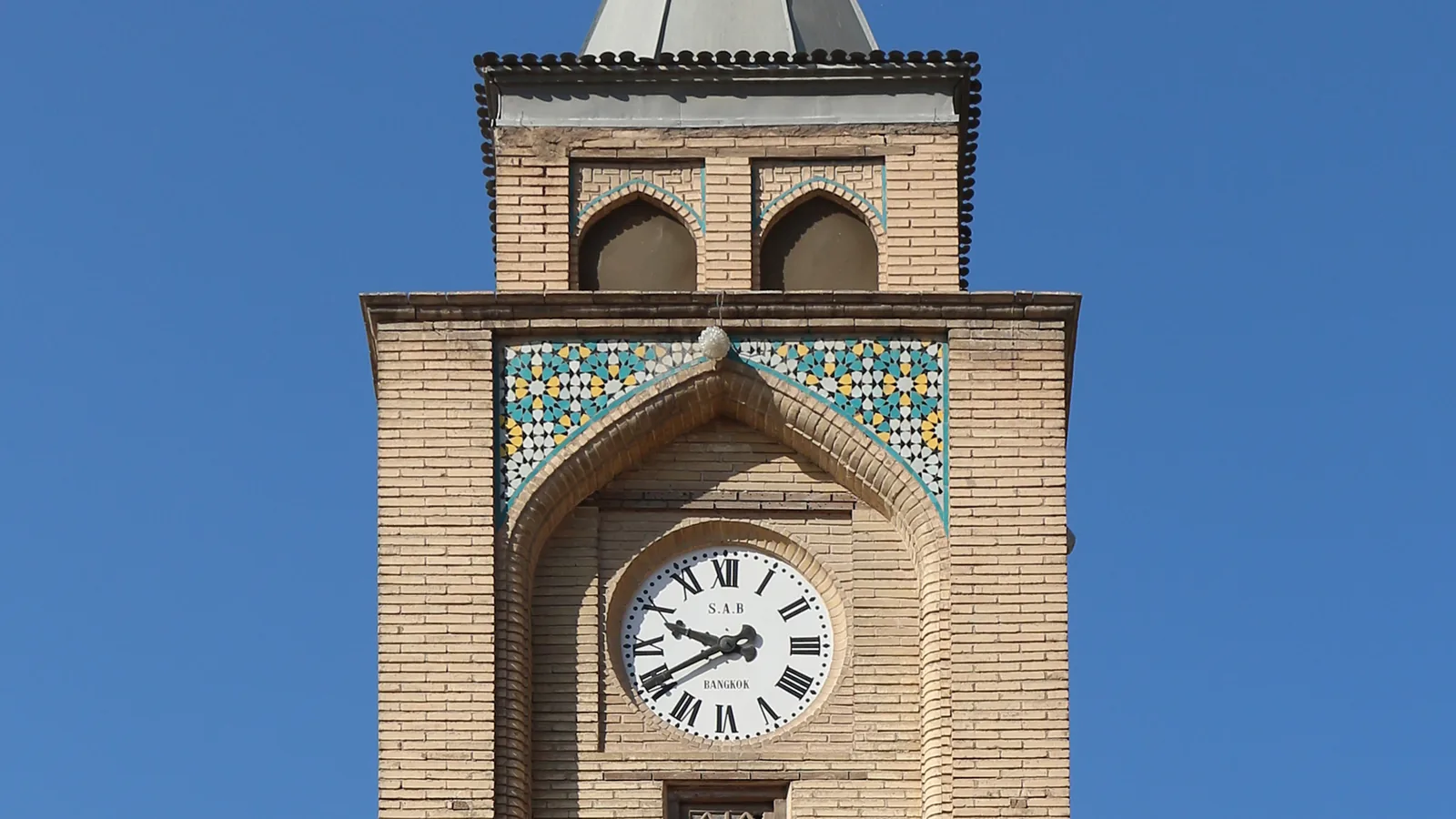
Khachatur Kesaratsi, primate of New Julfa from 1623, set up a printing press at the monastery of All Savior’s in 1636, the first in Iran, with paper and ink made in the monastery. The Psalter of 1638 came first, then a missal in 1641. His disciple Yovhannes Ktrshents came back from Europe in 1646 with a press and new fonts and began an Armenian Bible, then gave up under opposition from the scribes who lived by copying. The press resumed in 1687; Shah Soltan Hosein closed it for good in 1693.

"Un immense réseau de marchands," then a famine in 1758
Albert Le Bonheur, reviewing John Carswell’s 1968 study of the town in Arts Asiatiques in 1969, wrote that the Julfans built “un immense réseau de marchands établis au Tonkin, à Java, aux Philippines, dans tous les pays d’Europe et en Russie,” an immense network of merchants settled in Tonkin, Java, the Philippines, every country of Europe and Russia.
The Afghan occupation of Isfahan, 1722 to 1729, broke the town’s base. Nader Shah levied at least 10,000 tomans a year on the town; in 1745 he fined it 60,500 tomans, and in 1746 eight of its merchants were burned at the stake in Isfahan’s main square. His assassination in 1747 opened 15 years of civil war. In 1753 All Savior’s, to help raise 6,000 tomans for Azad Khan, sold its manuscripts and archives to Isfahan’s spice sellers and gunpowder makers at one toman per 100 kilograms of paper. In 1758 more than 500 Armenians starved to death in New Julfa alone. Karim Khan Zand gave a respite from 1763, but a census of the 1770s counted 1,517 Armenian clergy and laity and one of 1789 counted 360 houses in Armenian hands, a loss that Ghougassian puts at more than 80 percent of the original population. Decrees of 1844, on church property seized in the Gask quarter, and of 1858, on Armenian inheritances, followed an order of 1832, when Fath-Ali Shah told the governor of Isfahan to protect the Armenian community and exempted All Savior’s from taxes.
Key facts
- Arakel of Tabriz dated the deportation to the month of Navasard 1054, October 21 to November 19, 1604 (Ghougassian, “JULFA i”).
- Ghougassian’s “more than 400,000” is a figure for the whole province of Chukhur-e Saʿd; the “About 60,000 families” of Kasheff and Amurian, after D. M. Lang, is a household count for Julfa and its district.
- A farman of Shah Tahmasp dated 1545 made Julfa an endowment of St. Stephen’s monastery; the town paid its taxes to the royal treasury as a crown domain. John Cartwright estimated around 10,000 people in about 2,000 houses in 1600.
- The Julfa merchants had three days’ notice, took their movable wealth, wintered at Tabriz and began New Julfa on the right bank of the Zayandeh Rud in early summer 1605; Della Valle found ten churches there by 1619.
- Chardin reported the poll tax at 180 tomans a year under Abbas I; Thévenot gives 500 tomans in 1664. The money went to the shah’s mother.
- The 20 ward headmen elected the kalantar; Khwaja Nazar held the office from 1618 to 1636, and the town’s only named street was his.
- Kesaratsi set up a press at All Savior’s in 1636, the first in Iran; its Psalter of 1638 was followed by a missal in 1641; Shah Soltan Hosein closed the press in 1693.
- Nader Shah fined New Julfa 60,500 tomans in 1745; more than 500 Armenians starved there in 1758; a census of 1851 counted 2,614 people in 371 homes (“JULFA ii”).
FAQ
When were the Armenians of Julfa deported to Iran?
Between October 21 and November 19, 1604, according to the Armenian chronicler Arakel of Tabriz, during Shah Abbas I's retreat before an Ottoman counteroffensive. The merchants wintered at Tabriz and reached Isfahan in early summer 1605.
How many people were deported from Julfa in 1604?
The Encyclopaedia Iranica entry on Julfa gives more than 400,000 for the whole province of Chukhur-e Saʿd. Its entry on the Armenians of Iran, citing D. M. Lang, gives about 60,000 families for Julfa and its district, and about three thousand families reaching Isfahan. The two figures count different things.
When was the first book printed in Iran?
In 1638: a Psalter from the press that Archbishop Khachatur Kesaratsi set up at the monastery of All Savior's in New Julfa in 1636, with paper and ink made in the monastery.
Sources
- Encyclopaedia Iranica — Vazken S. Ghougassian, "JULFA i. SAFAVID PERIOD," Vol. XV, Fasc. 2-3, pp. 217-231 (September 15, 2009; updated May 14, 2018): Old Julfa, the 1545 farman and Cartwright's count; the 1603 campaign and the retreat of 1604; the deportation sentence quoted; Arakel's dating; the winter at Khalkhal, Ahar and Meshkin; three days' notice; New Julfa from early summer 1605; Della Valle, the 1619 decree, Tavernier; Herbert, Chardin and Fryer's counts; the 1593 decree, the silk monopoly and 1629.
- Encyclopaedia Iranica — Ghougassian, "JULFA i" (same entry): Nazar Avenue, the 20 wards and the kalantar; Khwaja Nazar as kalantar 1618 to 1636; the poll tax figures from Chardin and Thévenot; Abbas II's move of 1655 to 1659; the 1614 decree and the Etchmiadzin stones; Kesaratsi, the press of 1636, the Psalter of 1638, Ktrshents, 1687 and 1693.
- Encyclopaedia Iranica — Vazken S. Ghougassian, "JULFA ii. THE 18TH AND THE 19TH CENTURY," Vol. XV, Fasc. 3, pp. 231-235 (September 15, 2009; updated August 18, 2016): the Afghan occupation; Nader Shah's 10,000 tomans, the fine of 60,500 tomans in 1745 and the executions of 1746; the famine of 1758; the sale of manuscripts in 1753; Karim Khan Zand; the censuses of the 1770s, 1789 and 1851; the decrees of 1832, 1844 and 1858.
- Encyclopaedia Iranica — Manouchehr Kasheff and Andre Amurian, "ARMENIANS OF MODERN IRAN," Vol. II, Fasc. 5, pp. 478-483 (December 15, 1986; updated February 15, 2013): "About 60,000 families" after D. M. Lang; about three thousand families reaching Isfahan; the first church of 1606-07 and twenty churches by 1664.
- Encyclopaedia Iranica — Roger M. Savory, "ʿABBĀS I," Vol. I, Fasc. 1, pp. 71-75 (December 15, 1982; updated May 3, 2018): thousands of skilled Armenian artisans transferred from Julfa to New Julfa on the right bank of the Zayandeh Rud.
- Persée — Albert Le Bonheur, review of John Carswell, New Julfa: The Armenian Churches and Other Buildings (Oxford: Clarendon Press, 1968), Arts Asiatiques 19 (1969), p. 187: "un immense réseau de marchands établis au Tonkin, à Java, aux Philippines, dans tous les pays d'Europe et en Russie."
Cite this article
- APA
- Our Earth's History. (2026, September 22). October 21 to November 19, 1604: Julfa emptied, New Julfa built. Our Earth's History. https://ourearthshistory.com/west-asia/early-modern/new-julfa-1604-1605-shah-abbas-armenians-isfahan-kalantar-press-1636/
- Chicago
- Our Earth's History. “October 21 to November 19, 1604: Julfa emptied, New Julfa built.” Our Earth's History, September 22, 2026. https://ourearthshistory.com/west-asia/early-modern/new-julfa-1604-1605-shah-abbas-armenians-isfahan-kalantar-press-1636/.
- MLA
- “October 21 to November 19, 1604: Julfa emptied, New Julfa built.” Our Earth's History, 22 Sep. 2026, https://ourearthshistory.com/west-asia/early-modern/new-julfa-1604-1605-shah-abbas-armenians-isfahan-kalantar-press-1636/.
Text licensed CC BY-NC-ND 4.0. Found an error? Tell us.