Why did the Benin Bronzes leave Benin City, and are they going home?

TL;DR — British forces took brass plaques and heads from the Oba’s palace in Benin City in 1897 and sold them in London; museums began handing them back in 2021.
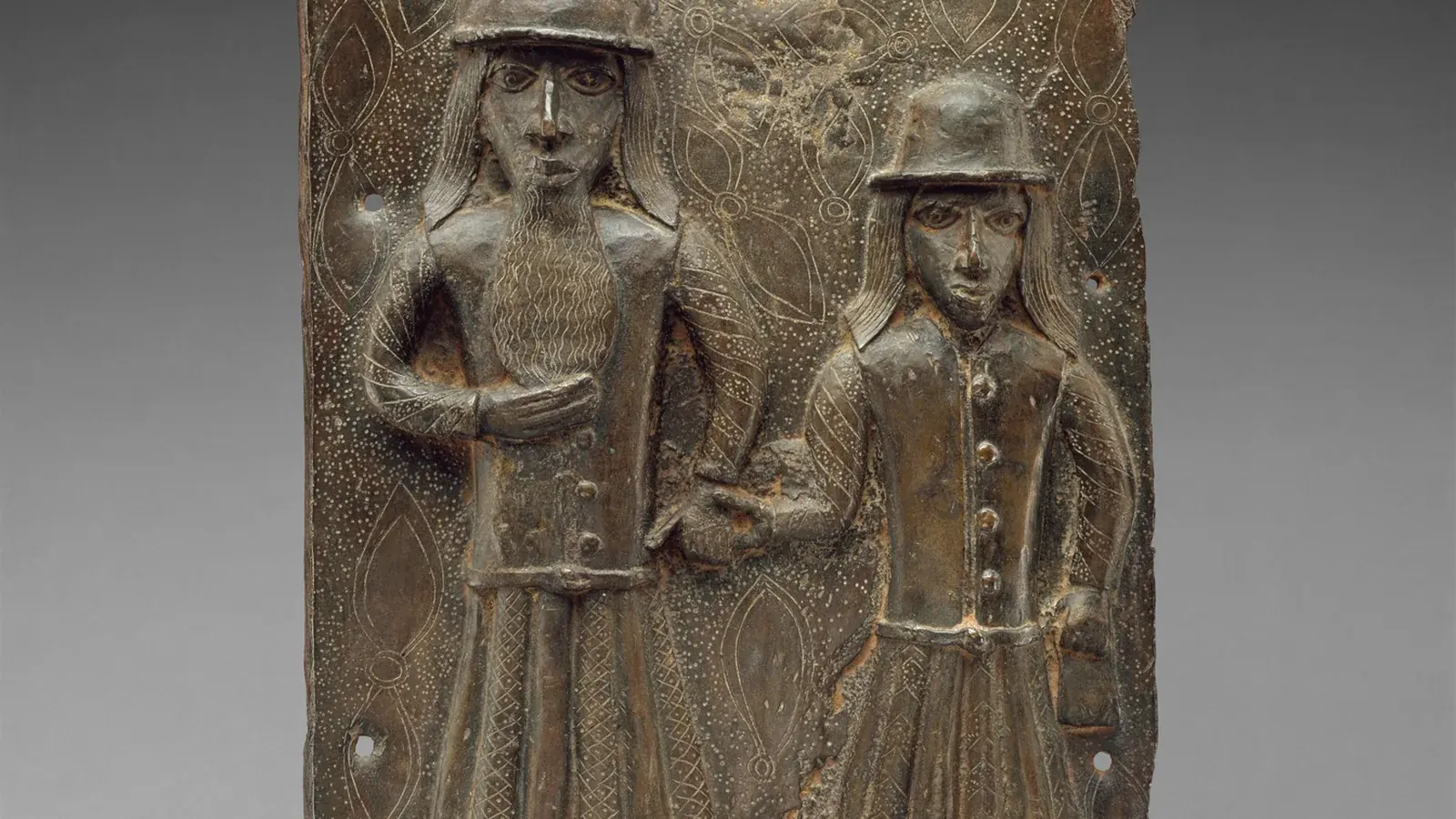
The Benin Bronzes are in museums from London to Berlin because British troops took them from the royal palace of Benin City in February 1897 and sold them in London. The casters of the Kingdom of Benin, a state of the Edo people in the forests of what is now southern Nigeria, had made them from brass that Portuguese and other European traders carried to West Africa as horseshoe-shaped rings called manillas. By 2022 a catalogue called Digital Benin had traced 5,304 of the objects to 139 institutions in 21 countries. Since 2021 the German government and the Smithsonian have transferred ownership of hundreds of them to Nigeria, and Cambridge has announced returns. In March 2023 Nigeria’s federal government declared the Oba of Benin, the reigning king, the owner of everything that came back, and in October 2025 the question of where the public would see them was still open.
Quick facts
- When
- 1487 (Portuguese trading post at Ughoton) · February 18, 1897 (British attack on Benin City) · July 1, 2022 (Germany transfers 1,130 objects) · October 11, 2022 (Smithsonian transfers 29) · March 23, 2023 (Nigerian gazette names the Oba as owner)
- Where
- Benin City, capital of the Kingdom of Benin, now in Edo State, Nigeria; museums in London, Berlin, Hamburg, Oxford, Cambridge and Washington
- Who
- The Edo people and their kings, the Obas; Oba Ovonramwen Nogbaisi, exiled in 1897; Admiral Harry Rawson, who led the attack; Oba Ewuare II, the reigning king
- Outcome
- Objects from the palace were shipped to Britain in 1897 and sold; 139 institutions in 21 countries held 5,304 of them by 2022; Germany and the Smithsonian transferred ownership to Nigeria in 2022 and Cambridge announced the return of 116 objects, and Nigeria's government has assigned the returned objects to the Oba
A kingdom of the Edo and its casters
The Kingdom of Benin took shape as a state in the 13th century, according to the World History Encyclopedia entry by Mark Cartwright. Its rulers held the title of Oba. The capital, also called Benin, stood about 30 kilometers from the coast, west of the Niger, and the palace at its center had many courtyards and galleries roofed on wooden pillars.
Portuguese ships reached the coast in the 1470s, and from 1487 the Portuguese kept a trading post for about 30 years at Ughoton, the kingdom’s river port. They brought brass and took away pepper, ivory, cloth and captives. Casting boomed from the end of the 15th century, when lost-wax casting replaced earlier smithing. The workshops belonged to a guild, the Igun-Eronmwon, whose name still appears on museum labels.
What the plaques show, and what they are made of
The plaques are rectangular panels about 45 centimeters high with figures in high relief, most often warriors and rulers, and they were fixed to the wooden pillars of the palace. Cartwright wrote that many of them record wars, court life and rituals; the kings can be picked out by leopard-tooth necklaces and coral-beaded helmets.
Most of the metal is brass, an alloy of copper and zinc, not bronze; the Guardian corrected its own headline on this point in April 2023. A team led by Tobias Skowronek of the Technical University of Georg Agricola in Bochum measured lead isotopes in 67 manillas from five shipwrecks dated between 1524 and 1843 and published the results in PLOS ONE on April 5, 2023. The early manillas, and the Benin castings, matched the lead-zinc ores of the German Rhineland between Cologne and Aachen. The same rings were the currency in which Europeans paid for gold, ivory and enslaved people.
February 1897: the city burned, the king exiled
In February 1897, after seven British officials and traders were killed, Britain sent what it called a punitive expedition against the kingdom. Admiral Harry Rawson led the attack on Benin City on February 18, 1897, and supervised the burning of chiefs’ compounds and villages nearby, the Guardian reported in 2022. British forces looted the palace of Oba Ovonramwen Nogbaisi and burned it, and the Oba was sent into exile. The Guardian wrote in 2022 that the objects were sold off in London to recoup the cost of the military mission.
The objects reached Europe in the spring of 1897. When some of them went on show at the British Museum that autumn, wrote Barnaby Phillips, a former BBC Nigeria correspondent, they caused a sensation. Many were auctioned in London, and German collectors bought heavily, according to a German foreign ministry statement cited by the BBC in December 2022.
Where the objects went
Digital Benin, a database built at the Museum am Rothenbaum in Hamburg and launched in Berlin on November 9, 2022, lists 5,304 objects held by 139 institutions in 21 countries. Barbara Plankensteiner, the museum’s director and the project’s principal investigator, said that roughly 5,000 of them were looted and that no provenance had been found for about 400.
How many were taken in 1897 depends on who counts. The Art Newspaper wrote in December 2022 that at least 3,000 artifacts were dispersed; the German foreign ministry put the total at an estimated 5,000, of which German museums held about 1,100. The British Museum held the largest single group, around 900 objects, according to the BBC.
The returns since 2021
Nigerian demands for the objects were first voiced in the 1930s, the Guardian wrote in October 2025, and in 2007 European museums and Nigerian officials formed the Benin Dialogue Group. Jesus College, Cambridge, returned a brass cockerel called Okukor in October 2021, the first British institution to do so, and the University of Aberdeen handed back the head of an Oba the same month. On July 1, 2022, in Berlin, the German foreign minister Annalena Baerbock and the Nigerian culture minister Lai Mohammed signed a declaration transferring ownership of 1,130 objects in German museums to Nigeria. On October 11, 2022, the Smithsonian Institution in Washington transferred 29 objects to Nigeria’s National Commission for Museums and Monuments, with nine staying in Washington on loan; a New York group called the Restitution Study Group sued to stop the transfer, and a court refused its restraining order on October 14. The Horniman Museum transferred 72 objects in November 2022, the University of Cambridge announced the return of 116 on December 14, and six days later Baerbock delivered 22 objects in person in Abuja, by the BBC’s count.
The British Museum was not among them. The Guardian wrote in November 2022 that a 1963 UK law prohibits the museum from permanently removing items from its collection, and the BBC reported the same in December 2022.
What is unresolved
Three parties in Nigeria could receive the objects: the federal government, Edo State, where the kingdom lay, and Oba Ewuare II, the reigning king. The Oba argued that the objects were looted from the palace and should return to the royal family, not to the state. On March 23, 2023, the federal government announced in its official gazette that the Oba of Benin was the rightful owner and custodian of the returned objects and that they must be stored at his residence in Benin City unless the royal family decided otherwise. Toyin Akinosho, co-founder of the Committee for Relevant Art in Lagos, said that Europeans could not tell Nigerians what to do with the objects of their heritage.
The Museum of West African Art in Benin City, planned since 2020 as the home of the returned objects, opened its first building on November 4, 2024, and its executive director Phillip Ihenacho told the Art Newspaper that no Benin Bronzes would be shown there for now. By October 2025 about 150 originals had come back to Nigeria, the Guardian reported, and none was on public display. The plaques left the palace pillars in one week of 1897; the last stretch of the way back, from the airport in Abuja to a room the public can enter, was still unsettled in 2025.
Key facts
- The Kingdom of Benin formed in the 13th century; its capital stood about 30 kilometers from the coast, and the palace galleries were roofed on wooden pillars (World History Encyclopedia).
- The Portuguese kept a trading post at Ughoton from 1487, and lost-wax brass casting boomed from the end of the 15th century.
- Lead isotopes in 67 manillas from five shipwrecks (1524 to 1843) matched the Benin castings to Rhineland ores (PLOS ONE, April 5, 2023).
- Admiral Harry Rawson attacked Benin City on February 18, 1897; the palace was looted and burned and Oba Ovonramwen Nogbaisi was exiled.
- Digital Benin listed 5,304 objects in 139 institutions in 21 countries in November 2022; estimates of the 1897 loot run from at least 3,000 (Art Newspaper) to about 5,000 (German foreign ministry).
- Germany transferred ownership of 1,130 objects on July 1, 2022; the Smithsonian transferred 29 on October 11, 2022; Cambridge announced 116 on December 14, 2022.
- Nigeria’s gazette of March 23, 2023, named the Oba of Benin as owner and custodian of the returned objects.
FAQ
Are the Benin Bronzes really bronze?
Most are brass, an alloy of copper and zinc, though the name also covers ivory and wooden objects from the palace. The 2023 PLOS ONE study traced the brass to manillas cast from Rhineland ore.
Who owns the Benin Bronzes that have been returned to Nigeria?
Nigeria's federal gazette of March 23, 2023, named the Oba of Benin as rightful owner and custodian and said the objects must be kept at his residence in Benin City unless the royal family decides otherwise.
Has the British Museum returned any Benin Bronzes?
No. The Guardian and the BBC reported in 2022 that a 1963 UK law prohibits the museum from permanently removing objects from its collection; it held around 900 Benin objects.
Sources
- Digital Benin — catalogue of Benin Kingdom objects held by museums worldwide (MARKK, Hamburg, launched 2022).
- World History Encyclopedia — Mark Cartwright, "Kingdom of Benin" (April 2, 2019).
- PLOS ONE — Tobias B. Skowronek and others, "German brass for Benin Bronzes: Geochemical analysis insights into the early Atlantic trade" (April 5, 2023).
- The Guardian — Dalya Alberge, "Benin bronzes made from metal mined in west Germany, study finds" (April 5, 2023).
- BBC News — Barnaby Phillips, "The art dealer, the £10m Benin Bronze and the Holocaust" (March 14, 2021).
- The Guardian — Philip Oltermann, "Digital Benin project reunites bronzes looted by British soldiers" (November 10, 2022).
- UNESCO — "UNESCO welcomes the signing of a historic agreement between Germany and Nigeria for the return of 1,130 Benin bronzes" (July 1, 2022).
- The Art Newspaper — Gareth Harris, "US campaign group sues Smithsonian over return of Benin Bronzes to Nigeria" (December 6, 2022).
- The Guardian — Jane Clinton, "Cambridge University to return over 100 looted Benin bronzes to Nigeria" (December 14, 2022).
- BBC News — "Benin Bronzes: Germany returns looted artefacts to Nigeria" (December 20, 2022).
- The Art Newspaper — Catherine Hickley, "Benin City museum opens first part of planned campus" (November 1, 2024).
- The Guardian — "Restitution row: how Nigeria's new home for the Benin bronzes ended up with clay replicas" (October 12, 2025).
Cite this article
- APA
- Our Earth's History. (2026, September 20). Why did the Benin Bronzes leave Benin City, and are they going home? Our Earth's History. https://ourearthshistory.com/africa/early-modern/benin-bronzes-1897-and-the-returns/
- Chicago
- Our Earth's History. “Why did the Benin Bronzes leave Benin City, and are they going home?” Our Earth's History, September 20, 2026. https://ourearthshistory.com/africa/early-modern/benin-bronzes-1897-and-the-returns/.
- MLA
- “Why did the Benin Bronzes leave Benin City, and are they going home?” Our Earth's History, 20 Sep. 2026, https://ourearthshistory.com/africa/early-modern/benin-bronzes-1897-and-the-returns/.
Text licensed CC BY-NC-ND 4.0. Found an error? Tell us.