Resolution 134, nine to none: the Security Council on Sharpeville

TL;DR — Nine votes to none on April 1, 1960: Resolution 134 deplored South Africa’s policies after police killed 69 people at Sharpeville on March 21. France and Britain abstained.
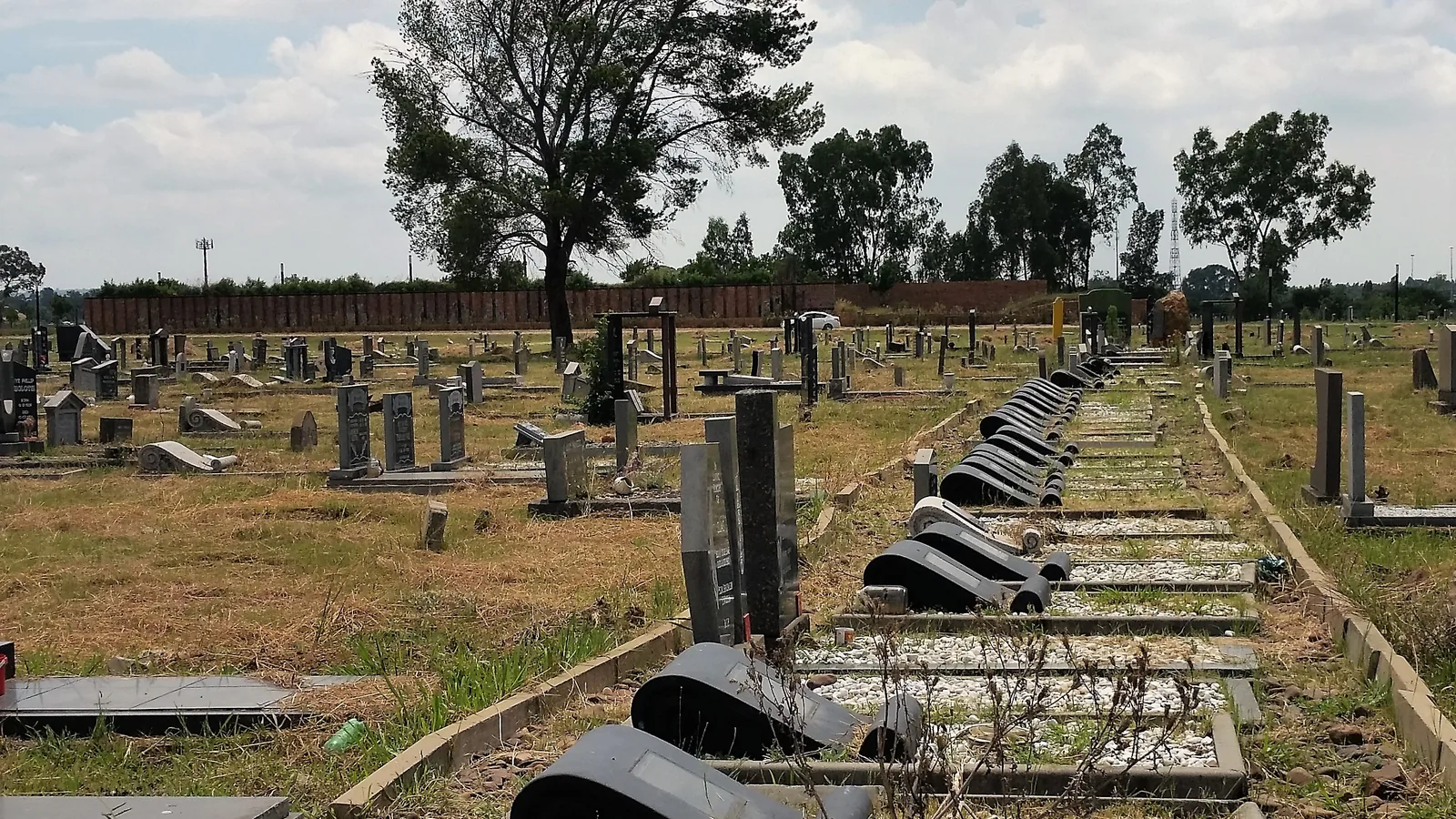
“Deplores the policies and actions of the Government of the Union of South Africa which have given rise to the present situation”: so reads the third operative paragraph of Security Council Resolution 134, adopted on April 1, 1960, by nine votes to none, with France and the United Kingdom abstaining. Before the Council was a complaint from 29 member states about “the large-scale killings of unarmed and peaceful demonstrators against racial discrimination and segregation in the Union of South Africa.” Those killings happened on March 21, 1960, outside the police station at Sharpeville, a township of Vereeniging south of Johannesburg, when police fired on a crowd that had come to be arrested for leaving its passes at home. The official count, given by the South African government and by South African History Online, was 69 dead and 180 wounded; the Truth and Reconciliation Commission’s own chronology prints 186 wounded.
Quick facts
- When
- December 16, 1959 (Luthuli announces the "Year of the Pass") · March 19, 1960 (Sobukwe's press conference) · March 21, 1960 (the shooting at Sharpeville; Langa the same evening) · March 22 and 24, 1960 (the House of Commons) · March 30 and 31, 1960 (Security Council meetings 851 and 853) · April 1, 1960 (Resolution 134) · April 8, 1960 (ANC and PAC banned) · June 15, 1960 (commission of enquiry report) · December 10, 1996 (Mandela signs the Constitution at Sharpeville)
- Where
- The police station at Sharpeville, a township of Vereeniging in what was then the Transvaal, south of Johannesburg; Langa, a township of Cape Town; the House of Commons at Westminster; the Security Council in New York
- Who
- Robert Sobukwe, president of the Pan Africanist Congress; Chief Albert Luthuli of the African National Congress; Philip Kgosana; C. J. M. Alport, Minister of State for Commonwealth Relations; the 29 member states that lodged complaint S/4279; Nelson Mandela
- Outcome
- The Security Council adopted Resolution 134 by nine votes to none with France and the United Kingdom abstaining; South Africa banned the ANC and PAC on April 8, 1960; the United Nations later named March 21 the International Day for the Elimination of Racial Discrimination, South Africa made it Human Rights Day, and Mandela signed the 1996 Constitution at Sharpeville on December 10, 1996
Passes, a press conference and a police station, March 1960
The campaign that ended at Sharpeville began as a contest between two organizations. At the African National Congress conference in Durban on December 16, 1959, Chief Albert Luthuli announced that 1960 would be the “Year of the Pass.” A week later the Pan Africanist Congress, which had broken away from the ANC, announced a campaign of its own: supporters would leave at home the passes that Black South Africans were required to carry, walk to police stations and offer themselves for arrest under the slogan “NO BAIL! NO DEFENCE! NO FINE!”
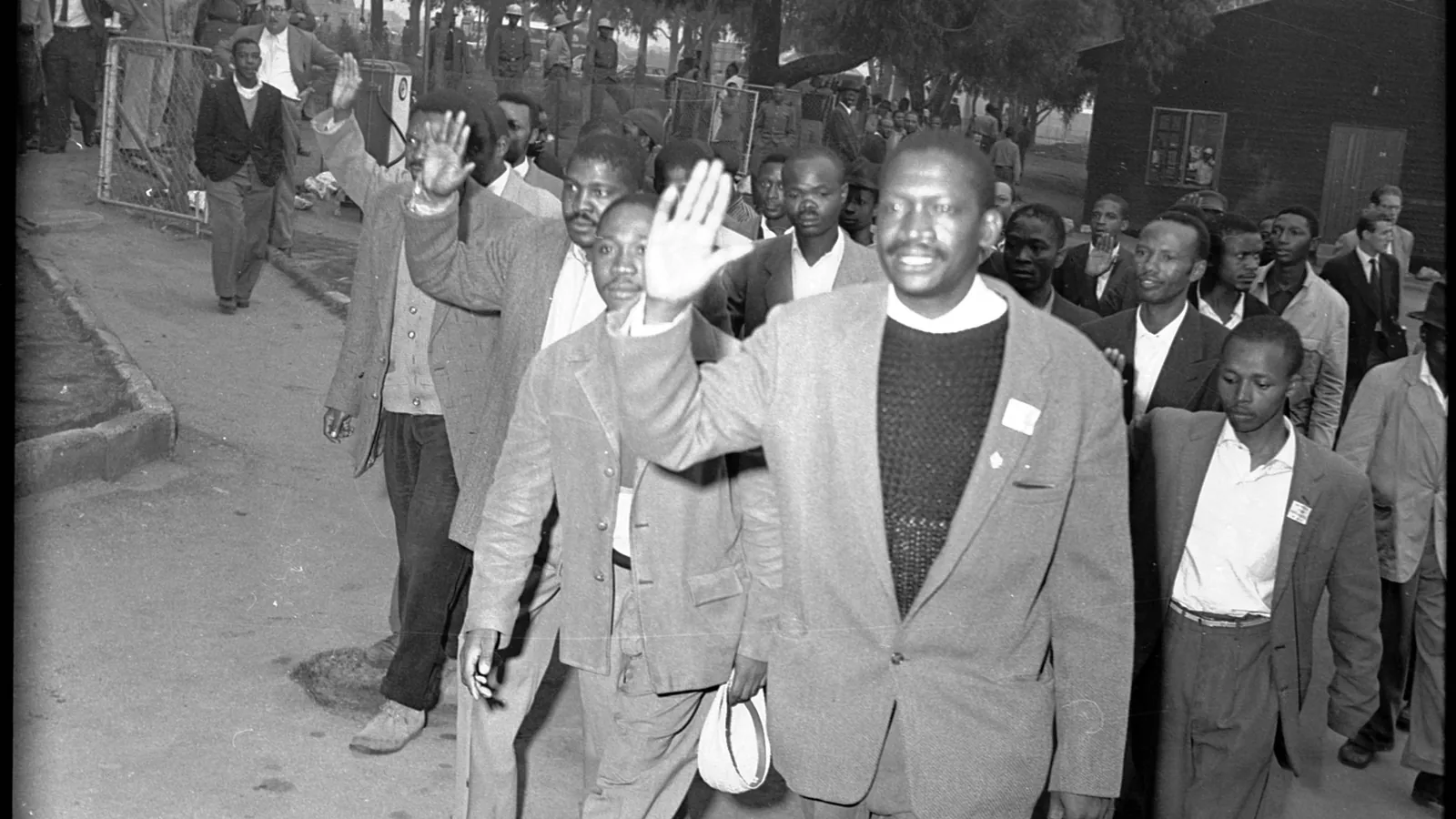
On Saturday, March 19, 1960, the PAC president, Robert Sobukwe, told a press conference that the campaign would begin on Monday the 21st and must stay peaceful: “in this campaign we are going to observe absolute non-violence,” he announced. That Monday morning, by South African History Online’s account, PAC members gathered in a field near the Sharpeville police station and walked to it singing “Izwe lethu” (Our land). Police waited outside, many of them on top of British-made Saracen armored cars; by midday about 300 armed police faced a crowd of about 5,000. At 1:15 in the afternoon a scuffle near the entrance knocked a policeman over. The police said afterward that stones were thrown; one officer on an armored car opened fire without warning, the others followed, and the shooting lasted about two minutes. “Most of the victims were shot in the back,” the Truth and Reconciliation Commission wrote in 1998 in its profile of the Transvaal.

Langa, the same evening
When news of Sharpeville reached Cape Town, a crowd that South African History Online puts at between 1,000 and 5,000 gathered at the Langa Flats bus terminus at about five o’clock. Police ordered them to disperse in three minutes and, when they re-formed, charged with batons, tear gas and guns. South African History Online counts three dead and 26 injured at Langa; the Truth and Reconciliation Commission’s chronology gives two dead and 47 wounded.
The next afternoon, in London, Hugh Gaitskell, the leader of the Opposition, asked how many British citizens had been killed or wounded “in the riots which took place in South Africa yesterday.” C. J. M. Alport, Minister of State for Commonwealth Relations, pressed to express regret, said that “civil commotion at any time in any part of the world is always to be regretted.”
Two judges, an emergency and a ban
Two days later Alport told the Commons that “there are to be two judicial inquiries into these circumstances,” and Sir H. Oakshott said that the Union government had “set up two Commissions of Inquiry, each under a Supreme Court judge.” The report of one of them is listed in the South African History Online archive as “Commission of Enquiry into the Occurrences at Sharpeville (and other places) on the 21st March, 1960,” in two volumes dated Johannesburg, June 15, 1960.
By March 25 the Minister of Justice had suspended passes throughout the country. A state of emergency followed, on March 30 by South African History Online’s account, though the Truth and Reconciliation Commission’s chronology prints March 24 and records 11,503 people detained before it ended on August 31. On April 8, 1960, the ANC and the PAC were banned under the Unlawful Organisations Act by a vote of 128 to 16. Sobukwe, arrested after the shooting, was released in 1969. All this happened while the Treason Trial of 156 accused, begun in 1956, was still running; it ended in 1961 with the last 34 acquitted.
Nine votes and two abstentions
The Security Council took up the complaint on March 30, nine days after the shooting. At its 851st meeting that day it invited South Africa and six other states, India, Ethiopia, Ghana, Pakistan, Guinea and Liberia, to take part without a vote; Jordan was added on March 31. Resolution 134 came on April 1, at the 856th meeting.
Its five paragraphs run from finding to demand. The first “recognizes that the situation in the Union of South Africa is one that has led to international friction and if continued might endanger international peace and security.” The second deplores “the loss of life of so many Africans” and sends the families “its deepest sympathies.” The third, quoted above, deplores the government’s policies. The fourth “calls upon the Government of the Union of South Africa to initiate measures aimed at bringing about racial harmony based on equality” and “to abandon its policies of apartheid and racial discrimination.” The fifth asks the Secretary-General to make arrangements to uphold the Charter and to report back. The preamble names the cause: “the racial policies of the Government of the Union of South Africa and the continued disregard by that Government of the resolutions of the General Assembly.” Nine members voted for it; France and the United Kingdom, both permanent members, abstained.
December 10, 1996, at Sharpeville
The Truth and Reconciliation Commission dated the start of its mandate to March 21, 1960, and recorded that the Indemnity Act of 1961, which shielded police officers for acts “committed in good faith,” was made retrospective to that day. The date outlived the government the resolution was addressed to. On May 8, 1996, the Constitutional Assembly adopted the text of a new constitution; the Constitutional Court refused to certify it on September 6 and certified an amended text on December 4. Then, in the Constitutional Court’s own words, “Nelson Mandela signs the Constitution into law in Sharpeville, in Vereeniging, on 10 December, which is international Human Rights Day.” South Africa keeps March 21 as Human Rights Day, “historically linked with 21 March 1960, and the events of Sharpeville,” as the government’s page for the day states. The United Nations observes the same date as the International Day for the Elimination of Racial Discrimination, proclaimed by General Assembly resolution 2142 (XXI); its observance page says the day “commemorates the Sharpeville Massacre in 1960.”
Key facts
- Security Council Resolution 134 (1960), document S/4300, was adopted on April 1, 1960, at the Council’s 856th meeting by nine votes to none, with France and the United Kingdom abstaining.
- The complaint that brought the matter to the Council, document S/4279 and Add.1, was lodged by 29 member states; the Council began discussion at its 851st meeting on March 30, 1960.
- Police fired on the crowd at the Sharpeville police station on March 21, 1960, for about two minutes; the official count was 69 dead and 180 wounded (South African government, South African History Online), and the Truth and Reconciliation Commission’s chronology prints 186 wounded.
- “Most of the victims were shot in the back,” the Truth and Reconciliation Commission’s Final Report states (Volume 3, Chapter 6).
- At Langa, Cape Town, the same evening, South African History Online counts three dead and 26 injured; the Truth and Reconciliation Commission’s chronology gives two dead and 47 wounded.
- The African National Congress and the Pan Africanist Congress were banned under the Unlawful Organisations Act on April 8, 1960, by 128 votes to 16 (South African History Online).
- Two commissions of inquiry, each under a Supreme Court judge, were set up (House of Commons, March 24, 1960); the Sharpeville commission’s report is dated Johannesburg, June 15, 1960.
- Nelson Mandela signed the Constitution into law at Sharpeville, in Vereeniging, on December 10, 1996, six days after the Constitutional Court certified it.
FAQ
What did Security Council Resolution 134 say about South Africa?
Adopted on April 1, 1960, it recognized that the situation in the Union of South Africa "has led to international friction and if continued might endanger international peace and security," deplored the loss of life and the government's policies and actions, called on the government "to abandon its policies of apartheid and racial discrimination," and asked the Secretary-General to consult with the government and report back.
How many people died at Sharpeville on March 21, 1960?
Sixty-nine, by the count given by the South African government, by South African History Online and by the United Nations. The number of wounded is printed as 180 in the official inquest figure that South African History Online cites and as 186 in the Truth and Reconciliation Commission's chronology.
Why is March 21 Human Rights Day in South Africa?
The South African government's page for the day says it "is historically linked with 21 March 1960, and the events of Sharpeville." The United Nations observes the same date as the International Day for the Elimination of Racial Discrimination under General Assembly resolution 2142 (XXI). The 1996 Constitution was signed at Sharpeville on December 10, 1996, the international Human Rights Day.
Sources
- United Nations, Security Council — Resolution 134 (1960), S/4300, adopted April 1, 1960 at the 856th meeting, in Resolutions Adopted and Decisions Taken by the Security Council in 1960 (with the decisions of the 851st and 853rd meetings, March 30 and 31, 1960).
- South African History Online — "Sharpeville Massacre, 21 March 1960," article A-0059846, published March 31, 2011, updated July 22, 2026.
- South African History Online — "Aftermath: Sharpeville Massacre 1960," article A-0065209, published June 13, 2011, updated July 21, 2026.
- South African History Online, Archive — "Commission of Enquiry into the Occurrences at Sharpeville (and other places) on the 21st March, 1960, Volume 1, Johannesburg, 15 June 1960," record R-0124897.
- Truth and Reconciliation Commission of South Africa, Final Report, Volume 3 (1998) — Chapter 1, Appendix: National Chronology (1956 and 1960 entries), and Chapter 6, Regional Profile: Transvaal 1960–1975, paragraphs 1 to 3.
- Truth and Reconciliation Commission of South Africa, Final Report, Volume 2 (1998) — Chapter 1, National Overview, paragraph 42 (the Indemnity Act of 1961).
- South African Government — "Human Rights Day 2024," 21 March.
- United Nations — "International Day for the Elimination of Racial Discrimination, 21 March" (citing General Assembly resolution A/RES/2142 (XXI)).
- Constitutional Court of South Africa — "The Constitution: History" (the certification of 1996 and the signing at Sharpeville on December 10, 1996).
- UK Parliament, Historic Hansard — "Union of South Africa (Riots)," HC Deb March 22, 1960, vol 620 cc239-41 (Hugh Gaitskell, C. J. M. Alport).
- UK Parliament, Historic Hansard — "Riots" (Union of South Africa), oral answers, HC Deb March 24, 1960, vol 620 cc648-53 (Alport, Sir H. Oakshott).
Cite this article
- APA
- Our Earth's History. (2026, September 22). Resolution 134, nine to none: the Security Council on Sharpeville. Our Earth's History. https://ourearthshistory.com/africa/contemporary/sharpeville-march-21-1960-resolution-134/
- Chicago
- Our Earth's History. “Resolution 134, nine to none: the Security Council on Sharpeville.” Our Earth's History, September 22, 2026. https://ourearthshistory.com/africa/contemporary/sharpeville-march-21-1960-resolution-134/.
- MLA
- “Resolution 134, nine to none: the Security Council on Sharpeville.” Our Earth's History, 22 Sep. 2026, https://ourearthshistory.com/africa/contemporary/sharpeville-march-21-1960-resolution-134/.
Text licensed CC BY-NC-ND 4.0. Found an error? Tell us.