A 900-meter wall and a fixed capital: Fasilides at Gondar, 1636
.jpg)
TL;DR — Fasilides fixed the moving Ethiopian court at Gondar in 1636; the Zamani Project and Annales d’Éthiopie papers describe his walled enclosure and the castles later emperors added.
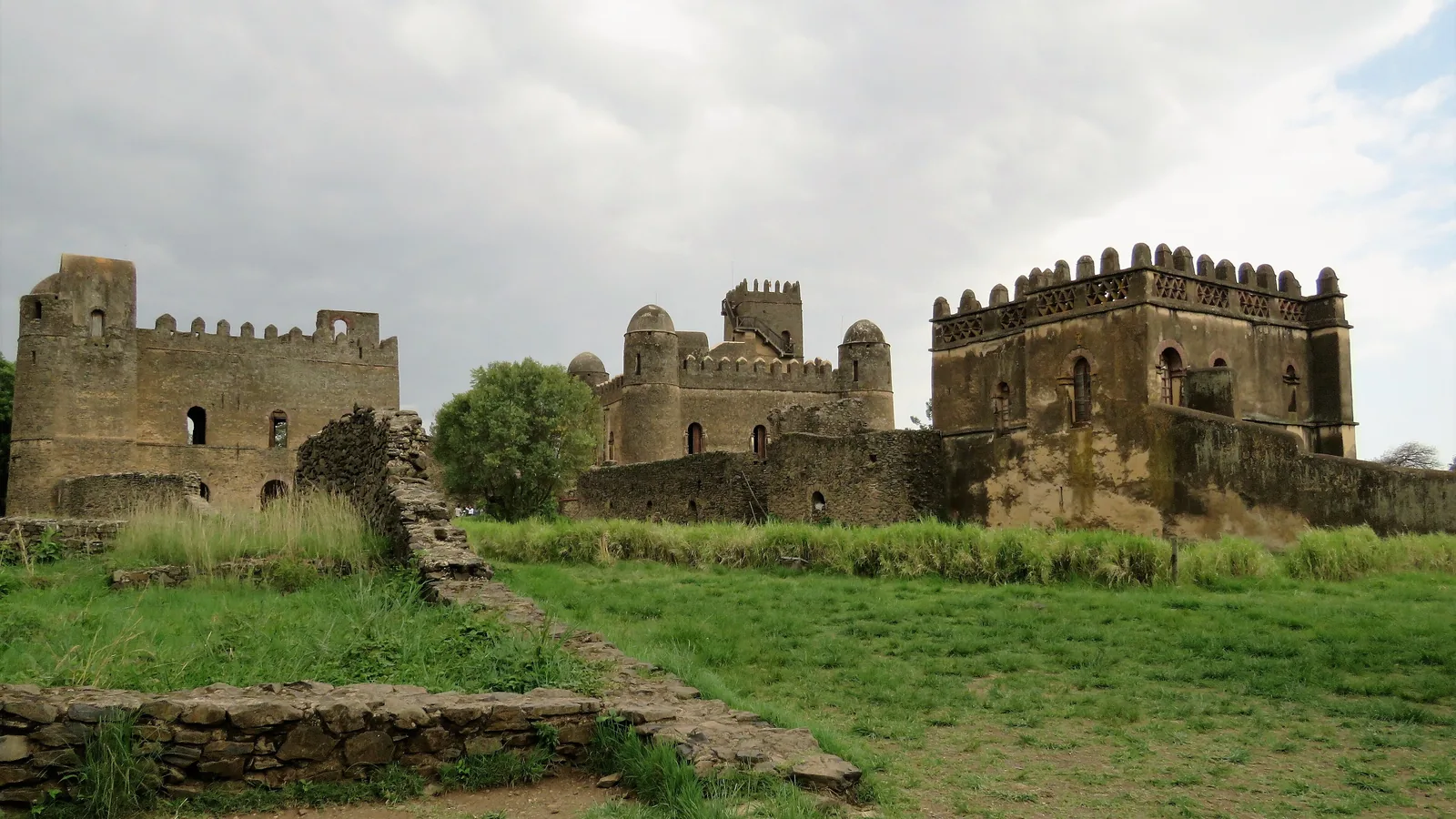
In 1632 the Ethiopian emperor Susenyos abdicated in favor of his son Fasilides, and four years later the new ruler stopped moving. The Zamani Project at the University of Cape Town, which surveyed the site in 2018, describes the change in one sentence: “Between the 13th - 17th centuries, Ethiopian rulers moved their royal camps frequently, but King Fasilides settled in Gondar and established it as a permanent capital in 1636.” His enclosure, Fasil Ghebbi, came to hold palaces, churches, monasteries and the castles of later emperors inside a wall 900 meters long. By the Zamani account it remained the capital until its decline in the late 18th century.
Quick facts
- When
- 1622 (Susenyos declares himself a Catholic) · 1631 (edict of toleration) · 1632 (Susenyos abdicates; Jesuits expelled) · 1636 (Fasilides settles at Gondar) · 1642 and 1647 (embassies to Yemen) · 1668 and 1678 (segregation decrees) · 1864 (Tewodros II sacks Gondar) · 2018 (Zamani Project survey)
- Where
- Gondar and the walled enclosure of Fasil Ghebbi, in northwestern Ethiopia; the Jesuit residences at Gorgora; the monastery of Qoma Fasilädäs in what is now South Gondar
- Who
- Emperor Susenyos; Emperor Fasilides (Fasiladas); Pedro Páez; Patriarch Afonso Mendez; Queen Wäld Sä'ala; Yohannes I; Iyasu I; Bakaffa; Tewodros II; Yohannis IV
- Outcome
- Fasilides made Gondar a permanent capital in 1636 and built its first and largest castle; later emperors added their own buildings inside a 900-meter wall. Gondar remained the capital until its decline in the late 18th century, and Tewodros II's sack of 1864 ended its political and commercial preeminence
Susenyos, Páez and the conversion of 1622
The capital came out of a religious war at court. Pedro Páez, a Spanish Jesuit, lived in Ethiopia from 1603 to 1622, according to the historian Elias Kiptoo Ngetich of Moi University in Kenya. He learned to read and write Ge’ez and Amharic and won over the emperor and part of his court. Susenyos, Ngetich wrote, “openly declared himself a Catholic in 1622, the same year that Paez died.”
The Catholic patriarch Afonso Mendez arrived in 1624. On February 11, 1626, the emperor, his family and the court made full submission to the Roman Church. Revolts followed. In 1631 Susenyos issued a proclamation allowing everyone to follow his own religious inclinations; Mendez forced him to change it, and the rebellion spread until, in Ngetich’s account, even the emperor’s own son turned against him. In 1632 Susenyos abdicated in favor of Fasilides and proclaimed that the old religion could be restored.
The Jesuits were expelled that year. Mendez was forced out in 1635, and priests who refused to leave were killed. Ngetich wrote that the persecution of Catholics and the exclusion of foreigners “sealed off Ethiopia from the West for the next century and a half.” Juan Ruiz Jiménez of the Real Academia de Bellas Artes de Granada, who studied the Jesuit residences at Gorgora that Páez had restored, gives the same turn: the rise of Fasilides in 1632 and pressure from his courtiers brought on the expulsion, and the Catholics who stayed went underground.
1636: a capital that stayed in one place
Solomon Woredekal, writing on the restoration of the Gondar monuments in Annales d’Éthiopie in 1985, named Fasiladas, as he spelled the name, as the king who made Gondar the capital. Of the several explanations for the choice, he wrote, the geopolitical condition of the country at the time seemed to be the accepted one. He did not name the others.
Abdussamad H. Ahmad, in the same journal in 2000, tied the new capital to a return of relative peace after a century of war and rebellion. Fasilides collected customs dues and protected the trade routes, and in Ahmad’s words Gondar “may have emerged as the first true urban centre of the Christian kingdom.” After a visit from the Yemeni judge Sharaf al-Din al-Hassan, Fasilides sent an embassy to Yemen in 1642 to negotiate trade. A second embassy left in 1647 under al-Hajji Salim b. ‘Abd al-Rahim, a Muslim of Gondar, with a Christian whose name the account does not give.
The emperor’s mother was building as well. The historian Anaïs Wion dated the founding of the monastery of Qoma Fasilädäs, in what is now South Gondar, to between 1620 and 1640, by Queen Wäld Sä’ala (1577–1661), wife of Susenyos and mother of Fasilides. Its church keeps a set of wall paintings that Wion assigned to the first Gondarine style.
Castle of Fasilides, the first and the largest
The Zamani Project describes Fasil Ghebbi as a fortified compound whose buildings show Hindu and Arab influences, with some Baroque elements that reached Gondar through the Jesuit missionaries. Woredekal wrote that the first castle, and the biggest, was built under Fasilides and named after him. It is rectangular and three stories high, with round domed towers at its corners and a one-story, L-shaped building on the south side.
On the east, where the water reservoir stood, the ground was filled with earth to make a raised terrace level with the first floor. An arched gateway joins the castle to the church of Adebabay Iyesus, where, Woredekal wrote, the successors of Fasilides are believed to have been crowned.
"Smaller buildings named after them"
The castle served as the main residence and chancellery of every emperor after Fasilides, Woredekal wrote, but “some had built smaller buildings named after them.” He dated the castle of Yohannes I to 1667–82: a crown-shaped building of two stories, linked by a covered walkway to the castles of Fasilides and Iyasu, and the only one plastered on both faces of its walls. Its structure was in such poor condition that the Italians rebuilt most of it. He gave Iyasu’s castle the dates 1682–1706 and Bakaffa’s castle 1721–30.
Yohannes I, called the Just, also changed who could live near the palace. A church council at Gondar in 1668 ordered the “segregation of the Franks, Muslims, Turks and also of the Falasha, called Kayla, who are of the Jewish religion, so that they do not live with the Christians,” Ahmad wrote, citing the royal annals edited by Ignazio Guidi. A second decree in 1678 moved Muslims to a quarter on the banks of the Qaha River, called Islamge or Bet al-Islam, and barred Muslims and Falasha from owning land in the town.
After the decline: 1864, 1881 and a survey in 2018
In 1864 Emperor Tewodros II ordered his Muslim subjects to convert or leave, and sent his soldiers to sack Gondar on the pretext that its people had refused to pay taxes. Ahmad wrote that the sack ended the political and commercial preeminence the town had held since Fasilides began drawing Muslims, Falasha and Qimant to it “some two hundred and thirty years earlier.” In 1881 Emperor Yohannis IV razed the mosque in the Muslim quarter and built a church in its place.
A history of the city was written down after those years. Sisay Sahile Beyene of the University of Gondar describes the Tārik Zamǝdra Gondar, “The History of the Land of Gondar,” as an Amharic compendium written at the turn of the 20th century, after the destruction and looting of the preceding decades. It follows the city from its founding in the 1630s to the reign of Menilek II.
The Zamani Project’s field campaign of 2018 measured the castle of Fasilides, the Bakaffa Castle, Dawit III’s Hall, the castle of Iyasu, the Royal Library, the Chancellery, the Royal Archive Building, the stables and the lion cages of Fasil Ghebbi.
Key facts
- The Zamani Project dates Fasilides’ settlement at Gondar as a permanent capital to 1636; a dissertation abstract in Aethiopica gives the founding as “the 1630s.”
- Fasil Ghebbi was enclosed by a wall 900 meters long and held palaces, churches and monasteries (Zamani Project).
- Susenyos declared himself a Catholic in 1622, issued an edict of toleration in 1631 and abdicated in favor of Fasilides in 1632 (Ngetich, 2016).
- The Jesuits were expelled in 1632, and Patriarch Afonso Mendez left in 1635 (Ngetich, 2016; Ruiz Jiménez, 2023).
- The castle of Fasilides is rectangular, three stories high, with round domed towers at its corners (Woredekal, 1985).
- Woredekal dated the castles of Yohannes I to 1667–82, Iyasu to 1682–1706 and Bakaffa to 1721–30.
- Fasilides sent embassies to Yemen in 1642 and 1647 (Ahmad, 2000).
- Tewodros II sacked Gondar in 1864, and Yohannis IV razed its mosque in 1881 (Ahmad, 2000).
FAQ
Who made Gondar the capital of Ethiopia?
Emperor Fasilides, also spelled Fasiladas, who came to the throne in 1632 when his father Susenyos abdicated. The Zamani Project dates his settlement at Gondar as a permanent capital to 1636.
What is Fasil Ghebbi?
The walled royal enclosure at Gondar, surrounded by a wall 900 meters long. It contains the castle of Fasilides and buildings added by later rulers, among them the castles of Iyasu and Bakaffa, Dawit III's Hall, the Royal Library and the Chancellery. It is a UNESCO World Heritage site.
Why did the Jesuits leave Ethiopia in 1632?
Susenyos's conversion and the full submission of his court to Rome in 1626 set off revolts. After he abdicated in 1632 and allowed the old religion to be restored, Fasilides drove the Jesuits out, and Mendez was forced to leave in 1635.
Sources
- Zamani Project, University of Cape Town: "Site - Fasil Ghebbi - Gondar" (site description and list of monuments documented in the 2018 field campaign).
- Solomon Woredekal, "Restoration of Historical Monuments of Gondar," Annales d'Éthiopie, vol. 13 (1985), pp. 119–127 (Persée).
- Elias Kiptoo Ngetich, "Catholic counter-reformation: a history of the Jesuits' mission to Ethiopia 1557-1635," Studia Historiae Ecclesiasticae, vol. 42, no. 2 (2016), pp. 104–115 (SciELO South Africa).
- Juan Ruiz Jiménez, Real Academia de Bellas Artes de Granada, "Actividad litúrgica y musical en las residencias jesuíticas de Gorgora en Etiopía (1607-1632)," journal article, published December 16, 2023 (Zenodo record and abstract).
- Anaïs Wion, "Un nouvel ensemble de peintures murales du premier style gondarien : le monastère de Qoma Fasilädäs," Annales d'Éthiopie, vol. 17 (2001), pp. 277–306 (Persée).
- Abdussamad H. Ahmad, "Muslims of Gondar 1864-1941," Annales d'Éthiopie, vol. 16 (2000), pp. 161–172 (Persée).
- Sisay Sahile Beyene, University of Gondar, dissertation abstract "A Critical Edition and Annotated Translation of the Late Nineteenth and Early Twentieth Century Treatise: Tārik Zamǝdra Gondar (The History of the Land of Gondar)," Aethiopica, vol. 25 (2022).
Cite this article
- APA
- Song Letter. (2026, September 30). A 900-meter wall and a fixed capital: Fasilides at Gondar, 1636. Our Earth's History. https://ourearthshistory.com/africa/early-modern/gondar-1636-fasilides-fasil-ghebbi-castles/
- Chicago
- Song Letter. “A 900-meter wall and a fixed capital: Fasilides at Gondar, 1636.” Our Earth's History, September 30, 2026. https://ourearthshistory.com/africa/early-modern/gondar-1636-fasilides-fasil-ghebbi-castles/.
- MLA
- Song Letter. “A 900-meter wall and a fixed capital: Fasilides at Gondar, 1636.” Our Earth's History, 30 Sep. 2026, https://ourearthshistory.com/africa/early-modern/gondar-1636-fasilides-fasil-ghebbi-castles/.
Get the week in history
One email a week: the new articles, and what was happening elsewhere at the same moment. Free, no ads, unsubscribe any time. How we handle your email.
Text licensed CC BY-NC-ND 4.0. Found an error? Tell us.