A fire in Istanbul, September 2, 1633, and the coffeehouses closed

TL;DR — A fire outside Istanbul’s Cibali gate burned a fifth of the city on September 2, 1633. The same day, Murad IV ordered the coffeehouses shut and banned tobacco.
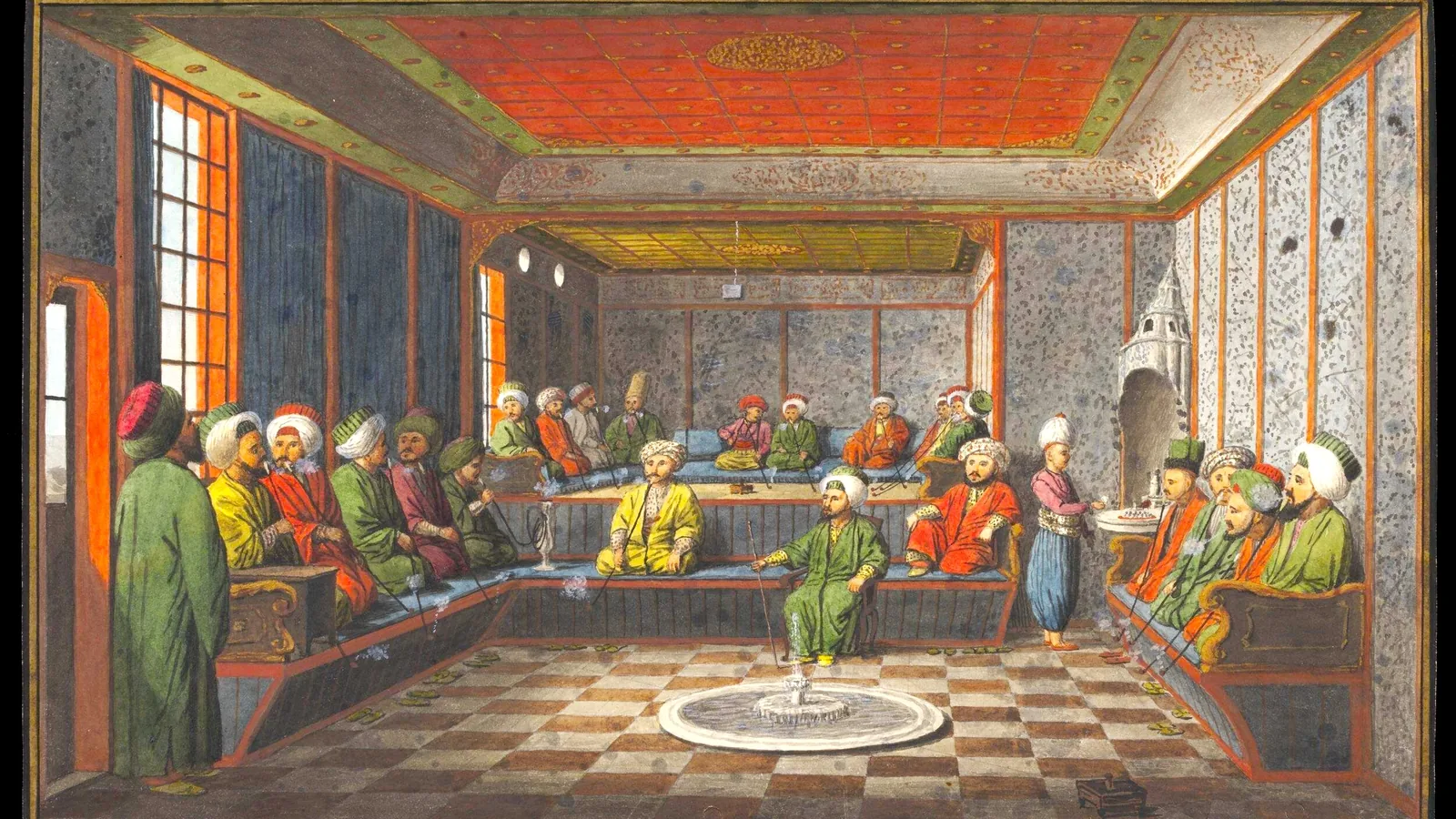
A fermân dated 27 Safer 1043, September 2, 1633, closed every coffeehouse in Istanbul and the other Ottoman cities. At Eyüp alone 120 coffee shops were torn down, according to the Turkiye Diyanet Vakfi Islam Ansiklopedisi entry “Kahve,” which cites Ottoman state archive document A.DVN, no. 25/47. The order came down on the same date as a fire that had started outside the Cibali gate in Istanbul, caused by a shipyard worker caulking a vessel, and that spread with the wind until a fifth of the city had burned, as the encyclopedia’s “Kahvehane” and “Kahve” entries both record. Word spread that the fire had started among men smoking tobacco in a coffeehouse. On that report, the preacher Kadizade Mehmed Efendi pressed the case that coffee and tobacco were a “bid’at-i seyyie,” an evil innovation, and Şeyhülislam Ahizade Hüseyin Efendi issued the fatwa that let Murad IV act.
Quick facts
- When
- 27 Safer 1043 (September 2, 1633); coffeehouses reopened early in the reign of Mehmed IV (from 1648)
- Where
- Istanbul, outside the Cibali gate, and other Ottoman cities including Edirne
- Who
- Sultan Murad IV; preacher Kadizade Mehmed Efendi; Şeyhülislam Ahizade Hüseyin Efendi; scholar Katip Celebi
- Outcome
- A fermân closed the coffeehouses of Istanbul and other Ottoman cities and banned tobacco; 120 coffee shops were torn down at Eyüp alone; the ban lasted until early in Mehmed IV's reign
Istanbul's first coffeehouses, in the 1550s
Istanbul’s first coffeehouses are generally accepted to have opened in the early 1550s, the “Kahvehane” entry states. The contemporary chronicler Ali Mustafa Efendi dated the first ones to 1553, while the seventeenth-century chronicler Pecuylu Ibrahim wrote that a merchant from Aleppo named Hakem and a man from Damascus named Sems opened them in Istanbul’s Tahtakale district in the year 962 (1554-1555). The “Kahve” entry adds an earlier trace of the drink itself, from Katip Celebi’s own writing: he recorded that coffee reached Istanbul by ship in the year 950 (1543) but met resistance from prohibitory fatwas, and the Egyptian scholar al-Qadiri wrote that news the same year that “the sultan has banned coffee in Istanbul” spread in Mecca during the pilgrimage season. Coffeehouses had closed once before, in Mecca, where gathering places for coffee, music and chess were popular by the early sixteenth century until religious disapproval shut them in 917 (1511), though that ban did not last long, the Encyclopaedia Iranica entry “Coffeehouse” records.
Coffeehouses spread quickly once established in Istanbul, reaching about 600, including small coffee stalls, during the reigns of Selim II and Murad III, according to the French writer d’Ohsson as cited in the “Kahve” entry. The same entry records closures through those decades: coffeehouses were shut in Homs in 966 (1559), in Aleppo, Damascus and Jerusalem in 972 (1565), and in Istanbul and Galata in 975 (1568), grouped together with taverns and banned on that basis. Şeyhülislam Ebussuud Efendi issued a fatwa calling coffee what “fasiklarin icecegi,” dissolute men drink; his successor Bostanzade Mehmed Efendi took the opposite position in 1000 (1592), with a fatwa titled “fevaid-i kahve,” the benefits of coffee, arguing it was not an intoxicant.
Kadizade Mehmed Efendi and his student Katip Celebi
The Kadizadeli movement aimed, in the words of the Turkiye Diyanet Vakfi Islam Ansiklopedisi entry “Kadizadeliler” by Semiramis Cavusoglu, to purge Islam of elements it counted as innovations outside the Quran and the sunna of the Prophet, among them whether tobacco and coffee were religiously forbidden; Kadizade Mehmed Efendi judged both an innovation and forbidden. Kadizade, born Mehmed in Balikesir in 990 (1582) and dead in 1045 (1635), preached at the Fatih mosque and then, from 1041 (1631-1632), at Hagia Sophia. Katip Celebi’s own biographical entry in the encyclopedia, written by Orhan Saik Gokyay, records that on returning to Istanbul, Katip Celebi attended Kadizade Mehmed Efendi’s lessons and came under the influence of a man of clear expression and persuasive oratory, a description Katip Celebi set down himself in his book Mizanu’l-hak, page 130. Katip Celebi, born Mustafa in Zilkade 1017 (February 1609) in Istanbul, son of Abdullah, was known among scholars as Katip Celebi and in the bureaucracy as Hacı Halife. He rode on several of Murad IV’s campaigns, including the Revan campaign of 1635, before turning to scholarship, and died in 1067 (1657).

The fire and the closure, September 2, 1633
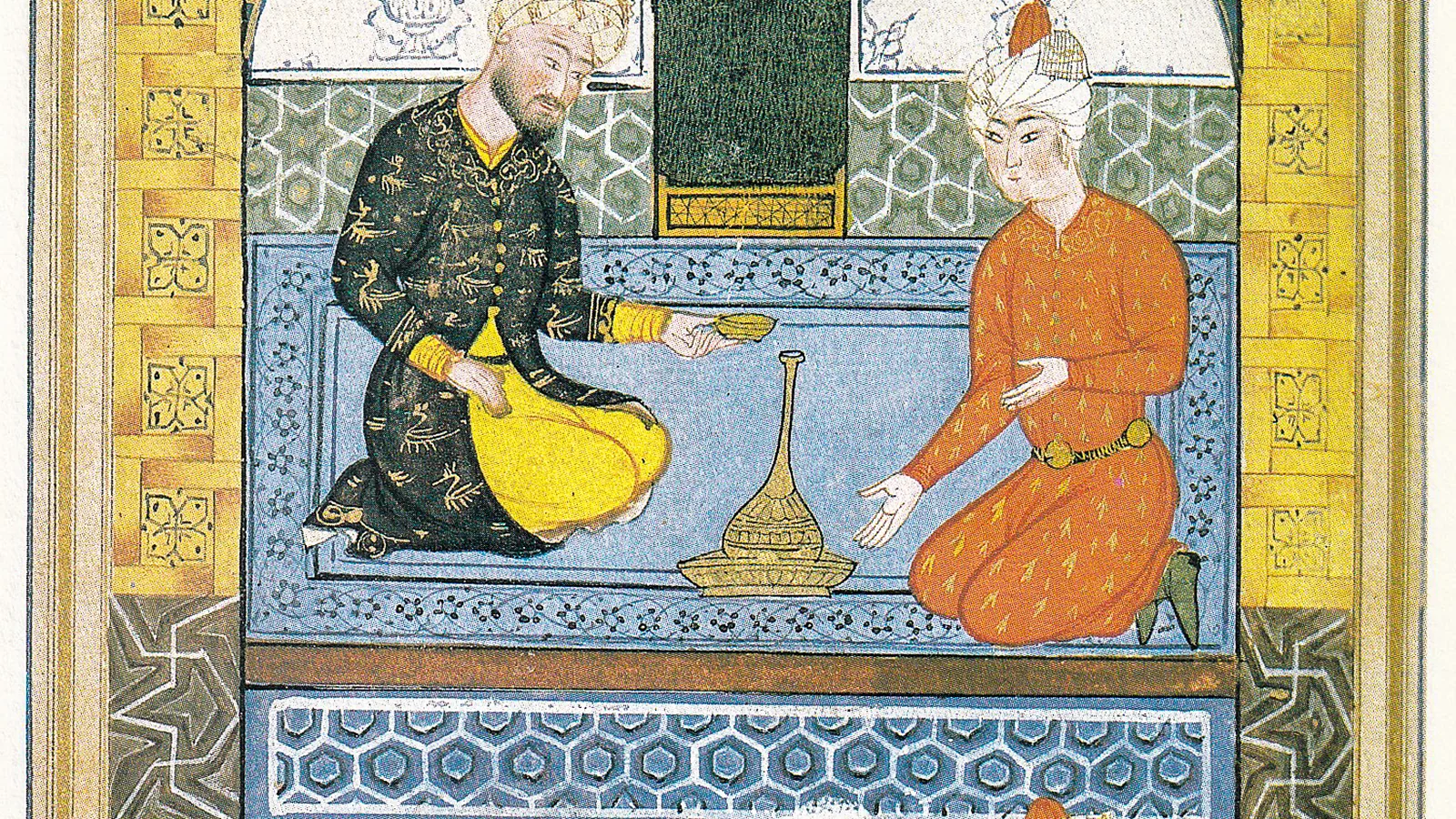
The Turkiye Diyanet Vakfi Islam Ansiklopedisi entry “Murad IV” records that Katip Celebi, noting losses beyond repair, wrote that many manuscripts were destroyed in the houses of scholars and notables. The same entry states that the sultan had the coffeehouses torn down on the pretext of preventing another fire, had rooms for unmarried men, tanners and farriers built in their place, and banned tobacco; it also names him as the sultan who had coffeehouses in Edirne torn down as well, so the closure reached beyond Istanbul. Despite the story that he hated tobacco and opium, the entry adds, Murad IV was himself excessively fond of drink, and saw falling in with the conservative faction’s inclination as a useful opening for his domestic rule.
Mizanu'l-hak, Katip Celebi's last book
Katip Celebi’s own entry in the encyclopedia lists Mizanu’l-hak fi ihtiyari’l-ehak among his works, describing it as the last book he wrote, made up of his balanced views on the disputed questions of his day, printed in Istanbul in the year 1306 of the Islamic calendar; the same entry records that he also mentions, within that book, a separate short treatise of his own on tobacco. His entry states that the original information about his life rests on his own autobiographical writing, in the manuscript Süllemü’l-vüsul and in Mizanu’l-hak itself, page 129 and following, including his time as Kadizade’s student.
Not every Ottoman writer who lived through the ban agreed with it. The “Kahve” entry records that the seventeenth-century authors Solakzade and Katip Celebi did not approve of so severe a ban and welcomed its lifting early in the reign of Mehmed IV, while the historian Naima judged it in the context of its day, holding that Murad IV’s aim had been to discipline tyrants and bandits. The Kadizadeli movement did not end with its founder’s death in 1045 (1635): Cavusoglu’s entry records two further phases, one under Üstüvani Mehmed Efendi that ended with his exile to Cyprus in 1066 (1656), and one under Vani Mehmed Efendi lasting from 1663 until his death in 1685.
Reopening, and coffeehouses across Europe
The “Kahve” entry places the lifting of the ban early in the reign of Mehmed IV and gives no year. Coffee’s spread continued elsewhere while the Ottoman ban stood. The “Kahve” entry records that Venice’s first coffeehouse opened in 1615 and coffeehouses spread across Italy by 1645, followed by Marseille in 1644, London in 1650, Vienna in 1651 and Paris in 1669.
Key facts
- Istanbul’s first coffeehouses are generally dated to the early 1550s: 1553 by the chronicler Ali Mustafa Efendi, or 962 (1554-1555) by Pecuylu Ibrahim (Turkiye Diyanet Vakfi Islam Ansiklopedisi, “Kahvehane”).
- Coffeehouses in Mecca were closed once before, in 917 (1511), on religious grounds, though the ban did not last long (Encyclopaedia Iranica, “Coffeehouse”).
- By the reigns of Selim II and Murad III, Istanbul had about 600 coffeehouses and coffee stalls, according to the French writer d’Ohsson (Turkiye Diyanet Vakfi Islam Ansiklopedisi, “Kahve”).
- The fire that started outside Istanbul’s Cibali gate on September 2, 1633, was caused by the carelessness of a shipyard worker caulking a vessel and burned a fifth of the city.
- The closure fermân of the same date, 27 Safer 1043, is recorded in Ottoman state archive document A.DVN, no. 25/47; 120 coffee shops were torn down at Eyüp alone.
- Kadizade Mehmed Efendi, born 990 (1582) in Balikesir and dead in 1045 (1635), pressed the case that coffee and tobacco were an evil innovation; the fatwa was issued by Şeyhülislam Ahizade Hüseyin Efendi.
- Katip Celebi (1609-1657), a student of Kadizade Mehmed Efendi, called the ban excessive and welcomed its lifting; he wrote in his last book, Mizanu’l-hak, that he had also written a separate treatise on tobacco.
- European coffeehouses opened later, in Venice in 1615, Marseille in 1644, London in 1650, Vienna in 1651 and Paris in 1669.
FAQ
When did Murad IV close the Ottoman coffeehouses?
On September 2, 1633 (27 Safer 1043), the same date as a fire that started outside Istanbul's Cibali gate and burned a fifth of the city. The order closed coffeehouses across the empire and banned tobacco.
Who was Kadizade Mehmed Efendi?
A preacher at the Fatih mosque and later at Hagia Sophia who argued that coffee and tobacco were a forbidden innovation. Katip Celebi attended his lessons and later described him as a man of persuasive oratory.
When did the Ottoman coffeehouses reopen?
The sources cited here state only that it was early in the reign of Mehmed IV, without giving an exact year or decree.
Sources
- Ahmet Yasar, "Kahvehane," Turkiye Diyanet Vakfi Islam Ansiklopedisi, EK-2 (Ankara, 2019), pp. 3-5.
- Idris Bostan, "Kahve," Turkiye Diyanet Vakfi Islam Ansiklopedisi (Ankara, 2001).
- Turkiye Diyanet Vakfi Islam Ansiklopedisi, "Murad IV" (Ankara).
- Semiramis Cavusoglu, "Kadizadeliler," Turkiye Diyanet Vakfi Islam Ansiklopedisi (Ankara, 2001).
- Orhan Saik Gokyay, "Katib Celebi," Turkiye Diyanet Vakfi Islam Ansiklopedisi (Ankara, 2022).
- Sayyed Ali Al-e Dawud, "Coffeehouse," Encyclopaedia Iranica, vol. VI, fasc. 1, pp. 1-4 (published December 15, 1992, last updated September 8, 2016).
- Encyclopaedia Iranica, "Coffee," vol. V, fasc. 8, pp. 893-896 (published December 15, 1992, last updated July 15, 2013).
Cite this article
- APA
- LETTER. (2026, September 28). A fire in Istanbul, September 2, 1633, and the coffeehouses closed. Our Earth's History. https://ourearthshistory.com/west-asia/early-modern/ottoman-coffeehouse-ban-1633-murad-iv-cibali-fire-kadizadeli/
- Chicago
- LETTER. “A fire in Istanbul, September 2, 1633, and the coffeehouses closed.” Our Earth's History, September 28, 2026. https://ourearthshistory.com/west-asia/early-modern/ottoman-coffeehouse-ban-1633-murad-iv-cibali-fire-kadizadeli/.
- MLA
- LETTER. “A fire in Istanbul, September 2, 1633, and the coffeehouses closed.” Our Earth's History, 28 Sep. 2026, https://ourearthshistory.com/west-asia/early-modern/ottoman-coffeehouse-ban-1633-murad-iv-cibali-fire-kadizadeli/.
Text licensed CC BY-NC-ND 4.0. Found an error? Tell us.