Chaldiran, August 23, 1514: guns behind gun-carriages, 40,000 horsemen

TL;DR — On August 23, 1514, janissaries firing from behind gun-carriages broke Shah Ismail’s cavalry at Chaldiran. Selim I took Tabriz, lost it within weeks, and peace waited until 1555.
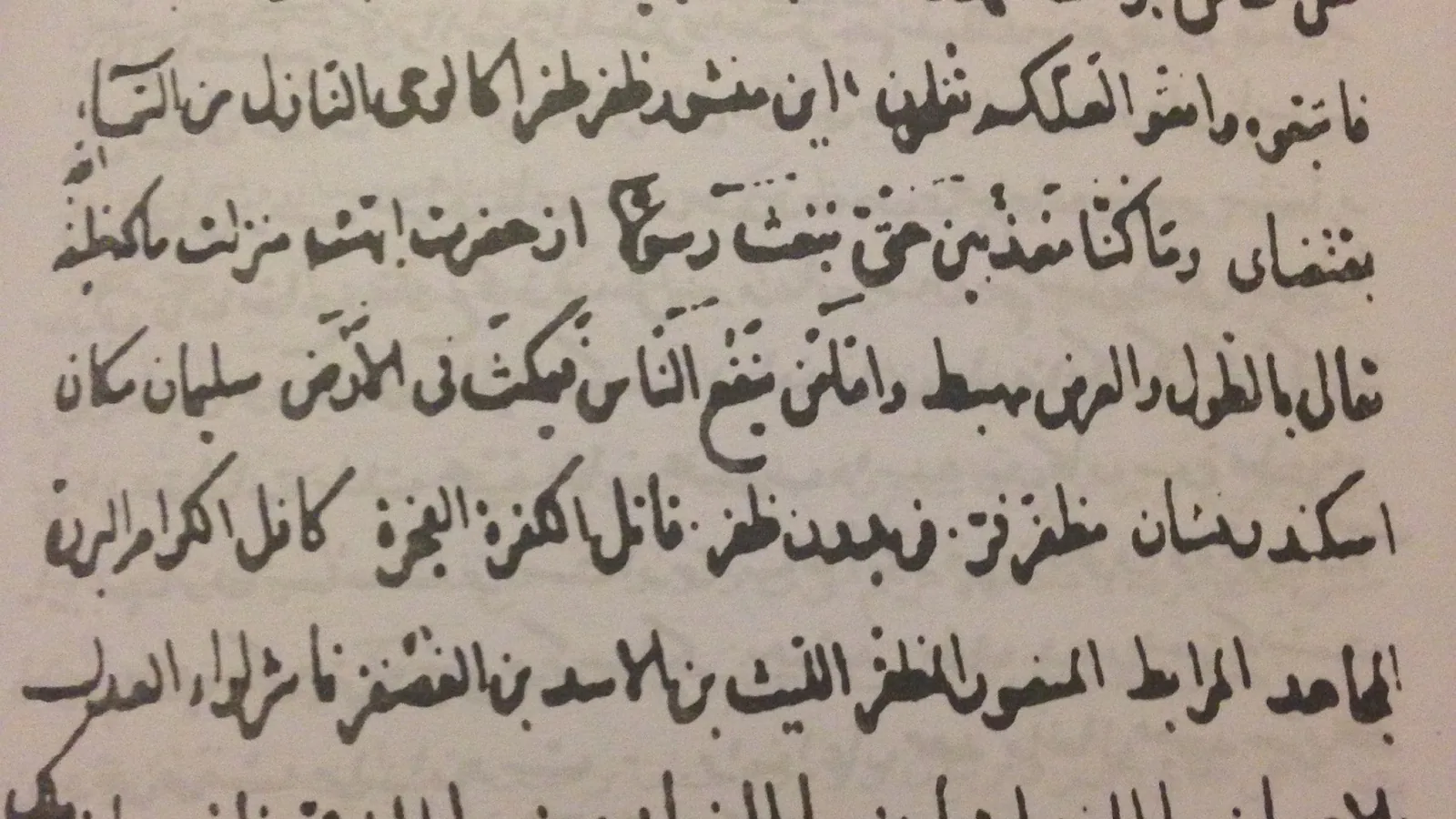
“An engagement fought near Khoy in northwestern Azarbaijan on 2 Rajab 920/23 August 1514”: so Michael J. McCaffrey defines the battle of Chaldiran in the Encyclopaedia Iranica, “a decisive victory for the Ottoman forces” of Sultan Selim I over the Safavids of Shah Ismail I. Roger M. Savory, in the same encyclopedia, wrote that “the most credible figures” for the armies were those of the chronicler Idris Bidlisi: 100,000 Ottomans and 40,000 Safavids. By the end of the day the shah’s cavalry was broken, his favorite wife was a prisoner, and the road to Tabriz lay open. The city fell without a fight, was back in Ismail’s hands within weeks, and the frontier was fixed by treaty 41 years later.
Quick facts
- When
- April 20, 1514 (Selim leaves Istanbul) · August 22 (Ottoman army reaches the plain of Chaldiran) · August 23, 1514 (the battle) · September 5 (Selim enters Tabriz; other entries give September 6 and 7) · September 15 (Ottoman army leaves Tabriz) · June 12, 1515 (Dulkadir defeated at Turna Mountain) · May 29, 1555 (peace of Amasya)
- Where
- The plain of Chaldiran northwest of Khoy, in what is now northwestern Iran; Tabriz, the Safavid capital; Amasya in Anatolia; the silk road from Tabriz to Bursa
- Who
- Sultan Selim I; Shah Ismail I; the muftis Hamza Saru Görez and Kemalpaşazade; the commanders Mohammad Khan Ostajlu and Nur-Ali Khalifa; Hadım Sinan Pasha; Hasan Pasha; Tajlu Khanum; the Venetian envoy Caterino Zeno
- Outcome
- The Safavid cavalry broke against janissary muskets and cannon; Selim took Tabriz and left it within days under pressure from his own troops, and Ismail reoccupied it; Diyarbakır and the Dulkadir principality passed to the Ottomans; Ismail never again led an army; the frontier was fixed by treaty at Amasya on May 29, 1555
Bayezid, Tokat and the road to war
The chroniclers of the time blamed provocations by Ismail; McCaffrey wrote that “no single event prompted Salīm’s decision to wage war. It was, in fact, the direct and inevitable result of the establishment of the Safavid state.” Ismail had crowned himself at Tabriz in 1501 and made Twelver Shiism the creed of Iran; his followers in Anatolia were the Qizilbash.
Selim’s father, Bayezid II, had deported Anatolian Shiites to the Morea in 1502; Adel Allouche, in a 1983 study, puts the number at thirty thousand. Risings followed: Shahquli Baba Tekelu’s in 1511, beaten near Sivas, and Nur-Ali Khalifa’s in 1512, which held Tokat and had the Friday sermon read there in Ismail’s name; the town burned when its people resisted. Selim took the throne that year, and before his campaign ordered the execution of “upwards of 40,000 Anatolian Qezelbāš,” in McCaffrey’s words; Allouche and the Turkish Encyclopaedia of Islam give the same forty thousand, and Savory, reporting it from Idris Bidlisi, added that “this is probably a conventional figure denoting a large number.”
Two muftis, one embargo, four letters
Two jurists, Hamza Saru Görez, the mufti of Istanbul, and Kemalpaşazade, issued rulings that placed the Qizilbash outside Islam and licensed war against them. Selim left Istanbul on April 20, 1514, and that summer banned Iranian raw silk from Ottoman markets; Allouche quotes Halil İnalcık on the effect: “The customs receipts from Bursa dropped from 130,000 ducats in 1512 to 40,000 ducats in 1521.”
Allouche reconstructs four messages. The first, in April 1514, told the shah that the sultan held fatwas approving war on Iran and was marching; the second, a month later, demanded that Ismail repent and become Selim’s vassal. Ismail’s reply, brought by the envoy Shah Quli Aqa, called the sultan’s letter “worthy not of a ruler but of a person addicted to opium.” The Turkish encyclopedia adds that a golden box filled with opium came with it. Selim had the envoy killed. A third message went from Erzincan in late July with gifts chosen as insults: rags, a staff, a toothpick, prayer beads and a begging bowl. A fourth, from Charmuk near Tercan, dared him to fight or wear a veil in place of armor.
August 22 at Chaldiran: the shah waits
The Ottoman army reached the plain of Chaldiran, northwest of Khoy, on August 22 (Savory). It had nearly come apart on the way: at Eleşkirt, the Turkish encyclopedia records, janissaries fired into the sultan’s tent, and a short speech from Selim got the columns moving again.
In the Safavid camp, Mohammad Khan Ostajlu and Nur-Ali Khalifa, “two commanders with firsthand knowledge of Ottoman tactics,” urged the shah to attack at once. The courtier Durmish Khan Shamlu and the shah rebuked them; Ismail, McCaffrey writes, “considered it cowardly to engage an unprepared enemy,” and “this mistake, which enabled the Ottomans to prepare their defenses, would prove costly to the Safavids.”
"Behind a barricade of gun-carriages"
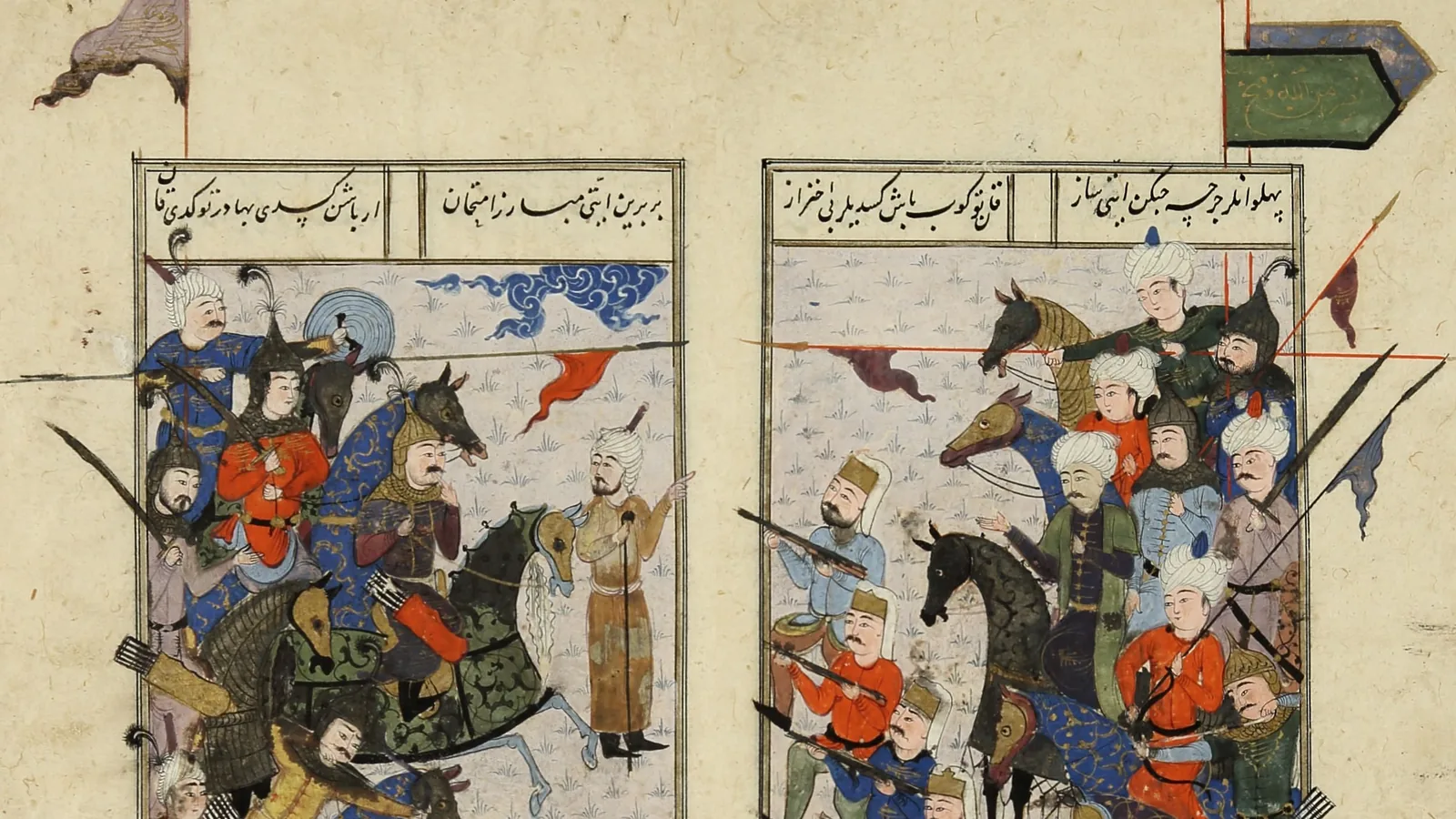
By the Turkish Encyclopaedia of Islam’s order of battle, Selim stood in the center with the janissaries and the gunners, Hadım Sinan Pasha held the right wing and Hasan Pasha, governor-general of Rumelia, the left. In front, Ayas Pasha’s musketeer janissaries stood behind a wall of carts and camels, with cannon chained together behind the azab foot soldiers. Allouche counts the guns at 300.
McCaffrey describes what followed: “The Janissary units were stationed in the center behind a barricade of gun-carriages. As the Safavids advanced the Janissaries opened fire supported by the Ottoman artillery. The largely cavalry Safavid forces were soon in disarray.” Ismail broke the Rumelians on the Ottoman left and reached the center before the musketeers turned him, by the Turkish encyclopedia’s account. He was hit by a shot and his horse went down; the Turkish encyclopedia alone records that a companion who resembled him, Mirza Ali, called out “I am the shah” and gave himself up in his place. Hasan Pasha and ten sancakbeyis died on the Ottoman side; no published count gives a total for either army. Among the prisoners was Tajlu Khanum, mother of the future Shah Tahmasp; Savory reports two traditions of her fate, ransomed with ruby earrings and found wandering in Azerbaijan, or given by Selim to a military judge, the Ja’far Çelebi whom Allouche names.
.jpg)
Tabriz for a week, then the Aras and Amasya
Selim entered Tabriz without resistance on September 5, the date given by Savory, Allouche and the Turkish encyclopedia; McCaffrey has September 7, and Osman G. Özgüdenli, in another Iranica entry, September 6. He took the shah’s treasury and, by Özgüdenli’s dating, left for Karabakh on September 15. At the Aras river the army mutinied, and Selim turned for Amasya. In Allouche’s summary, the main result “was not the capture of Tabriz, as this capital city was re-occupied by Shah Ismāʿīl one month after Selim’s departure.” A peace embassy from the shah reached Amasya; Selim sent its envoys to Istanbul as prisoners.
In 1515 an army under Sinan Pasha beat the Dulkadir principality at Turna Mountain on June 12, and Bıyıklı Mehmed Pasha conquered Diyarbakır and Mardin. Ismail went into mourning, wore a black turban and ordered every sayyed to dress the same, Savory writes; McCaffrey adds that he “never again led his troops into battle.” The Venetian Caterino Zeno wrote at the time: “If the Turk had been beaten, the power of Esmāʿīl would have become greater than that of Tamerlane’s, as by fame alone of such a victory he would have made himself absolute lord of the East.” Selim died in 1520 and Ismail in 1524. Their sons, Suleiman and Tahmasp, made the peace; Allouche gives its terms, “the Safavids recognized Ottoman sovereignty over Arab Iraq and the areas north of Azarbayjan, including Kurdistan,” and Colin Paul Mitchell dates its signing at Amasya to May 29, 1555.
Key facts
- The battle was “fought near Khoy in northwestern Azarbaijan on 2 Rajab 920/23 August 1514”; the Ottoman army had reached the plain the day before (McCaffrey; Savory).
- Savory calls Idris Bidlisi’s figures the most credible: 100,000 Ottomans and 40,000 Safavids; Allouche adds 300 Ottoman guns.
- Before the campaign Selim ordered the execution of “upwards of 40,000” Anatolian Qizilbash, a figure Savory calls “probably a conventional figure denoting a large number.”
- The silk embargo of 1514 cut Bursa customs receipts from 130,000 ducats in 1512 to 40,000 in 1521 (Allouche, after İnalcık).
- Ismail’s reply to Selim’s letters called them “worthy not of a ruler but of a person addicted to opium”; Selim had the envoy executed (Allouche; TDV).
- Mohammad Khan Ostajlu and Nur-Ali Khalifa urged an immediate attack on August 22; Ismail refused as cowardly (McCaffrey).
- Hasan Pasha, governor-general of Rumelia, and ten sancakbeyis died on the Ottoman side; Tajlu Khanum was captured (TDV; Savory).
- Selim entered Tabriz on September 5 by three accounts and left on September 15; peace was signed at Amasya on May 29, 1555 (Savory; Özgüdenli; Mitchell).
FAQ
When and where was the Battle of Chaldiran fought?
On August 23, 1514, on the plain of Chaldiran northwest of Khoy, in what is now northwestern Iran. The Ottoman army under Selim I reached the plain on August 22 and fought the next day.
Why did Shah Ismail lose at Chaldiran?
His army of about 40,000 was mostly cavalry, and it charged an Ottoman center where janissaries with muskets stood behind a barricade of gun-carriages and chained cannon. Two of his commanders had urged him to attack on August 22, before the Ottomans could set up; he refused, and McCaffrey names that refusal as the costly mistake.
What did Selim gain from the Chaldiran campaign?
Tabriz for about a week; Ismail reoccupied it a month after Selim left. The durable gains were Diyarbakır, Mardin and the Dulkadir principality in 1515. The Ottoman-Safavid frontier was settled by treaty at Amasya on May 29, 1555.
Sources
- Encyclopaedia Iranica — Michael J. McCaffrey, "ČĀLDERĀN," Vol. IV, Fasc. 6, pp. 656-658 (December 15, 1990; updated March 27, 2013): the date and place; "no single event"; Bayezid's deportations; the 1511 and 1512 risings; "upwards of 40,000"; Ostajlu and Nur-Ali Khalifa rebuked; "behind a barricade of gun-carriages"; Tabriz on 17 Rajab; Diyarbakır and Dulkadir; mourning.
- Encyclopaedia Iranica — Roger M. Savory, "ESMĀʿĪL I ṢAFAWĪ i. Biography," Vol. VIII, Fasc. 6, pp. 628-636 (December 15, 1998; updated February 20, 2017): the 1502 deportation; "a conventional figure"; the "most credible figures" of Idris Bidlisi; the plain reached on August 22; Tajlu Khanum and the two traditions; Tabriz on September 5; the black turban; Caterino Zeno quoted.
- Encyclopaedia Iranica — Osman G. Özgüdenli, "OTTOMAN-PERSIAN RELATIONS i. Under Sultan Selim I and Shah Esmāʿil I" (July 20, 2006; updated October 21, 2013): Ismail crowned at Tabriz in 1501; Selim leaves Istanbul on April 20, 1514; 40,000 of 140,000 men left behind; letters "in an extremely offensive style"; Tabriz on September 6 and left on September 15; the mutiny at the Aras; the Amasya embassy; Kemah, Turna Mountain and Diyarbakır in 1515; Selim's death on September 21, 1520.
- Encyclopaedia Iranica — Colin Paul Mitchell, "ṬAHMĀSP I" (July 15, 2009; updated October 26, 2012): the peace of Amasya on May 29, 1555, after the Safavid successes of the early 1550s.
- TDV İslâm Ansiklopedisi (İSAM) — Mustafa Çetin Varlık, "ÇALDIRAN SAVAŞI," vol. 8 (Istanbul, 1993), pp. 193-195: the khutba at Tokat in 1512; the two muftis; the golden box of opium; the janissaries at Eleşkirt; the order of battle on both sides; Ismail wounded and the Mirza Ali episode; Hasan Pasha and ten sancakbeyis killed; the entry into Tabriz and the return by Kars and Bayburt; the annexations in southeastern Anatolia.
- Internet Archive — Adel Allouche, The Origins and Development of the Ottoman-Safavid Conflict (906-962/1500-1555), Islamkundliche Untersuchungen 91 (Berlin: Klaus Schwarz Verlag, 1983), full text: thirty thousand moved to the Morea; "forty thousand qizilbash"; the silk embargo and the Bursa customs receipts after İnalcık; Selim's four messages and the gifts; "addicted to opium"; the envoy executed; Hamdam Pasha; 300 guns; Ja'far Çelebi; Tabriz "re-occupied by Shah Ismāʿīl one month after Selim's departure"; Amasya arrival; the terms of 1555.
Cite this article
- APA
- Our Earth's History. (2026, September 22). Chaldiran, August 23, 1514: guns behind gun-carriages, 40,000 horsemen. Our Earth's History. https://ourearthshistory.com/west-asia/early-modern/chaldiran-august-23-1514-selim-ismail-cannon/
- Chicago
- Our Earth's History. “Chaldiran, August 23, 1514: guns behind gun-carriages, 40,000 horsemen.” Our Earth's History, September 22, 2026. https://ourearthshistory.com/west-asia/early-modern/chaldiran-august-23-1514-selim-ismail-cannon/.
- MLA
- “Chaldiran, August 23, 1514: guns behind gun-carriages, 40,000 horsemen.” Our Earth's History, 22 Sep. 2026, https://ourearthshistory.com/west-asia/early-modern/chaldiran-august-23-1514-selim-ismail-cannon/.
Text licensed CC BY-NC-ND 4.0. Found an error? Tell us.