A garden in Tehran, July 1906: the sit-in that won Iran a parliament
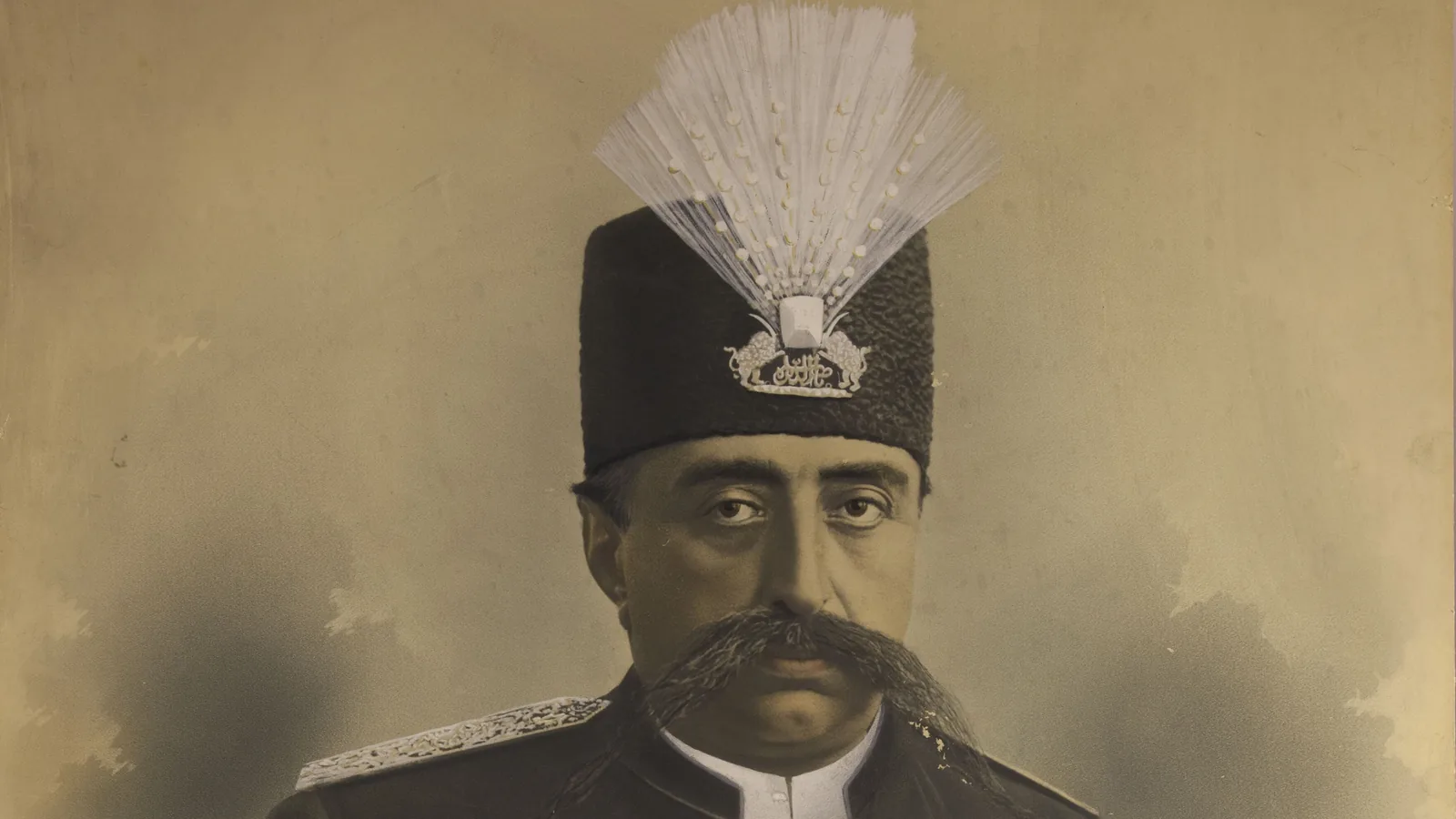

TL;DR — Merchants camped in Tehran’s British legation garden in July 1906 until the shah decreed an elected assembly on August 5; that Majles was shelled in 1908, closed in 1911.
On Monday, July 23, 1906, there were 858 people camped in the garden of the British legation in Tehran. Three days later there were 5,000. By August 1 the Times put the figure at 13,000, and Edward G. Browne, who collected these numbers in The Persian Revolution of 1905–1909 (1910), wrote that a later report of 16,000 “appears to be excessive, 12,000 or 14,000 being probably nearer the truth.” The campers were merchants, bankers and guildsmen practicing bast, the Persian custom of taking sanctuary in a place the authorities would not violate. They left on August 5, the day Mozaffar al-Din Shah signed a decree for an elected assembly. That assembly, the Majles, opened on October 7, 1906, was bombarded by the Cossack Brigade on June 23, 1908, restored in July 1909, and closed by a coup on December 24, 1911, weeks after a Russian ultimatum.
Quick facts
- When
- July 19, 1906 (first refugees in the legation garden) · August 5, 1906 (the shah's decree) · September 9, 1906 (electoral law) · October 7, 1906 (Majles opens) · December 30, 1906 (Fundamental Law signed, by the text's date) · October 7, 1907 (Supplementary Fundamental Law) · June 23, 1908 (Majles bombarded) · July 16, 1909 (Mohammad Ali Shah deposed) · November 29, 1911 (Russian ultimatum) · December 24, 1911 (second Majles closed)
- Where
- The British legation garden in Tehran and the legation's summer quarters at Qolhak; the Sahib-Qiraniyya palace; the Baharestan, the Majles building; Tabriz in Azerbaijan; Rasht and Anzali on the Caspian coast; the House of Commons and House of Lords in London
- Who
- Mozaffar al-Din Shah and his son Mohammad Ali Shah; Grant Duff, the British chargé d'affaires; Colonel Liakhov of the Cossack Brigade; Sattar Khan and Baqer Khan in Tabriz; W. Morgan Shuster, the American treasurer-general; Edward G. Browne, who collected the documents; Lord Curzon in the House of Lords
- Outcome
- A decree of August 5, 1906 created an elected assembly; a Fundamental Law of 51 articles and a supplement followed; the Majles was shelled in June 1908, restored in July 1909 and shut by a coup on December 24, 1911 after a Russian ultimatum
Tents in the legation garden, July 19 to August 5, 1906
The garden filled in stages, and Browne dated each one. On Thursday, July 19, representatives of the merchants and bankers went out to Qolhak, the legation’s summer quarters, to ask the chargé d’affaires, Grant Duff, whether people who took refuge in the legation in town would be expelled. He reassured them, and a few went straight to the garden that day. Their first demands, Browne recorded, were the dismissal of the prime minister, Ayn al-Dowleh, a code of laws, and the recall of the clerics who had withdrawn to Qom. On July 30 the shah dismissed the minister and invited the clerics back. The campers stayed and asked for more: “a regular Constitution and a representative National Assembly, with satisfactory guarantees of the Shah’s good faith.”
The Encyclopaedia Iranica’s account of the revolution’s events, by Vanessa Martin, begins with December 12, 1905, when the governor of Tehran had two sugar merchants beaten on the soles of their feet over prices; the bazaar closed the next day, and about 2,000 clerics and students took sanctuary at the shrine of Shah Abd al-Azim south of the city until a decree of January 10, 1906 promised a house of justice. The legation garden was the second bast.
A birthday decree and a law of 51 articles
August 5 was, Browne wrote in a parenthesis, the shah’s birthday. The decree issued that day, in Browne’s translation, ordered “that an Assembly of delegates elected by the Princes, the Doctors of Divinity (ʿulamā), the Qajar family, the nobles and notables, the land-owners, the merchants and the guilds shall be formed and constituted, by election of the classes above mentioned, in the capital Tihran.” Its proposals would take effect once the shah ratified them. Browne printed the document with its dateline from the Sahib-Qiraniyya palace.
Regulations for the elections followed on September 9, 1906, in six classes of electors, from princes and the Qajar tribe to the trade guilds; the Iranica entry counts 156 seats, 60 of them for Tehran. The Majles opened on October 7 with Sani al-Dowleh as its first president. Its Fundamental Law, 51 articles on the assembly’s powers, was signed on December 30, 1906 by the text’s own date, as printed by the Foundation for Iranian Studies; the Encyclopaedia Iranica gives January 1, 1907, and adds that the document was rushed to the shah “just before his death.” Mozaffar al-Din Shah died in January 1907, and his son Mohammad Ali Shah inherited both the throne and the assembly.
Five mojtaheds with a veto, October 7, 1907
The new shah ratified a second text on October 7, 1907, the Supplementary Fundamental Laws. Its Article 1 made Twelver Shia Islam the state religion. Article 2 gave the clergy a check on the assembly: a committee of at least five mojtaheds, senior jurists, was to review every proposal and “reject and repudiate, wholly or in part, any such proposal which is at variance with the Sacred Laws of Islam,” an arrangement that was to last “until the appearance of His Holiness the Proof of the Age,” the hidden imam of Shia belief. Martin’s entry credits the draft to the conservative cleric Sheikh Fazlollah Nuri and records the change that blunted it: the Majles itself would choose the five from a list of 20 the clergy submitted.
Cannon at the Baharestan, and the answer from Tabriz
On June 22, 1908, Mohammad Ali Shah made Colonel Liakhov, the Russian commander of his Cossack Brigade, military governor of Tehran. The next day, by the Iranica entry on the brigade, Liakhov and six other Russian officers led the Cossacks with six guns to the Baharestan, the Majles building, and shelled it together with the adjoining Sepahsalar mosque; several hundred people were killed.
Tabriz refused to accept the result. Two local fighters, Sattar Khan and Baqer Khan, who had set out with 300 men to defend the Majles in Tehran, turned back to hold their own city when fighting broke out there, and the provincial council gave them the honorary titles Sardar-e Melli and Salar-e Melli. The Iranica entry on Sattar Khan by Anja Pistor-Hatam dates the final blockade from February 4, 1909, when the city “was completely cut off from its supply routes”; the blockade ended in April as Russian troops moved in. Forces from Rasht and the Bakhtiari tribes entered Tehran on July 13, 1909; three days later the shah took refuge in the Russian legation, and the restored Majles deposed him on July 16, 1909, in favor of his young son Ahmad.
Shuster, the ultimatum and the last day of the second Majles
The second Majles hired an American, W. Morgan Shuster, as treasurer-general; he reached Tehran on May 12, 1911. His confiscation, on the government’s orders, of the estates of Prince Shoa al-Saltaneh, a brother of the deposed shah, was followed by a first Russian ultimatum, and Russian troops occupied Anzali and Rasht on the Caspian coast. In The Strangling of Persia (1912) Shuster wrote: “True to its promise, on November 29th, at noon, the Russian Government presented to Persia its second ultimatum, demanding its acceptance within the space of just forty-eight hours.” The text he printed demanded his dismissal, a promise to hire no foreigners without Russian and British consent, and an indemnity for the troops. The Majles rejected it, the cabinet accepted it, and on December 24, 1911, Shuster wrote, the deposed cabinet “executed a coup d’état against the Medjlis, and by a demonstration of gendarmes and Bakhtiyari tribesmen succeeded in expelling all the Deputies.” Martin’s entry ends the constitutional period on the same day.
In London, on December 4, Acland, the under-secretary for foreign affairs, told the Commons that the government “were informed of the terms of the ultimatum before it was sent.” Three days later Lord Curzon put the point to the Lords: “His Majesty’s Government cannot wash their hands of all responsibility for this Ultimatum.”
Key facts
- Browne counted 858 people in the British legation garden on July 23, 1906, 5,000 three days later, and 13,000 by August 1 on the Times’s figure; his own estimate was 12,000 to 14,000.
- Mozaffar al-Din Shah’s decree of August 5, 1906, his birthday by Browne’s note, ordered an assembly elected by princes, clergy, the Qajar family, nobles, landowners, merchants and guilds.
- The electoral law of September 9, 1906 set 156 seats, 60 of them for Tehran (Encyclopaedia Iranica); the Majles opened on October 7, 1906.
- The Fundamental Law of 51 articles is dated December 30, 1906 in the Foundation for Iranian Studies text; the Encyclopaedia Iranica gives January 1, 1907.
- Article 2 of the Supplementary Fundamental Laws of October 7, 1907 created a committee of at least five mojtaheds with power to reject bills contrary to Islamic law.
- On June 23, 1908, the Cossack Brigade under Colonel Liakhov shelled the Baharestan; several hundred people were killed (Encyclopaedia Iranica).
- Tabriz was cut off from February 4, 1909; Tehran fell to constitutionalist forces on July 13, 1909 and Mohammad Ali Shah was deposed on July 16.
- Russia’s second ultimatum came at noon on November 29, 1911 with a 48-hour limit; the second Majles was expelled from its building on December 24, 1911.
FAQ
What was a bast?
A bast was sanctuary: refuge in a shrine or a foreign legation, where by custom the authorities did not make arrests. Browne used the word for both the 2,000 clerics at Shah Abd al-Azim in December 1905 and the thousands of merchants in the British legation garden in July and August 1906.
Why did the British legation let them stay?
Browne recorded only that the chargé d'affaires, Grant Duff, gave the merchants' delegates "a reassuring reply" at Qolhak on July 19, 1906, and that a few went to the garden the same day. The sources cited below give no fuller statement of British motives in 1906.
How long did the first Majles last?
From October 7, 1906 to June 23, 1908, the day the Cossack Brigade shelled its building. A second Majles sat after the shah's deposition in July 1909 until the coup of December 24, 1911.
Sources
- Edward G. Browne, The Persian Revolution of 1905–1909 (Cambridge: Cambridge University Press, 1910): chapter IV on the second bast, with the numbers of July 23 to August 5, 1906; appendix with the farman of August 5, 1906 and the electoral law of September 9, 1906 in English translation; full text on the Internet Archive.
- W. Morgan Shuster, The Strangling of Persia (New York: The Century Co., 1912): chapters VI and VII, with the translation of the second Russian ultimatum of November 29, 1911 and the coup of December 24, 1911; full text on the Internet Archive.
- Foundation for Iranian Studies, "Iran 1906 Constitution": English text of the Fundamental Law of December 30, 1906 and the Supplementary Fundamental Laws of October 7, 1907.
- UK Parliament, Historic Hansard: "Russia and Persia," House of Commons, December 4, 1911, vol. 32, cc. 996–998 (Mr. Acland's answer on the ultimatum).
- UK Parliament, Historic Hansard: "Persia," House of Lords, December 7, 1911, vol. 10, cc. 677–700 (Earl Curzon of Kedleston's speech).
- Encyclopaedia Iranica, "Constitutional Revolution ii. Events" (Vanessa Martin): the bastinado of December 12, 1905, the Majles opening of October 7, 1906, the signing of January 1, 1907, the deposition of 1909, Shuster's arrival and the end of the second Majles.
- Encyclopaedia Iranica, "Constitutional Revolution i. Intellectual background" (Abbas Amanat).
- Encyclopaedia Iranica, "Cossack Brigade": Liakhov's appointment of June 22, 1908, the bombardment of June 23 and the deposition of July 16, 1909.
- Encyclopaedia Iranica, "Sattār Khan" (Anja Pistor-Hatam): the defense of Tabriz, the titles Sardār-e Melli and Sālār-e Melli, and the blockade from February 4, 1909.
- Encyclopaedia Iranica, "Bāqer Khan Sālār-e Melli" (Abbas Amanat).
Cite this article
- APA
- Our Earth's History. (2026, September 22). A garden in Tehran, July 1906: the sit-in that won Iran a parliament. Our Earth's History. https://ourearthshistory.com/west-asia/modern/tehran-bast-1906-iran-first-majles-constitution/
- Chicago
- Our Earth's History. “A garden in Tehran, July 1906: the sit-in that won Iran a parliament.” Our Earth's History, September 22, 2026. https://ourearthshistory.com/west-asia/modern/tehran-bast-1906-iran-first-majles-constitution/.
- MLA
- “A garden in Tehran, July 1906: the sit-in that won Iran a parliament.” Our Earth's History, 22 Sep. 2026, https://ourearthshistory.com/west-asia/modern/tehran-bast-1906-iran-first-majles-constitution/.
Text licensed CC BY-NC-ND 4.0. Found an error? Tell us.