From $2.90 to $11.65 a barrel: the Arab oil embargo of 1973 to 1974
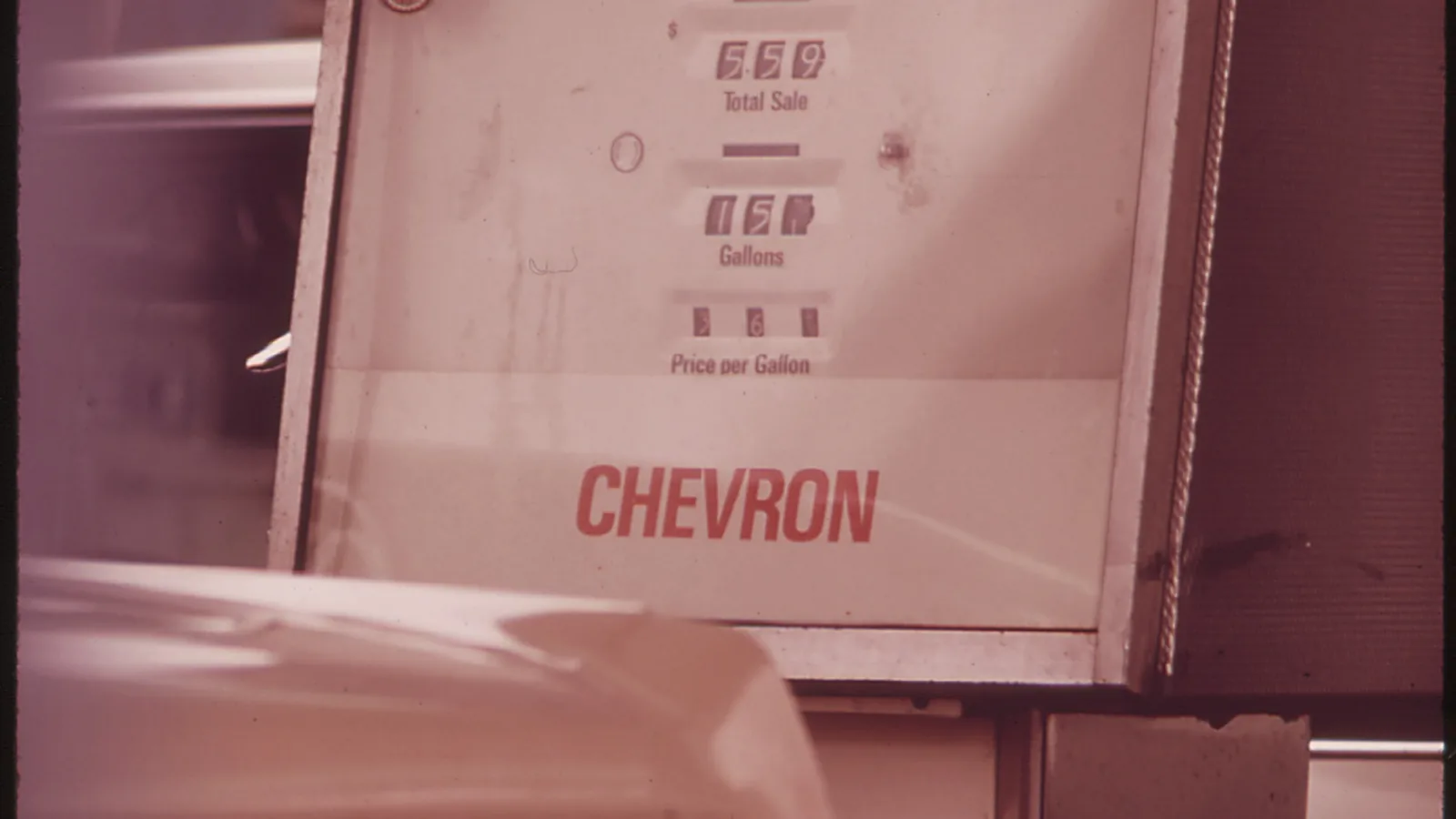

TL;DR — OAPEC cut output 5 percent a month from October 17, 1973, and embargoed the United States; a barrel rose from $2.90 to $11.65 before the ban ended in March 1974.
“On 17 October the Organization of Arab Petroleum Exporting Countries (OAPEC) decided to cut oil production,” a memorandum from the CIA’s Office of Economic Research told Washington on October 19, 1973. “Production will be reduced by not less than 5% a month until an Israeli withdrawal from occupied territories is completed and the ‘legal rights’ of the Palestinians are restored.” The cuts came during the 1973 Arab-Israeli War, after the United States decided to resupply the Israeli army by air. Arab members of OPEC banned oil exports to the United States and extended the ban to the Netherlands, Portugal and South Africa, according to the State Department’s Office of the Historian. Federal Reserve History puts the price of a barrel at $2.90 before the embargo and $11.65 in January 1974. The embargo was lifted in March 1974. The price stayed where it was.
Quick facts
- When
- October 14, 1973 (Kissinger's letter to King Faisal) · October 17, 1973 (OAPEC cuts decided; Kissinger's "no cut-off" remark) · October 19, 1973 (CIA memorandum; embargo on the United States) · October 22, 1973 (Douglas-Home in the Commons) · November 7 and 25, 1973 (Nixon's addresses) · December 12, 1973 (Kissinger's London speech) · January 18, 1974 (Egyptian-Israeli disengagement) · March 1974 (embargo lifted)
- Where
- Jidda in Saudi Arabia; the White House Situation Room and the Oval Office in Washington; the House of Commons in London; the Pilgrim Society in London; Copenhagen and the OECD in Paris
- Who
- King Faisal, Prince Fahd and the oil minister Ahmad Zaki Yamani of Saudi Arabia; Henry Kissinger, U.S. secretary of state; Richard Nixon; John Love, Nixon's energy adviser; Sir Alec Douglas-Home, British foreign secretary; the Office of Economic Research of the CIA
- Outcome
- Arab OPEC members embargoed the United States, the Netherlands, Portugal and South Africa and cut production; oil rose from $2.90 to $11.65 a barrel by January 1974; Nixon announced Project Independence; the embargo was lifted in March 1974 and the price stayed
Jidda, October 14 to 16: a letter and three replies
Henry Kissinger, the U.S. secretary of state, wrote to King Faisal of Saudi Arabia on October 14, 1973, that the United States “had no alternative” but to airlift supplies to Israel after the Soviet “massive airlift of arms” to Arab states. The letter was held until October 15, the day the resupply was to be announced; the announcement ran on page A1 of The Washington Post on October 16.
The Saudi answers came in three voices. The oil minister, Ahmad Zaki Yamani, told the French on October 14 that Saudi Arabia would cut production by 5 percent a month for a year unless the United States imposed an equitable settlement. Prince Fahd, the interior minister, told an American official in Jidda on October 15 that the relationship “can never be the same again” and that Saudi Arabia would “find itself compelled to support economic sanctions against the United States.” King Faisal’s own reply of October 16 said he was “pained” by the decision. The New York Times reported the same day that Yamani had promised oil executives a 10 percent cut at once and 5 percent a month after that.
"We don't expect an oil cut-off now"
At 3:05 in the afternoon of October 17, Kissinger chaired the Washington Special Actions Group in the White House Situation Room. John Love, the president’s energy adviser, handed round a draft speech. Kissinger, who had met the foreign ministers of Saudi Arabia, Kuwait, Morocco and Algeria that morning, said: “We don’t expect an oil cut-off now in the light of the discussions with the Arab Foreign Ministers this morning.” The minutes’ footnote records that oil had not been discussed. OAPEC took its decision the same day.
The CIA memorandum of October 19 measured the exposure. “Several countries, including Libya, Abu Dhabi, Kuwait, and Saudi Arabia, have either announced or threatened a total embargo against the United States,” it read, but the United States took only about 1.6 million barrels a day of Arab oil, so “after the first month, the brunt of the cutback would fall on Europe and Japan.” Western Europe drew 70 percent of its oil from Arab producers and Japan 40 percent. In London on October 22, Sir Alec Douglas-Home, the foreign secretary, told the Commons that “there is no indication that the restrictions which are being talked about are specifically directed against this country.”
Nixon on television, November 7 and 25
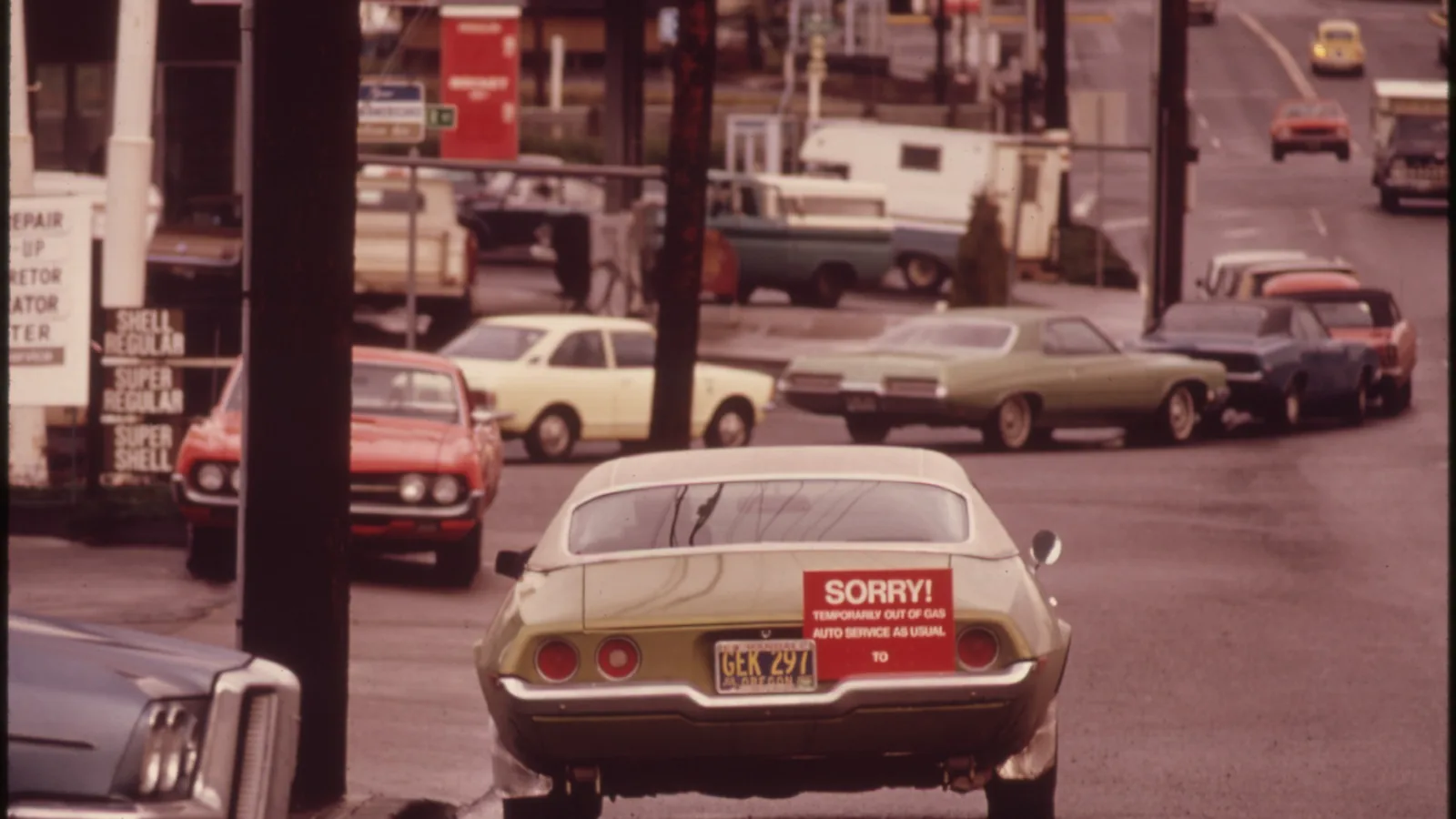
Richard Nixon spoke from the Oval Office at 7:30 in the evening on November 7. “By the end of this month, more than 2 million barrels a day of oil we expected to import into the United States will no longer be available,” he said, and the winter supply would fall 10 to 17 percent short. He ordered a 15 percent cut in heating oil, a cut of more than 10 percent in airline flights and thermostats lowered by six degrees to a national daytime average of 68, and asked the governors to reduce highway speed limits to 50 miles per hour, a step he said could save over 200,000 barrels a day. He named the long-term effort in the last minutes: “Let us pledge that by 1980, under Project Independence, we shall be able to meet America’s energy needs from America’s own energy resources.”
On November 25 he came back. Seven European nations had banned Sunday driving, he said; the United States would not, but he asked filling stations to close from 9 p.m. Saturday to midnight Sunday from December 1. He had signed the Alaska pipeline act nine days earlier; the Emergency Petroleum Allocation Act followed on November 27.

Kissinger in London, December 12
Before the Pilgrim Society in London on December 12, 1973, Kissinger set the war aside as a cause. The energy crisis was “the inevitable consequence of explosive growth of worldwide demand outrunning the incentives for supply. The Middle East war made a chronic crisis acute, but a crisis was coming in any event.” He proposed an international Energy Action Group of consumer countries, with producers invited from the beginning, and offered “a very major financial and intellectual contribution” from the United States.
The European Community’s summit at Copenhagen answered on December 15 without naming the group, and sent the matter to the Organization for Economic Cooperation and Development. Kissinger wrote to Nixon that the summit had been “unable to endorse the U.S. call for the formation of an Energy Action Group” and had settled for what he called “bland communiqué language that would send the problem to the OECD for study.” At the OECD Oil Committee on December 19, the British, German, Italian, Canadian, Dutch and Norwegian delegates called the proposal “an imaginative and constructive initiative”; the French delegate was noncommittal.
March 1974: the embargo lifted, the price left standing
Kissinger’s talks with Arab leaders began in November 1973; the First Egyptian-Israeli Disengagement Agreement followed on January 18, 1974. The prospect of a similar arrangement between Israel and Syria, the Office of the Historian writes, was enough for the producers to lift the embargo in March 1974; Federal Reserve History adds that the decision came “amid disagreements within OAPEC on how long to continue the punishment.” At a State Department staff meeting on March 18, William Donaldson reported that in Paris “the French backed off totally and allowed the OECD to come up with the various study groups that we wanted.”
The Office of the Historian lists what the five months left behind: the Strategic Petroleum Reserve, a national 55 mile-per-hour speed limit and the International Energy Agency proposed by Kissinger, without dating any of them. The price carries a date. A barrel that cost $2.90 before October 1973 cost $11.65 in January 1974, and when the embargo ended two months later, that figure did not move.
Key facts
- OAPEC decided on October 17, 1973, to cut production “by not less than 5% a month” until Israel withdrew from occupied territories (CIA memorandum, October 19, 1973).
- Kissinger wrote to King Faisal on October 14 that the United States “had no alternative” but to airlift supplies to Israel; the resupply was announced publicly on October 16.
- On October 17, at 3:05 p.m., Kissinger told the Washington Special Actions Group: “We don’t expect an oil cut-off now.”
- The United States imported about 1.6 million barrels a day of Arab oil; Western Europe depended on Arab oil for 70 percent of consumption and Japan for 40 percent (CIA, October 19).
- Nixon announced Project Independence on November 7, 1973, with a 1980 target, and asked governors for 50 mile-per-hour limits; the Emergency Petroleum Allocation Act was signed on November 27.
- Kissinger proposed the Energy Action Group in London on December 12, 1973; the EC summit of December 15 sent the question to the OECD.
- The price of a barrel rose from $2.90 to $11.65 by January 1974; the embargo was lifted in March 1974 (Federal Reserve History; Office of the Historian).
FAQ
Why did the Arab oil producers embargo the United States in 1973?
The Office of the Historian states that Arab members of OPEC acted "in retaliation for the U.S. decision to re-supply the Israeli military" and to strengthen their hand in the peace talks that would follow the war. Kissinger's letter to King Faisal of October 14, 1973, explained the airlift as an answer to the Soviet airlift to Arab states; Prince Fahd replied the next day that Saudi Arabia would be "compelled to support economic sanctions."
How much did the price of oil rise during the 1973 embargo?
Federal Reserve History gives $2.90 a barrel before the embargo and $11.65 a barrel in January 1974. The same essay records that the embargo was officially lifted in March 1974 and that "the higher oil prices, on the other hand, remained."
What was Project Independence?
The name Nixon gave on November 7, 1973, to a program of domestic energy development, with a pledge that by 1980 the United States would meet its energy needs from its own resources. He asked Congress for an Energy Research and Development Administration in the same address.
Sources
- U.S. Department of State, Office of the Historian: "Oil Embargo, 1973–1974," Milestones in the History of U.S. Foreign Relations, 1969–1976 (retired page, still hosted).
- Federal Reserve History: Michael Corbett, "Oil Shock of 1973–74," essay on the embargo and the price rise from $2.90 to $11.65 a barrel.
- Foreign Relations of the United States, 1969–1976, vol. XXXVI, Energy Crisis, 1969–1974, Document 216: Editorial Note on Kissinger's letter to King Faisal of October 14, 1973, and the Saudi replies of October 15 and 16.
- Foreign Relations of the United States, 1969–1976, vol. XXXVI, Document 219: Minutes of Washington Special Actions Group Meeting, October 17, 1973, 3:05–4:04 p.m.
- Foreign Relations of the United States, 1969–1976, vol. XXXVI, Document 223: Memorandum Prepared in the Office of Economic Research, Central Intelligence Agency, "The Oil Weapon and Its Effects," October 19, 1973.
- Foreign Relations of the United States, 1969–1976, vol. XXXVI, Document 264: Editorial Note on Kissinger's Pilgrim Society address of December 12, 1973, and the European responses.
- Foreign Relations of the United States, 1969–1976, vol. XXXVI, Document 340: Minutes of the Secretary of State's Staff Meeting, March 18, 1974, 3:10 p.m.
- The American Presidency Project (UC Santa Barbara): Richard Nixon, "Address to the Nation About Policies To Deal With the Energy Shortages," November 7, 1973.
- The American Presidency Project (UC Santa Barbara): Richard Nixon, "Address to the Nation About National Energy Policy," November 25, 1973.
- UK Parliament, Historic Hansard: "Middle East," HC Deb, October 22, 1973, vol. 861, cc. 697–705, statement by Sir Alec Douglas-Home.
Cite this article
- APA
- Our Earth's History. (2026, September 22). From $2.90 to $11.65 a barrel: the Arab oil embargo of 1973 to 1974. Our Earth's History. https://ourearthshistory.com/west-asia/contemporary/oil-embargo-1973-posted-price-arabian-light/
- Chicago
- Our Earth's History. “From $2.90 to $11.65 a barrel: the Arab oil embargo of 1973 to 1974.” Our Earth's History, September 22, 2026. https://ourearthshistory.com/west-asia/contemporary/oil-embargo-1973-posted-price-arabian-light/.
- MLA
- “From $2.90 to $11.65 a barrel: the Arab oil embargo of 1973 to 1974.” Our Earth's History, 22 Sep. 2026, https://ourearthshistory.com/west-asia/contemporary/oil-embargo-1973-posted-price-arabian-light/.
Text licensed CC BY-NC-ND 4.0. Found an error? Tell us.