'Dissent from U.S. policy': the Blood telegram and Bangladesh, 1971
,_Copy_of_Document_in_the_Bangladesh_Military_Museum,_Dhaka.jpg)
TL;DR — Blood’s cable of April 6, 1971 called U.S. policy “bending over backwards to placate” Pakistan; Dhaka fell on December 16, and the death toll is still counted two ways.
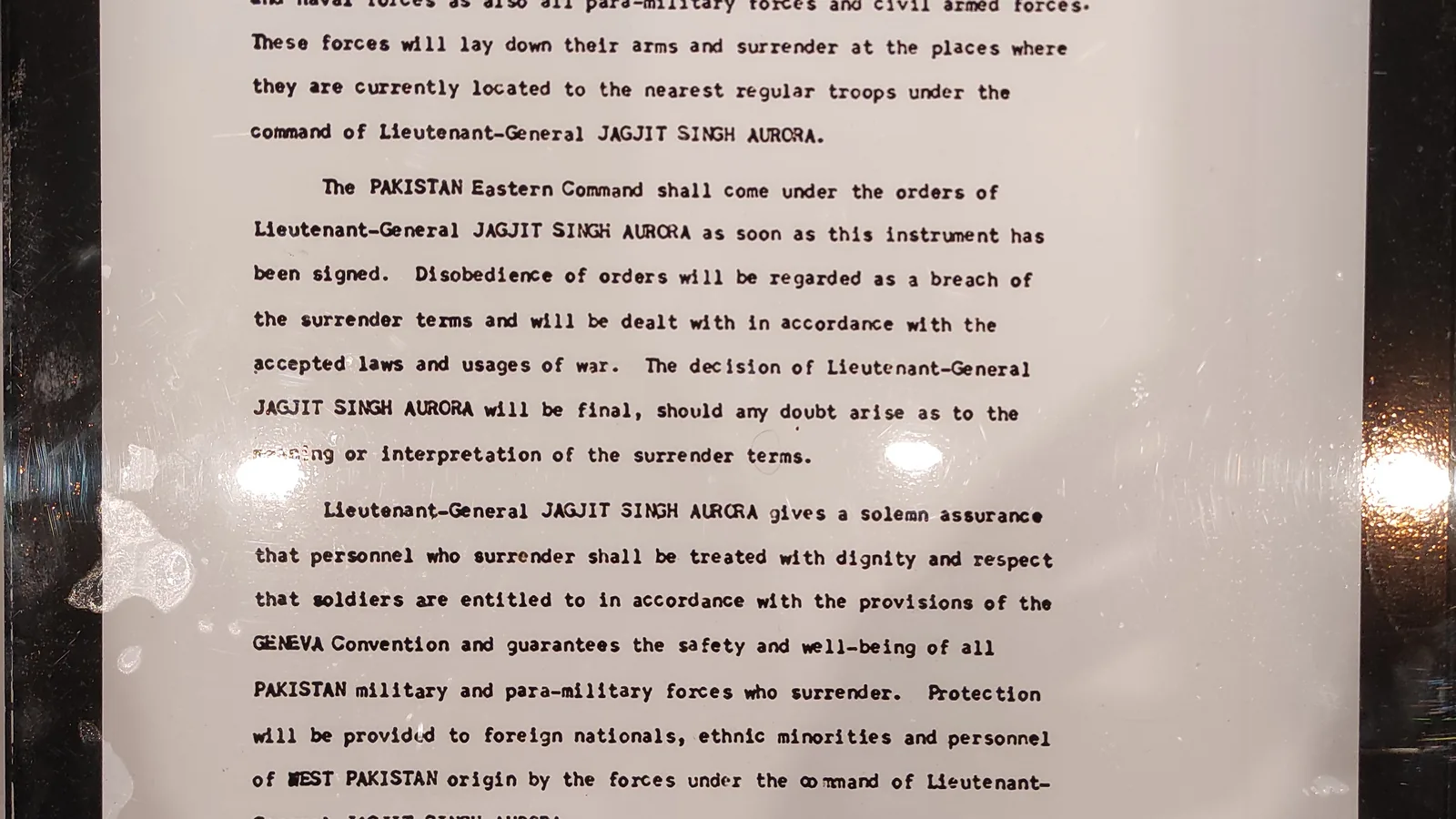
On April 6, 1971, Archer Blood, the United States consul general in Dacca, sent the State Department a cable titled “Dissent from U.S. Policy Toward East Pakistan.” As the National Security Archive summarizes it, the message faulted Washington for failing “to denounce the suppression of democracy,” for failing “to denounce atrocities,” and for “bending over backwards to placate the West Pak[istan] dominated government.” It added that “the overworked term genocide is applicable.” The cable went out at a low classification; the next day the department reclassified it as secret. Eight months later, on December 16, 1971, General A. A. K. Niazi signed an instrument of surrender at the Race Course in Dhaka, and East Pakistan became Bangladesh.
Quick facts
- When
- November 12, 1970 (cyclone) · December 7 and 17, 1970 (elections) · March 1, 1971 (assembly postponed) · March 6 (Senior Review Group meets) · March 7 (Race Course speech) · night of March 25 to 26 (Operation Searchlight) · April 6 (Blood telegram) · April 28 (Nixon's note) · December 3 (open war; the WSAG minutes) · December 16, 1971, 5:01 p.m. (surrender signed at Dhaka)
- Where
- Dacca, now Dhaka, the capital of East Pakistan and then of Bangladesh; the Race Course ground, Pilkhana, Rajarbagh and Dhaka University; the White House and State Department in Washington; the Lok Sabha in New Delhi
- Who
- Archer Blood, United States consul general in Dacca; Sheikh Mujibur Rahman of the Awami League; General Agha Muhammad Yahya Khan, president of Pakistan; Richard Nixon and Henry Kissinger; U. Alexis Johnson of the State Department; Indira Gandhi; General A. A. K. Niazi and General Jagjit Singh Aurora
- Outcome
- East Pakistan became Bangladesh; Pakistani forces under Niazi surrendered at Dhaka on December 16, 1971; the death toll is given as about three million by the Liberation War Museum and as one to three million in W. Norman Brown's 1972 estimate
April 6, 1971: the cable from Dacca
Blood had been reporting for a week before the dissent cable. On March 28 his consulate had cabled of “a reign of terror by the Pak Military” and of evidence that Awami League supporters and Hindus were being singled out (Document 1). The April 6 cable went out as Limited Official Use, a classification low enough to let it circulate widely among officials, which is why the department raised it to secret the day after it was sent.
Votes, a cyclone and a postponed assembly
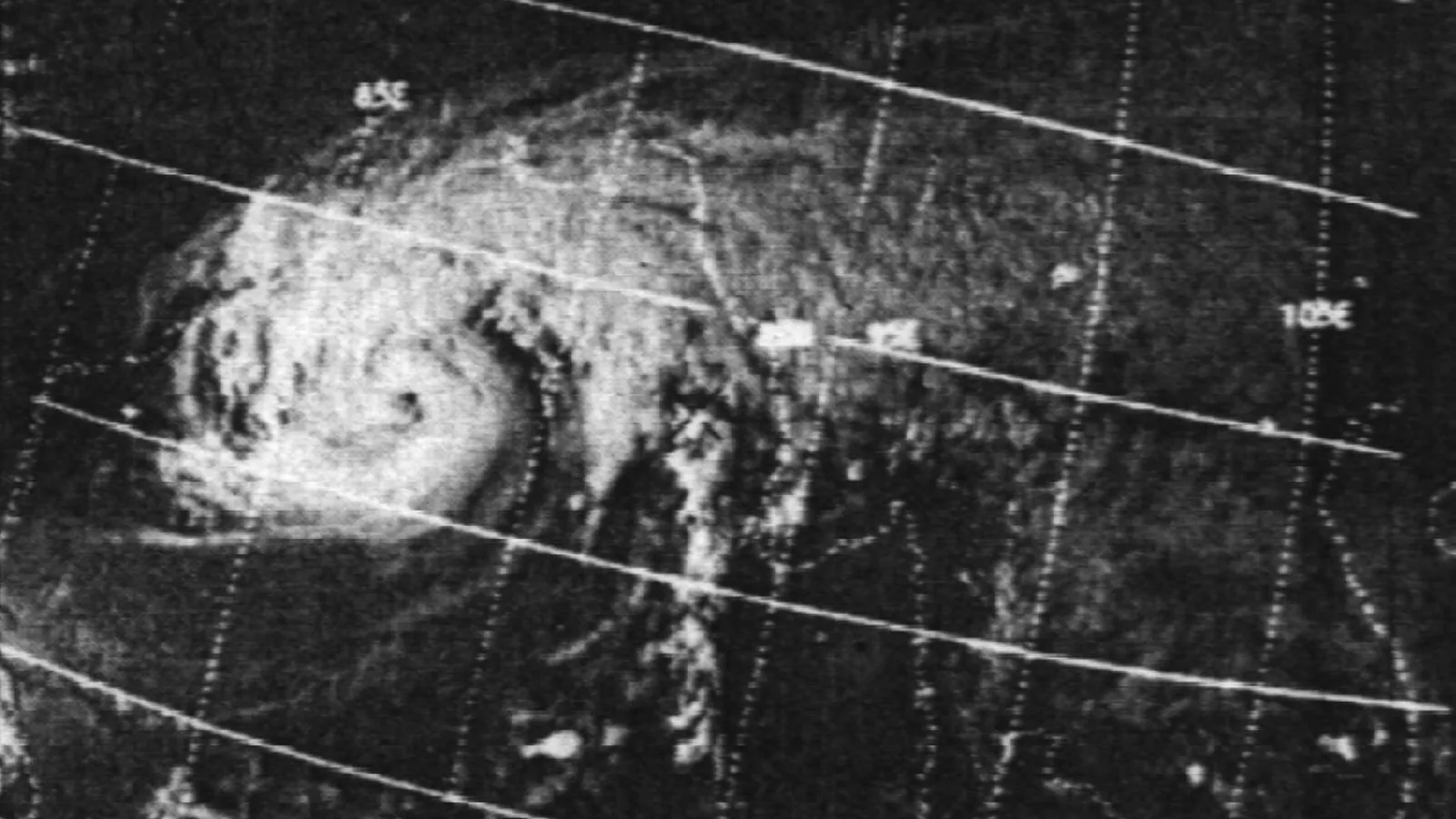
The crisis began at the ballot box. On November 12, 1970, a cyclone struck the coast of East Pakistan, the eastern wing of the state created by the partition of 1947; the Liberation War Museum in Dhaka puts the dead at 3 lakh, or 300,000. National Assembly elections followed on December 7 and provincial elections on December 17. Sheikh Mujibur Rahman’s Awami League won 160 of 162 seats in the State Department’s internal account and 167 of 169 by the Liberation War Museum and the National Security Archive, enough for a majority in the 313-seat assembly; Bhutto’s People’s Party won 83.
On March 1, 1971, two days before the assembly was to meet, President Agha Muhammad Yahya Khan announced by radio that the session was postponed indefinitely because the People’s Party and others had said they would not attend. Mujib called a strike in Dhaka for March 2, a countrywide strike for March 3 and a rally at the Race Course for March 7. In Washington on March 6, the Senior Review Group met under Henry Kissinger. U. Alexis Johnson of the State Department told it that if Yahya used force, with 20,000 troops against “a hostile East Pakistan population of 75 million, the result would be a blood-bath with no hope of West Pakistan reestablishing control over East Pakistan.”
At the Race Course on March 7, before a crowd the museum puts at almost 10 lakh, Mujib spoke for about 20 minutes. The museum’s calendar renders one sentence as “This war is a war for independence, this war is a war for Freedom,” and quotes him telling the crowd that if a shot was fired and he could give no further advice, “you fight the enemy with what you have at hand.”

The night of March 25 to 26
The museum’s calendar for March 25 describes a preplanned operation, known in military terms as Operation Searchlight, in which troops moved as “the clock struck one.” At 1:00 a.m. the 22nd Baluch Regiment attacked the East Pakistan Rifles at Pilkhana, and the attack spread through Rajarbagh, Dhaka University and Shankhari Bazar. At the same hour another party broke through a barricade near Mujib’s house and fired on it until he was taken at 1:30 a.m. The elected East Pakistani representatives formed a government in exile on April 10, and its cabinet took its oath on April 17 at Baiddyanathtala in Meherpur, later renamed Mujibnagar. The Mukti Bahini fought the occupying army from 11 sectors. Refugees crossed into India: about 10 million by May 1971 in the National Security Archive’s background note, and “approximately seven million” in Indira Gandhi’s letter to Nixon of August 14, as the archive summarizes it (Document 22).
"He wants to tilt toward Pakistan"
Nixon’s own hand set the line. On the last page of a policy options memorandum of April 28, 1971, he wrote, “To all hands: Don’t squeeze Yahya at this time” (Document 9). On June 3 Kissinger told Kenneth Keating, the ambassador in New Delhi, that “the President has a special feeling for President Yahya. One cannot make policy on that basis, but it is a fact of life” (Document 13). Pakistan was then the channel for Nixon’s secret approach to China, and the Office of the Historian’s editorial note states plainly that when fighting developed, the administration “tilted” toward Pakistan.
Open war came on December 3, when Pakistan attacked India’s western frontier from the air and by land and Indian troops entered East Pakistan from seven points. In Washington that morning the Washington Special Actions Group met from 11:19 to 11:55. Kissinger opened by saying that the president was telling him every half-hour that they were not tough enough: “He really doesn’t believe we’re carrying out his wishes. He wants to tilt toward Pakistan, and he believes that every briefing or statement is going the other way” (Document 218).
Race Course, Dhaka, 5:01 p.m., December 16, 1971
On Niazi’s order, Pakistani troops began surrendering their weapons at 5:00 a.m. on December 16. Later that morning two officers drove under a white flag to his headquarters with a note from General Nagra: “Dear Abdullah, I’m here. You will now surrender to me. This is an order.” General Jacob, Aurora’s chief of staff, reached Dhaka about 1:00 p.m., and after a meeting to prepare the documents General Jagjit Singh Aurora arrived from Kolkata within the hour. At about 5:00 p.m. Aurora and Niazi sat at a table on the Race Course. Aurora handed him the instrument of surrender; at 5:01 p.m. Niazi signed. The two records differ on the hour. The State Department’s editorial note records that at 2:30 p.m. in New Delhi Indira Gandhi told the Lok Sabha that Niazi’s forces had surrendered unconditionally an hour earlier, and hailed Dacca as “the free capital of a free country” (Document 320).
How many died between March 25 and December 16 has no single answer. The Liberation War Museum states about three million killed, some 278,000 women raped and 10 million refugees in India. The National Security Archive gives the same three million as the figure Mujib reported and adds, citing W. Norman Brown’s The United States and India, Pakistan, and Bangladesh (Harvard University Press, 1972, page 217), that other public estimates “range from one to three million.” Blood’s cable of April 6 predates both counts. It was written 11 days into the killing, when the number was not yet a number.
Key facts
- Archer Blood’s cable “Dissent from U.S. Policy Toward East Pakistan” is dated April 6, 1971; it called U.S. policy “bending over backwards to placate the West Pak[istan] dominated government” and said “the overworked term genocide is applicable” (National Security Archive, Document 8).
- The State Department reclassified the cable as secret the day after it was sent (National Security Archive, note 6).
- The Awami League’s 1970 seat count is 160 of 162 in the State Department’s March 6, 1971 minutes and 167 of 169 on the National Security Archive and Liberation War Museum pages.
- On March 6, 1971, U. Alexis Johnson told the Senior Review Group that force by Yahya would produce “a blood-bath” (FRUS, Volume XI, Document 6).
- Operation Searchlight began at 1:00 a.m. on March 26 with an attack on Pilkhana; Mujib was seized at his house at 1:30 a.m. (Liberation War Museum calendar, March 25).
- Nixon wrote “To all hands: Don’t squeeze Yahya at this time” on April 28, 1971 (National Security Archive, Document 9).
- Kissinger told the WSAG on December 3, 1971 that the president “wants to tilt toward Pakistan” (FRUS, Volume XI, Document 218).
- Niazi signed the instrument of surrender at the Dhaka Race Course at 5:01 p.m. on December 16, 1971 (Liberation War Museum calendar, December 16).
FAQ
What did the Blood telegram of April 6, 1971 say?
As the National Security Archive quotes it, the cable from the U.S. consulate in Dacca faulted Washington for failing "to denounce the suppression of democracy" and "to denounce atrocities," said the government was "bending over backwards to placate" West Pakistan's rulers, and stated that "the overworked term genocide is applicable."
What was the "tilt" toward Pakistan in 1971?
The Office of the Historian's own note says the Nixon administration "tilted" toward Pakistan once fighting began. The December 3, 1971 WSAG minutes record Kissinger saying the president "wants to tilt toward Pakistan"; Nixon's April 28 note read "Don't squeeze Yahya at this time."
How many people died in Bangladesh in 1971?
The Liberation War Museum in Dhaka states about three million. The National Security Archive gives the same figure as Mujib's report and, citing W. Norman Brown's 1972 book, adds that public estimates range from one to three million. No count reconciles the two.
Sources
- National Security Archive, George Washington University — Electronic Briefing Book No. 79, 'The Tilt: The U.S. and the South Asian Crisis of 1971,' ed. Sajit Gandhi, December 16, 2002, with summaries of Documents 1, 8, 9, 13, 21 and 22 and notes 2, 3 and 6.
- U.S. Department of State, Office of the Historian — Foreign Relations of the United States, 1969–1976, Volume XI, South Asia Crisis, 1971, Document 6: Minutes of Senior Review Group Meeting, March 6, 1971.
- Foreign Relations of the United States, 1969–1976, Volume XI, Document 218: Minutes of Washington Special Actions Group Meeting, December 3, 1971, 11:19–11:55 a.m.
- Foreign Relations of the United States, 1969–1976, Volume XI, Document 320: Editorial Note on the surrender announcement of December 16, 1971.
- Foreign Relations of the United States, 1969–1976, Volume XI, Document 1: Editorial Note (the administration 'tilted' toward Pakistan).
- Liberation War Museum, Dhaka — 'Emergence of Bangladesh' (government in exile, Mukti Bahini sectors, casualty and refugee figures) and 'Bengalis and Bengal' (the cyclone of November 12, 1970 and the elections of December 7 and 17, 1970).
- Liberation War Museum, Dhaka — 'Today '71' daily calendar for March 1, March 7, March 25, December 3 and December 16, 1971.
Cite this article
- APA
- Our Earth's History. (2026, September 22). 'Dissent from U.S. policy': the Blood telegram and Bangladesh, 1971. Our Earth's History. https://ourearthshistory.com/south-asia/contemporary/bangladesh-1971-blood-telegram-surrender-dhaka/
- Chicago
- Our Earth's History. “'Dissent from U.S. policy': the Blood telegram and Bangladesh, 1971.” Our Earth's History, September 22, 2026. https://ourearthshistory.com/south-asia/contemporary/bangladesh-1971-blood-telegram-surrender-dhaka/.
- MLA
- “'Dissent from U.S. policy': the Blood telegram and Bangladesh, 1971.” Our Earth's History, 22 Sep. 2026, https://ourearthshistory.com/south-asia/contemporary/bangladesh-1971-blood-telegram-surrender-dhaka/.
Text licensed CC BY-NC-ND 4.0. Found an error? Tell us.