Six counts of the dead: the Lords debate India's famine, July 1878

TL;DR — The House of Lords debate of July 22, 1878, put six death estimates for the 1876-1878 Indian famine on record, from 600,000 to 6 million.
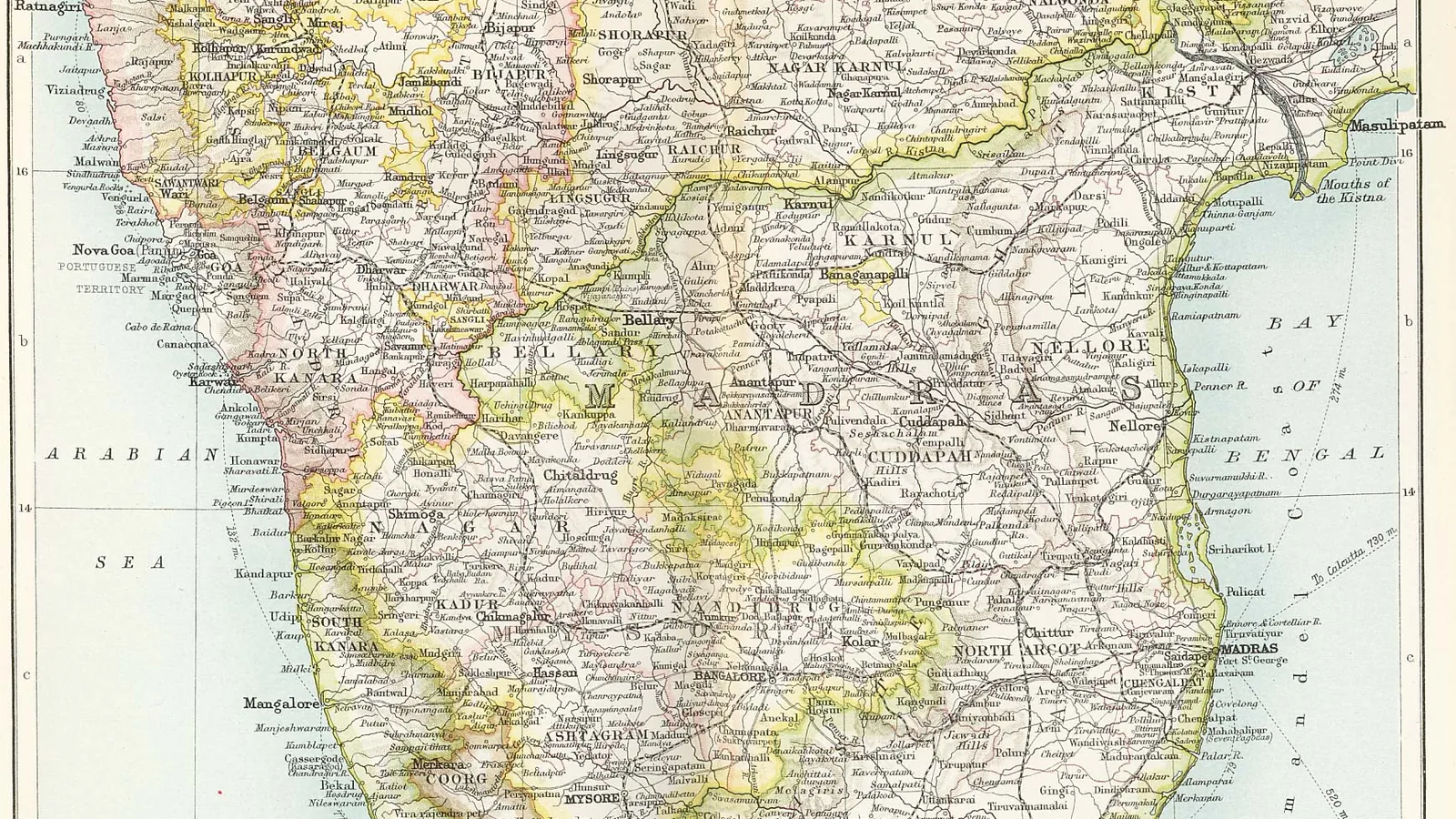
On July 22, 1878, the House of Lords debated a question titled “Recent Famines in India.” Lord Napier and Ettrick opened by recalling that the Orissa famine of 1866 had “swept off about one-third of their number—that was, about 1,000,000 souls,” and he used that toll as a yardstick for the newer famine that had struck the Madras, Bombay and Mysore territories between 1876 and 1878. Over the debate the House heard six different counts of the famine dead, from 600,000 to 6 million, a defense of the government’s relief wages, and a dispute between Sir Richard Temple and the viceroy, Lord Lytton, over conditions in Mysore. No single figure was accepted as final.
Quick facts
- When
- July 22, 1878 (House of Lords debate, "Recent Famines in India") · 1876-1878 (the famine) · July 5, 1880 (first report of the Indian Famine Commission tabled in the Commons)
- Where
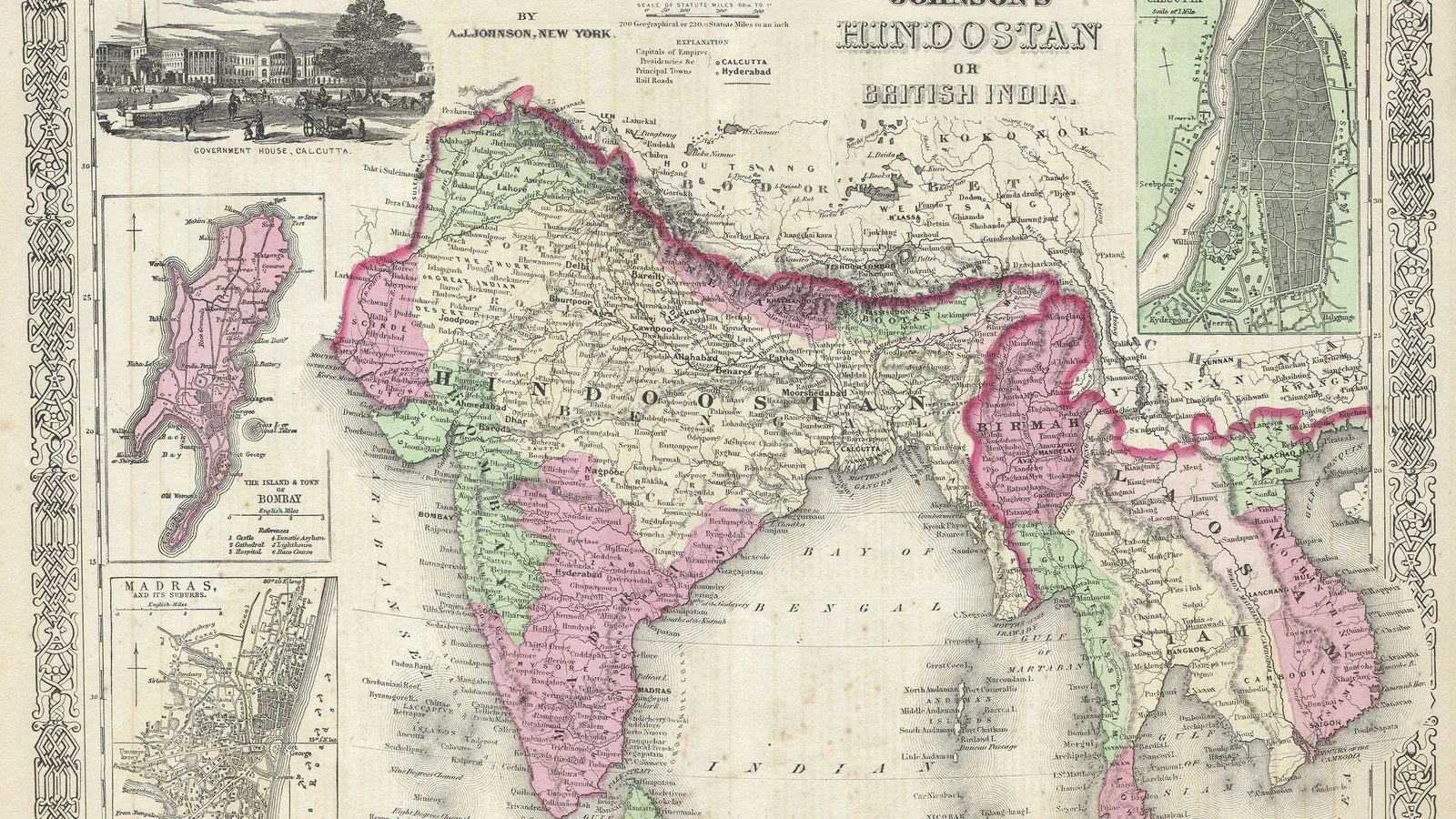
- Madras, Bombay and Mysore, India; the House of Lords and House of Commons, London
- Who
- Lord Napier and Ettrick; Viscount Cranbrook; W. R. Cornish; Dr. George Smith; a Times correspondent; Viceroy Lytton; Sir Richard Temple; William Digby; the Marquess of Hartington
- Outcome
- The debate placed six competing death estimates on the record, from 600,000 to 6 million, without settling on a total; the Indian Famine Commission's first report followed in 1880
The Orissa comparison
Napier read into the record a directive the government of India had sent Temple on January 16, 1876, warning that relief in the Madras and Bombay presidencies “will not cost less than £6,500,000” and stating that “the task of saving life, irrespective of the cost, is one which it is beyond our power to undertake.” On January 25, 1877, the Bombay government protested that the directive “does not lay down any general principles by which the district officers should be guided in refusing the aid needed to preserve life.” The central government answered on February 2, 1877, with a pledge that Napier read out and that also appears independently in William Digby’s 1878 account: “We say that human life shall be saved at any cost and at any effort; no man, woman, or child shall die of starvation.” Napier also quoted the secretary of state for India, the Marquess of Salisbury, who had doubted that “any useful result would be obtained by instituting a special inquiry” into famine deaths.
Six estimates of the dead
Napier set out the competing counts one by one. W. R. Cornish, the Madras sanitary commissioner, reported on May 8, 1877, that the affected districts would be “reduced in 18 months’ time by one-fifth or one-sixth” of their pre-famine population, a figure Napier converted to about 2,500,000. The Madras government’s own tally, made at the end of 1877, put the population loss “over all the districts of India affected by the late scarcity” at about 3,000,000. Dr. George Smith estimated “the loss of life in Madras, Mysore, and Bombay” at 1,500,000. A correspondent for The Times put the reduction in Madras alone at 3,000,000 and the total across famine districts at not much below 6,000,000. Napier gave his own figure last, estimating the loss in Madras at 600,000 and hoping Mysore’s came in under 400,000. Viceroy Lytton, in a minute dated August 12, 1877, supplied a sixth count by implication: without the guaranteed railways and relief spending, he wrote, “from 3,000,000 to 4,000,000 of people, instead of only 500,000, must have died of famine in Southern India” that year, placing his own reading of the actual toll at about 500,000. Napier argued that comparing census figures across years undercounted migration, and that “the death-rate method” was “far more correct.” Viscount Cranbrook, replying for the government, denied any wish to conceal the toll and pointed to the appointment of a commission of inquiry, while conceding that the registration system in Southern India “was very imperfect.”
_-_Geographicus_-_India-j-64.jpg)
"No man, woman, or child shall die of starvation"
In January 1877, according to the Environment & Society Portal’s account, Temple reduced wages in relief camps across Madras and Bombay so that workers received “one pound (0.45 kg) of grain plus wages for a full day of labor: one anna (four pennies) for a man and a slightly reduced amount for a woman and working child,” a ration Temple defended on the ground that higher pay might encourage dependency. Digby’s own book, published later in 1878, described relief-work rations differently: 1½ pounds of grain for a man, 1 pound for a woman and ½ pound for a child, a scale meant to “provide food enough to sustain working powers, and to ensure a small surplus for condiments.” The two accounts describe the ration in different terms. Digby judged the government by the standard it had set for itself: after Temple declared the famine controlled in early 1877, Digby wrote that “a famine can scarcely be said to be adequately controlled which leaves one fourth of the people dead.” His book also criticized early reluctance over public works, recording that officials “do not think it advisable in present emergency to sanction large and expensive works.”
Richard Temple's Mysore report
Temple visited Mysore twice, in February and April 1877, and reported that relief numbers “appear very moderate” and showed that “the people must be in good condition” and that the authorities were “administering relief very carefully and economically.” About five months later Lytton inspected Mysore himself and reached the opposite conclusion, writing that “the provision of proper relief works has been entirely neglected,” that gratuitous relief “had been administered in a lax and unsystematic manner,” that crime had increased, that people were leaving Mysore in large numbers, and that mortality “was terrible.” Napier told the House that the government of India had overridden the Madras government twice: first when Temple “imposed upon the Government of Madras his own views as to famine relief,” and second when the viceroy “entirely overturned the civil constitution of the Government of Madras” and installed a “dictator,” assisted by General Kennedy of the Bombay establishment as his “adlatus.”
July 5, 1880: the first report
Senjuti Mallik’s paper in GeoJournal links the famine itself to what followed: “The famine in 1876-1878 initiated the foundation of the first Indian Famine Commission of 1880 that consequently laid the commencement of India’s subsequent relief system, namely the Famine Codes.” A 2011 paper by Leela Sami in Social History of Medicine weighed two explanations for the famine’s death toll and concluded, in its abstract, that “a re-assessment of the mortality statistics and the medical observations leads to the conclusion that starvation, rather than climate or social displacement, accounts for the bulk of deaths.” In the House of Commons on July 5, 1880, the secretary of state for India, the Marquess of Hartington, was asked about the commission’s findings. “The first Report has been received and printed,” he answered, “and I hope it will be in the hands of Members in a few days.”
Key facts
- On July 22, 1878, the House of Lords debated a question titled “Recent Famines in India” (Hansard, HL Deb, vol. 241, cc2021-36).
- W. R. Cornish, the Madras sanitary commissioner, reported on May 8, 1877, a population reduction Lord Napier converted to about 2,500,000.
- The Madras government’s end-of-1877 estimate put the total population loss across affected districts at about 3,000,000.
- Dr. George Smith estimated the loss of life in Madras, Mysore and Bombay at 1,500,000.
- A correspondent for The Times put the Madras reduction at 3,000,000 and the total across famine districts at close to 6,000,000.
- Lord Napier and Ettrick estimated Madras’s loss at 600,000; Viceroy Lytton’s minute of August 12, 1877, implied a toll of about 500,000.
- In January 1877 Temple set relief-camp rations at one pound of grain plus one anna for a man’s full day of labor, per the Environment & Society Portal; William Digby’s 1878 book gives 1½ pounds for a man, 1 pound for a woman and ½ pound for a child.
- The Indian Famine Commission’s first report was tabled in the House of Commons on July 5, 1880.
FAQ
How many people died in the Indian famine of 1876-1878?
The House of Lords debate of July 22, 1878, produced no agreed figure. Estimates ranged from 600,000, given by Lord Napier and Ettrick for Madras, to 6,000,000, given by a Times correspondent for all famine districts, with W. R. Cornish, the Madras government, Dr. George Smith and Viceroy Lytton offering figures in between.
What was the "Temple wage"?
The ration Sir Richard Temple set for relief workers in Madras and Bombay from January 1877. The Environment & Society Portal describes it as one pound of grain plus one anna for a man's full day of labor. William Digby's 1878 account describes relief-work rations as 1½ pounds of grain for a man, 1 pound for a woman and ½ pound for a child.
What came out of the 1876-1878 famine?
The Indian Famine Commission, whose first report was tabled in the House of Commons on July 5, 1880. A GeoJournal paper by Senjuti Mallik states that the 1876-1878 famine "initiated the foundation" of the commission, which in turn laid the basis for India's Famine Codes.
Sources
- UK Parliament, Hansard (historic-hansard archive), "Question. Observations. [Recent Famines in India.]," House of Lords, July 22, 1878, vol. 241, cc2021-36.
- Environment & Society Portal, "Government response," Famines in Late Nineteenth-Century India exhibition.
- William Digby, The Famine Campaign in Southern India, Madras and Bombay Presidencies and Province of Mysore, 1876-1878, vol. 1 (London: Longmans, Green, and Co., 1878), full text via Internet Archive.
- Senjuti Mallik, "Colonial Biopolitics and the Great Bengal Famine of 1943," GeoJournal, via PMC (PMC9735018).
- UK Parliament, Hansard (historic-hansard archive), "Indian Famine Commission -- The First Report," House of Commons, July 5, 1880.
- Leela Sami, "Starvation, Disease and Death: Explaining Famine Mortality in Madras 1876-8," Social History of Medicine, vol. 24, no. 3 (2011), pp. 700-719, abstract via Oxford Academic.
Cite this article
- APA
- Our Earth's History. (2026, September 25). Six counts of the dead: the Lords debate India's famine, July 1878. Our Earth's History. https://ourearthshistory.com/south-asia/modern/india-famine-1876-1878-lords-debate-july-22-1878-death-estimates-temple-wage/
- Chicago
- Our Earth's History. “Six counts of the dead: the Lords debate India's famine, July 1878.” Our Earth's History, September 25, 2026. https://ourearthshistory.com/south-asia/modern/india-famine-1876-1878-lords-debate-july-22-1878-death-estimates-temple-wage/.
- MLA
- “Six counts of the dead: the Lords debate India's famine, July 1878.” Our Earth's History, 25 Sep. 2026, https://ourearthshistory.com/south-asia/modern/india-famine-1876-1878-lords-debate-july-22-1878-death-estimates-temple-wage/.
Text licensed CC BY-NC-ND 4.0. Found an error? Tell us.