Why did the 1857 uprising end the East India Company's rule of India?
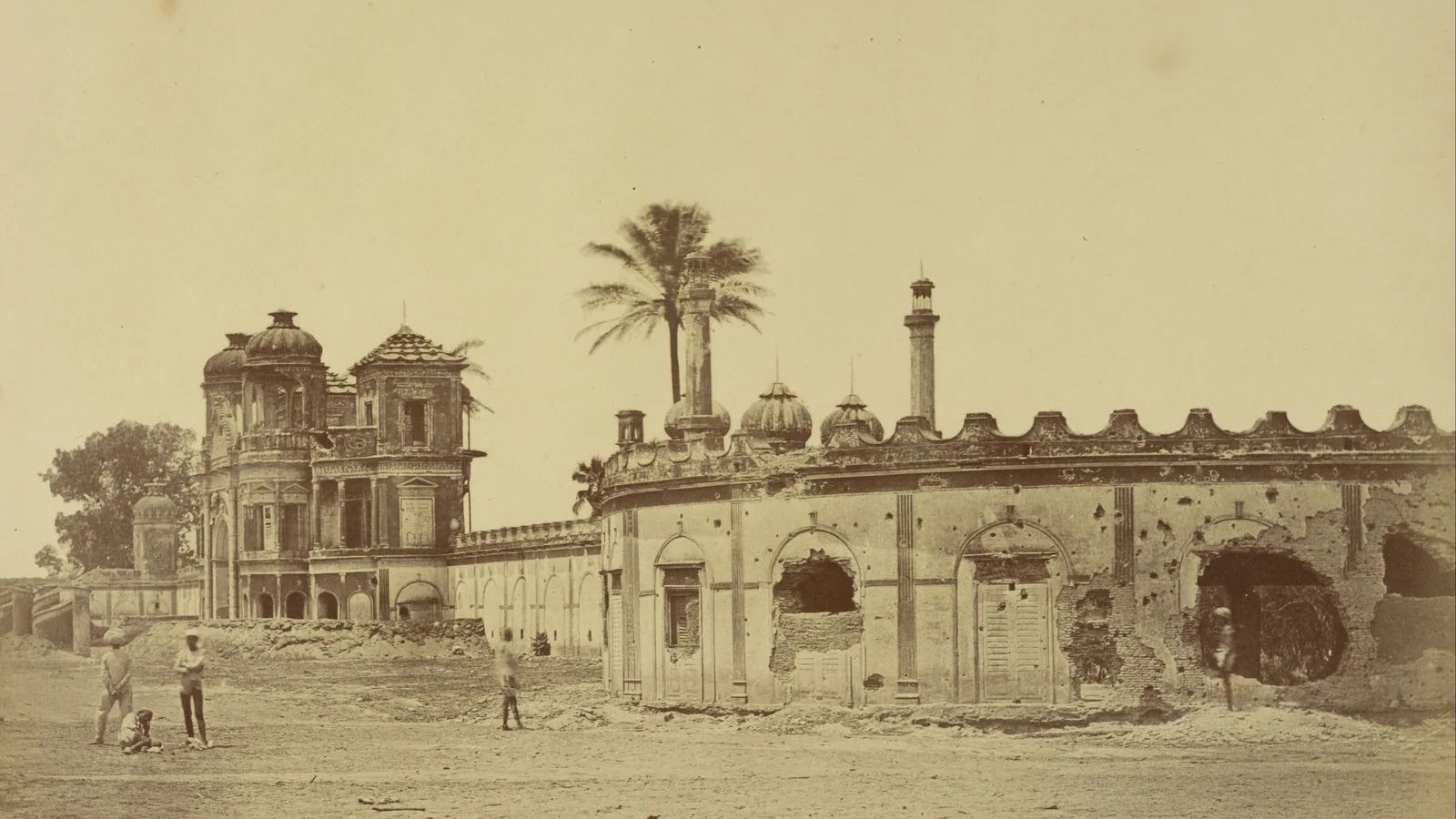
_-_Google_Art_Project.jpg)
TL;DR — A cartridge rumor set the Bengal Army against its officers, sepoys marched to Delhi and a Mughal king, and Parliament answered in 1858 by taking India from the Company.
The 1857 uprising ended the East India Company’s rule because a mutiny of its sepoys grew into a rebellion at Delhi, and Parliament then abolished the Company’s “double government.” A rumor in January 1857 that new rifle cartridges were greased with cow and pig fat set the army against its officers; on May 10 three regiments at Meerut killed the Europeans they found and marched to Delhi, where the pensioned Mughal king was reported within days to be in the rebels’ hands. Lord Palmerston moved in the Commons on February 12, 1858 to take India from the Company; the Act received royal assent on August 2, and Queen Victoria’s proclamation of November 1 promised no more annexations and no interference with religion.
Quick facts
- When
- January 1857 (cartridge rumor at Dum-Dum) · March 29, 1857 (Mangal Pandey at Barrackpore) · April 24, 1857 (85 troopers refuse at Meerut) · May 10, 1857 (Meerut rises) · May 11 to 14, 1857 (Delhi taken, king reported with the rebels) · January 27, 1858 (trial of Bahadur Shah opens) · February 18, 1858 (Commons vote 318 to 173) · August 2, 1858 (royal assent) · November 1, 1858 (queen's proclamation)
- Where
- Dum-Dum and Barrackpore near Calcutta; Berhampore in Bengal; Meerut and Delhi on the Gangetic plain of northern India; Oudh (now Awadh, in Uttar Pradesh); the House of Commons in London
- Who
- Sepoys of the Bengal Army; Bahadur Shah, the pensioned king of Delhi; Lord Canning, governor-general; Lord Palmerston in the Commons; Major F. J. Harriott, prosecutor at Delhi; Syed Ahmad Khan, who wrote the causes down in 1858; the historian John William Kaye
- Outcome
- The Company's territories, powers and servants passed to the Crown; a Secretary of State and a Council of India of 15 replaced the Court of Directors and Board of Control; the queen promised no further annexation and no interference with religion
A rumor at Dum-Dum, January 1857
The Company’s Bengal Army consisted of Indian soldiers, called sepoys, under British officers. In January 1857 at Dum-Dum, a musketry school eight miles from Calcutta where sepoys were learning the new Enfield rifle, a low-caste magazine worker asked a Brahmin sepoy for a drink from his water pot. Refused, he answered that caste would soon mean nothing, because cartridges greased with beef fat and hog’s lard were being made for the army. John William Kaye, whose History of the Sepoy War drew on official and private papers, recorded that no greased cartridge had been issued at Dum-Dum and that the story soon reached every sepoy at the depot.
The Enfield cartridge had to be bitten open. For a Hindu soldier the cow was sacred; for a Muslim the pig was unclean. Fires followed at Barrackpore and letters went out to other stations, Kaye wrote; on February 26 the 19th Regiment at Berhampore refused the cartridges. On March 29, 1857, a sepoy of the 34th named Mangal Pandey fired at his sergeant-major on the Barrackpore parade ground. A court-martial sentenced him on April 6 and he was hanged on April 8 in front of the troops.
Meerut, May 10, 1857
At Meerut the 3rd Light Cavalry was told it need no longer bite the cartridge but could tear it. At a parade on April 24, Kaye recorded, only five of 90 troopers took the ammunition, and the 85 who refused went before a court-martial. A Meerut letter printed in the Atlantic Monthly said the court, made up of Indian officers, gave them ten years’ imprisonment; on Saturday, May 9, they were put in irons in front of their comrades and marched to jail. Syed Ahmad Khan, writing the next year, described the prisoners looking at their medals and weeping, and a garrison persuaded that it would be made to bite the cartridges next.
On Sunday evening, May 10, three regiments left their lines, killed the Europeans they found, burned half the station and marched off to Delhi, where three more regiments were stationed.
Delhi and the king, May 11 to 14
The first word reached Agra by telegraph on May 11, in a private message; then the wires were cut. On May 14, Kaye wrote, Agra reported on the authority of a letter from the king of Delhi himself that the town, the fort and his own person were in the insurgents’ hands. It then became clear that the king had joined them, and that “the mutiny of a few regiments, by thus concentring at Delhi, was beginning to simulate a national rebellion.”
Bahadur Shah was, in the words of the charge sheet, a pensioner of the British government. A military commission tried him at Delhi from January 27, 1858, on charges that he had aided the mutineers between May 10 and October 1, 1857, that on or about May 11 he had “declare[d] himself the reigning king and sovereign,” and that on May 16 he had been accessory to the murder of Europeans within the palace. He answered “Not guilty.” A court diary read in evidence recorded 49 English prisoners handed to the soldiers with the words, “The army may do as they please.” The prosecutor, Major F. J. Harriott, closed on March 9, 1858.
What Syed Ahmad Khan said the causes were
Syed Ahmad Khan wrote his account in Urdu in 1858 and published an English translation at Benares in 1873, saying that no native of the country had yet written on the subject. He listed five causes, from the people’s misreading of the government’s intentions to a disaffected army. Above them all he put the absence of any Indian from the Legislative Council, “the one great root of all this evil”: laws passed without a single Indian member were read as plots to strip the people of their religion.
He denied that the annexation of Oudh in 1856 caused the general rising, since no great landed prince joined it and the mutineers were “the governed not the governing class.” Yet he wrote that all classes held the Company had broken its treaties there, and that with each conquest the people feared they would be made Christians. Kaye added the sepoys’ own stake: a very large part of the Bengal Army came from Oudh. Of the cartridges Syed Ahmad wrote that the sepoys “really believed” they were made up with fat, and that the punishments at Barrackpore and Meerut were “most wrong and most inopportune.”
Parliament ends the "double government," 1858
On February 12, 1858, Palmerston asked the Commons for leave to bring in a bill “for the better Government of India.” Since 1833, he said, the Company had ceased to trade and was “but a phantom of its original body”; its Court of Directors was elected by holders of India stock and was “not responsible to Parliament,” while a Board of Control under a minister sat beside it. Thomas Baring answered for the Company that it was “premature to think of putting down the Indian Government before you have put down the Indian mutiny.” On February 18 the House rejected a delaying amendment by 318 votes to 173.
The Act received royal assent on August 2, 1858. Section I vested the Company’s territories and powers in the queen. Section III gave the powers of the Directors and the Board of Control to a Secretary of State. Section VII set up a Council of India of 15, seven chosen by the Directors and eight by the Crown. The speech proroguing Parliament that day called it an Act “for transferring to Her direct Authority the Government of Her Indian Dominions.”
The queen's proclamation, November 1, 1858
The proclamation read in India on November 1, 1858 named Canning the first viceroy, kept every Company servant in office and accepted the Company’s treaties with the princes. Two clauses answered grievances that Syed Ahmad had listed. “We desire no extension of our present territorial possessions,” it said, and it ordered officials to “abstain from all interference with the religious belief or worship of any of our subjects.” Syed Ahmad wrote that the proclamation held such redress for every grievance “that a man writing on the subject feels his pen fall from his hands.”
Kaye titled his book the Sepoy War, British writers called the rising the Mutiny, and in India it is also called the First War of Independence. A cartridge no one had issued became a test of faith for an army whose men feared for their caste; the army carried its quarrel to a Mughal pensioner at Delhi; and Parliament decided within nine months that no one in the Company’s “double government” could be held to answer. Under Section XLII the Company kept its stock and its dividend, charged on India’s revenues. It lost India.
Key facts
- The cartridge rumor started at Dum-Dum in January 1857; Kaye recorded that no greased cartridge had been issued there.
- Mangal Pandey of the 34th fired on his sergeant-major at Barrackpore on March 29, 1857 and was hanged on April 8.
- At Meerut on April 24, 1857, 85 of 90 troopers of the 3rd Light Cavalry refused the cartridges; they were ironed on May 9 and the station rose on May 10.
- Agra reported on May 14 that the king of Delhi and the city were in the insurgents’ hands (Kaye).
- Bahadur Shah’s trial before a military commission opened at Delhi on January 27, 1858; he pleaded not guilty.
- The Commons voted 318 to 173 on February 18, 1858 to proceed with the bill; royal assent came on August 2, 1858.
- The Act created a Secretary of State and a Council of India of 15; the proclamation of November 1, 1858 promised no annexation and no religious interference.
FAQ
Was the cartridge grease real?
Kaye wrote that no greased cartridges had been issued at Dum-Dum when the rumor began, and the Meerut letter in the Atlantic Monthly called the cartridges "equally innocent of lard and fat." Syed Ahmad Khan wrote that the sepoys "really believed" the grease was there, which was what counted.
What happened to Bahadur Shah after the trial?
The printed proceedings show the charges, his plea of not guilty and the prosecutor's close on March 9, 1858. The finding is not legible in the copy read for this article, and his later fate is not covered by any source read here.
Did the 1858 Act abolish the East India Company?
No. Section I moved its territories and powers to the Crown and Section III moved its Directors' powers to a Secretary of State, but Section XLII kept the Company's stock and dividend in being, charged on the revenues of India. Its rule of India ended; the Company itself did not.
Sources
- Syed Ahmad Khan, The Causes of the Indian Revolt, written in Urdu in 1858, English translation (Benares: Medical Hall Press, 1873); scan of the Digital Library of India copy on the Internet Archive.
- Proceedings on the trial of Muhammad Bahadur Shah, titular King of Delhi, before a military commission upon a charge of rebellion, treason and murder, held at Delhi on the 27th day of January 1858 and following days (Calcutta, 1895); scan on the Internet Archive.
- John William Kaye, A History of the Sepoy War in India, 1857–1858, vol. 1, 5th ed. (London: W. H. Allen, 1870), Books III to IV; scan on the Internet Archive.
- The Atlantic Monthly, December 1857 — "The Indian Revolt," with a letter from Meerut dated June 1, 1857 (Wayback Machine copy).
- UK Parliament, Historic Hansard — House of Commons, "Government of India: Leave," February 12, 1858, Series 3, vol. 148, cc. 1276–1359 (Palmerston's speech).
- UK Parliament, Historic Hansard — House of Commons, "Government of India Bill: Adjourned Debate, Third Night," February 18, 1858, Series 3, vol. 148, cc. 1607–1715 (division, 318 to 173).
- legislation.gov.uk (The National Archives) — The Government of India Act 1858, 21 & 22 Vict. c. 106, "An Act for the better Government of India," as enacted, August 2, 1858.
- UK Parliament, Historic Hansard — House of Lords, "Prorogation of the Parliament: Speech of the Lords Commissioners," August 2, 1858, Series 3, vol. 151, cc. 2369–2373.
- Proclamation by the Queen in Council, to the princes, chiefs, and people of India, 1 November 1858 (Wikisource transcription).
Cite this article
- APA
- Our Earth's History. (2026, September 20). Why did the 1857 uprising end the East India Company's rule of India? Our Earth's History. https://ourearthshistory.com/south-asia/modern/india-1857-end-of-company-rule/
- Chicago
- Our Earth's History. “Why did the 1857 uprising end the East India Company's rule of India?” Our Earth's History, September 20, 2026. https://ourearthshistory.com/south-asia/modern/india-1857-end-of-company-rule/.
- MLA
- “Why did the 1857 uprising end the East India Company's rule of India?” Our Earth's History, 20 Sep. 2026, https://ourearthshistory.com/south-asia/modern/india-1857-end-of-company-rule/.
Text licensed CC BY-NC-ND 4.0. Found an error? Tell us.