Haffkine's plague vaccine: Bombay 1897 and the Mulkowal inquiry
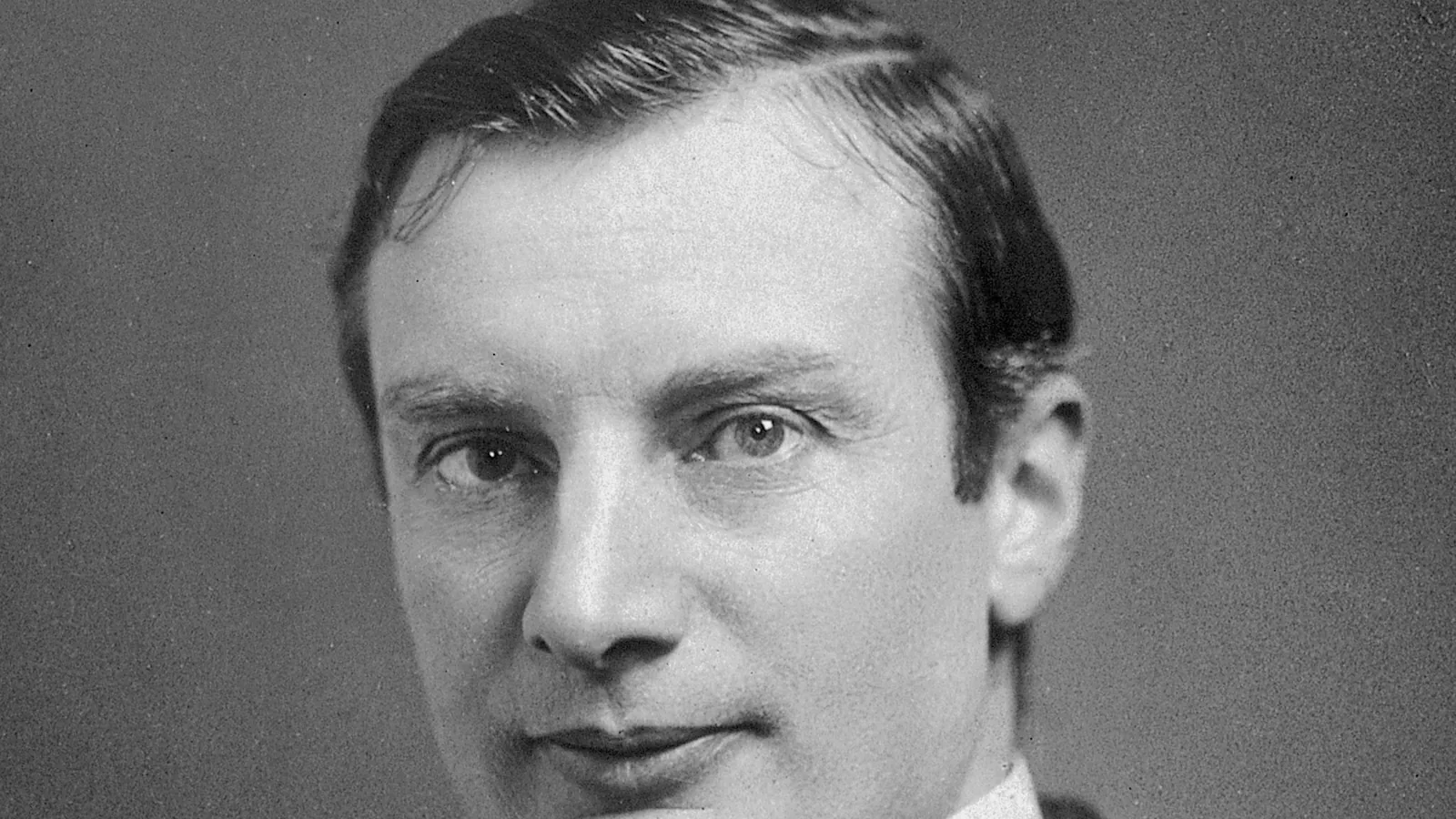

TL;DR — Haffkine injected himself with his plague vaccine on January 10, 1897; a 1902 tetanus accident at Mulkowal cost him his post, and a 1907 inquiry cleared him.
“On the 10th January 1897, Dr. Haffkine caused himself to be inoculated with 10 cc of a similar preparation, thus proving in his own person the harmlessness of the fluid.” That is how the institute that now carries his name describes the day Waldemar Mordecai Haffkine tested his own plague vaccine on himself in Bombay. The city’s governor had invited him in 1896 after plague broke out, and he had found working space at the JJ Group of Hospitals. A form of the vaccine judged fit for human trials was ready that January, and in February 1897 it was tested on volunteers at Byculla jail.
Quick facts
- When
- January 10, 1897 (Haffkine's self-inoculation) · February 1897 (Byculla jail trial) · October 30, 1902 (Mulkowal accident) · 1907 (inquiry clears Haffkine) · 1925 (institute renamed for him)
- Where
- JJ Group of Hospitals and the Plague Research Laboratory, Bombay; Byculla jail, Bombay; Mulkowal village, Punjab; the Lister Institute, London
- Who
- Waldemar Mordecai Haffkine; Dr. Elliot, European Inoculating Officer; Dr. Charles J. Martin, Director of the Lister Institute
- Outcome
- An inquiry published in 1907 found Haffkine not responsible for the 19 tetanus deaths at Mulkowal in 1902. He left India by 1915 at the latest, and in 1925 the Bombay government renamed the laboratory the Haffkine Institute.
Bombay, 1896-1898
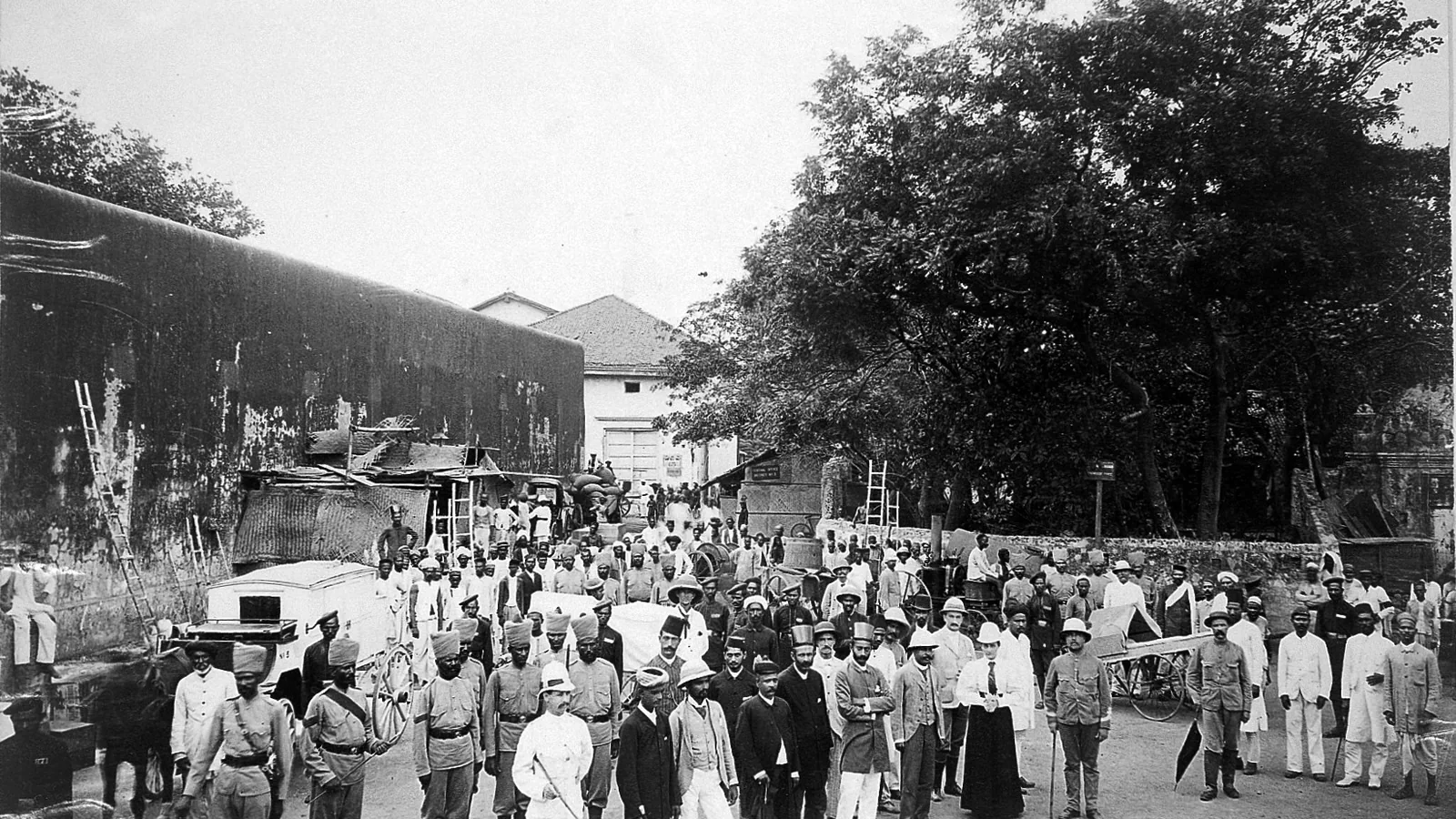
The plague that brought Haffkine to Bombay killed 170,000 people in the city by 1906, according to a 2021 historical review in the Journal of Intensive Medicine. Haffkine had already tested a vaccine on himself once before: in July 1892, in Paris, he had made his cholera preparation’s first human test on his own body, a pattern he repeated for plague five years later. In 1898 his laboratory moved to Khushru Lodge, a bungalow owned by Sir Sultan Shah, Aga Khan III, and fitted up at the Aga Khan’s expense. Under the Aga Khan’s patronage, roughly half of Bombay’s Khoja Muslim community, 10,000 to 12,000 people, received the prophylactic inoculation there. Haffkine entered the laboratory’s permanent premises on August 10, 1899, when it was named the Plague Research Laboratory and he became its director in chief.
October 30, 1902, at Mulkowal
Large-scale inoculation continued into Punjab. At Mulkowal, in the Punjab, Dr. Elliot, the European Inoculating Officer, “inoculated 107 persons at this village on October 30th, in the forenoon,” according to the Government of India report that James Cantlie reprinted in the Journal of Tropical Medicine and Hygiene in 1907. Nineteen of them, all inoculated from a single bottle numbered 53N, developed tetanus and died; the other 88, inoculated that day from different bottles, remained healthy. A 2025 peer-reviewed review in Pharmaceuticals gives the same count independently: 19 dead from bottle 53N, 88 unaffected from other bottles. Haffkine was dismissed from his post as director of the plague laboratory and placed on leave from the Indian Civil Service, the review states.

A dropped instrument, disputed
The Government of India report Cantlie reprinted concluded that “the contamination is directly attributable to the opening of the bottle by a forceps that had been dropped on the ground during that operation,” and that the forceps had not been flamed before it touched the bottle again. The report added a chemical argument: the bottle was odorless when opened, while tetanus growing in a culture medium gives off a strong smell that becomes unmistakable within three days of contamination. The bottle itself had been prepared 41 days and issued from the laboratory 26 days before the accident, and the report held it free of contamination until at most two or three days before use. A 2021 review in the Journal of Intensive Medicine describes the same episode differently, attributing the tetanus spores to “a vial that had been dropped on the soil” and not properly disinfected before reuse.
Two inquiries, two verdicts
“The subject was investigated by two scientific bodies: (a) a Commission in India, and (b) the Lister Institute in London,” the reprinted report states. The Indian commission began, in the report’s account, from the assumption that contamination of the syringe or of the bottle at the moment of inoculation was unlikely to cause 19 cases of tetanus, and on that assumption it rejected the evidence gathered in Punjab and held that the bottle had been contaminated in Bombay. The Lister Institute took a different view. Its director, Dr. Charles J. Martin, wrote on May 5, 1906, that “the Governing Body are bound to say that they cannot fully concur,” and that while it still favored the probability of laboratory contamination, “they think Mr. Haffkine has a right to claim the benefit of the doubt,” citing the fact that the forceps used to draw the cork at Mulkowal had been dropped on the ground and reused on the same cork. Haffkine himself, in evidence dated February 4, 1903, wrote that the objections in his testimony against a laboratory origin “must stand independent of our ability or otherwise to find out how it actually occurred,” listing several alternative possibilities he called guesses rather than proof. A witness questioned about the dropped forceps answered, “Why should I be the cause of the death of these people? The forceps fell on many other occasions and nobody died.” Besides Mulkowal, the report records ten other fatal inoculation accidents in Punjab that month, each traced to a different bottle, with no other person from the same bottle affected in any of them.
Exoneration and a name, 1907 and 1925
An inquiry published in the Lancet on February 2, 1907, cleared Haffkine of responsibility and error, the Journal of Intensive Medicine review states. A separate peer-reviewed biography, published in the Journal of Medical Biography in 2007, gives the same year and credits a campaign led by Ronald Ross with securing the exoneration, adding that the stigma remained in India afterward. The Haffkine Institute’s own biography page dates his retirement to 1914; the 2007 biography’s abstract instead gives 1896 to 1915 as his years as bacteriologist to the Government of India. In 1925, “due to the efforts of Lt. Col. F.P. Mackie, the Laboratory was aptly named as ‘Haffkine Institute,’” according to the institute’s biography page, a date its Milestones page repeats without variation.
Key facts
- Haffkine injected himself with 10 cc of his plague vaccine on January 10, 1897, and the vaccine was tested on volunteers at Byculla jail the following month.
- The Bombay plague killed 170,000 people by 1906, the Journal of Intensive Medicine states.
- On October 30, 1902, Dr. Elliot inoculated 107 people at Mulkowal; 19 who received bottle 53N died of tetanus, and 88 inoculated from other bottles were unaffected.
- Haffkine was dismissed as director of the plague laboratory and placed on leave from the Indian Civil Service after the accident.
- The 1907 report attributes the contamination to an unflamed forceps dropped on the ground; a 2021 review instead names the vial itself as having touched the soil.
- The Lister Institute’s director, Dr. Charles J. Martin, wrote on May 5, 1906, that Haffkine had “a right to claim the benefit of the doubt.”
- An inquiry published in the Lancet on February 2, 1907, cleared Haffkine of responsibility.
- In 1925 the Bombay government renamed the laboratory the Haffkine Institute, honoring Lt. Col. F.P. Mackie’s efforts.
FAQ
What did Haffkine do on January 10, 1897?
He injected himself with 10 cc of his plague vaccine preparation in Bombay, to demonstrate its harmlessness before it was tested on volunteers at Byculla jail the following month.
What happened at Mulkowal on October 30, 1902?
Dr. Elliot inoculated 107 people against plague. Nineteen who received a dose from a single bottle, numbered 53N, developed tetanus and died; the other 88, inoculated from different bottles that day, remained healthy.
Was Haffkine found responsible for the Mulkowal deaths?
An inquiry published in the Lancet on February 2, 1907, cleared him of responsibility and error, after the Indian commission and the Lister Institute in London had reached different conclusions on how the contamination occurred.
Sources
- James Cantlie, "A Study of the Evidence as to the Source of the Infection which caused the Cases of Tetanus at Mulkowal, Punjab, India, during Inoculation against Plague in October, 1902," Journal of Tropical Medicine and Hygiene, vol. X, no. 3 (February 1, 1907), reprinting the Government of India report of December 1, 1906.
- Stefan Tyski, Marta Burza, and Anna E. Laudy, "Microbiological Contamination of Medicinal Products - Is It a Significant Problem?," Pharmaceuticals 18, no. 7 (2025), 946.
- Jean-Marc Cavaillon and Marcin F. Osuchowski, "COVID-19 and earlier pandemics, sepsis, and vaccines: A historical perspective," Journal of Intensive Medicine 1, no. 1 (May 18, 2021), 4-13.
- Haffkine Institute for Training, Research and Testing, "Waldemar Mordecai Haffkine" biography page.
- Haffkine Institute for Training, Research and Testing, "Milestones" page.
- Barry J. Hawgood, "Waldemar Mordecai Haffkine, CIE (1860-1930): prophylactic vaccination against cholera and bubonic plague in British India," Journal of Medical Biography 15, no. 1 (2007), 9-19 (abstract).
Cite this article
- APA
- LETTER. (2026, September 28). Haffkine's plague vaccine: Bombay 1897 and the Mulkowal inquiry. Our Earth's History. https://ourearthshistory.com/south-asia/modern/haffkine-plague-vaccine-bombay-1897-mulkowal-1902-inquiry/
- Chicago
- LETTER. “Haffkine's plague vaccine: Bombay 1897 and the Mulkowal inquiry.” Our Earth's History, September 28, 2026. https://ourearthshistory.com/south-asia/modern/haffkine-plague-vaccine-bombay-1897-mulkowal-1902-inquiry/.
- MLA
- LETTER. “Haffkine's plague vaccine: Bombay 1897 and the Mulkowal inquiry.” Our Earth's History, 28 Sep. 2026, https://ourearthshistory.com/south-asia/modern/haffkine-plague-vaccine-bombay-1897-mulkowal-1902-inquiry/.
Text licensed CC BY-NC-ND 4.0. Found an error? Tell us.