Bhopal, night of December 2–3, 1984: a death toll counted six ways

TL;DR — Union Carbide paid US$470 million in 1989 on a disputed basis of 3,000 dead; published counts of the immediate deaths run from 2,000 to 3,800.
“In the intervening night of 2/3 December 1984, more than 40 tons of mixture of toxic gases, including methyl isocyanate . . . leaked from the carbaryl insecticide manufacturing plant of Union Carbide India Limited (UCIL), in Bhopal city (India) killing about 3,800 people,” wrote a team from the Indian Council of Medical Research’s National Institute for Research in Environmental Health (ICMR-NIREH) in the Journal of Postgraduate Medicine in 2020. R. S. Murthy, in the Industrial Psychiatry Journal in 2014, put the deaths on the night at around 2,000. S. Singh and colleagues at the same institute wrote in 2023 that “About 2,500 people died immediately.” E. Broughton’s review in Environmental Health in 2005 gave “at least 3,800.” The 1989 settlement rested on a fourth number, the Madhya Pradesh claims register on a fifth, and the “official death toll” quoted by the BMJ in 2004 on a sixth.
Quick facts
- When
- Night of December 2 to 3, 1984 (the leak) · March 1985 (Bhopal Gas Leak Disaster Act) · August 1985 (ICMR cohort begins) · 1989 (US$470 million settlement) · July 19, 2004 (Supreme Court order on undistributed funds) · June 2010 (Bhopal court judgment) · October 11, 2010 (NIREH founded) · August 2012 (Supreme Court judgment on health care) · March 13, 2021 (NIREH campus dedicated)
- Where
- The Union Carbide India Limited pesticide plant in Bhopal, Madhya Pradesh, India; the Supreme Court of India in New Delhi; the ICMR-NIREH campus in Bhopal
- Who
- Union Carbide Corporation and its subsidiary Union Carbide India Limited; the Government of India; the Government of Madhya Pradesh and its Bhopal Gas Tragedy Relief and Rehabilitation Department; the Indian Council of Medical Research (ICMR); Dow Chemical; N. D. Jayaprakash; Dr. Harsh Vardhan
- Outcome
- Union Carbide paid US$470 million in 1989 "as a full and final settlement," a figure partly based on 3,000 dead. Published counts of the immediate deaths run from 2,000 to 3,800; 15,310 death claims had been approved by October 2003; an ICMR cohort of 92,320 people recorded 6,609 deaths between 1985 and 2015
Sevin, a 22 percent stake and three safety systems
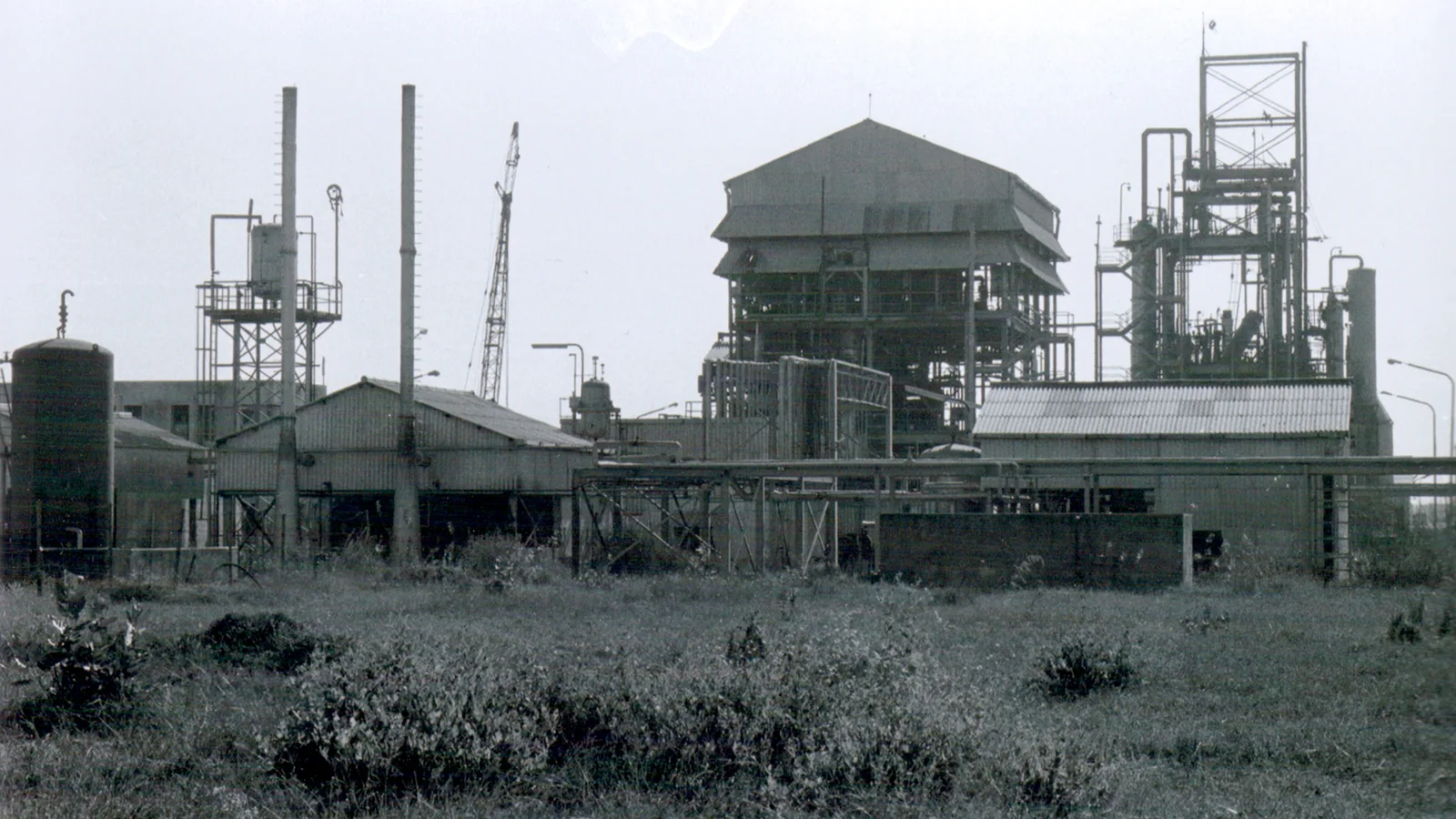
Union Carbide Corporation (UCC), Broughton’s review records, “was asked to build a plant for the manufacture of Sevin, a pesticide,” and the Indian government held a 22 percent stake in the subsidiary that ran it. By 1984 the plant was running at a quarter of its capacity. In July 1984 local management was ordered to close and sell it; with no buyer found, the plan became to dismantle it and move it abroad.
The review lists three safety systems out of use that night. The refrigeration unit for the methyl isocyanate tank had been shut down, its refrigerant drained for use elsewhere. The vent-gas scrubber had been switched off three weeks before. The flare tower had been out of order for three months. UCC’s own account differed. Broughton wrote that the company “began attempts to dissociate itself from responsibility for the gas leak” and that in 2005, by then owned by Dow Chemical, it still said on its website that the disaster was the work of “deliberate sabotage.” The company’s statement is given here as Broughton quoted it.
"More than half a million people were exposed"
Broughton’s review records that “The Indian government reported that more than half a million people were exposed to the gas.” Murthy gives the plume a reach of about 7 kilometers and about 200,000 directly exposed; his sentence on the dead reads “More than 2000 (about 1% of directly exposed) died on the night of the disaster.” Broughton labeled the larger figures as estimates: counts of those killed in the first few days “run as high as 10,000,” with “15,000 to 20,000 premature deaths” reported over the two decades after.
The one long-run count from a single register is the ICMR’s population study, begun in August 1985. The 2023 paper by Singh and colleagues gives the cohort as 92,320 people, 76,654 exposed and 15,666 unexposed controls, followed at six-month intervals to 2015. In those 30 years the cohort recorded 6,609 deaths, a mortality rate of 7.2 percent, with respiratory disease the largest cause among the exposed.
March 1985: an Act, and the cases moved to India
“In March 1985, the Indian government enacted the Bhopal Gas Leak Disaster Act,” Broughton wrote. “The Act made the government the sole representative of the victims in legal proceedings both within and outside India.” The suits filed in the United States were, Broughton wrote, taken out of the American legal system by the presiding judge and “placed entirely under Indian jurisdiction.” The Act’s own clauses are not quoted in the papers cited below.
US$470 million "as a full and final settlement"
The Supreme Court of India mediated the 1989 settlement. In Broughton’s words, “UCC accepted moral responsibility and agreed to pay $470 million to the Indian government to be distributed to claimants as a full and final settlement. The figure was partly based on the disputed claim that only 3000 people died and 102,000 suffered permanent disabilities.” That 3,000 is the fourth number.
The fifth and sixth appear together in a BMJ news report of August 14, 2004, by S. Kumar. It opens: “The official death toll is 5800, but campaigners say that more than 20 000 people have died from gas related illnesses.” Further down it cites the Bhopal Gas Tragedy Relief and Rehabilitation Department of the Madhya Pradesh government: by the end of October 2003, compensation had been awarded to 554,895 people for injury and to “15310 claims for deaths.” The report does not explain how 5,800 and 15,310 relate, and for the 5,800 it names no source. It also records the Supreme Court’s order of July 19, 2004 to distribute the 15 billion rupees ($325 million at the BMJ’s conversion) still held by the Reserve Bank of India from the 1989 payment.
The BMJ quoted N. D. Jayaprakash, co-convenor of the Bhopal Gas Peedit Sangharsh Sahayog Samiti, a victims’ group: “Almost half a million victims have been paid a paltry amount of 25 000 rupees by the Indian courts, while for deaths a shameful amount of 100 000 rupees has been paid on average.” Broughton gave the average paid to families of the dead as $2,200.
Bhopal Gas Disaster Research Centre, 1986, to a campus dedicated March 13, 2021
T. Trushna and R. R. Tiwari, in the Bulletin of the World Health Organization in 2022, traced the institutions that followed: a coordinating unit set up by the ICMR after the leak, the Bhopal Gas Disaster Research Centre in 1986, and the Centre for Rehabilitation Studies under the Madhya Pradesh relief department in 1995. Murthy dates the next change to “the court judgment of June 2010” in Bhopal and the dissatisfaction survivors expressed after it: health care and research were revived, compensation was raised, and the National Institute for Research in Environmental Health was founded on October 11, 2010. Murthy also describes a Supreme Court judgment of August 2012 that “recognized the rights of the survivors” and directed specific measures of health care for them.
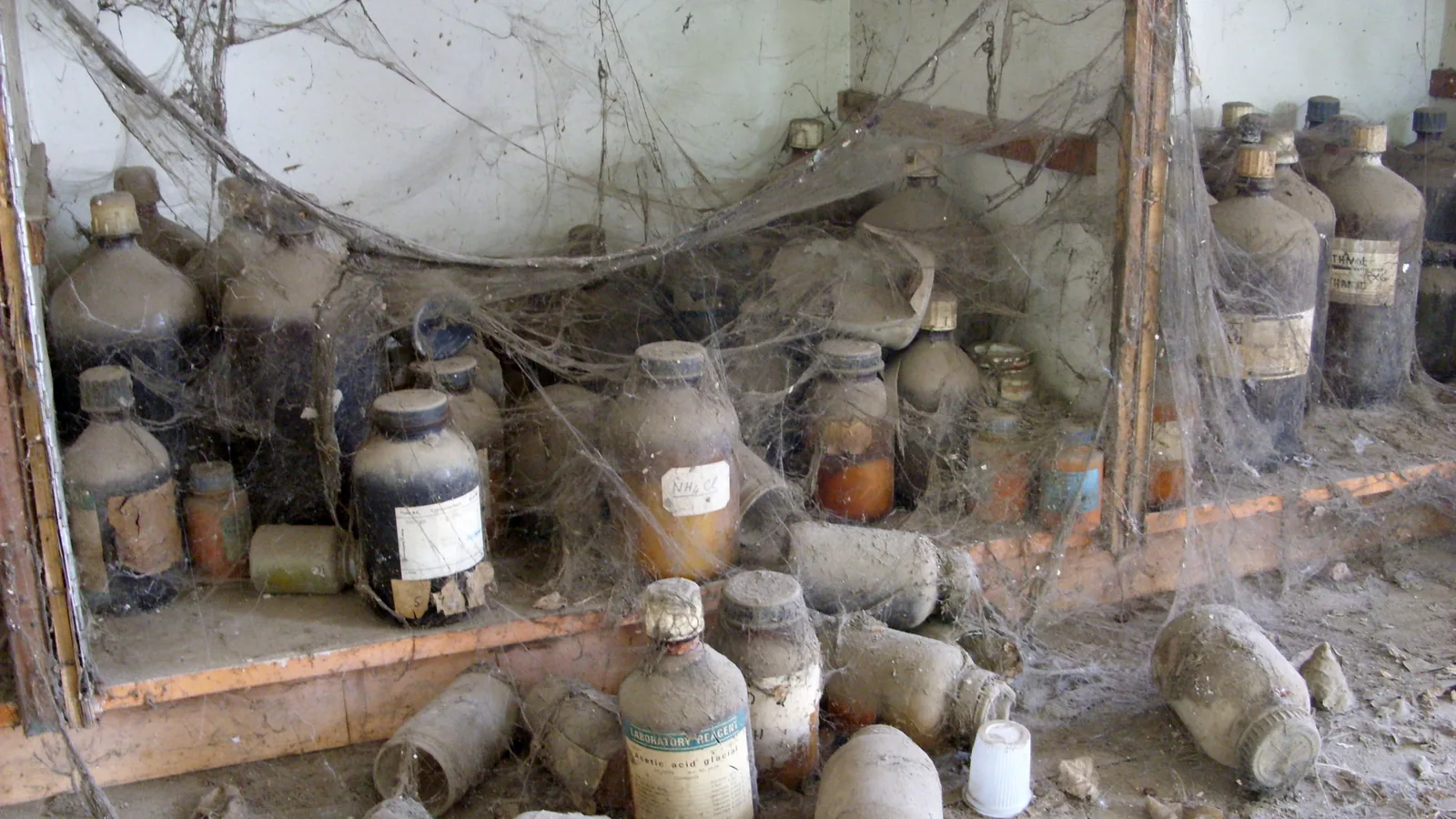
The plant site remained. The 2020 ICMR-NIREH paper records that after the closure “huge quantities of chemicals” were left in and around the premises in solar evaporation ponds, and that in 2006 the Madhya Pradesh government began piping treated water to the localities around the plant. That paper surveyed 10,827 residents between 2014 and 2016; “No attempt was made to laboratory analyze the drinking water,” it states. Sharma, in Environmental Health Perspectives in June 2005, reported that action groups had demanded that Dow Chemical, which merged with Union Carbide in 2001, pay for the cleanup, and that the Supreme Court Monitoring Committee “has not taken a final view on this.”
The permanent campus cost 1,240 million rupees ($17.89 million by the authors’ conversion). A Press Information Bureau release of March 13, 2021 records that Dr. Harsh Vardhan, the Union Minister of Health and Family Welfare, dedicated the campus that day, and describes NIREH as “the 31st permanent research centre” of the ICMR.

Key facts
- On the night of December 2 to 3, 1984, “more than 40 tons of mixture of toxic gases, including methyl isocyanate,” leaked from the Union Carbide India Limited plant in Bhopal (Banerjee et al., 2020).
- Published counts of the immediate deaths: around 2,000 (Murthy, 2014), “About 2,500” (Singh et al., ICMR-NIREH, 2023), “at least 3,800” (Broughton, 2005) and “about 3,800” (Banerjee et al., ICMR-NIREH, 2020).
- Broughton’s review lists three safety systems out of use that night: the refrigeration unit shut down, the vent-gas scrubber off for three weeks and the flare tower out for three months.
- “The Indian government reported that more than half a million people were exposed to the gas” (Broughton); Murthy gives about 200,000 directly exposed in a radius of about 7 kilometers.
- The Bhopal Gas Leak Disaster Act of March 1985 made the government “the sole representative of the victims in legal proceedings both within and outside India” (Broughton).
- In 1989 Union Carbide agreed to pay US$470 million “as a full and final settlement,” a figure “partly based on the disputed claim that only 3000 people died and 102,000 suffered permanent disabilities” (Broughton).
- The BMJ of August 14, 2004 gave “The official death toll is 5800” and, from the Madhya Pradesh relief department, 554,895 injury awards and 15,310 death claims approved by the end of October 2003; on July 19, 2004 the Supreme Court ordered 15 billion rupees still held by the Reserve Bank of India to be distributed.
- The ICMR cohort of 92,320 people, followed from August 1985 to 2015, recorded 6,609 deaths, a mortality rate of 7.2 percent (Singh et al., 2023); NIREH was founded on October 11, 2010, and its campus was dedicated on March 13, 2021 (PIB).
FAQ
How many people died in the Bhopal gas disaster of December 1984?
No single figure is agreed. Peer-reviewed papers put the immediate deaths at around 2,000 (Murthy, 2014), about 2,500 (Singh et al., 2023) or about 3,800 (Broughton, 2005; Banerjee et al., 2020). The 1989 settlement was partly based on 3,000 dead, the BMJ reported an official toll of 5,800 in 2004, and 15,310 death claims had been approved by October 2003.
How much did Union Carbide pay for Bhopal?
US$470 million, paid to the Indian government in 1989 under a settlement mediated by the Supreme Court of India, "as a full and final settlement." In 2004 the court ordered 15 billion rupees still undistributed from that sum to be paid out. The BMJ quoted a victims' group that the average award for a death was 100,000 rupees; Broughton gave the average to families of the dead as $2,200.
What is the ICMR Bhopal cohort study?
A population study the Indian Council of Medical Research began in August 1985, following 92,320 people, 76,654 exposed to the gas and 15,666 unexposed controls, through six community health clinics at six-month intervals. By 2015 the cohort had recorded 6,609 deaths, a mortality rate of 7.2 percent, with respiratory disease the largest cause among the exposed.
Sources
- Broughton E., "The Bhopal disaster and its aftermath: a review," Environmental Health 4:6 (May 10, 2005), full text at PubMed Central, PMC1142333.
- Kumar S., "Victims of gas leak in Bhopal seek redress on compensation," BMJ 329 (August 14, 2004), p. 366, full text at PubMed Central, PMC509368.
- Murthy R. S., "Mental health of survivors of 1984 Bhopal disaster: A continuing challenge," Industrial Psychiatry Journal 23, no. 2 (2014), pp. 86–93, full text at PubMed Central, PMC4361985.
- Singh S., Raj D., Sabde Y., Kalyanasundaram M. and Tiwari R. R. (ICMR-NIREH), "Survival Analysis for Cohort of Bhopal Gas Disaster Victims during 1985-2015," Indian Journal of Occupational and Environmental Medicine 27, no. 3 (2023), pp. 219–225, PMC10691511.
- Trushna T. and Tiwari R. R. (ICMR-NIREH), "Establishing the National Institute for Research in Environmental Health, India," Bulletin of the World Health Organization 100, no. 4 (April 1, 2022), pp. 281–285, PMC8958832.
- Banerjee N., Banerjee A. et al. (ICMR-NIREH), "Morbidity profile of communities in Bhopal city (India) vis-à-vis distance of residence from Union Carbide India Limited plant and drinking water usage pattern," Journal of Postgraduate Medicine 66, no. 2 (2020), pp. 73–80, PMC7239398.
- Sharma D. C., "By Order of the Court: Environmental Cleanup in India," Environmental Health Perspectives 113, no. 6 (June 2005), pp. A394–A397, PMC1257623.
- Press Information Bureau, Ministry of Health and Family Welfare, Government of India, "Dr Harsh Vardhan's visit to Bhopal," press release of March 13, 2021 (PRID 1704592).
- Indian Council of Medical Research, "Institutes" (list of ICMR institutes, including ICMR-NIREH and ICMR-BMHRC, Bhopal).
Cite this article
- APA
- Our Earth's History. (2026, September 22). Bhopal, night of December 2–3, 1984: a death toll counted six ways. Our Earth's History. https://ourearthshistory.com/south-asia/contemporary/bhopal-december-3-1984-union-carbide-settlement-470-million/
- Chicago
- Our Earth's History. “Bhopal, night of December 2–3, 1984: a death toll counted six ways.” Our Earth's History, September 22, 2026. https://ourearthshistory.com/south-asia/contemporary/bhopal-december-3-1984-union-carbide-settlement-470-million/.
- MLA
- “Bhopal, night of December 2–3, 1984: a death toll counted six ways.” Our Earth's History, 22 Sep. 2026, https://ourearthshistory.com/south-asia/contemporary/bhopal-december-3-1984-union-carbide-settlement-470-million/.
Text licensed CC BY-NC-ND 4.0. Found an error? Tell us.