Coast or frontier? The 1875 debate that sent Zuo Zongtang to Kashgar
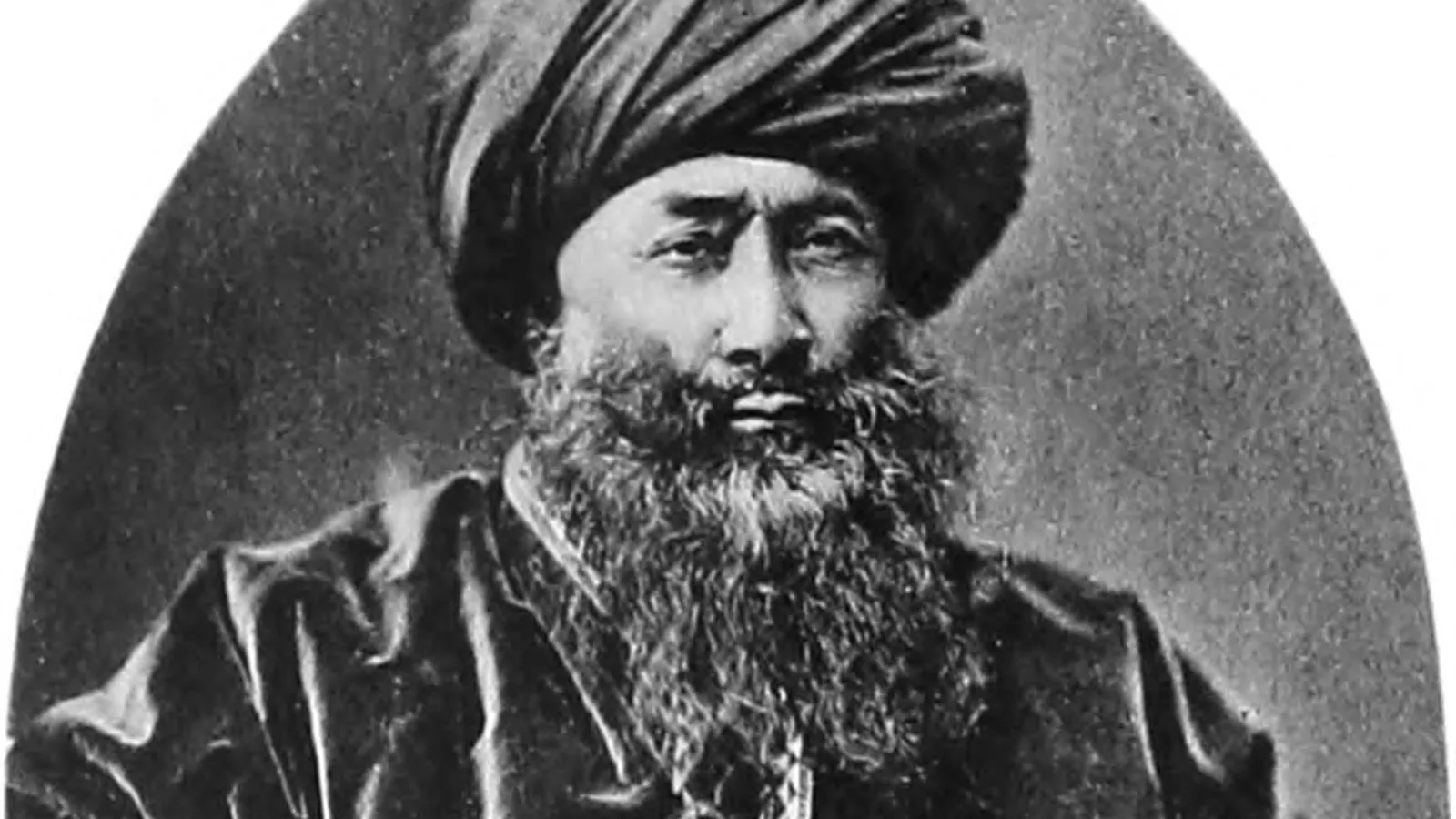

TL;DR — In 1875 the Qing court chose the frontier over the coast; Zuo Zongtang retook Urumqi in 1876 and Kashgar in 1877, and Yaqub Beg died at Korla that May.
“Hongzhang argued it most forcefully.” That is how the Draft History of Qing (清史稿), compiled 1914–1927, in a literal rendering, records Li Hongzhang’s part in the argument of 1875: let the Pasha at Kashgar keep his state as a vassal, stop the western campaign, and spend the money on the sea. The Pasha was Yaqub Beg, an officer from Kokand who had held Kashgar since 1865 by the Encyclopaedia Iranica’s dating. Zuo Zongtang won. His armies took Urumqi in 1876 and Turfan in the spring of 1877; Yaqub Beg died at Korla in May 1877; Kashgar fell that autumn. Ili, held by Russia since 1871, came back by treaty in 1881, and the Draft History puts the making of Xinjiang into a province in 1883.
Quick facts
- When
- 1864 or 1865 (rising at Kashgar; Draft History and Iranica differ by a year) · 1871 (Russia takes Ili) · 1872 (Ottoman recognition, title Amir) · February 2, 1874 (Forsyth's treaty sealed) · 1875 (court debate) · 1876 to 1877 (Urumqi, Turfan, Kashgar retaken) · May 1877 (Yaqub Beg dies at Korla) · 1881 (Treaty of St Petersburg) · 1883 (Xinjiang made a province, by the Draft History's count)
- Where
- Kashgar, Yarkand, Aksu and Khotan in the south of what is now Xinjiang; Urumqi, Manas and Turfan on the northern road; Korla; the Ili valley; Beijing; St Petersburg
- Who
- Yaqub Beg, called the Pasha in the Draft History; Zuo Zongtang; Li Hongzhang; the grand councilor Wenxiang; Liu Jintang and Jin Shun; Bai Yanhu; Beg Kuli; Sir Douglas Forsyth; Sir Charles Dilke and Lord George Hamilton; Chonghou; Zeng Jize; the Russian foreign minister Giers
- Outcome
- The court chose the frontier over the coast; Qing armies retook the northern road in 1876 and the south in 1877; Yaqub Beg died at Korla in May 1877; Russia returned most of Ili in 1881 for 9 million rubles; Xinjiang became a province with a governor
Eight cities of the south under an officer from Andijan
Zuo’s biography in the Draft History introduces his enemy without a personal name. The Muslim chief beyond the passes was called the Pasha; he had been a beg of Andijan, a district of Kokand, and when Russia destroyed Kokand he “feared the Russian pressure and slipped across the border,” in a literal rendering, seized Kashgar and “gradually ate away the eight cities of the south.” He then took the cities of the northern road with their revenues. Its Geography treatise dates the rising to the third year of Tongzhi, 1864, as does the Iranica entry on Kokand. Sir Douglas Forsyth’s report of 1875 marks “the Amir’s territory” at each edge, from beyond Khotan in the south to Chightam east of Turfan.
Envoys to Constantinople, Tashkent and Calcutta
Demetrius Boulger’s biography of 1878 records that before the end of 1872 Yaqub Beg closed secret negotiations with the sultan and “appeared in a new and holier light to Asiatics as Emir, or Ameer.” He acknowledged the suzerainty of the Porte and struck coins with the head of Sultan Abdul Aziz.
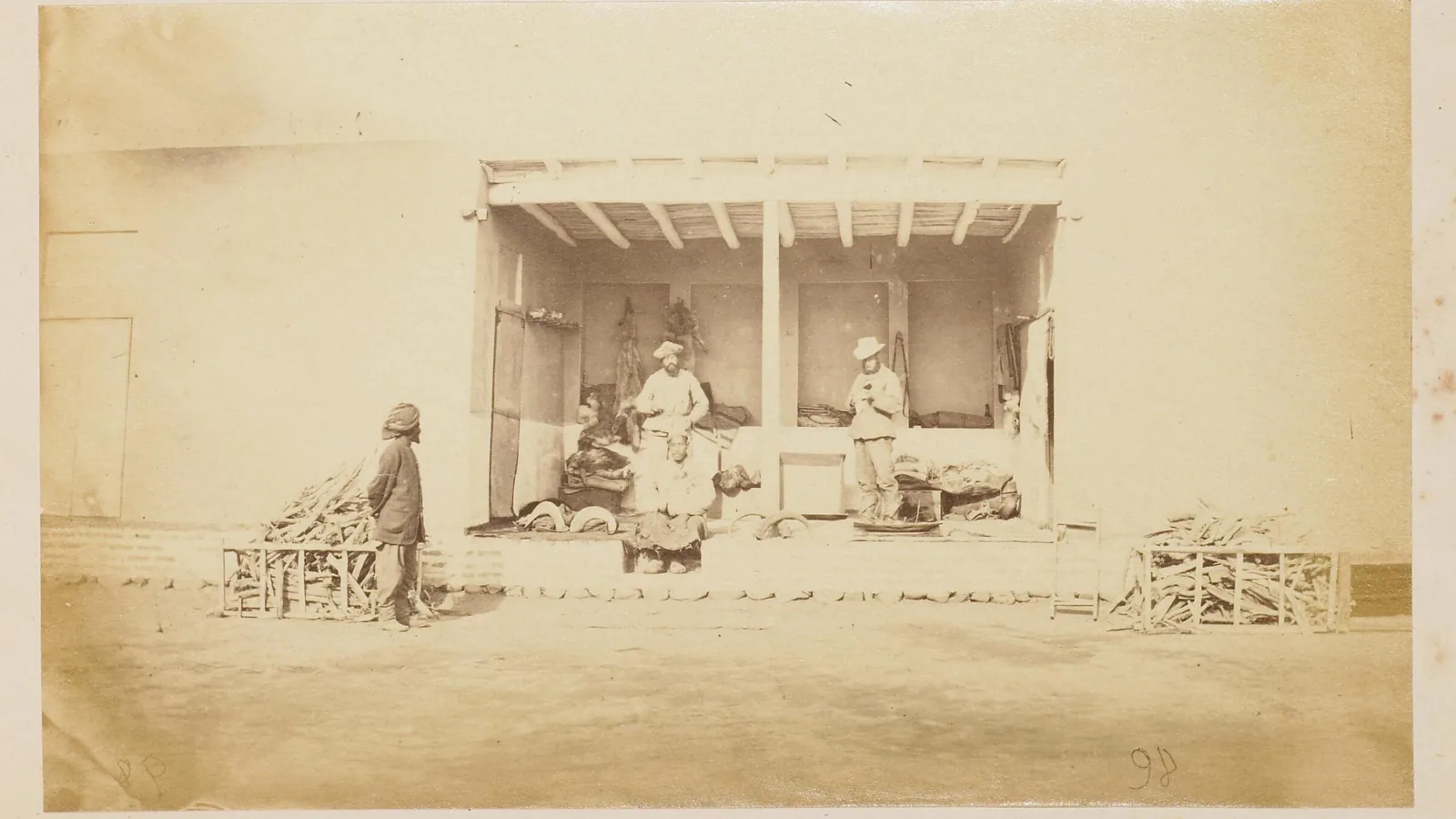
Forsyth’s mission from India, at Kashgar by December 1873, had its treaty of commerce sealed by the Amir on February 2, 1874. Asked by Sir Charles Dilke in the Commons on May 15, 1874, whether it recognized the Amir’s independence, Lord George Hamilton said that in its preamble “the Amir was recognized as distinctly as words could do it,” the engagements being made with “the Amir of Kashgar and his heirs and successors.” The Draft History reads the British motive plainly: “The English secretly helped him, wishing to have him set up a separate state, to use as a shield against Russia.” The same history’s Treatise on Foreign Relations records that in the summer of the tenth year of Tongzhi, 1871, “the Russians took Ili by surprise.”

Li Hongzhang's leaking cup and Zuo Zongtang's map
The case for the coast, as Zuo’s biography summarizes it: since the Qianlong emperor settled Xinjiang it had “consumed several million every year; this was a leaking cup,” and the court should “follow the English proposal, allow the Pasha to set up his own state and call himself a vassal, stop the western campaign, and devote full strength to coastal defense.”
Zuo’s reply, as quoted: Shaanxi and Gansu were newly pacified; to fail to recover the land the state had lost, and instead “cut it off and let it become a separate state, is to sit and leave trouble for oneself. If by any chance the Pasha cannot hold it, then if it is not absorbed by the English in the west, it will turn north and fall to the Russians.” “This must not be.” The history then names the deciding voice: “The grand councilor Wenxiang alone approved Zongtang’s argument, and so the decision was taken to go beyond the passes and not to stop the war.”
Urumqi, Turfan, and a death at Korla with three explanations
In the third month of the second year of Guangxu, 1876, Zuo reached Suzhou in Gansu. In the fifth month Liu Jintang crossed the Tianshan, joined Jin Shun, and took Urumqi; Bai Yanhu, a rebel from Shaanxi, fled to Toksun. In the ninth month the south city of Manas fell, and “the northern road was pacified.” In the third month of the third year, 1877, Liu took Dabancheng and Toksun and, with other columns, recovered Turfan, where “more than ten thousand” surrendered.
The next sentence, in a literal rendering: “The Pasha drank poison and died; his son Beg Kuli killed his younger brother and fled to Kashgar.” Boulger’s biography gives two other versions and chooses neither. One, which he found more probable, said Yaqub Beg was murdered on May 1 by conspirators led by Hakim Khan Torah. The other came from the Turkestan Gazette at Tashkent: that he “died of fever on the 1st of May, after an illness of seven days’ duration.” On July 17 the under-secretary Bourke told Dilke that the government knew “nothing more than what appears in the newspapers.” Boulger’s conclusion: “Of the main fact that Yakoob died at Korla in May, 1877, there is no doubt.”
In the eighth month Liu’s columns chased Bai Yanhu through Kucha and Aksu to Kashgar, where He Buyun surrendered the Chinese town and Beg Kuli fled into Russian territory. The four western cities followed.
Ili for 9 million rubles, and a governor at Dihua in 1883
Zuo’s plan for a province went up in the first month of 1878. Chonghou opened talks with the foreign minister Giers in the second month of 1879 and agreed to 5 million rubles and a frontier that gave up the south and west of Ili; the court ordered him punished, and Zeng Jize took over in the first month of 1880. Russia’s note of the eleventh month gave way on seven points, beginning with the return of Ili, and the indemnity rose: “Chonghou’s original treaty paid 5 million rubles; the Russians, since the southern part of Ili had been given back, wanted to double the original figure, and only after a long time agreed to reduce and fix it at 9 million rubles.” The treaty was signed at the Russian capital in the first month of the seventh year, 1881, with Giers; Jin Shun took Ili over in the second month of 1882.
The Geography treatise closes the story in two clauses: “In the eighth year of Guangxu the whole was cleared and pacified. In the ninth year a province was established, with a governor and a provincial administration commissioner,” which by the Draft History’s account is 1883. Dihua, the old Urumqi, became the seat. The frontier Li Hongzhang had priced as a leaking cup was, by then, a province with a governor.
Key facts
- The Draft History of Qing records that in 1875 Li Hongzhang argued “most forcefully” for stopping the western campaign and recognizing the Pasha as a vassal, and that Wenxiang alone backed Zuo Zongtang, which decided the court.
- Yaqub Beg, a Kokandi from Andijan, held Kashgar and the eight cities of the south from 1865 (Encyclopaedia Iranica); the Draft History and Iranica’s Kokand entry date the rising to 1864.
- He took the title Amir under Ottoman suzerainty in 1872 and coined money with Sultan Abdul Aziz’s head (Boulger); Forsyth’s treaty of commerce was sealed on February 2, 1874, and named “the Amir of Kashgar and his heirs and successors” (Hansard, May 15, 1874).
- Russia seized Ili in the summer of 1871, by the Draft History’s Treatise on Foreign Relations.
- Qing armies took Urumqi in the fifth month of Guangxu 2 (1876) and Turfan in the third month of Guangxu 3 (1877); Kashgar fell after the eighth month of 1877.
- Yaqub Beg died at Korla in May 1877; the Draft History says he drank poison, while Boulger relays a murder by Hakim Khan Torah’s conspirators and a Turkestan Gazette report of fever after seven days’ illness.
- The Treaty of St Petersburg, signed in the first month of 1881, returned most of Ili for 9 million rubles, up from the 5 million in Chonghou’s rejected draft; the province of Xinjiang followed in Guangxu 9 (1883), by the Draft History.
FAQ
How did Yaqub Beg die?
Three accounts survive and they disagree. The Draft History of Qing writes that the Pasha "drank poison and died." Boulger's 1878 biography relays a report from Tashkent that he was murdered on May 1, 1877, by conspirators under Hakim Khan Torah, and the Turkestan Gazette's report that he died of fever on the same day after a seven-day illness. All agree on Korla and on May 1877.
Why did Li Hongzhang oppose the reconquest of Xinjiang?
By the Draft History's summary, the coastal-defense party held that Xinjiang had cost several million a year since the Qianlong reign, "a leaking cup," and that the money was needed against the sea powers. Li pressed this case hardest. Zuo answered that a Kashgar left independent would fall to Britain or Russia, and the grand councilor Wenxiang sided with him.
What did the Treaty of St Petersburg of 1881 change?
It replaced the draft Chonghou had agreed to in 1879. Russia returned the southern part of Ili it had kept in the draft; the indemnity rose from 5 million to 9 million rubles; the trade routes through Xi'an and Hanzhong to Hankou were struck out; and the consulate for Urumqi was moved to Turfan. Zeng Jize signed it with Giers and Bützow in the first month of 1881, and Jin Shun took over Ili in 1882.
Sources
- Draft History of Qing (Qingshi gao), juan 412, biography of Zuo Zongtang: the Pasha, the 1875 debate, the campaigns of Guangxu 2 and 3, the Pasha's death, the Ili memorial. Chinese text on Wikisource.
- Draft History of Qing, juan 153, Treatise on Foreign Relations 1, Russia: the seizure of Ili in Tongzhi 10, Chonghou's mission, the 5 million rubles, Zeng Jize's renegotiation, the 9 million rubles, the signing in Guangxu 7. Chinese text on Wikisource.
- Draft History of Qing, juan 76, Treatise on Geography 23, Xinjiang: the rising of Tongzhi 3, the pacification of Guangxu 8, the province of Guangxu 9 and its prefectures. Chinese text on Wikisource.
- Demetrius C. Boulger, The Life of Yakoob Beg: Athalik Ghazi, and Badaulet; Ameer of Kashgar (London, 1878); full text on the Internet Archive, chapters on the Ottoman alliance, the Forsyth embassy and the death at Korla.
- T. D. Forsyth, Report of a Mission to Yarkund in 1873, under command of Sir T. D. Forsyth, with historical and geographical information regarding the possessions of the Ameer of Yarkund (Calcutta: Foreign Department Press, 1875); full text on the Internet Archive.
- UK Parliament, Historic Hansard, House of Commons, May 15, 1874, vol. 219 cc337-42, 'India: the Amir of Kashgar,' Sir Charles Dilke, Mr. Forsyth and Lord George Hamilton on the treaty and recognition.
- UK Parliament, Historic Hansard, House of Commons, July 17, 1877, vol. 235 c1390, 'Russia and Turkey: the War; War Intelligence; the Ameer of Kashgar,' Dilke's question and Mr. Bourke's answer.
- Encyclopaedia Iranica, Pavel Lurje, 'Kashgar' (2012): Yaqub Beg's revolt dated 1865 to 1877.
- Encyclopaedia Iranica, Timur K. Beisembiev and Scott C. Levi, 'Kokand Khanate' (2023): the Kokandi privileges in Xinjiang ended by Yaqub Beg's rising of 1864; the Tsar's edict of February 2, 1876, annexing the khanate.
Cite this article
- APA
- Our Earth's History. (2026, September 22). Coast or frontier? The 1875 debate that sent Zuo Zongtang to Kashgar. Our Earth's History. https://ourearthshistory.com/central-asia/modern/yaqub-beg-kashgar-1877-zuo-zongtang-xinjiang/
- Chicago
- Our Earth's History. “Coast or frontier? The 1875 debate that sent Zuo Zongtang to Kashgar.” Our Earth's History, September 22, 2026. https://ourearthshistory.com/central-asia/modern/yaqub-beg-kashgar-1877-zuo-zongtang-xinjiang/.
- MLA
- “Coast or frontier? The 1875 debate that sent Zuo Zongtang to Kashgar.” Our Earth's History, 22 Sep. 2026, https://ourearthshistory.com/central-asia/modern/yaqub-beg-kashgar-1877-zuo-zongtang-xinjiang/.
Text licensed CC BY-NC-ND 4.0. Found an error? Tell us.